Category: Culture

  • Ancient Maya Lintel  to Be Repatriated to Mexico After Voluntary Return 

    Ancient Maya Lintel to Be Repatriated to Mexico After Voluntary Return 

    Maya
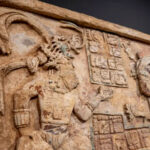
    The artifact being repatriated to Mexico depicts Cheleew Chan K’inich, the ninth ruler of Yaxchilán, receiving tribute from a subordinate lord.

    A Maya limestone lintel dating to the Mesoamerican Classic period (600-900 A.D.) will be returned to Mexico after an anonymous businessman voluntarily surrendered the piece to the Mexican Consulate in New York. The artifact, weighing approximately one ton, was presented to the public for the first time on April 16, 2026, during a ceremony at the consulate’s Octavio Paz Auditorium.

    What Is a Maya Lintel

    In Maya architecture, a lintel is the horizontal beam that spans the opening above a doorway, set between two upright supports. At major Maya centers like Yaxchilán in Chiapas, rulers commissioned elaborately carved limestone lintels to document dynastic history, ritual events, and military conquests. These lintels were placed above doorways so that anyone entering the room would see the commemorative text and image.

    Maya lintels are considered among the finest examples of pre-Hispanic art. The carvings combine hieroglyphic texts with detailed figural scenes, providing scholars with invaluable records of royal lineages, political alliances, and religious practices. Their value lies not only in their artistic quality but in the historical information they preserve about Maya rulers and their ceremonies. Fewer than a dozen such carved wooden lintels are known to exist from the Classic period, making each discovery a significant archaeological event.

    Maya
    Dintel 24 of Yaxchilán depicts Lord Jaguar II supervising a bloodletting ritual performed by his wife Lady K’ab’al Xook. Such rituals were considered essential to earn the favor of the gods, especially during times of warfare.

    Identity of the Ruler Depicted

    Diego Sandoval, the consulate’s legal director, explained that iconographic analysis identified the main figure on the lintel as Cheleew Chan K’inich, also known as Jaguar Acorazado IV, the ninth ruler of Yaxchilán. He reigned from approximately 769 to 800 A.D. and is shown receiving tribute from a subordinate ruler.

    The scene includes symbolic elements such as atlantean figures holding a representation of the sky and the presence of the god Itzam, associated with mountains and universal balance. At the center of the carving appears the signature of the artisan, “Mayú.” Sandoval noted that the figures together represent a quincunx, a symbol of cosmic order and the renewal of time.

    How the Artifact Left Mexico

    Mexican authorities have not disclosed how the lintel was removed from Mexican territory. The artifact originated in the Yaxchilán region of Chiapas, a major Maya center located along the Usumacinta River that flourished during the Late Classic period. The consulate stated that the piece was taken from Mexico, passed through Europe, and eventually arrived in the United States, but specific details about its removal remain unknown.

    Erroneous Reports About the British Museum

    Following news of the repatriation, some media reports incorrectly suggested that the lintel had previously been housed at the British Museum in London. This is not accurate. While the British Museum does hold notable Maya lintels from Yaxchilán, those pieces are different artifacts. Lintels 24 and 25 from Yaxchilán Structure 23 are on permanent display in the British Museum’s Mexican Gallery. Those lintels were removed from Yaxchilán by Alfred Maudslay in 1882 and 1883 and shipped to Great Britain. The lintel being returned to Mexico from New York is a separate piece that has no connection to the British Museum’s collection.

    Dispute Over the Lintel’s True Origin

    While Mexican authorities have claimed the lintel as part of their national heritage, some experts argue that the artifact may actually originate from Guatemala and should therefore be repatriated there. Scholarly research on similar looted Maya lintels has documented the case of a sculptor named Mayuy, whose signature appears on at least four masterwork lintels that have been traced to northern Guatemala.

    According to academic studies published by the Getty Research Institute, the lintels in question were discovered in 1950 by explorer Dana Lamb, who stumbled upon a Maya ruin in the tropical forests of northern Guatemala. Lamb called the site Laxtunich but failed to record its precise location, turning his find into a longstanding mystery. The lintels he discovered there, long since looted, are considered among the masterworks of Maya sculpture from the Classic period. Using fieldwork, physical evidence, and Lamb’s expedition notes, researchers have identified a small area with archaeological sites where the carvings were likely produced.

    The scholar Stephen Houston and his colleagues have argued that these works can be assigned to a carver named Mayuy, who sculpted his name on two of them. The research points to their repatriation and, as an ultimate aim, repatriation to Guatemala. One analysis specifically examines how Mayuy grafted celestial, seasonal, and divine identities onto a local magnate and his overlord from the kingdom of Yaxchilan, Mexico, suggesting a complex political relationship between sites on both sides of the modern border.

    Transport and Final Destination

    A Mexican Air Force plane will transport the lintel to Mexico, where it will be received by Foreign Secretary Roberto Velasco. The piece will then be taken to the National Museum of Anthropology in Mexico City as part of the government’s ongoing policy of cultural patrimony restitution.

    According to Consul Bucio, this piece is among approximately 14,000 archaeological pieces recovered by Mexico in the last five years during the administrations of Andrés Manuel López Obrador and Claudia Sheinbaum. Of that total, more than 2,300 pieces were in New York and were recovered with support from the Manhattan District Attorney’s Office.

    The exact date of the lintel’s return to Mexico has not been announced. It remains unclear whether Guatemala will make a formal claim for the artifact, and how Mexican authorities would respond to such a request.

  • Masculinity Event Comes to Guadalajara — and Stirs Debate

    Masculinity Event Comes to Guadalajara — and Stirs Debate

    Fearless Congress
    A gathering billed as Latin America’s largest masculinity event has sparked a broader debate about how Mexican society thinks about men, manhood, and the weight of tradition. Collage from the organizers.

    A masculinity conference billed as the largest of its kind in Latin America is coming to Guadalajara this month — and it has sparked a broader debate about how Mexican society thinks about men, manhood, and the weight of tradition.

    Fearless Congress 2026 runs April 17–19 at the Santuario de los Mártires in Tlaquepaque, a suburb of Guadalajara, Jalisco. Organizers expect more than 10,000 attendees. Tickets range from MX$1,450 to MX$7,490 (about US$82–US$422).

    The speaker lineup includes Canadian psychologist Jordan Peterson, retired Spanish footballer Carles Puyol, Spanish psychologist Isabel Rojas Estapé, Catholic speaker Christopher West, and Mexican actor and activist Eduardo Verástegui, who has publicly supported U.S. President Donald Trump.

    The event is promoted as addressing a male identity crisis. “We are living through a silent crisis,” reads the Fearless website: “men confused, empty and disconnected from their purpose.” Andrés Villaseñor, the organizer, says men have “lost their way” and face depression, addiction, and lack of purpose — and must “return to the original plan” to become “defenders, protectors and providers.”

    The event drew controversy before it opened. Government logos from Jalisco, Guadalajara, and Zapopan appeared on the Fearless website, suggesting official backing, though they were removed by April 7. The nature of any institutional support has not been publicly confirmed. The sponsoring governments all belong to Citizens’ Movement (MC), a party nominally classified as center-left and social-democratic, but Jalisco has long been a socially conservative state with deep Catholic roots, and critics questioned whether public platforms should be used to promote an event with such a specific ideological and religious focus.

    Critics have also linked the conference to the broader “manosphere” — a network of online communities that, according to the United Nations, promotes masculinity while trivializing gender-based violence and reinforcing discriminatory stereotypes. The UN has labeled the manosphere a serious threat to gender equality.

    Machismo and Its Discontents

    The timing puts a spotlight on something Mexico has been wrestling with for decades. Machismo — a cultural code built around dominance, stoicism, and male authority — remains one of the more persistent forces in Mexican social life. Its roots trace back to the Spanish conquest, when colonial structures combined with Catholic doctrine to lock in rigid expectations for men and women alike.

    At its most benign, the code encourages men to work hard, protect their families, and carry their burdens without complaint. At its most destructive, it has been linked to elevated rates of domestic violence, femicide, mental health struggles among men, and the systematic exclusion of women from economic and political life. Mexico records roughly 10 femicides per day, according to government data — a figure that advocates tie directly to entrenched gender norms.

    Those norms are shifting, if slowly. Feminist marches across Mexico have brought sustained public pressure, and President Claudia Sheinbaum’s election in 2024 as the country’s first female head of state was widely seen as a cultural turning point. Women now hold roughly half the seats in Mexico’s Senate and nearly half in the Chamber of Deputies.

    Yet legislative progress and cultural change don’t always move together. Groups like Gendes A.C. in Mexico City have worked for years to reach men directly — running Alcoholics Anonymous-style meetings to help men understand and confront how gender-based violence operates. Their director has put it plainly: “A macho in rehabilitation is a man in deconstruction.”

    2 Visions of Manhood

    What makes Fearless interesting — and contested — is that it enters this debate from the opposite direction. Rather than interrogating machismo, it frames traditional masculinity as something worth recovering. Critics say that framing glosses over the harm those traditional roles have caused, particularly to women. Others argue that addressing male alienation and mental health shouldn’t be dismissed simply because it comes wrapped in conservative theology. Men in Mexico — and across Latin America — do face real crises: higher rates of suicide than women, lower rates of therapy use, and persistent pressure to perform a version of strength that leaves little room for vulnerability.

    What’s clear is that the conversation isn’t going away. Whether the forum is a feminist rally on the Paseo de Montejo, a therapy circle in Roma, or a weekend conference in Jalisco, more and more Mexicans are asking the same question from different angles: What should it actually mean to be a man here?

    That debate, for better or worse, just got a very large stage.

    At a Glance: Fearless Congress 2026

    • Dates: April 17–19, 2026
    • Venue: Santuario de los Mártires, Tlaquepaque, Jalisco
    • Expected attendance: 10,000+
    • Ticket prices: MX$1,450–MX$7,490 (approximately US$82–US$422)
    • Speakers include Jordan Peterson, Carles Puyol, Isabel Rojas Estapé, Christopher West, Eduardo Verástegui
    • More information: fearlessmasculinity.com

    Sources: El Occidental, Mexico News Daily

  • Harfuchmania Explodes Over Mexico’s Heartthrob Security Minister

    Harfuchmania Explodes Over Mexico’s Heartthrob Security Minister

    Harchufmania
    Omar García Harfuch, Mexico’s security minister, is now available as a miniature doll, a blanket or even a concha sweet bread. Photo: Social media

    Walk through almost any street market in Mexico City right now, and you’ll find him staring back at you — not from a campaign poster or a newspaper front page, but from a flannel blanket. Omar García Harfuch, Mexico’s 44-year-old Secretary of Security and Citizen Protection, has become one of the country’s most improbable pop culture phenomena, and vendors across the country are cashing in.

    The craze goes by several names — Harfuchmanía, Harfuchitos — but the basic idea is the same: the face of Mexico’s top cop has migrated from the nightly news onto cushions, towels, cardboard cutouts, plush dolls, party decorations, and AI-generated social media montages. On MercadoLibre, Latin America’s largest online marketplace, a García Harfuch blanket has ranked among the platform’s top sellers. One Mexico City factory, staffed entirely by women, has been producing more than 150 García Harfuch blankets a day, with orders arriving from the United States and Costa Rica.

    “All the ladies love him,” designer Ingrid Rebeca Sánchez told Reuters. “They want to sleep with him, they want to dry themselves off with him.”

    How Did This Start?

    The immediate spark was Feb. 22, when Mexican Army special forces raided a compound in Tapalpa, Jalisco, and killed Nemesio “El Mencho” Oseguera Cervantes, the founder of the Jalisco New Generation Cartel (CJNG) and Mexico’s most-wanted drug lord. The operation — backed by U.S. intelligence — was widely credited to García Harfuch, who oversees national security under President Claudia Sheinbaum.

    It was personal for him. In 2020, CJNG gunmen ambushed his armored vehicle on a busy Mexico City avenue, firing more than 400 bullets. He was hit 3 times and 2 of his escorts were killed. He survived and publicly blamed the cartel — and specifically El Mencho. When the operation in Jalisco succeeded, García Harfuch had, in the public imagination, closed that chapter.

    The merchandise surge was nearly immediate. Towels selling for around MX$100 (about US$6) and travel blankets for MX$180 (about US$10) began moving fast through street stalls and online platforms. By mid-March, Google Trends was recording search spikes across Guanajuato, Jalisco, the State of Mexico, and Mexico City.

    Omar García Harfuch, Mexico's security minister,
    Omar García Harfuch, Mexico’s security minister. Photo: Courtesy

    The Backstory Goes Back Further

    The current wave didn’t emerge from a vacuum. García Harfuch has been building this image for years. In 2022, Green Party lawmaker Jesús Sesma called him a “superhero” — then built a Batman-modified action figure in his likeness, which promptly went viral. The doll established a template: García Harfuch as a vigilante-style protector, a bit larger than life. Vendors are now selling that Batman doll alongside the newer “Harfuchito” plush figures, some of which depict him shirtless.

    The dolls carry their own precedent in Mexican culture. Being immortalized as a miniature figure is an honor that has traditionally gone to presidents — former President Andrés Manuel López Obrador inspired his own collectibles, the “Amlitos” — and to beloved mascots like Dr. Simi, the cartoonish giant from the Farmacias Similares pharmacy chain. Now García Harfuch has joined that company.

    There’s a political dimension, too. A December 2025 poll placed him as the leading Morena party contender for the 2030 presidential race, when Sheinbaum’s term ends, ahead of Economy Minister Marcelo Ebrard. Security analysts at México Evalúa have called him the most visible leader of Sheinbaum’s tougher-on-cartels strategy. The merch, in that light, looks less like a joke and more like an early political brand.

    A concha sweet bread is decorated in the likeness of Omar García Harfuch, Mexico’s security minister. Photo: Bestcake CDMX

    And Now, Sweet Bread

    The latest addition to the García Harfuch product universe comes from a panadería. Baker Jonathan Barrera, who runs Bestcake CDMX in the capital’s Iztapalapa borough, has been producing made-to-order conchas — Mexico’s iconic dome-shaped pan dulce — with the minister’s face molded into the sugary crust on top. He’s calling them “Harfuchas.”

    The concha, a shell-patterned sweet bread dating to the colonial era and a fixture at panaderías from Mexico City to the Yucatán Peninsula, doesn’t change much in flavor here. As our pan dulce guide explains, the classic recipe is built on butter and a crumbly sugar topping — and Barrera says he kept that intact. The design is the only thing that’s different.

    The Harfuchas sell in boxes of 6 for MX$350 (about US$19), or in a more elaborate 4-piece set for MX$370 (about US$21). They’re available by advance order only, through Bestcake CDMX’s social media accounts. Barrera handles most of the production himself, so wait times have climbed as the orders piled up.

    It’s a fitting capstone to a phenomenon that has run from army operations to street markets to breakfast tables. For a deeper look at the man behind all the merchandise, Reuters has the full profile.


    At a Glance: Harfuchas from Bestcake CDMX

    • Baker: Jonathan Barrera, Bestcake CDMX
    • Where: Iztapalapa borough, Mexico City
    • Order: By advance order only via Instagram @bestcake_cdmx; no individual pieces sold
    • Price: Box of 6, MX$350 (about US$19); box of 4 (elaborate set), MX$370 (about US$21)
    • Wait times: Variable; high demand means orders can take several days

    Source: Gastrolab, Infobae, Eje Central, Reuters

  • Controversy and Name Change at Mexico City’s Estadio Azteca
    Controversy and Name Change at Mexico City’s Estadio Azteca

    Estadio Azteca
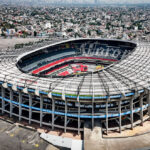
    Regardless of its name, Mexico City’s main soccer arena is one of the largest in the world, with a capacity of over 100,000.

    On March 28, 2026, the Estadio Azteca—one of soccer’s most hallowed grounds—reopened its doors after an extensive renovation. But the iconic Mexico City stadium did so under a new name: Estadio Banorte. While the $105 million naming rights deal brought much-needed funds for modernization, it ignited a firestorm of controversy among fans, protesters, and even FIFA regulators. This is the story of how a historic colossus became a corporate symbol, the financial mechanics behind the change, and where the newly named venue stands among the giants of Latin American and world sports.

    Why the Name Change?

    The decision to rename the Estadio Azteca was not a simple branding exercise but a financial lifeline. In March 2025, Grupo Ollamani, the stadium’s owner, led by Mexican media mogul Emilio Azcárraga, announced a major alliance with Banorte, one of Mexico’s largest financial institutions. The core of the deal was a loan of 2.1 billion Mexican pesos—approximately $105 million USD—to be repaid over 12 years.

    According to a filing with the Mexican Stock Exchange, the naming rights were a central component of this financing package. The funds were essential for continuing the stadium’s massive remodeling project, which had begun in the summer of 2024. The original budget for the renovation was 1.5 billion pesos, making the Banorte injection critical to meeting the standards required for the 2026 FIFA World Cup. Emilio Azcárraga framed the partnership as a point of pride, stating, “With them, we will modernize this emblematic stadium, respecting its essence and architectural designs recognized for decades. It will be the most important venue to showcase Mexico to the world”.

    A History Etched in Grass and Concrete

    To understand the emotional weight of the name change, one must look at the stadium’s storied past. Opened on May 29, 1966, the Estadio Azteca was designed by renowned architects Pedro Ramírez Vázquez and Rafael Mijares Alcérreca. Nicknamed the Coloso de Santa Úrsula (Colossus of Santa Úrsula) after the neighborhood it resides in, it immediately set a standard for modern sports architecture.

    The Azteca is the only stadium in history to have hosted two FIFA World Cup finals: the legendary 1970 final, where Pelé’s Brazil triumphed, and the 1986 final, where Diego Maradona lifted the trophy. It was also the site of two of the most famous moments in soccer history during the 1986 quarter-final: Maradona’s infamous “Hand of God” goal and the “Goal of the Century” against England. Today, bronze plaques commemorating those events still stand outside the gates.

    This was not the first time the stadium’s name was subject to controversy. In 1997, following the death of FIFA executive Guillermo Cañedo, owner Televisa briefly renamed the stadium in his honor. The move was widely seen as an attempt to dissociate the venue from the name “Azteca,” which was shared by a rival television network, TV Azteca. However, the public refused to accept the change, and the original name was quietly restored. The 2025 rebranding to Banorte, however, proved permanent—secured by a binding financial contract.

    Controversy and FIFA’s Neutralization

    The rebranding was met with immediate backlash, culminating in dramatic scenes during the stadium’s March 28, 2026, re-inauguration match between Mexico and Portugal.

    While the stadium was packed with 87,500 spectators, a very different scene unfolded outside and on the surrounding highways. Protesters, organized under the banner of denouncing the “World Cup of Dispossession,” took to the streets. In one striking act of civil disobedience, they transformed a major Mexico City highway into a makeshift football pitch, blocking traffic to highlight issues they claimed were being ignored for the sake of World Cup preparations, including shortages of housing, water, and electricity.

    Banners reading “Global event, local eviction” reflected fears that the modernization was fueling gentrification and displacement in the Santa Úrsula neighborhood. Actor Damián Alcázar accused the protesters of being political opponents, but the demonstrations highlighted a deep social divide regarding the priorities of the mega-event.

    The FIFA Rule

    The most paradoxical twist to the naming saga came from FIFA itself. Despite the lucrative deal to call the stadium Estadio Banorte, the venue will not carry that name during the 2026 World Cup. According to FIFA regulations for organized events, the stadium cannot display any sponsor names that are not official FIFA partners. As a result, for the duration of the tournament starting June 11, 2026, the stadium will be officially referred to as Estadio de la Ciudad de México (Mexico City Stadium).

    Furthermore, the venue will have to cover or remove all Banorte branding visible inside and outside the stadium. This is a standard practice applied to all World Cup venues; the Azteca joins a list of 10 other stadiums in the US and Mexico undergoing similar temporary rebranding for the tournament.

    Size and Global Standing

    Beyond the controversy, the physical scale of the stadium remains a point of pride and debate. Historically, the Estadio Azteca was one of the largest stadiums in the world. At its inauguration in 1966, it held 107,494 spectators, and at various points in the late 20th century, it was reported to hold upwards of 114,600.

    However, to comply with modern safety standards and FIFA regulations—and to add luxury boxes and amenities—the capacity has been reduced. Today, the official capacity stands at approximately 87,500 seats.

  • MUNAE Reborn: Mexico City’s Printmaking Museum Gets a Facelift at 40
    MUNAE Reborn: Mexico City’s Printmaking Museum Gets a Facelift at 40

    Mexico City’s Museo Nacional de la Estampa — one of the country’s premier destinations for graphic arts — is getting a significant makeover as it marks its 40th anniversary. The National Institute of Fine Arts and Literature, known as Inbal, has launched a MX$3 million (roughly US$150,000) renovation that is expected to wrap up by May 30.

    The work covers a wide range of improvements. New lighting will be installed in all exhibition halls, the facade will be repainted, and gallery floors will be replaced. Workers will also clean Vitral para el Munae, a stained-glass artwork by the late visual artist Salvador Piñoncelly, who spent more than five decades creating glass works for public buildings across Mexico. The renovation also includes carpentry and metalwork on the building’s windows, new awnings, restroom upgrades, and a redesigned ticketing area.

    MUNAE

    According to Inbal, the projects are being supervised by the Dirección de Arquitectura, the Dirección de Recursos Materiales, and Cencropam — the national center responsible for the conservation of Mexico’s movable artistic heritage.

    Munae opened Dec. 17, 1986, by presidential decree, with the stated mission of collecting, preserving, and promoting the graphic work of Mexican and foreign artists. It sits on Av. Hidalgo 39, on the Plaza de la Santa Veracruz in the capital’s historic center — a colonial-era square that also includes the Franz Mayer Museum and the Church of Santa Veracruz. The 19th-century Neoclassical building that houses the museum was remodeled at its founding to accommodate galleries while preserving its original character.

    Over nearly four decades, Munae has assembled a collection of more than 12,500 works, spanning Prehispanic clay seals, colonial-era woodcuts, lithographs from the Academy of San Carlos period, and contemporary prints. The museum has organized some 350 temporary and traveling exhibitions, making it a steady anchor in Mexico City’s cultural calendar. Among its curiosities is an 1800 Washington printing press, one of the oldest engraving machines still on display anywhere.

    MUNAE
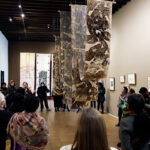
    Mexico City’s Museo Nacional de la Estampa is getting a significant makeover as it marks its 40th anniversary celebrating graphic arts. Photo: Courtesy

    Printmaking has deep roots in Mexican artistic identity. Long before the muralist movement of the 20th century, graphic art served as a vehicle for social commentary and popular culture — most famously in the work of José Guadalupe Posada, whose skeletal caricatures helped define a national visual language. The medium later shaped artists like José Clemente Orozco and David Alfaro Siqueiros, whose graphic works are held in related collections at the nearby Museo Nacional de Arte.

    Mexico City is second only to London in total number of museums, and Munae occupies a distinctive niche in that crowded field. It’s compact by the standards of the megalopolis — a focused collection rather than an encyclopedic one — and it regularly draws visitors who want to try their hand at printmaking in its public workshop. Those interactive sessions, where visitors can carve or press their own linocut, have made it a favorite stop for travelers looking for something beyond the usual tourist circuit. For more on the capital’s museum scene, Yucatán Magazine has covered Mexico City’s National Museum of Anthropology, widely regarded as one of the world’s finest.

    The museum will remain closed during the renovation. Inbal has not announced a formal reopening event, though the May 30 target would position Munae for a summer reopening. More details are available through Inbal’s official site.


    Museo Nacional de la Estampa — At a Glance

    • Address: Av. Hidalgo 39, Plaza de la Santa Veracruz, Centro Histórico, Mexico City
    • Founded: Dec. 17, 1986, by presidential decree
    • Collection: More than 12,500 works from Prehispanic seals to contemporary prints
    • Renovation budget: MX$3 million (approx. US$150,000)
    • Projected reopening: May 30, 2026
    • Supervising agencies: Dirección de Arquitectura, Dirección de Recursos Materiales, Cencropam

    Source: Excélsior