What started as a routine examination of ancient remains at Chichén Itzá turned into something much more surprising. Scientists analyzing DNA from a burial site found not one but two pairs of identical twins.
The discovery came from a place called Serie Inicial, also known as Chichén Viejo—the older section of the famous Maya ruins. Researchers had been studying remains found in an underground chamber, and the genetic results caught them off guard.
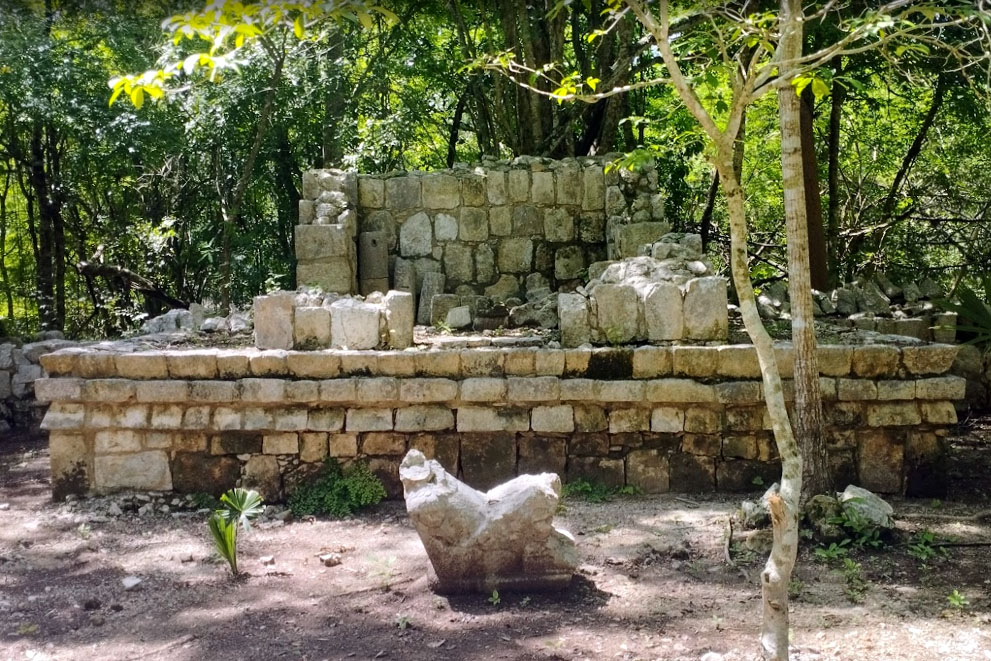
What Scientists Found at Chichén Itzá
The study, published in the journal Nature, examined 64 sets of remains from a burial site first uncovered in 1967. The location of most of the remains was within a chultún—an underground water storage chamber—connected to a small cave near a cenote.
The DNA analysis, led by Rodrigo Barquera from the Max Planck Institute and Julio Lara from the Autonomous University of Yucatán, revealed several key facts. All the remains found in this specific burial at Chichén Itzá were male, which is unusual in itself. Included were children between three and six years old when they died. At least a quarter were closely related—brothers or cousins buried together. Among them, two pairs were identical twins, a rare find that got researchers’ attention.
Identical twins occur in only about 0.4 percent of births. Finding two pairs in a single burial of 64 individuals is far higher than chance would predict.
Connection to Maya Mythology
The discovery of twins points to a famous Maya story. The Popol Vuh, the sacred book of the Kʼicheʼ Maya, tells of the Hero Twins—Hunahpu and Xbalanque. In the story, the twins travel to the underworld, where they face repeated cycles of sacrifice and resurrection.
The burial site at Chichpen Itzá itself matters too. Underground chambers and caves were seen as entrances to the underworld in Maya belief. Putting twins in such a place suggests that the people performing these rituals were reenacting the story of the Hero Twins.
“It doesn’t get any cooler than that,” archaeologist Jaime Jose Awe told Science magazine. “We couldn’t have known this without ancient DNA.”
How They Died
One puzzle remains: the cause of death. The bones show no cut marks or other signs of how these children were killed. Unlike remains from the nearby Sacred Cenote, which show clear trauma, these bodies were placed in the chamber without visible injury. Researchers suggest poisoning as one possibility, though more testing is needed.
Connection to Modern Maya People
The study didn’t just look at ancient remains at Chcichén Itzá. Scientists also worked with 68 volunteers from the modern Maya community of Tixcacaltuyub, a town near Chichén Itzá. The results showed something remarkable: the ancient children and modern residents share a direct genetic link. The same population has lived in the area for more than 1,000 years.
“Their genomic legacy of Chichén Itzá and the Maya is still present,” the Nature study states.
But there were differences, too. Modern Maya people carry genetic variants that help resist certain diseases—specifically, protection against Salmonella infection. Their ancestors from 1,000 years ago did not have these same protections.
This tells a clear story. When Spanish colonizers arrived, they brought new diseases, including the Salmonella strain that caused the deadly 1545 cocoliztli epidemic. The Maya who survived passed on genetic adaptations to their descendants. The DNA of modern Maya people still carries that history.
Why This Discovery at Chichén Itzá Matters
This discovery is important for several reasons. It overturns the old myth that Maya sacrifice focused on young women or virgins. That idea came from early Spanish accounts and has stuck in popular imagination, but the DNA evidence shows a different reality.
It also confirms that ancient DNA can work in tropical climates. Heat and humidity usually destroy genetic material, but advances in technology now allow scientists to recover and analyze DNA from Maya sites. This opens the door for more studies across Chichén Itzá, the Maya region, and Mesoamerica more broadly.
Excavations of recently discovered human remains in Dziblichalún from roughly the same period have also been announced to have potential for comparative DNA analysis.
The research also shows the value of working with Indigenous communities. The Maya people of Tixcacaltuyub were partners in the research, not just subjects. They permitted the DNA comparison of samples from Chichén Itzá and were instrumental in shaping the study. For these communities, seeing their ancient connection confirmed matters. “It’s very valuable to know and be sure of their roots,” said Ermila Moo Mezeta, a Maya co-author of the study.