
Category: Arts & Entertainment

  • Doc Brown Goes to Mexico City: Christopher Lloyd Wows CCXP Crowd

    Doc Brown Goes to Mexico City: Christopher Lloyd Wows CCXP Crowd

    Christopher Lloyd celebrates his “Back to the Future” legacy at the third edition of the Comic Con Experience. Photo: Courtesy

    Christopher Lloyd stepped onto a Mexico City stage Friday to a standing ovation, then dropped a surprise: his favorite character isn’t the one everyone expected.

    Lloyd, 87, was the opening headliner at CCXP México 2026, the third edition of the Comic Con Experience held this weekend at Centro Banamex in the capital. More than 1,500 fans packed the Thunder Stage when he walked out, many of them in tears. The actor thanked the crowd and said he was moved to hear fans tell him they loved him — in Spanish.

    For most people in the room, Lloyd will always be Dr. Emmett Brown, the wild-haired physicist from the Back to the Future trilogy who built a time machine out of a DeLorean. And Lloyd didn’t shy away from that legacy. He explained that the heart of the Doc Brown character was loneliness — a solitary scientist in his lab — and that what tied him to Marty McFly was mutual curiosity. “Doc Brown always worries about destroying the space-time continuum,” he said. “If that happens, the whole universe disappears. He lives with that responsibility all the time.”

    But ask Lloyd which role he holds most dear, and the answer isn’t Doc.

    It’s Uncle Fester.

    Lloyd told the audience that his favorite character across his entire career is the ghoulish, bald-headed relative from The Addams Family — not because of the film’s success, but because of a personal connection that goes back to childhood. He remembered reading the Addams Family comic strips in newspapers as a boy, never imagining he’d one day play one of the characters. The audience responded by snapping their fingers in unison to the Addams Family theme while the stage lights flickered along.

    The session covered a lot of ground. Lloyd talked about the villain Judge Doom in Who Framed Roger Rabbit, saying playing antagonists is genuinely fun. “It really makes you feel good to explore that side of a character,” he said. Asked whether he’d apologize for his villains’ actions, he laughed it off. “No. The audience went to the movies to see it. They wanted it. They asked for it.”

    Early Roles

    He also reflected on his film debut in One Flew Over the Cuckoo’s Nest, saying the transition from theater to screen was easier than people assume, largely because of how Jack Nicholson ran the set. “He gave us confidence,” Lloyd said. “It was a challenging cast, directed by Milos Forman. But I survived and it gave me a lot of confidence to continue.”

    The session closed on a note that felt very on-brand for the man who made time travel famous. Lloyd told fans not to give up on what matters to them. “Your future is for you to make,” he said before leaving the stage to applause. “Make it a great one.”

    He also made a World Cup prediction: Mexico wins.

    As for souvenirs from the Back to the Future set, Lloyd admitted he kept one item — a yellow shirt covered in patterns. It lives in his closet. His wife, he said with a laugh, hopes it stays there.

    Lloyd remains at CCXP through the weekend, signing autographs and posing for photos with fans inside a real DeLorean. Ticket prices for photo sessions were set at around MX$3,800 (approximately US$185).

    Mexico City has a deep relationship with popular entertainment history — as does Yucatán’s own film legacy, which stretches back to the arrival of Edison’s kinetoscope in Mérida in 1897.

    At a Glance: CCXP México 2026

    • Dates: April 24–26, 2026
    • Venue: Centro Banamex, Av. del Conscripto 311, Lomas de Sotelo, Miguel Hidalgo, Mexico City
    • General admission starts at MX$990 (approximately US$48)
    • Epic Pass (all-access): MX$4,275 (approximately US$208)
    • Other guests: Aaron Paul (Breaking Bad), Matt Smith and Olivia Cooke (House of the Dragon), Bruce Dickinson (Iron Maiden)
    • Christopher Lloyd photo sessions: approx. MX$3,800 (approximately US$185) per ticket via Ticketmaster
    • More info: ccxp.mx

    Source: El Universal, Sopitas, Plano Informativo

  • Celebrity Wedding at Mexico’s ‘Desert Galápagos’ Triggers Shutdown of Protected Reserve

    Celebrity Wedding at Mexico’s ‘Desert Galápagos’ Triggers Shutdown of Protected Reserve

    A celebrity wedding in one of Mexico’s most ecologically sensitive nature reserves has set off a firestorm of criticism — and touched off a federal crackdown that closed popular natural sites just as the Semana Santa holiday season kicked off.

    The controversy centers on Alfredo Cantú, a Mexican content creator known online as “Un Tal Fredo,” who married his partner, Adrián Álvarez, at Cuatro Ciénegas, a federally protected biosphere reserve in the northern state of Coahuila. Days after the event, environmental authorities moved in and shuttered several natural areas within the reserve, citing possible irreversible ecological damage.

    Alfredo Cantú, a Mexican content creator known online as “Un Tal Fredo,” married his partner, Adrián Álvarez, at Cuatro Ciénegas, a federally protected biosphere reserve in the northern state of Coahuila. Photo: Courtesy

    Profepa, Mexico’s consumer-protection environmental enforcement agency, acting in coordination with Semarnat, the National Commission of Protected Areas, and the National Water Commission, closed the popular Río Mezquites corridor and sealed 3 water wells operating without legal permits. The agencies said the intervention was aimed at halting illegal water extraction and protecting the reserve’s fragile systems — but the timing, coming immediately after the wedding, was impossible to ignore.

    Profepa acknowledged that an event was held in the reserve and that it prompted an environmental inspection. Officials said temporary structures, artificial lighting, and heavy vehicles had been deployed in protected zones — including near gypsum dune formations and natural pozas, or spring pools, that took thousands of years to form. Dinners were reportedly held inside marble mines within the protected area. The agency stopped short of formally blaming Cantú for the damage, saying it was still evaluating the scope of the impact.

    The influencer has not commented publicly. Some of his followers pushed back on the criticism, pointing out that the same-sex wedding represented an important moment of visibility for the LGBTQ+ community. In Mexico, where marriage equality is now recognized nationally but social acceptance remains uneven, the wedding drew both admiration and scrutiny before the ecological fallout became news.

    Alfredo Cantú, a Mexican content creator known online as “Un Tal Fredo,” married his partner, Adrián Álvarez, at Cuatro Ciénegas, a federally protected biosphere reserve in the northern state of Coahuila. Photo: Courtesy

    What made the story resonate beyond celebrity gossip is where it happened. Cuatro Ciénegas is no ordinary vacation destination. Designated as a UNESCO Biosphere Reserve in 1994, the area encompasses roughly 84,347 hectares (208,425 acres) and is home to more than 500 spring pools, or pozas, packed with organisms found nowhere else on Earth. Scientists have compared it to the Galápagos Islands. Researchers describe it as having the highest level of endemic biodiversity in North America, with microbial life varying pond to pond — each pool, in effect, a small experiment in evolution. NASA has noted potential links between the basin’s microbial forms and the search for life on Mars.

    The closure landed at the worst possible moment for local business owners. The shutdown came at the start of spring break season, when Cuatro Ciénegas — also a designated Pueblo Mágico — draws its heaviest tourist traffic. Municipal president Víctor Manuel Leija Vega acknowledged that the closures hit the local economy hard, as tourism is the community’s primary source of income. Tour operators, hoteliers, and service providers were left scrambling.

    The episode has reignited a broader debate in Mexico about the tension between tourism, celebrity culture, and conservation. Profepa has been stepping up enforcement of Mexico’s protected natural areas — including along the coasts of the Yucatán Peninsula, where unauthorized development has repeatedly threatened fragile ecosystems. Environmental specialists note that even brief human intrusion in places like Cuatro Ciénegas can trigger damage that outlasts the event by decades. The combination of crowds, infrastructure, noise, and vehicle traffic can alter soil chemistry, disturb endemic species, and disrupt water systems that took geological time to develop.

    Whether Cantú’s wedding was the direct cause of the closures or whether federal authorities simply used the moment to act on preexisting violations — the three unsealed wells, for example, were already operating without permits — remains an open question. Profepa has not published a formal determination. What is clear is that the story put Cuatro Ciénegas in the national spotlight, and that a protected reserve of unique global scientific value paid a very public price for it.

    Alfredo Cantú, a Mexican content creator known online as “Un Tal Fredo,” married his partner, Adrián Álvarez, at Cuatro Ciénegas, a federally protected biosphere reserve in the northern state of Coahuila. Photo: Courtesy

    At a Glance: Cuatro Ciénegas Biosphere Reserve

    • Located in Coahuila, in northern Mexico
    • Covers approximately 84,347 hectares (208,425 acres)
    • Designated a UNESCO Biosphere Reserve in 1994
    • Home to more than 500 pozas (spring pools) with species found nowhere else on Earth
    • Contains stromatolites — ancient microbial structures rare on the modern planet
    • Classified as a Pueblo Mágico (Magical Town)
    • Tourism is the municipality’s primary economic driver

    Sources: Revista FAMA / Infobae

  • ‘La Oficina’: Prime Video Brings  ‘The Office’ to Mexico with a New Adaptation

    ‘La Oficina’: Prime Video Brings  ‘The Office’ to Mexico with a New Adaptation

    La Officina
    ‘La Oficina’: Everything We Know About the Mexican Adaptation of ‘The Office’

    The popular workplace comedy mockumentary format, which has been remade in countries around the world, is still alive. La Oficina brings the spirit of The Office to a Mexican setting, using a familiar style to explore often awkward workplace dynamics.

    Set in the city of Aguascalientes (the Scranton of Mexico, we presume), the series takes place inside Jabones Olimpo, a soap company where a group of employees navigates meetings, on-the-spot decisions, and situations that reflect the everyday reality of any workplace. With a comedic tone, the show looks at professional relationships, management mistakes, and the small tensions that simmer between coworkers.

    This production is part of the well-known format created by BBC Studios, which has been adapted in 17 countries over the years. The Mexican version aims to translate the original’s workplace dynamics into a specific cultural context, using humor to portray everyday situations in a professional environment.

    The action centers on a group of employees who are constantly trying to keep the business running while dealing with questionable decisions, organizational problems, and the unexpected situations of the daily grind.

    At the center of the story is Jerónimo Ponce III, the company’s regional manager. The character got the position by inheriting it from the family business, but he lacks the experience needed to run it. His management style and decisions constantly create awkward situations.

    Fernando Bonilla plays Jerónimo Ponce III and leads the cast. His character becomes the focal point around which many of the situations employees face revolve, as they’re often left to clean up the mess left by their boss’s decisions.

    The workplace — which bears a striking resemblance to Dunder Mifflin in Scranton — brings together a mix of personalities. Some are just trying to do their jobs while dealing with personal or financial problems that spill over into daily office life.

    Mockumentary Style as a Storytelling Tool


    La Oficina uses the tried-and-true mockumentary style that defines the original format. This technique allows characters to speak directly to the camera and share their thoughts on workplace situations, giving viewers an inside look at how coworkers interact.

    This narrative approach has been one of the keys to The Office’s success in its different international versions. The structure lets audiences observe power dynamics, workplace conflicts, and each character’s quirks from a perspective that blends observation with humor.

    La Officna Production and Creative Team


    The series is directed and produced by Gaz Alazraki, with Marcos Bucay as showrunner. Both are part of the creative team responsible for adapting the format to the Mexican context.

    The production is part of a global agreement among Amazon, MGM Studios, and Máquina Vega to develop local content with international appeal. La Oficina will premiere on Prime Video on March 13.

  • Oaxacan Women Artisans TakeStage for International Women’s Day
    Oaxacan Women Artisans TakeStage for International Women’s Day

    A new exhibition opening this weekend at Oaxaca’s state folk art museum will bring together 100 handmade pieces from craftswomen across the state’s eight regions, timed to coincide with International Women’s Day.

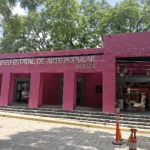
    Mujeres. Creadoras de historias [Women: Creators of Stories] opens at noon Sunday at the Museo Estatal de Arte Popular Oaxaca [State Museum of Popular Art of Oaxaca], known as the Meapo. The show spotlights the craft traditions that Oaxacan women have long carried — textiles, embroidery, black clay pottery, and basketry — and makes their work available for sale directly from the artisans.

    Women Drive the Craft Economy

    Carlomagno Pedro Martínez, director of the Meapo, estimates that women make up roughly 65% of the state’s artisanal workforce. Their presence is especially pronounced in textiles — weaving and embroidery in particular — as well as in ceramics and basket-making.

    “The artisans maintain living ancestral techniques, passing knowledge from generation to generation. This work is a form of creating stories, keeping the memory of their communities alive in the face of modernity,” Martínez said.

    Oaxaca is widely considered one of Mexico’s most important states for folk art. It is home to an estimated 20,000 working artisans, and crafts account for a significant share of the state’s economy. Women have historically been the primary keepers of those traditions, though their individual contributions have not always received formal recognition.

    Who Is Showing

    The exhibition features work from named master artisans representing communities throughout Oaxaca. Among them is Angélica Vásquez, a recipient of the National Prize for Sciences and Arts in 2011 — one of Mexico’s highest cultural honors. Also showing are Elida Merino, an artisan and bilingual teacher from San Pedro Amuzgos; Carolina Hernández, a Mixtec artisan from San Juan Colorado; and Elodia Martínez from San Blas Atempa.

    The Meapo’s home village of San Bartolo Coyotepec is itself represented through master potters of barro negro [black clay], the polished dark pottery that has become one of Oaxaca’s most recognized craft traditions.

    The show draws participants from communities across the state’s eight geographic regions, including both indigenous and Afro-Mexican communities, making it one of the more geographically inclusive exhibitions the museum has mounted.

    About the Meapo

    The Museo Estatal de Arte Popular Oaxaca sits on the south side of the main plaza in San Bartolo Coyotepec, about 12 kilometers south of Oaxaca city. Inaugurated in 2004, the museum is dedicated to preserving and promoting Oaxacan folk art and the artisans who produce it. Its permanent collection spans the pre-Hispanic period to the present, with particular depth in barro negro pottery. Carlomagno Pedro Martínez — himself an accomplished ceramicist who began training in his family’s workshop — has led the institution since its founding.

    The timing of Mujeres. Creadoras de historias is not coincidental. March 8 is International Women’s Day, observed globally, and the exhibition specifically frames the work of Oaxacan craftswomen within a broader conversation about labor, cultural preservation, and identity.

    Women’s craft traditions in Oaxaca have come under increasing scrutiny in recent years, largely because of high-profile cases in which international brands have reproduced indigenous designs without crediting or compensating the communities that created them. Those disputes have accelerated federal efforts to establish legal protections for Mexico’s indigenous intellectual property. Yucatán Magazine has reported on similar cases involving Oaxacan heritage.

    The Mujeres exhibition takes a different approach — not confrontation, but visibility. By presenting the work in a formal museum setting, with the artisans identified by name and community, the show pushes back against the long tradition of displaying folk art anonymously, a practice the Meapo has been actively working to end since its founding.

    Pieces in the exhibition include traditional garments, embroidered textiles, and objects made using techniques that predate European contact. More information on the museum is available at UNESCO’s intangible heritage program.

    Quick Facts: Mujeres. Creadoras de historias

    • Opening: Sunday, March 8, at noon — International Women’s Day
    • Venue: Museo Estatal de Arte Popular Oaxaca (Meapo), San Bartolo Coyotepec, Oaxaca
    • Number of pieces: 100
    • Regions represented: All 8 regions of Oaxaca, including indigenous and Afro-Mexican communities
    • Featured artisans include: Angélica Vásquez (National Prize for Sciences and Arts, 2011), Elida Merino (San Pedro Amuzgos), Carolina Hernández (San Juan Colorado), Elodia Martínez (San Blas Atempa), and barro negro masters from San Bartolo Coyotepec
    • Craft disciplines: Textiles, embroidery, weaving, ceramics, barro negro pottery, basketry
    • Museum director: Carlomagno Pedro Martínez
    • Meapo location: About 12 km south of Oaxaca city on the main plaza of San Bartolo Coyotepec

    Source: Excélsior

  • New Exhibition Takes Flight With the Mighty Hummingbird 
    New Exhibition Takes Flight With the Mighty Hummingbird 

    hummingbirds
    A new exhibit in Mexico City highlights the majesty of the hummingbird.

    At the Museum of Natural History in Mexico City, visitors are taking a deep dive into the world of hummingbirds

    Colibríes, arte y biodiversidad urbana (Hummingbirds, Art, and Urban Biodiversity), aims to educate the public about these remarkable birds while showcasing detailed clay sculptures by artist Davit Nava.

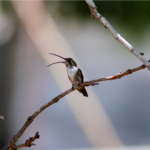
    Hummingbirds possess extraordinary physical abilities. They can hover in midair, fly backward, and change direction instantly—feats that have long fascinated scientists and bird enthusiasts alike. The exhibition highlights these traits while emphasizing the bird’s significance in Mexico’s ecosystem.

    Museum Director Mercedes Jiménez del Arco explained that the institution — part of the Mexico City Environment Secretariat — focuses on communicating important environmental topics to the public. Hummingbirds, she noted, are a key subject because of their unique biodiversity value.

    The Americas are the only places in the world where hummingbirds exist naturally, making the region particularly privileged. According to the National Commission for the Knowledge and Use of Biodiversity (CONABIO), more than 300 species of hummingbirds have been discovered globally. Mexico is home to approximately 59 of those species, and remarkably, nearly half can be found within Mexico City itself.

    “A city that we apparently see with many cars and many buildings still has such great biodiversity,” Jiménez del Arco said. “It’s really spectacular.”

    The 23 clay sculptures are each a life-sized representation of a hummingbird species rendered with scientific precision. Nava, a sculptor deeply committed to environmental issues, produced pieces that allow visitors to appreciate the birds’ intricate details up close.

    Beyond the scientific facts and artwork, the exhibition also provides an opportunity to reflect on the cultural significance hummingbirds have held throughout Mesoamerican history. Ancient civilizations, including the Aztecs and Maya, regarded these tiny creatures as sacred beings with deep spiritual meaning.

    The Maya people told a creation story in which the gods, after making all other animals, realized they had no messenger to carry their thoughts between worlds. With no remaining materials to fashion a new creature, they carved a small jade stone into the shape of an arrow and breathed life into it, creating the first hummingbird. According to Maya belief, these birds were so light and delicate that they could approach the most fragile flowers without disturbing a single petal. Their purpose was to travel between the human realm and the divine, carrying thoughts, prayers, and messages.

    Some traditional beliefs persist in parts of Mexico today—that a hummingbird appearing nearby brings a message of love from someone who is thinking of the observer. The Maya also maintained that hummingbirds should never be captured or caged, as their role as divine messengers required them to remain free.

    For the Aztecs, hummingbirds held equally powerful symbolism. Their primary deity, Huitzilopochtli—whose name translates to “Hummingbird of the Left” or “Hummingbird from the South”—was the god of war and the sun. Aztec tradition held that warriors who died in battle would be reincarnated as hummingbirds, returning to life to flit among flowers and drink nectar. The birds thus represented the spirits of fallen warriors, embodying strength, energy, and good fortune. Aztecs viewed the hummingbird’s long, sharp beak as a weapon, and believed that wearing hummingbird talismans conferred energy and power.

    Another Aztec legend described the hummingbird as the sun in disguise, taking the form of the tiny bird to court the moon, his true love, secretly.

    The Museum of Natural History and Cultural Environment is located in the Bosque de Chapultepec, Mexico City’s large urban park, on Avenida de los Compositores in the second section. The exhibition is included with regular museum admission, which costs 38 pesos for the general public. Students and teachers with valid identification pay 18 pesos, while senior citizens and people with disabilities enter free upon presentation of credentials.

    The museum operates Tuesday through Sunday from 10 a.m. to 5 p.m., with ticket sales ending at 4:30 p.m. Colibríes, arte y biodiversidad urbana will remain on display through April 12.