Category: Politics

  • AMLO Blasts Trump’s ‘Interventionist’ Tactics

    amlo
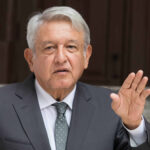
    Former Mexican President Andrés Manuel López Obrador has launched a scathing attack on Donald Trump’s administration for meddling in international affairs.

    From his ranch in Palenque, Chiapas, Andrés Manuel López Obrador, Mexico’s former president, has launched a blistering critique of Donald Trump’s current administration. 

    In a lengthy message on X, AMLO has not only called for a course correction but has also sought to position himself as a protector of national sovereignty, aiming to influence a bilateral dynamic that is increasingly tense and complex.

    From Friendly Neighbor to “Vile Adventurer”

    The central axis of AMLO’s argument revolves around a perceived shift in Trump’s character. He recalls his own government as a period of respectful cooperation, where dialogue prevented trade wars and made the T-MEC possible. By contrast, AMLO does not attribute the change to political circumstances but to the bad influence of “false friends and internal and external advisors” who, in his view, have led the American president into “vile and sinister adventures”.

    His greatest concern is the designation of Mexican cartels as Foreign Terrorist Organizations (FTOs). López Obrador warned that this classification could justify unilateral actions, allowing the U.S. to pursue individuals without sufficient evidence in a form of extrajudicial “execution” outside its territory. His final plea, “Por el bien de todos, que regrese el otro Trump” (“For everyone’s good, may the other Trump return”), points to a past he considers more predictable and respectful of Mexican sovereignty.

    Sovereignty Under Fire: FTOs, Extraditions, and Investigations

    AMLO’s intervention is not occurring in a vacuum but in a context of maximum diplomatic friction known as “CIAgate,” triggered by the death of U.S. agents in Mexico. In May 2026, the Trump administration formalized the designation of six Mexican cartels (including Sinaloa and Jalisco Nueva Generación) as FTOs, a move critics argue could paralyze trade and justify military action.

    Supporting President Claudia Sheinbaum, AMLO echoes her stance that these attacks do not seek to solve the fentanyl crisis but are of a “political and electoral” nature, aiming to “weaken Morena.”

    This tension is further fueled by a Los Angeles Times report revealing U.S. investigations into Morena governors Alfonso Durazo (Sonora) for alleged ties to organized crime and Américo Villarrea for fuel theft. Both governors have denied the accusations and claimed their visas are still valid.

    Andrés Manuel López Obrador has emerged as a crucial bulwark for the current administration, interpreting U.S. pressure as interventionism and a coordinated attack on the political project he leads. 

    The former president has also been publicly critical of the Trump administration’s interventions in Venezuela, as well as the rhetoric surrounding an invasion of Cuba.

  • Sheinbaum Takes a Hard Line Against Washington, Rallying Support Amid Sinaloa Scandal
    Sheinbaum Takes a Hard Line Against Washington, Rallying Support Amid Sinaloa Scandal

    Sheinbaum
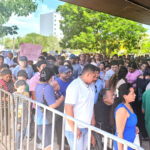
    Last Sunday, supporters of President Sheinbaum showed up in droves across the country to express their support.

    Two years after her historic election victory, President Claudia Sheinbaum marked her political anniversary by delivering her toughest warning yet to the United States, reframing a growing domestic political crisis as a national struggle to defend Mexico’s sovereignty.

    Addressing an estimated 130,000 supporters packed into the Plaza de la República on Sunday, Sheinbaum launched a fierce attack on the US Department of Justice over its accusations against high-ranking officials in Sinaloa.

    Her central question was direct: “Is it a legitimate interest to fight organized crime, or do they actually intend to influence the 2027 election in our country?” In the shadow of the Monument to the Revolution, she answered her own question by accusing Washington of injerencia, a Spanish term for interference.

    A Swift and Partisan Dispersal

    By mid-afternoon, the plaza was almost empty. While the administration boasted of a massive turnout, the speed with which the crowd vanished was as notable as its size. Buses idled at the ready, their engines running to return supporters to their destinations shortly after the president’s speech ended.

    The swift and organized dispersal highlighted the nature of the event: it was not an organic outpouring of public sentiment, but a calculated mobilization of territorial leadership—a hallmark of the political machine built by her predecessor, Andrés Manuel López Obrador.

    The Sinaloa Elephant in the Room

    The president’s nationalist messaging obscured a much more delicate issue: the crisis within her own party. The event was meant to celebrate the second anniversary of her triumph. Still, it instead functioned as a show of force to shield Morena from the fallout of U.S. accusations against high-ranking party members.

    The Justice Department has formally accused and requested the extradition of Sinaloa Governor Rubén Rocha Moya and Senator Enrique Inzunza, alongside eight other officials, for alleged ties to the Sinaloa Cartel. The US claims these officials received bribes to protect the cartel in exchange for political support.

    Not once during her speech did the president mention the accused by name. There were no substantive explanations of the allegations and no detailed defense of their conduct. Instead, the Sinaloa scandal was transformed into a national grievance against an overreaching United States.

    A New Law to Block Elections

    This confrontation comes as Mexico’s Senate is fast-tracking a controversial constitutional amendment that would allow elections to be annulled on the grounds of “foreign interference.” While the official narrative, echoed by the president, presents the reform as a preemptive shield against global meddling, critics see it as a political weapon.

    The amendment’s language is vague: it refers to “acts of foreign intervention or interference that influence electoral results,” a definition so broad that it raises immediate concerns about how it might be wielded by a dominant political party controlling all three branches of government.

    The United States has also publicly expressed concerns that the amendment could be “used as a political tool against the opposition.” Morena’s defenders, including Deputy Ricardo Monreal, argue that simple tweets or news reports will not trigger the measure. However, with Washington’s aggressive security policies and the upcoming Mexican mid-term elections, the combination of a high-stakes political battle and ambiguous legal language has put electoral stability at the center of the debate.

    The Chihuahua Subplot

    Sheinbaum also wove the unrelated death of two CIA agents in Chihuahua into her sovereignty narrative. While the US has called for cooperation and transparency, the president has used the incident to highlight the double standards of security cooperation. Her administration has pointedly noted that while the US demands extraditions, it has not fulfilled Mexico’s own requests. The Mexican Foreign Ministry revealed that between 2018 and 2026, Mexico filed 269 extradition requests with the United States—none of which were granted.

    The case has also been used to spotlight opposition figures. Although Governor Maru Campos has said she is cooperating with the investigation, Sheinbaum used her speech to link her political adversaries to a pattern of foreign collusion, a recurring theme in López Obrador’s playbook.

    A Battle for the Narrative

    As the rally wound down, the crowd chanted, “You are not alone!” It was a potent display of loyalty as Sheinbaum recalibrates her presidency for the challenges ahead.
    But Sheinbaum’s critics, including El País opinion columnist Elia Castillo Jiménez, argue that the president is less focused on governing than on winning the argument.

  • U.S. Targets More Morena Governors in Cartel Probe

    U.S. Targets More Morena Governors in Cartel Probe

    The U.S. Department of Justice is preparing to formally charge at least one more governor from Mexico’s ruling Morena party over alleged ties to organized crime — and analysts say Baja California Gov. Marina del Pilar Ávila is near the top of that list.

    According to journalist Carlos Loret de Mola, Ávila has not held a U.S. visa for roughly a year. Washington revoked it as part of a money laundering investigation, he wrote — the first time in recent memory that a sitting Mexican governor was denied entry to the U.S. Loret de Mola also named Tamaulipas Gov. Américo Villarreal as a likely target, citing his alleged connection to fuel-theft networks and cartel financing of Morena campaigns. A Tamaulipas mayor, unnamed in the reporting, is said to round out the near-term list.

    The disclosure comes roughly two weeks after federal prosecutors in Manhattan unsealed charges against Sinaloa Gov. Rubén Rocha Moya and nine other current and former state officials. That April 29 indictment accused the group of conspiring with the Chapitos faction of the Sinaloa Cartel — the sons of imprisoned drug lord Joaquín “El Chapo” Guzmán — in exchange for millions of dollars in bribes and political support. Rocha Moya, 76, who has denied the allegations, temporarily stepped down from his governorship on May 2, a move that stripped him of the legal protections his office provided. The mayor of Culiacán, Juan de Dios Gamez, also stepped aside.

    U.S. Attorney Jay Clayton framed the indictment as a broader warning: “The Sinaloa Cartel is a ruthless criminal organization that has flooded this community with dangerous drugs for decades. As the indictment lays bare, organizations like it would not operate as freely or successfully without corrupt politicians and law enforcement officials on their payroll.”

    Political analyst Mario Maldonado wrote in El Universal this week that the Justice Department is now readying at least one additional Morena governor’s name, while also preparing extradition requests for other party-affiliated officials. He described the president’s inner circle as braced for impact. “The presidential cabinet is expecting a new offensive from Washington against Mexican politicians accused of alleged ties to drug trafficking,” he wrote. “President Claudia Sheinbaum already knows.”

    Loret de Mola wrote that both governors and the Tamaulipas mayor “appear to head the list of Morena politicians against whom the U.S. government would be initiating formal legal processes in its courts, according to information circulating in high-level Mexican and U.S. government circles.”

    The pressure extends beyond criminal proceedings. The White House released its 2026 National Drug Control Strategy this week, placing Mexico at the center of U.S. efforts to cut fentanyl trafficking and explicitly tying future security cooperation to results on drug enforcement. The timing matters: the U.S.-Mexico-Canada trade agreement is up for its mandatory review this summer, and the 2026 World Cup begins in weeks.

    The review of 53 Mexican consulates in the United States — confirmed by State Department officials — has added another layer of tension. Maldonado wrote that what might look like a routine administrative move “reads in the current context as part of a comprehensive strategy against Mexico.”

    Sheinbaum has pushed back publicly. Last week, her foreign ministry sent a diplomatic note to the Justice Department demanding concrete evidence against the Sinaloa officials. She has insisted that Mexico will not hand anyone over without what she calls “overwhelming and irrefutable proof.” Behind the scenes, her team is reportedly pushing for the accused to be tried in Mexico rather than extradited. Mexico’s attorney general has yet to move against any of the 10 officials named in the Sinaloa indictment.

    Maldonado warned that if the Justice Department moves against another sitting governor, Sheinbaum “will have to make more radical decisions.”

    Morena controls 22 of Mexico’s 31 state governorships — which means the scope of any sustained U.S. legal campaign could stretch across much of the country. Even Yucatán, long an outlier for safety, has seen rare signs of cartel activity, underlining how broadly organized crime has worked to extend its reach.


    At a Glance

    • Sinaloa Gov. Rubén Rocha Moya and 9 others were indicted by U.S. prosecutors on April 29, 2026
    • Charges include narcotics trafficking conspiracy and weapons offenses; potential penalty is life in prison
    • Rocha Moya stepped down temporarily on May 2; Culiacán Mayor Juan de Dios Gamez also left office
    • Analysts name Baja California Gov. Marina del Pilar Ávila and Tamaulipas Gov. Américo Villarreal as next likely targets for formal charges
    • Ávila’s U.S. visa was revoked roughly a year ago; she has not been charged with any crime
    • Mexico has refused extradition absent what it calls “irrefutable” evidence
    • The U.S.-Mexico-Canada trade agreement is up for review this summer, adding economic pressure to the standoff

    Sources: Diario de Yucatán, El Universal, NBC News, CBC News, U.S. Department of Justice, White House

  • U.S. Pressure on Mexican Officials Puts Sheinbaum in a Bind
    U.S. Pressure on Mexican Officials Puts Sheinbaum in a Bind

    The U.S. Department of Justice indictment of Sinaloa Gov. Rubén Rocha Moya, unsealed in late April in a New York federal court, was historic by any measure. No American administration had ever charged a sitting Mexican governor before. But for many close observers of Mexican politics, the more unsettling question isn’t what happens to Rocha Moya — it’s who comes next.

    The charges accuse Rocha Moya of conspiring with the sons of jailed Sinaloa Cartel boss Joaquín “El Chapo” Guzmán — a faction known as Los Chapitos — to move narcotics into the United States in exchange for political support. According to prosecutors, cartel operatives kidnapped opposition candidates and stole ballots during the 2021 Sinaloa governor’s race to help him win. The U.S. Attorney for the Southern District of New York called it a “deliberate effort to undermine public institutions.”

    Rocha Moya stepped down from his post following the charges and has denied them, calling the indictment politically motivated and an attack on Mexico’s sovereignty.

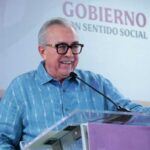
    The governor of Sinaloa, Rubén Rocha Moya, participates in a working meeting at the National Palace, convened by the President Claudia Sheinbaum Pardo in May 2025.

    A List Nobody Is Surprised By

    Veteran journalist Carlos Loret de Mola reports that sources in high-level government circles on both sides of the border point to two more Morena officials as likely targets of formal U.S. legal proceedings. Neither name, he notes, comes as a surprise to anyone who follows Mexican politics.

    The first is Marina del Pilar Ávila, the Morena governor of Baja California. Her U.S. tourist visa was revoked roughly a year ago, along with that of her then-husband, Carlos Torres, who is now under federal investigation in Mexico for alleged ties to organized crime, including weapons and drug trafficking and money laundering. Ávila has said the visa cancellation was an administrative matter and that she has a clear conscience. She and Torres have since divorced.

    The second is Américo Villarreal, the Morena governor of Tamaulipas, a state with a long and well-documented history of cartel infiltration. Villarreal’s name has surfaced repeatedly in connection with huachicol — the large-scale theft and black-market sale of fuel, mostly siphoned from Pemex pipelines — as well as broader allegations of collusion with organized crime. According to Loret de Mola, a former Tamaulipas mayor publicly stated that Villarreal was involved. The governor has not been charged and has denied wrongdoing.

    A CIA Grievance, a Broken Bargain

    The column’s sharpest passage concerns the CIA. Loret de Mola writes that the agency is furious over what it sees as a double standard from President Claudia Sheinbaum. When U.S. agents working alongside a Chihuahua state government operation to dismantle a major narco laboratory were killed, Sheinbaum’s government launched legal and political attacks on the CIA, its operatives, and the opposition-led state that had hosted them. Meanwhile, when Rocha Moya — a Morena ally — was formally charged by U.S. prosecutors, Sheinbaum’s administration defended him and demanded “irrefutable proof” before any extradition process could begin.

    The CIA, Loret de Mola claims, is now taking note of which politicians and media figures are lining up to defend Rocha Moya.

    The column carries weight in part because of who wrote it. Loret de Mola is among Mexico’s best-known journalists — born in Mérida, grandson of a former Yucatán governor, and son of a prominent political writer. He spent nearly two decades as anchor of Televisa’s flagship morning newscast before leaving in 2019 to pursue independent work. He co-founded the digital platform Latinus, writes a widely read column for El Universal, and contributes to The Washington Post. He has reported from conflict zones including Afghanistan, Syria, and Libya, and won Mexico’s National Journalism Prize. For years, his primary focus has been the ties between Mexico’s political class and organized crime — a beat that has made him a target of the ruling party and one of the most closely watched voices in Mexican media.

    Sheinbaum’s Impossible Position

    It is a genuinely difficult spot for the president. Rocha Moya is a longtime Morena figure with close ties to former President Andrés Manuel López Obrador, who is Sheinbaum’s political mentor. All three belong to the same party, which controls 22 of Mexico’s 31 governorships and both chambers of the national legislature.

    Acting against Rocha Moya risks fracturing the coalition. Not acting deepens a rift with Washington at a moment when USMCA trade negotiations remain unresolved and the Trump administration has made cartel crackdowns a top priority — at times threatening military action inside Mexico.

    A poll by Mexican firm Massive Caller found that more than 70% of respondents believe Rocha Moya is guilty, and nearly 80% said he should be extradited to the U.S.

    So far, Sheinbaum has not moved to arrest or extradite him.


    At a Glance

    • U.S. charges against Sinaloa Gov. Rocha Moya were unsealed April 29, 2026, in the Southern District of New York
    • The indictment names 10 Mexican officials and alleges cartel cooperation during the 2021 Sinaloa election
    • Baja California Gov. Marina del Pilar Ávila lost her U.S. visa about a year ago; her ex-husband is under Mexican federal investigation for alleged organized crime ties
    • Tamaulipas Gov. Américo Villarreal has been repeatedly linked to huachicol and cartel collusion; no formal charges have been filed
    • Rocha Moya stepped down as governor after the charges were unsealed; he denies all allegations
    • Mexico’s Sheinbaum government has asked the U.S. Justice Department for “irrefutable” proof before pursuing extradition
    • Carlos Loret de Mola’s column appears in Diario de Yucatán and is among the most widely read in Mexico

    Source: Diario de Yucatán; Al Jazeera; Christian Science Monitor; Infobae; Mexico News Daily

  • Sheinbaum Defends Governor Accused of Cartel Ties, Cites Sovereignty

    Sheinbaum Defends Governor Accused of Cartel Ties, Cites Sovereignty

    Mexican President Claudia Sheinbaum. File photo

    A sweeping U.S. indictment targeting a sitting Mexican governor has set off one of the sharpest diplomatic confrontations of President Claudia Sheinbaum’s administration, forcing her to publicly balance national sovereignty against mounting American pressure over drug-trafficking allegations.

    Federal prosecutors in Manhattan unsealed charges Wednesday against Rubén Rocha Moya, the 76-year-old governor of Sinaloa, along with nine current and former state officials. The indictment accuses them of conspiring with the Sinaloa Cartel’s “Chapitos” faction — led by the sons of imprisoned drug lord Joaquín “El Chapo” Guzmán — to move large quantities of narcotics into the United States in exchange for bribes and political backing. Prosecutors allege cartel operatives helped rig Rocha Moya’s 2021 election by threatening opposition candidates and stealing ballot papers. One official named in the case is accused of receiving $11,000 a month from the cartel. Rocha Moya has flatly denied the accusations, calling them baseless and politically motivated.

    Mexico Pushes Back on Extradition

    Sheinbaum addressed the case at her Friday morning press conference, pushing back firmly on calls to hand Rocha Moya over to U.S. authorities. She invoked the principle of presumption of innocence and insisted that any investigation must proceed through Mexican legal channels.

    “Everyone is innocent until proven guilty. That is how justice works in Mexico,” she said, adding that responsibility must be established within the country’s legal framework. She directed any further action to the Fiscalía General de la República, Mexico’s attorney general’s office, which she said must gather and evaluate evidence before any steps are taken.

    Mexico’s Foreign Ministry confirmed it had received provisional arrest requests from the U.S. related to the potential extraditions, noting that no supporting evidence had been included with the documents.

    The Opposition Draws Historical Comparisons

    Sheinbaum reserved some of her sharpest language for Mexico’s political opposition, which she accused of turning to foreign courts to score domestic points. She called it “truly lamentable” that right-wing parties would lean on a New York federal court or the U.S. Justice Department to advance their positions.

    Drawing on Mexican history, she compared her opponents to 19th-century conservatives who sought foreign intervention to shape the country’s politics — figures like Antonio López de Santa Anna and Porfirio Díaz. By contrast, she aligned herself and the ruling Morena party with independence heroes Miguel Hidalgo, Benito Juárez, and Emiliano Zapata.

    “We will never subordinate ourselves,” she said, framing the case as a matter of national dignity. “Sovereignty is not negotiable.”

    A Diplomatic Tightrope

    The indictment puts Sheinbaum in a difficult position. Rocha Moya is a Morena stalwart with close ties to former President Andrés Manuel López Obrador, whose political movement Sheinbaum inherited. Refusing to act against him risks deepening tensions with Washington at a particularly sensitive time, with U.S.-Mexico trade negotiations under the USMCA agreement still ongoing. Acting against him could fracture the party’s base.

    Standard & Poor’s placed Sinaloa’s credit rating under special negative review following the U.S. charges, signaling the economic ripple effects of the case.

    The U.S. and Mexican governments have an extradition treaty, though Mexico has historically been reluctant to extradite sitting elected officials. For context on how earlier extraditions played out in Mexico’s relationship with Washington, see our coverage here.

    The full scope of the indictment, reported by Al Jazeera, includes allegations tied to a May 2022 shipment that was eventually intercepted in Phoenix, Arizona, containing nearly 189,000 fentanyl pills, along with cocaine and methamphetamine.


    The Rocha Moya Case at a Glance

    • Sinaloa Gov. Rubén Rocha Moya, 76, indicted by federal prosecutors in Manhattan’s Southern District
    • 9 other current and former Sinaloa officials named in the same indictment
    • Charges include drug trafficking and weapons counts linked to the Sinaloa Cartel’s Chapitos faction
    • Cartel allegedly helped Rocha Moya win the 2021 governorship through threats and ballot fraud
    • Mexico’s Foreign Ministry says U.S. extradition requests arrived without supporting evidence
    • Rocha Moya denies all charges; Sheinbaum says the attorney general’s office must lead any investigation
    • S&P placed Sinaloa’s credit rating under special negative review following the indictment

    Source: El Universal