
Category: Politics

  • Mexico Moves to Ban Cash at Gas Stations and Toll Booths

    Mexico Moves to Ban Cash at Gas Stations and Toll Booths

    President Claudia Sheinbaum announced this week that Mexico plans to make digital payments mandatory at gas stations and highway toll booths — a sweeping shift that would affect millions of drivers nationwide and mark one of the country’s boldest moves yet away from a cash-based economy.

    Sheinbaum made the announcement during the opening of the 89th Banking Convention on Thursday, saying her administration is working with the Bank of Mexico (Banxico) and private banks to design the new payment framework. She said the goal is to have it in place sometime this year, though no specific date was given.

    “Our objective is that this year, through the schemes we work out with the banking sector, we make payment for gasoline and highway tolls mandatory through digital means,” Sheinbaum said. “This will allow us to advance in the digitalization of the country.”

    The tools being promoted include CoDi, Banxico’s QR-code-based digital payment platform, DiMo — its newer phone-number-based transfer system — as well as debit and credit cards and mobile payment apps.

    To sweeten the deal for consumers, the president of the Mexican Banking Association (ABM), Emilio Romano Mussali, said banks would temporarily waive interchange fees on card transactions at gas stations. That’s the commission charged to merchants — and sometimes passed on to customers — each time a card is used. Romano Mussali said the savings should flow to drivers, but added that would require buy-in from the gas station sector.

    “We will request the commitment of the gas station sector to adopt CoDi as an immediate payment method,” he said.

    The announcement comes as Mexico wrestles with what analysts are calling the country’s worst huachicol fiscal crisis in years — a sophisticated fuel-theft scheme in which organized crime imports fuel through fraudulent paperwork to dodge the federal excise tax, known as the IEPS. Analysts estimate the scheme costs Mexico’s treasury roughly US$24 million a day in lost revenue. By tracking fuel transactions digitally, the government aims to make illegal cash-based fuel sales easier to detect and harder to conceal. A recent investigation by InSight Crime found that Mexico’s fuel black market has gone increasingly transnational, with cartels mislabeling shipments at Gulf ports and border crossings to evade taxes.

    The policy also fits into a broader financial modernization drive. Despite growing smartphone adoption, cash still dominates everyday commerce in Mexico. Nearly half of Mexican households do not have a bank account, relying exclusively on cash for their purchases. That reality means the new policy could prove difficult for older Mexicans and those in rural areas who are less accustomed to card and phone payments.

    The gas station industry’s response will be key. Romano Mussali said digital payment terminals would need to be widely deployed at service stations, and that operators would need to agree to pass the fee savings along to customers rather than absorbing them as additional margin.

    If it moves forward, the policy would effectively end cash as an option at Mexico’s roughly 13,500 gas stations and hundreds of toll plazas on federal highways — a transaction volume that, until now, has been overwhelmingly cash-dependent.

    Expats and foreign residents who may be weighing their banking options in light of this shift can find guidance at Yucatán Magazine’s roundup of best Mexican banks for foreigners.

    No implementation date has been confirmed. The government said the rollout will proceed in coordination with the banking sector, gas station operators, and highway concessionaires.

    Digital Payment Plan at a Glance

    • What’s changing: Cash payments at gas stations and toll booths will be phased out in favor of cards and digital payments
    • When: Sometime in 2026; no firm date announced
    • Who’s involved: President Sheinbaum, Banxico, the ABM, and the gas station industry
    • Key tools: CoDi (QR-based), DiMo (phone transfer), debit/credit cards, mobile apps
    • Incentive: Banks will temporarily waive card transaction fees at gas stations
    • Catch: Gas stations must agree to pass savings on to customers and install compatible terminals
  • Mexico Walks a Diplomatic Tightrope With the US by Sending Aid to a Collapsing Cuba

    Mexico Walks a Diplomatic Tightrope With the US by Sending Aid to a Collapsing Cuba

    As Cuba’s energy grid falters and its economy buckles under the weight of a tightened United States embargo, Mexico finds itself in an increasingly awkward position. It is dispatching ships full of food and aid to its Caribbean neighbor while trying not to anger the White House, just as critical trade negotiations are set to resume.

    In late February, the Mexican government sent its second major shipment of humanitarian aid to Cuba in less than a month. Navy vessels departed from the port of Veracruz carrying over 1,100 tonnes of food, including beans and milk powder. This followed an earlier delivery of more than 800 tonnes of essentials earlier in the month. 

    A fleet of volunteer cargo vessels is currently en route to Havana from Progreso, Yucatán, in a move that organizers are calling an emergency humanitarian mission. 

    For Mexico, this is framed as a continuation of its historical foreign policy. President Claudia Sheinbaum has emphasized that these actions are a matter of sovereignty and “humanitarian aid,” rather than a political slight against the United States.

    The aid, however, arrives as Cuba faces what is being widely reported as a total collapse of the island nation’s energy infrastructure. On March 16, the nation’s electrical grid went dark after a complete shutdown, leaving approximately 10 million people without power. This blackout is the direct result of a severe fuel shortage. 

    No oil has been imported to the island since January 9. The situation has deteriorated rapidly following an executive order signed by US President Donald Trump in late January, threatening tariffs on any country supplying oil to Cuba. This move effectively blocked the primary sources of fuel that kept the island running.

    The current energy situation has also cripled tourism to Cuba, which has historically been one of its main economic lifelines. 

    The strategic pressure from Washington has been twofold. First, the US effectively halted oil shipments from Venezuela after the capture of Venezuelan leader Nicolás Maduro by US forces, which cut off a third of Cuba’s supply. Second, the threat of tariffs pressured Mexico—which had become Cuba’s primary supplier, accounting for 44 percent of its foreign oil in 2025—to reconsider its energy exports. Reports emerged that Pemex, the state-owned Mexican oil company, had paused or reviewed planned crude shipments to Cuba as early as January amid fears of US retaliation. Sheinbaum confirmed that a shipment was canceled but stressed that diplomatic channels were being used to navigate the situation.

    The humanitarian consequences on the island are stark. Beyond the blackouts, which have shut down water pumps, hospitals, and public transport, the lack of fuel has crippled daily life. The BBC reported that protesters in the city of Morón ransacked a Communist Party building amid soaring food prices and persistent power cuts, a rare public display of dissent. Cuban President Miguel Díaz-Canel stated that no fuel has entered the country in three months, leaving the economy gasping for air.

    This places Mexico in a geopolitical vise. On one hand, the country has a deep-rooted history of solidarity with Cuba. The ruling Morena party publicly rejected the US measure, calling it a violation of international law and a tool of “collective punishment.” On the other hand, Mexico’s economic stability is inextricably linked to its northern neighbor. The upcoming review of the United States-Mexico-Canada Agreement (USMCA) is scheduled to be completed by July 1, 2026.

    The timing could not be more delicate. Mexican Economy Minister Marcelo Ebrard has been in talks with US Trade Representative Jamieson Greer to expedite the review process, discussing everything from steel tariffs to the automotive industry. Any perception that Mexico is defying US foreign policy by supporting the Cuban regime could complicate these negotiations. US Republican lawmakers have already signaled that continued shipments to Cuba could influence the U.S.-Mexico-Canada Agreement talks and cooperation on security issues like migration and drug trafficking.

    For now, Mexico is attempting to maintain balance. While the oil shipments have reportedly slowed or paused amid the uncertainty, the government continues to send visible, symbolic humanitarian aid by sea. This allows Sheinbaum to project an image of regional solidarity without directly provoking the tariff war that Trump has threatened. As one analyst put it, the situation may force a break not just between Mexico and Cuba, but between the foreign policy instincts of the past and the economic realities of a Mexico facing a powerful, protectionist US administration. 

  • Mexico Purchases New Aircraft as Part of Broader Military Modernization Push

    Mexico Purchases New Aircraft as Part of Broader Military Modernization Push

    The Mexican Navy has announced plans to integrate 36 new aircraft into its fleet as part of a broader strategy to bolster national security capabilities. The announcement came during the centennial celebration of Naval Aviation held at the Veracruz Naval Air Base.

    The acquisition plan includes transport aircraft, coastal surveillance helicopters, close-air-support units, and unmanned aerial vehicles (drones) to modernize reconnaissance and surveillance operations. 

    Currently, the Naval Aviation branch operates 115 aircraft—69 fixed-wing planes and 46 helicopters—staffed by more than 2,200 personnel, including pilots, mechanics, electronics specialists, and operations crews. These assets operate from 10 naval air bases and 22 squadrons distributed across Mexico’s Pacific and Gulf coastlines, and are responsible for monitoring 11,122 kilometers of coastline.

    The Navy’s primary aerial missions include Search and Rescue (SAR), protection of strategic installations, and counter-narcotics operations. During the anniversary event, two female naval aviators shared operational experiences. Fragate Lieutenant Karla Elizabeth Espinoza, a CN-235 maritime patrol aircraft commander equipped with infrared sensors and radar, described participating in counter-narcotics operations, including detecting submersible vessels. 

    Nevertheless, military observers have noted that Mexico is preparing to adopt a more hawkish stance in defending its sovereignty against domestic and foreign threats

    Military Expansion Across All Branches

    The naval aviation expansion reflects a broader trend of military growth and institutional consolidation. According to budget analysis, Mexico’s armed forces are projected to control nearly 10% of administrative spending in 2026, representing a historic increase in responsibilities and corresponding budget allocation.

    Mexico’s national defence budget is set to rise by 7.8% from 158.287 billion pesos (approximately $8.794 billion) in 2025 to 170.753 billion pesos (approximately $9.486 billion) in 2026. This includes roughly 5.135 billion pesos ($280 million) allocated to modernization and equipment projects—marking a significant shift after seven years without major military procurement funding.

    For 2026, the Navy’s requested budget stands at 65.926 billion pesos. Beyond traditional naval functions, SEMAR has assumed control of the Mexico City International Airport, various ports, and customs administration, while also managing restoration and expansion of the Interoceanic Corridor of the Isthmus of Tehuantepec.

    The National Guard, now formally integrated into the Defense Ministry budget following its administrative transfer from civilian control, received 23.492 billion pesos ($1.305 billion) for daily operations. However, this initial amount does not include physical investment and equipment procurement. Personnel transfers between the Army, Air Force, and National Guard are now authorized to meet operational requirements.

    Equipment Challenges

    Despite modernization announcements, analysts point to significant equipment challenges. The air combat capability relies on approximately three operational F-5 fighter aircraft, originally acquired in 1982, with production lines long closed. 

    military
    Much of Mexico’s armed combat vehicles are being retired and displayed in outdoor museums to make way for newer and more advanced hardware.

    Ground forces operate approximately 650 combat vehicles, including Panhard light armored vehicles, DNC1 tracked vehicles, and Humvee fleets, though some analysts question real combat readiness.  Mexico represents less than 3% of U.S. military capacity by equipment metrics. The military’s fundamental orientation remains focused on internal security, emergency response, and social assistance rather than conventional warfare. This doctrine shapes procurement, training, and deployment decisions even as capabilities modernize.

  • Spain’s King Breaks Silence on Colonial Abuses in America

    Spain’s King Breaks Silence on Colonial Abuses in America

    King Felipe VI of Spain said Monday that the colonization of the Americas involved “a lot of abuse” and “ethical controversies” — marking the most direct acknowledgment of colonial-era wrongs the Spanish Crown has made in the years-long dispute with Mexico over an official apology.

    The remarks came during an unscheduled visit to La mitad del mundo. La mujer en el México indígena (“Half the World: Women in Indigenous Mexico”), an exhibition of roughly 250 Prehispanic pieces now on display at the Museo Arqueológico Nacional in Madrid, Spain. Many of the objects had never left Mexico before. The king toured the show alongside Mexico’s ambassador to Spain, Quirino Ordaz Coppel, along with museum director Isabel Izquierdo and other officials.

    In an informal exchange captured on video shared by the Casa Real — the Spanish royal household — Felipe VI said that certain things from that period, viewed through today’s values, “obviously cannot make us feel proud.” He called for rigorous historical analysis without what he described as excessive moral presentism. He also noted that debates over the exercise of colonial power existed from the very beginning, and that good intentions expressed in legislation — such as the Leyes de Indias — often fell short in practice. “There was a lot of abuse,” he said.

    The king added that Mexico is the product of all its cultures, including the encounter with Spain.

    The comments carry weight because they come from the king himself, not a minister. They follow a November 2025 statement by Spanish Foreign Minister José Manuel Albares, who acknowledged “pain and injustice toward indigenous peoples” during the conquest — the first such admission by a senior Spanish official. President Claudia Sheinbaum called that statement a “first step.” Monday’s remarks by Felipe VI are seen as another move in a gradual diplomatic thaw between the two countries.

    The friction goes back to 2019, when then-President Andrés Manuel López Obrador wrote to Felipe VI and Pope Francis demanding a formal apology for the abuses of the 1519–1521 conquest and the three centuries of colonial rule that followed. Spain rejected the request, and the king never replied publicly. When Sheinbaum took office in October 2024, she declined to invite the king to her inauguration as a result. Spain responded by pulling all official representation from the ceremony, including Prime Minister Pedro Sánchez.

    The backdrop to all of this is deeply familiar in Yucatán. The Peninsula was among the last regions of Mesoamerica to be fully subdued by Spanish forces, and the Maya resisted colonial rule for centuries. Spanish colonial history shaped Mérida from the ground up — the city was founded on top of the Maya city of T’ho in 1542, and even Plaza Grande was built using stones from destroyed Maya structures.

    Neither Monday’s visit nor Felipe VI’s comments constitute a formal apology. The Casa Real described the exhibition as a binational cultural project, organized jointly by Spain’s Ministry of Foreign Affairs and Mexico’s Secretaría de Cultura, aimed at highlighting the role of indigenous women in pre-Columbian societies. The king’s visit was not listed on his public agenda.

    Still, analysts watching the Mexico-Spain relationship are paying attention. Spain has so far stopped well short of the kind of formal colonial reckoning carried out by countries like Germany (Tanzania), Belgium (Democratic Republic of Congo), and The Netherlands (former enslaved colonies). Whether Monday’s words move that needle remains to be seen.

    For now, El País is reporting the king’s statement as a notable shift from a Crown that had, until recently, stayed out of the debate entirely.

    About the Exhibition

    • La mitad del mundo. La mujer en el México indígena is on display at the Museo Arqueológico Nacional, Madrid
    • Features approximately 250 Prehispanic pieces, many never before exhibited outside Mexico
    • Highlights include the guerrera águila (eagle warrior) figure from Tehuacán, Puebla; Olmec terracottas from the Gulf Coast; the Palenque priestess figure; a Mayan incense holder; and the Joven de Amajac sculpture found in Veracruz
    • Organized jointly by the Spanish Ministry of Foreign Affairs and Mexico’s Secretaría de Cultura
    • The show is also running at the Museo Nacional Thyssen-Bornemisza and other Madrid venues
  • Angry Taxi Drivers in Mexico City Airport Create Chaos
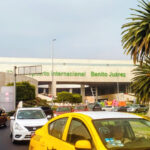
    Angry Taxi Drivers in Mexico City Airport Create Chaos

    taxi
    Taxi Blockades at Mexico City Airport Expose Long Battle Over Ride-Shares

    Hundreds of taxi drivers blocked access to Mexico City’s Benito Juárez International Airport this week, paralyzing circulation at both terminals in a dramatic protest against ride-hailing platforms they say are illegally stealing their livelihoods.

    The March 11 protest, organized by the airport’s 11 authorized taxi unions, left passengers stranded on access roads, many of whom were forced to haul luggage long distances to catch flights. Police in riot gear eventually negotiated the reopening of some lanes while shuttle trucks transported stranded travelers.

    At the heart of the conflict is a legal gray area that has festered for nearly a decade: federal law explicitly prohibits services like Uber, Didi, and inDrive from operating within airport grounds, yet they continue picking up passengers daily with little consequence.

    A Web of Contradictory Rules

    The legal framework seems clear on paper. According to the Ley de Aeropuertos and Ley de Caminos, Puentes y Autotransporte Federal, all ground transportation within airports falls under federal jurisdiction. To operate legally, vehicles need permits from the Secretaría de Infraestructura, Comunicaciones y Transportes, as well as authorization from the airport administration.

    Authorized taxi operators must meet strict requirements: vehicles must be no more than five years old, meet specific technical specifications, have passenger insurance, be emissions-certified, and pay significant access fees to the airport. Some unions report paying up to six million pesos per month for the right to operate within the federal zone.

    “We are simply demanding that the law be followed,” said Ignacio Rodríguez, secretary of the Movimiento Nacional Transportista.

    But the situation grew murkier in October 2025 when a federal judge granted Uber a definitive suspension in an amparo case. The ruling, from the Juzgado Décimo Tercero en Materia Administrativa, ordered the Guardia Nacional to halt sanctions against Uber drivers at airports, requiring that any operations be conducted in accordance with existing transportation law.

    Uber celebrated the decision, stating it protects its drivers and calling on Congress to modernize the legislation ahead of the 2026 World Cup.

    The SICT quickly clarified that the ruling does not grant authorization to operate, arguing that the ruling is invalid and would be ignored. 

    Historical Tensions Boil Over

    The conflict is hardly new. In May 2015, hundreds of Mexico City taxi drivers blocked major thoroughfares protesting Uber’s arrival.

    A year later, tensions turned physical when cab drivers surrounded suspected Uber vehicles near the Monumento a la Independencia, rocking cars and pushing against them in snarled traffic.

    Now, authorized taxi operators claim the economic damage has become unsustainable. Before ride-hailing platforms, their organizations averaged 6,000 monthly trips. Today, that figure has fallen to 2,000.

    Carlos Lovera, advisor for Sitio Nueva Imagen, told reporters they are not opposed to competition, but demand equal rules.

    “We demand an even playing field, the way things are running currently is simply not sustainable,” Lovers said.

    Taxi drivers have also been active on social media, arguing that ride-sharing platforms are unsafe. However, most comments on platforms like Facebook and TikTok point out that taxi drivers are infamous for not following the rules themselves and are, in fact, less safe than drivers on platforms like Uber or Didi. 

    Violence and Tensions

    Wednesday’s protest saw moments of physical confrontation. At Terminal 2, pushing matches erupted between protesters and police attempting to clear lanes. A 39-year-old man was detained for breaking a tow truck’s medallion, although he was released after agreeing to pay damages. Five others were released hours later.

    Three vehicles obstructing traffic were sent to impound lots. For passengers caught in the chaos, the political battle translates into missed flights and frustrating delays.

    An Uncertain Resolution

    Following four hours of dialogue with the federal government and airport authorities, protesters agreed to lift the blockades. The government committed to initiating operations by the national guard beginning March 12 to “disincentivize” ride-hailing services in the federal zone, with permanent monitoring expected by the end.

    But taxi representatives remain skeptical. “We have been promised the same thing over and over, but it never actually happens,” said taxi driver Manuel Olivera.

    As the 2026 World Cup approaches, with more than 5.5 million additional visitors expected, pressure mounts for a permanent solution. Uber has urged Congress to establish clear regulations enabling coexistence between traditional and digital models.