Category: Politics

  • Sheinbaum Says She Won’t Sue Elon Musk Over Cartel Claim

    Sheinbaum Says She Won’t Sue Elon Musk Over Cartel Claim

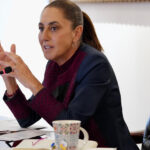
    Mexican President Claudia Sheinbaum said Wednesday she has decided not to pursue a civil lawsuit against tech billionaire Elon Musk over his social media posts accusing her of taking orders from drug cartels, though she left the door open if his attacks continue.

    “I took the decision — my decision, really — to finally not file, not present the civil complaint in this case,” Sheinbaum said at her daily morning press conference at the National Palace. “We’ll see. If it continues, then we’ll reevaluate.”

    The dispute has its roots in late February, when Musk responded to a 2025 video of Sheinbaum circulating on his platform, X, in which she argued against returning to a full-scale militarized war on drugs. When a user commented that Sheinbaum was “a cartel plant,” Musk replied that she was “just saying what her cartel bosses tell her to say.” He offered no evidence to support the claim.

    The posts came days after the Feb. 22 military operation in Tapalpa, Jalisco, that killed Nemesio Oseguera Cervantes — known as “El Mencho” — the longtime leader of the Jalisco New Generation Cartel (Cártel Jalisco Nueva Generación, CJNG) and one of the world’s most wanted criminals. The U.S. had offered a $15 million reward for his capture. American intelligence support contributed to the operation, which the White House called a major victory against fentanyl trafficking. The killing triggered a violent CJNG backlash across more than 20 Mexican states — roadblocks, arson attacks, and armed confrontations with security forces that left at least 25 National Guard members dead.

    Sheinbaum initially called the cartel-ties allegation “absurd” and said her legal team was reviewing options. At the time she noted, pointedly, that Musk was accusing her of taking orders from a cartel her own military had just taken down.

    On Wednesday she stepped back from the legal threat but used the occasion to open a broader debate about the role of social media platforms in public life.

    “It is a major discussion — where does freedom of expression end and where does attacking someone begin?” she said. She added that platforms like X operate beyond national jurisdictions, making regulation complicated. “They are international platforms. But it is a very good debate and I think it is essential that it takes place in our country.”

    Sheinbaum’s Women’s Secretary, Citlalli Hernández, added a pointed detail: while Google, Meta, and TikTok have all signed protocols with the Mexican government to combat digital violence against women, X declined to participate. “X argued it has no offices in Mexico and did not take part in the meetings — despite being one of the platforms where this type of violence is most common,” Hernández said.

    Digital violence and children’s screen time

    Sheinbaum broadened the conversation further, flagging the growing global debate around children’s exposure to social media. She cited evidence linking heavy platform use to anxiety in young people, and said Mexico needs an open national discussion on the subject.

    “I’m not saying we should sanction it or restrict it,” she said. “But it has been demonstrated that very long hours on these platforms generate anxiety problems in children.”

    Education Secretary Mario Delgado echoed those concerns earlier this week, noting that at least 79 countries have adopted some form of regulation on mobile device use in schools, and that UNESCO recommends banning phones from classrooms to reduce distraction and improve learning outcomes.

    A wider backdrop

    Sheinbaum’s security record has drawn scrutiny since El Mencho’s death, but polls suggest most Mexicans backed the operation. A survey conducted after the raid found that roughly seven in 10 respondents viewed the military action favorably, and nearly half said their approval of the president increased as a result.

    Her administration has differed from that of her predecessor, Andrés Manuel López Obrador, who favored a nonconfrontational approach to organized crime. Under Sheinbaum, homicides linked to organized crime fell 16 percent nationally in 2025 compared to the previous year, according to consulting firm Lantia Consultores. Earlier this year, she deployed nearly 10,000 National Guard troops to the northern border to combat fentanyl trafficking amid U.S. tariff pressure.

    Musk, who owns X and has been a close ally of the Trump administration, has made repeated interventions in Mexican politics. Al Jazeera reported that when Sheinbaum first raised the possibility of legal action, she described the narco-government accusation as “demonstrably false.”

    Wednesday’s announcement did not close the matter entirely. Sheinbaum said the episode could be a model for how Mexico tackles the question of digital violence — and that she herself might be among the first to use a new government reporting mechanism designed to help women document and act on online attacks.

    Quick facts

    • Claudia Sheinbaum has been president of Mexico since October 2024
    • Elon Musk owns X (formerly Twitter), where the disputed posts were published
    • Nemesio Oseguera Cervantes (“El Mencho”) was killed Feb. 22 in a military operation in Tapalpa, Jalisco
    • The CJNG — Jalisco New Generation Cartel — responded to his death with attacks across more than 20 states
    • At least 25 National Guard members were killed in the aftermath of the operation
    • The U.S. offered a $15 million reward for El Mencho’s capture; American intelligence supported the operation
    • Mexico’s Education Secretary says 79 countries have adopted some form of school mobile phone restriction
    • X declined to participate in Mexico’s government protocol on digital violence against women

    Sources: Diario de Yucatán, Reuters, Al Jazeera, El Financiero

  • Mexico Says No to Trump’s Peace Board, Citing Lack of Palestinian Role
    Mexico Says No to Trump’s Peace Board, Citing Lack of Palestinian Role

    Mexico has turned down a formal invitation from former US President Donald Trump to join his new initiative, the “Board of Peace.” This group is designed to oversee the reconstruction of the Gaza Strip and serve as an alternative to the United Nations in managing the conflict. On Tuesday, Mexican President Claudia Sheinbaum held a press conference to explain her government’s decision. While Mexico will not become a full member, it plans to send an observer to the board’s first meeting in Washington this Thursday.

    Sheinbaum said that declining full membership is a matter of principle regarding international recognition. 

    “In the statement, it says we recognize the search for peace in any space that opens up,” Sheinbaum explained. “But in this case, when it comes particularly to peace in the Middle East, given that we recognize Palestine as a state, it is important that both states participate, right? Both Israel and Palestine. And that is not how the meeting is set up.”

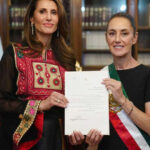
    This commitment to a two-state solution is a cornerstone of Mexico’s current foreign policy. Shortly after taking office, Sheinbaum’s administration made a significant diplomatic move by formally receiving the credentials of a Palestinian ambassador, a step she has highlighted as full recognition of the Palestinian state. This position was echoed earlier when the formal invitation arrived; Sheinbaum remarked that it was “very important” for the Board to have representation directly from Gaza, a sentiment also shared by Brazilian President Luiz Inácio Lula da Silva.

    The Board of Peace, an idea pushed by Trump, has received mixed reactions globally. According to Trump, about 35 countries have decided to join the group. However, it has notably failed to secure a seat for Palestine at the table. The inaugural meeting this Thursday in Washington will include some of Trump’s key international allies, particularly from the right wing, such as Argentina’s Javier Milei and Hungary’s Viktor Orbán. 

    While Argentina is on the list of Latin American participants, alongside Paraguay have been hesitant. Several European countries, including France, Norway, and Spain, have also opted out. Canada and New Zealand have already stated they have no intention of joining. Morocco stands out as the first African and one of the first Arab nations to join the assembly. A key detail of the board’s structure is the significant financial barrier to entry: Trump has required that countries pay $1 billion for a permanent seat, with the former president retaining final approval over all members and decisions.

    A Wider Context of US-Mexico Tensions

    Mexico’s refusal to join the Board of Peace is not an isolated decision. It adds another layer of complexity to an already strained relationship with the United States. Several major issues are currently testing the bilateral ties.

    One of the most immediate points of conflict is the fight against drug trafficking. The Trump administration has ramped up its rhetoric and actions against cartels, which has caused friction. There have been reports of the US military conducting operations in the Caribbean against drug vessels and a constant push for more aggressive action from Mexico. While President Sheinbaum has cooperated by extraditing cartel figures and deploying the National Guard to the northern border, she has firmly rejected any foreign intervention on Mexican soil, stating, “Under no circumstance will we accept interventions, interference, or any other act from abroad that is detrimental to the integrity, independence, and sovereignty of the country”.

    Another major point of contention is Cuba. The Trump administration has declared a national emergency regarding the island nation and imposed strict measures, including the threat of tariffs against any country that provides oil to Cuba. This puts Mexico, historically a supporter of Cuba and a member of the left-wing Morena party with ties to the island, in a difficult position. Despite US pressure, Sheinbaum has defended Mexico’s right to provide humanitarian aid. “We are going to continue sending humanitarian aid, food, and some other requests that the Cuban government has made that its people need,” she stated. 

    These issues are compounded by Trump’s constant threats to impose sweeping tariffs on Mexican goods, a favorite negotiating tactic of his. So far, Sheinbaum has navigated these challenges with a strategy described by some former diplomats as “squish and muddle through”—treading carefully to avoid direct conflict while subtly pushing back on key principles like national sovereignty and humanitarian support for allies. The Board of Peace’s decision fits this pattern: a polite but firm “no” based on a clear principle, while maintaining communication by sending an observer.

  • Marx Arriaga Leaves SEP After 5-Day Standoff Over Mexico’s Free Textbooks
    Marx Arriaga Leaves SEP After 5-Day Standoff Over Mexico’s Free Textbooks

    It took five days, a small crowd of supporters outside the building, and an official dismissal notice to finally get Marx Arriaga out of his office at Mexico’s Secretariat of Public Education (SEP). When he left on Feb. 18, backpack over his shoulder, he headed for the Metro and then home to Texcoco — and announced he would return to teaching in Ciudad Juárez, Chihuahua.

    The episode, clumsy from start to finish, exposed deep fractures inside President Claudia Sheinbaum’s ruling Morena movement over who controls Mexico’s public school textbooks and what they should say.

    Arriaga had served since the López Obrador era as director general of Educational Materials at the SEP, overseeing production of 107 new free textbooks under the Nueva Escuela Mexicana (New Mexican School), or NEM, the education reform model launched in 2019. The books were praised by the left as a break from privatized, market-driven education — and attacked by conservatives, parents, and educators who said they contained ideological content, factual errors, and cut core subjects like mathematics.

    The conflict began last October, when the SEP’s Undersecretary of Basic Education, Angélica Noemí Juárez Pérez, sent Arriaga official orders to revise the materials for the 2026-2027 school year. Documents obtained by the magazine Proceso show the ministry flagged 192 specific contents for elimination or revision, including sections on the 1968 Tlatelolco massacre, the forced disappearance of the 43 Ayotzinapa students, and what it called material that was “not relevant,” “confusing,” or “not didactic.” Arriaga refused, saying the changes would gut the pedagogical logic of the entire curriculum.

    When the SEP moved to remove him on Feb. 13, he didn’t go quietly. He held press conferences from inside his office. He broadcast live on social media, wearing the same clothes for days. He signed employment papers for contract staff before leaving, a move his critics said was intended to entrench his team and complicate things for his successor. Supporters rallied outside, chanting “Education first for the worker’s son.”

    The government’s handling of it all was widely criticized. Education Secretary Mario Delgado said little publicly. President Sheinbaum, appearing to minimize the controversy, said the only change requested had been to include more women in the textbooks. That statement drew scorn: official memos showed the requested changes went much further. Sheinbaum also seemed to criticize how her own ministry had notified Arriaga of his removal. Delgado later admitted the dismissal notice had been “very poorly handled.”

    Reforma opinion writer Gabriela Warkentin, one of Mexico’s most prominent media voices, was blunt in a column published today. “For five days,” she wrote, “the government ceded the narrative and we still do not know how large the damage will be.” Warkentin argued that what should have been a clear political win — replacing a controversial holdover from the previous administration with a fresh face — became a self-inflicted wound. “Handled well,” she wrote, the transition “would have been a resounding triumph for the President.”

    The new director, Nadia López García, has a markedly different profile from her predecessor. Born in Oaxaca’s Mixteca Alta region to agricultural workers and a native speaker of the Mixtec language Ñuu Savi, she holds a degree in pedagogy from UNAM and has published 11 books translated into 10 languages. She previously served as national coordinator of literature at the National Institute of Fine Arts and Literature (INBAL). The SEP said her priorities will include adding more women to history lessons, expanding materials in indigenous languages, and producing formats in Braille and large print.

    Sheinbaum has since stated the core of the NEM model will not change. That declaration, Warkentin argues in Reforma, amounts to a political concession. “Any change this government now wants to make to the textbooks will be scrutinized and blocked by the hard-line wing of the Movement,” she wrote.

    The textbook controversy has been building for years. Since the NEM books first appeared in 2023, they have been challenged in courts, pulled from some state classrooms, and criticized by academic groups, parents, and education nonprofits. Education advocacy group Mexicanos Primero noted last year that the model had been implemented without sufficient teacher training or independent learning assessments. Mexico spends around $2,790 per student at the basic education level annually, well below the OECD average of roughly $10,000.

    For more on the debate over Mexico’s public education system and its ongoing reforms, see our coverage of education policy in Mexico.


    Factbox: Key Players and Timeline

    • Marx Arriaga Navarro — Former Director General of Educational Materials, SEP; oversaw the creation of 107 free textbooks under the NEM model; refused to revise content ordered by the ministry; barricaded in his office Feb. 13–18, 2026; announced return to classroom teaching in Ciudad Juárez
    • Nadia López García — Arriaga’s successor, effective Feb. 16; Oaxacan pedagogue, poet, and indigenous rights activist; native Mixtec speaker; previously coordinated national literature programs at INBAL; author of 11 books translated into 10 languages
    • Mario Delgado — Secretary of Education; acknowledged the dismissal process was “very poorly handled”; said Arriaga refused to change “a single comma” in the textbooks
    • Claudia Sheinbaum — President of Mexico; said the only change requested was the inclusion of more women in the textbooks; stated the NEM model will remain intact
    • Nueva Escuela Mexicana (NEM) — Education reform model launched under former President López Obrador in 2019; replaced traditional subject-based curriculum with project-based learning; the 107 free textbooks it produced have faced sustained controversy over content, quality, and ideological framing
    • The disputed content — Official documents show the SEP requested elimination or revision of 192 specific items, including references to the 1968 Tlatelolco massacre, the Ayotzinapa disappearances, and the “Dirty War” period of political repression
  • AMLO’s Ex-Aide Takes No Prisoners in Scathing New Book
    AMLO’s Ex-Aide Takes No Prisoners in Scathing New Book

    A new book by a former top legal official in Mexico’s federal government is causing headaches for the ruling Morena party, with opposition senators calling for criminal investigations and key party figures firing back with denials.

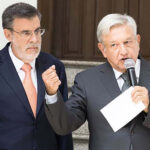
    The book, Ni venganza ni perdón: Una amistad al filo del poder — “Neither Revenge Nor Forgiveness: A Friendship at the Edge of Power” — was written by Julio Scherer Ibarra, who served as Legal Counsel to former President Andrés Manuel López Obrador from 2018 until he resigned in September 2021. Co-authored with journalist Jorge Fernández Menéndez, the book draws on Scherer’s nearly 30-year relationship with López Obrador and alleges, among other things, that organized crime money was used to finance Morena campaign operations in multiple states.

    The book names Sergio Carmona, known as the “rey del huachicol” — king of fuel theft — as a key financier who allegedly funneled money into Morena campaigns in states including Tamaulipas, Sinaloa, and Sonora, beginning in 2018. Carmona was killed in November 2021. The book also levels accusations at Jesús Ramírez, who served as presidential spokesperson and is currently a senior adviser in President Claudia Sheinbaum’s government.

    Opposition senator Ricardo Anaya, who leads the National Action Party (PAN) bloc in the Senate, said the allegations are serious enough that authorities are legally obligated to act — no formal complaint required.

    “Much of what he is pointing out involves crimes that are prosecuted on the state’s own authority,” Anaya said. “The authorities are obligated to open investigation files.”

    Anaya went further, saying that if no investigation is opened, it would amount to confirmation of the alleged ties between Morena and organized crime.

    President Sheinbaum pushed back during her daily press conference on Feb. 17, saying she does not see any need for the Attorney General’s Office (FGR, in Spanish) to investigate Scherer. When reporters asked whether it would be desirable for the FGR to look into the matter, Sheinbaum redirected attention to Genaro García Luna, the former security secretary under President Felipe Calderón, who is now in a U.S. prison for drug trafficking ties. Sheinbaum has also said she does not plan to read the book.

    Clara Brugada, head of government of Mexico City, also pushed back, calling the allegations about her and Ramírez false.

    “I reject what this person has said,” Brugada stated. “That is a lie and an attempt to damage the image of people, like Jesús Ramírez and me, and I do not accept it.” She vouched for Ramírez as a person of integrity and challenged Scherer to produce evidence.

    Morena senator Guadalupe Chavira called the book “irresponsible,” accusing Scherer of aiming to “confuse and speculate” following his departure from government.

    Scherer’s exit from government was itself controversial. He resigned after facing accusations of extortion and running an influence-peddling network — charges that ultimately did not result in convictions. Various government bodies launched legal proceedings against him after he left, none of which succeeded.

    The book has stirred a broader political debate about the 2030 presidential succession inside Morena. Some political analysts have noted that the figures targeted by Scherer’s allegations are generally aligned against Security Secretary Omar García Harfuch, a potential future presidential contender. Scherer, for his part, has denied that the book makes direct personal imputations — telling Sonora Governor Alfonso Durazo, who sought clarification about references to his state, that the passages in question refer to events in 2018 and contain no direct accusations against him.

    Scherer is the son of Julio Scherer García, the legendary journalist who founded the news magazine Proceso after being pushed out of the newspaper Excélsior under government pressure in the 1970s. That family history adds an extra layer of resonance to the current controversy in Mexican media and political circles.

    For more on Mexico’s security landscape, see Yucatán’s safety rankings at Yucatán Daily News. For a detailed overview of the book itself, see its Wikipedia entry.

    Fast Facts

    • Ni venganza ni perdón was co-written by Julio Scherer Ibarra and journalist Jorge Fernández Menéndez
    • Scherer served as Legal Counsel to the President under López Obrador from 2018 to September 2021
    • The book alleges that organized crime funds, linked to a figure known as the “rey del huachicol,” financed Morena campaigns in northern Mexico starting in 2018
    • Opposition senator Ricardo Anaya (PAN) has called for formal investigations, arguing the alleged crimes are prosecutable without a complaint from Scherer
    • President Sheinbaum said she sees no need for the FGR to investigate, and has stated she will not read the book
    • Mexico City head of government Clara Brugada and former presidential spokesman Jesús Ramírez both denied the allegations against them
    • Morena senator Guadalupe Chavira dismissed the book as irresponsible speculation
    • Sergio Carmona, the alleged financier named in the book, was killed in November 2021
    • Scherer’s father founded the news magazine Proceso after being ousted from Excélsior under government pressure in 1976