Author: MxTrib Staff

  • Alcalde’s List of 86 Critics Draws Comparisons to ‘Enemies’ Lists

    Alcalde’s List of 86 Critics Draws Comparisons to ‘Enemies’ Lists

    Mexico’s presidential legal counsel, Luisa María Alcalde Luján, published a list of 86 journalists, commentators and politicians this week, saying they form part of a coordinated network that amplifies criticism of the federal government. The disclosure triggered immediate backlash from many of the people named.

    Alcalde presented the list Wednesday during “Derecho de Réplica,” a weekly government briefing held at the National Palace where officials respond to news coverage they consider unfair. She described it as an analysis of a “digital amplification ecosystem,” not a blacklist.

    Four Layers of a Network

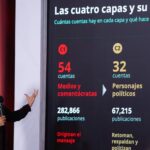
    According to Alcalde, the network breaks down into four layers. The first, made up of 54 accounts belonging to media outlets and commentators, “originates” critical messages, she said. Among those named were Carlos Loret de Mola, Denise Dresser, Ciro Gómez Leyva, Jorge Ramos and Leticia Robles de la Rosa, along with outlets including El Universal, Latinus and Aristegui Noticias.

    A second layer of 32 accounts belongs to politicians who pick up and spread the message further, Alcalde said. That group included former President Felipe Calderón, 2024 presidential candidate Xóchitl Gálvez, and National Action Party figures such as Jorge Romero and Santiago Taboada.

    A third layer of 34 anonymous accounts, which Alcalde called trolls, repackages the content and distributes it. A fourth layer, an “amplification ring” of more than 500,000 bot accounts around the world, pushes the messages until they resemble organic conversations involving millions of posts, she said. The analysis covered seven months, from Jan. 1 to Aug. 8.

    Comparisons to Blacklists

    The reaction was swift. Journalist Carmen Aristegui compared the list to those compiled by the Gestapo, the Soviet government under Josef Stalin and the Khmer Rouge in Cambodia, and asked whether President Claudia Sheinbaum’s government was drawing up its own list of enemies.

    Lorenzo Córdova, a former president of Mexico’s National Electoral Institute, wrote online that he’s been showing up on similar lists for years. Pascal Beltrán del Río, director of Excélsior, said the presentation stigmatized journalists without proving any coordinated campaign exists. Calderón resurfaced a past interview in which Sheinbaum herself said compiling lists is “a fascist thing to do.”

    Alcalde Pushes Back

    Facing criticism online, Alcalde posted a video Thursday denying she had released a blacklist of government enemies. Appearing in the network doesn’t mean a person or outlet is part of any operation, she said; what matters is what happens afterward, when anonymous accounts pick up the content and connect it to a coordinated narrative.

    She also defended making the findings public. “There’s people financing this, and people deserve to know,” Alcalde said, without identifying who she believes is funding the bot network. Latinus host Claudio Ochoa, who was named on the list, told her directly to own her role in presenting it.

    The dispute lands amid a broader fight over press freedom in Mexico. Sheinbaum’s government has floated new media rules requiring outlets to label opinion separately from news, a plan critics call vague and open to abuse. A similar proposal, to criminalize unauthorized memes of public officials, drew similar warnings from digital rights groups. Mexico currently ranks 149th out of 180 countries on Reporters Without Borders’ press freedom index.

    At a Glance

    • Who: Luisa María Alcalde Luján, presidential legal counsel
    • What: List of 86 journalists, commentators and politicians tied to an alleged “digital amplification ecosystem”
    • When: Presented Aug. 12 during the weekly “Derecho de Réplica” briefing
    • Where: National Palace, Mexico City
    • Data window analyzed: Jan. 1 to Aug. 8, 2026
    • Alleged bot network: More than 500,000 accounts worldwide

    Source: Proceso, El Universal

  • Pope Leo XIV Won’t Visit Mexico Despite Sheinbaum’s Push

    Pope Leo XIV Won’t Visit Mexico Despite Sheinbaum’s Push

    Pope Leo XIV
    Pope Leo XIV has no plans to visit Mexico during his Latin American tour.

    President Claudia Sheinbaum said Wednesday she will keep pressing the Vatican for a papal visit to Mexico, even as Pope Leo XIV confirmed a November tour of South America that leaves the country off the itinerary.

    “We’re going to insist on the pope’s visit to Mexico,” Sheinbaum told reporters during her morning press conference at the National Palace, hours before receiving Vatican Secretary of State Cardinal Pietro Parolin. Mexico’s government sent a formal invitation in May 2025, at the start of Sheinbaum’s administration, and she said she raised it again personally during a phone call with the pope on Dec. 12.

    Skipping Mexico

    The Holy See announced Wednesday that Leo XIV will travel to Uruguay, Argentina and Peru from Nov. 6 to 17, his first papal trip to Latin America and the sixth international journey of his pontificate. The pope will visit Montevideo, Paysandú and Florida in Uruguay, then Buenos Aires, Córdoba and the Marian shrine of Luján in Argentina, before ending in Peru with stops in Lima, Chiclayo, Cusco and Pucallpa.

    Peru holds particular significance for Leo XIV, who spent decades there as a missionary and later served as bishop of Chiclayo before becoming pope in 2025. He also holds Peruvian citizenship. The visit will additionally mark the first papal trip to Argentina and Uruguay in nearly 40 years, and the first time a pope has set foot in Argentina since Pope Francis, who was born in Buenos Aires but never returned home during his 12-year papacy.

    Mexico last hosted a pope in 2016, when Francis toured several cities, including a stop in Chiapas. The invited the pope to Yucatán back in 2021, when Cardinal Parolin made an earlier visit to the region, though that trip never materialized either.

    Why Mexico Isn’t on This Itinerary

    The Vatican has given no official explanation for leaving Mexico off the schedule, and nothing in the announcement suggests the country was deliberately passed over. A few factors help explain the choice of destinations instead.

    Peru, Argentina and Uruguay each carry a personal or symbolic pull that this particular trip was built around. Leo XIV’s decades-long history in Peru made a return there something close to inevitable. Argentina’s inclusion closes a gap left by Pope Francis, who never managed a homecoming trip during his own papacy. And Uruguay, where Catholics make up a smaller share of the population than anywhere else in the region, hasn’t had a papal visit in decades.

    Mexico, by contrast, appears to be a matter of timing rather than exclusion. In November 2025, Leo XIV told reporters that the Marian shrine of Guadalupe was among his top destinations, alongside Peru, Argentina and Uruguay. Asked when a Latin America swing might happen, he said travel planning would ramp up gradually the following year, citing a full calendar of Vatican commitments. That suggests Mexico could still get its turn on a future trip rather than having been ruled out.

    The Pope’s Stance on AI

    Sheinbaum argued that a visit from Leo XIV would carry weight beyond religious circles, pointing to the pontiff’s writings on artificial intelligence as a reason his voice matters in Mexico’s own policy debates. She cited the encyclical “Magnifica Humanitas,” published in May, in which the pope addresses protecting individuals as AI technology expands.

    According to Sheinbaum, the document has become an international reference point for questions about who controls digital platforms, how algorithms function and who benefits from their use.

    “It’s a very important debate globally, and one that we’re having in Mexico too,” she said, adding that Leo XIV has called for public regulation of artificial intelligence and closer scrutiny of its effects — a discussion she linked to Mexico’s own conversations about social media and content moderation.

    Church and State

    Despite her praise for the pope’s positions, Sheinbaum reiterated that Mexico will maintain the separation of church and state, saying it’s still worthwhile to weigh in on the pope’s views on AI and other humanitarian issues. She noted that any papal visit would carry deep meaning for millions of Catholic Mexicans, even as she framed the invitation as being about more than religion.

    No new date has been set for a Mexico stop, and the Vatican has not indicated one is under discussion for the current tour.

    Fast Facts

    • Mexico’s invitation to Pope Leo XIV dates to May 2025.
    • Sheinbaum discussed the invitation with the pope by phone on Dec. 12.
    • The pope’s South America tour runs Nov. 6-17, 2026.
    • Stops include Uruguay, Argentina and Peru, but not Mexico.
    • Leo XIV has named Mexico’s Guadalupe shrine among his desired destinations.
    • Pope Francis last visited Mexico in 2016.

    With reporting from Diario de Yucatán and the Vatican confirms itinerary announcement.

  • Mexico Weighs Bid to Host 2029 FIFA Club World Cup

    Mexico Weighs Bid to Host 2029 FIFA Club World Cup

    Mexico could be in line for another shot at global soccer glory, just three years after wrapping up the 2026 World Cup.

    Claudia Sheinbaum
    Claudia Sheinbaum. File photo

    President Claudia Sheinbaum confirmed this month that her government is looking at a bid to host the 2029 FIFA Club World Cup. She said any decision would depend on whether the deal makes sense for the country financially.

    The push is coming from the Mexican Football Federation, led by Mikel Arriola, which wants Mexico to serve as the sole host this time around. That would be a change from 2026, when Mexico shared World Cup hosting duties with the United States and Canada.

    Sheinbaum has asked the Tourism Department to put together a report on how the 2026 tournament affected tourism, the economy and Mexico’s international image. That analysis is expected to guide her administration’s final call.

    A Familiar Stadium in the Spotlight

    If Mexico lands the bid, Estadio Azteca in Mexico City is the favorite to host the opening match and the final. The stadium, which holds more than 80,000 fans, was a centerpiece of the 2026 World Cup and hosted five matches during that tournament.

    Other venues under consideration include stadiums in Monterrey and Guadalajara, both of which also hosted 2026 World Cup games. Mexico’s federation is pitching the plan as a way to reuse infrastructure — stadiums, transit upgrades and hotel capacity — built for last summer’s tournament rather than start from scratch.

    The Club World Cup itself has changed shape recently. FIFA moved the competition to a four-year cycle and expanded it to 32 clubs, with some reports suggesting the field could eventually grow further.

    Stiff Competition for Hosting Rights

    Mexico won’t have a clear path to hosting. Brazil, Qatar and the United States have all shown interest, and Spain and Morocco are working on a joint bid, according to a Yahoo Sports report on the process.

    Sheinbaum has been cautious about committing federal support. “We need to see the conditions — it always has to be favorable for Mexico,” she told reporters at her morning press conference, according to Milenio.

    FIFA has not set a timeline for choosing a host, and no formal Mexican bid has been submitted yet.

    What It Could Mean for Yucatán

    The Yucatán Peninsula didn’t host any 2026 World Cup matches, but the region still felt the tournament’s ripple effects. Mérida leaned on its flight connections to pitch itself as a base for fans traveling between host cities, an between-matches strategy that drew mixed results — hotel occupancy across the state came in below expectations once the tournament actually kicked off.

    A 2029 Club World Cup, even without matches in the Yucatán Peninsula, would likely bring another wave of visitors passing through the region on their way to and from host cities.


    At a Glance

    • Mexico is weighing a solo bid to host the 2029 FIFA Club World Cup
    • The Mexican Football Federation, led by Mikel Arriola, is driving the proposal
    • Estadio Azteca is the favorite to host the opening match and final
    • Brazil, Qatar, the U.S. and a Spain-Morocco bid are also in the running
    • Sheinbaum has requested an economic impact report before backing the bid
    • FIFA has not set a date for choosing the 2029 host

    Reporting based on statements from President Claudia Sheinbaum and coverage from Yahoo Sports and Milenio.

  • Mérida Man Tries to Trademark Mexico’s Viral World Cup Duck

    Mérida Man Tries to Trademark Mexico’s Viral World Cup Duck

    World Cup duck
    FIFA may have spent a fortune on a cartoon jaguar, but the real World Cup mascot turns out to be a duck.

    A Mérida resident filed paperwork to claim the brand rights to Merlín, the duck who became Mexico’s unofficial mascot of the 2026 FIFA World Cup — a move that drew a swift rebuke from President Claudia Sheinbaum, who called it an abuse.

    David Sides Fuentes, who lives in the Santa Gertrudis Copó neighborhood of Mérida, submitted a trademark application to the Mexican Institute of Industrial Property (IMPI) on June 17, according to official records. The filing — expediente 3643308 — sought a 10-year registration for the brand and logo of “El Pato Merlín. El pato de la suerte” (Merlín the Duck. The Lucky Duck). The proposed trademark, records show, would cover advertising, political campaigns, business incubators, and management services for artists and athletes. The submitted logo depicts a duck wearing a green jersey with a Quetzalcóatl design, similar to the one worn by Mexico’s national soccer team, with the Aztec Calendar in the background.

    Sheinbaum made the application public and wasted no time in condemning it. “It’s an abuse,” she said during her morning press conference at the National Palace.

    A Street Vendor’s Duck Goes National

    Merlín’s rise from neighborhood pet to national symbol happened fast. The two-year-old Pekin duck first appeared in public during street celebrations after Mexico defeated South Africa 2-0 on June 11 in the tournament’s opening match at Estadio Azteca — the same stadium that will become the first venue ever to host matches in three separate World Cups. Videos of Merlín waddling through the crowds on Reforma Avenue spread across social media within hours, and the duck hasn’t been out of the spotlight since.

    His owner is Carla Gómez, a street vendor who sells beverages at a sidewalk stall. She was gifted the duck by a customer and, by her own account, never imagined the attention that would follow. “We thought we were passing by unnoticed,” she said in one interview. “It was a normal day for us.” She jokingly calls Merlín the “boss” of the family business and says he has a balanced diet — though he is allowed a pork taco on Sundays. As for footwear, Merlín typically wears shoes because, she says, “he likes to walk.”

    Merlín Meets the President

    On June 22, Gómez and her sons brought Merlín to the National Palace, where Sheinbaum had invited the family to appear at her daily press briefing. The duck arrived in his now-familiar green jersey and a FIFA tie, sat beside his owner at the podium, quacked occasionally, and reportedly attempted to peck the president when she tried to pet him. Sheinbaum used the moment to frame Merlín as more than a viral curiosity. “He has been a symbol of the World Cup, a symbol of what Mexican families stand for, of who we are as Mexican families,” she said.

    At the same event, Sheinbaum announced that the federal government would help Gómez’s family file their own trademark application with IMPI — and the family has since initiated that process.

    How Mexico’s Trademark System Works

    The timing of the Mérida resident’s filing puts into sharp relief a basic fact of Mexican intellectual property law: trademark rights in Mexico go to whoever registers first, not whoever uses a name or image first. IMPI, the autonomous federal agency that administers the country’s industrial property system, operates on a first-to-file basis. An application is published for a public opposition period of about one month before advancing to substantive examination, a process that typically takes between four and eight months in total. Third parties — including Gómez’s family — can file an opposition to block a registration they believe conflicts with their rights.

    Mexico has tightened its rules against marca piratas, or trademark squatting, in recent years, including a 2018 reform that requires trademark holders to file a formal declaration proving active commercial use within three years of registration or lose their rights. Whether the Merlín application proceeds, or is blocked by the family’s counterfiling or public opposition, remains to be seen.

    Those following the World Cup in Yucatán can keep up with the latest from the tournament and its cultural moments through Yucatán Magazine. For more on the mechanics of Mexican trademark law, the AP’s reporting on the Merlín story offers useful context from the family’s perspective.

    Fast Facts

    • Merlín is a two-year-old Pekin duck owned by Mexico City street vendor Carla Gómez
    • He went viral after appearing in crowd celebrations following Mexico’s 2–0 opening win over South Africa on June 11
    • David Sides Fuentes of Mérida’s Santa Gertrudis Copó neighborhood filed IMPI application expediente 3643308 on June 17
    • The application sought 10-year rights to use the Merlín brand for advertising, political campaigns, and artist management services
    • President Sheinbaum called the filing “an abuse” and pledged government support to help Gómez’s family register the trademark themselves
    • Mexico’s trademark system is first-to-file; prior use alone does not establish legal ownership
    • IMPI allows third parties to oppose trademark applications during a roughly one-month public comment window
    • The full trademark process in Mexico typically takes four to eight months if uncontested

    Sources: Diario de Yucatán, El Universal, Associated Press, Reuters, Gulf News

  • Volaris Has Decided You’re Elderly at 60, and Booking Your Flights Accordingly

    Volaris Has Decided You’re Elderly at 60, and Booking Your Flights Accordingly

    A booking notice from Volaris is drawing attention from foreign residents and frequent flyers in Mexico. A pop-up warning that appears during the airline’s online checkout process states that unaccompanied passengers aged 60 or older may only book nonstop flights or itineraries with a single connection — and that the layover must fall between 2 and 4 hours.

    The message reads: “Unaccompanied senior citizens aged 60 or older can only travel on non-stop flights or 1 stop of 2 to 4 hours.”

    If you’re 60 or older, Volaris is concerned about your ability to travel unaccompanied.

    Several travelers have reported encountering the warning on Volaris’ website and app during the booking process, and screenshots of the pop-up have circulated in expat groups online. Volaris has not issued a public statement about it.

    The policy does not appear to be rooted in Mexican aviation law. Mexico’s civil aviation regulations, administered by the Agencia Federal de Aviación Civil (AFAC), address passengers with disabilities, reduced mobility, and medical conditions — but impose no travel restrictions on healthy adults based on age alone. No federal rule requires a person over 60 to fly nonstop or to maintain any minimum connection time.

    This is a Volaris policy, not a government one.

    The airline does operate a paid assistance program called Volaris te Acompaña — “Volaris Accompanies You” — for passengers over 60 who want help navigating check-in, boarding, and connections. The service is optional, and Volaris’ own website is explicit on that point. It is unavailable for passengers who are not self-sufficient due to conditions such as dementia, Alzheimer’s, or degenerative illness — suggesting the program was designed for travelers who are otherwise capable of traveling independently.

    The connection restriction in the booking pop-up appears to be a separate operational rule, one that goes further than the assistance program itself.

    Whether the restriction is legally enforceable is unclear, but its logic is not hard to follow. Volaris is a low-cost carrier that operates hundreds of daily flights across Mexico, the United States, and Central America. Tight connections are a common headache. Mexico City’s Benito Juárez International Airport, in particular, is large and congested — the kind of hub where a short layover can become a sprint across terminals. Limiting older solo travelers to more generous connection windows reduces the odds of a missed flight, a stranded passenger, and the complaints that follow.

    Still, the threshold has raised eyebrows. Most international airlines use 60, 62, or 65 as the benchmark for senior discounts and special services, not for travel restrictions. In the U.S., Canada, and Europe, it’s routine for people in their 60s to travel alone on complex international itineraries without any airline intervention. Restrictions of the kind Volaris imposes are more commonly associated with unaccompanied children — not with adults who are, by all other measures, fully independent travelers.

    Mexico’s legal definition does place 60 as the threshold for “adulto mayor” status — senior citizen — under federal law. Aeroméxico, for instance, uses the same age on its passenger information page. But classification as a senior citizen for benefits purposes is different from being subject to booking restrictions.

    For expats and foreign residents who rely on Volaris for connections through Mexico City or Guadalajara, the policy has practical implications. It could mean fewer booking options and higher fares if nonstop flights or suitable layover windows aren’t available on a given route. Travelers planning itineraries through a Volaris hub would be wise to check whether the restriction applies to their specific booking before assuming they have full flexibility.

    Volaris did not respond to requests for comment.

    For more on getting to and around the region, see flying to Yucatán.


    What to Know

    • Volaris restricts solo passengers aged 60+ to nonstop flights or connections with a layover of 2 to 4 hours
    • The restriction appears only during online booking; Volaris has not issued a public explanation
    • No Mexican federal aviation regulation requires age-based travel restrictions for healthy adults
    • Volaris te Acompaña is the airline’s optional paid escort service for older travelers; it is separate from this restriction
    • Passengers with cognitive or degenerative conditions are ineligible for the escort program
    • Volaris flies from Mérida to Mexico City, Guadalajara, Monterrey, Tijuana, and other destinations; volaris.com

    Sources: volaris.com; cms.volaris.com