
Author: MxTrib Staff

  • Sheinbaum Tells Mexicans to Stop Watching TV Azteca

    Sheinbaum Tells Mexicans to Stop Watching TV Azteca

    President Claudia Sheinbaum used her Monday morning news conference to tell the public to stop watching a major television network. Asked about a group that has been posting banners around Mexico City accusing government officials of ties to drug cartels, Sheinbaum pointed the finger at TV Azteca owner Ricardo Salinas Pliego and offered a blunt recommendation: change the channel.

    TV Azteca. Photo: Wikipedia

    “Don’t watch TV Azteca,” she said from the podium at the National Palace. “Salinas Pliego is going to be angry and is probably writing a post right now.”

    The network fired back within hours.

    What Triggered It

    The comment came in response to a reporter’s question about a group called Mexicanos al Grito de Paz, a collective that has been plastering banners around Mexico City with images of government officials accused of links to drug trafficking. Sheinbaum said the group was not registered with the Interior Ministry and suggested that accounts tied to Salinas Pliego were behind the campaign, while acknowledging she had no direct proof.

    “When they’re already showing these things on television or radio, things that are just three people going and putting up a sign, well, there must be some connection. I can’t confirm it, it’s a hypothesis,” she said.

    She also announced plans to create a weekly segment at the mañanera to name and shame what she called the biggest liar of the week. She said she had proposed the idea to her legal adviser, Luisa María Alcalde, and that it would be called “El Mitómano de la Semana,” or “Liar of the Week.”

    The Network Responds

    TV Azteca issued a formal statement accusing Sheinbaum of carrying out what it called an obvious attempt at censorship and a direct attack on freedom of expression and the press. The network said the call to boycott its programming would be useless, pointing to millions of viewers who follow its news, entertainment, and sports coverage.

    The statement accused the government of having high-level ties to organized crime and of protecting what it called corrupt networks connected to the sons of former President Andrés Manuel López Obrador. The network also said it expected more pressure to come. “We know that more attacks are coming and that this is just the prelude to a stage of censorship and silencing against critical media like us,” it said, according to El Universal.

    Grupo Salinas, the parent company, echoed the sentiment on X: “Media outlets don’t exist to obey power. They exist to serve and inform people with the truth.”

    A Feud With Deep Roots

    The clash has been building for some time. Salinas Pliego’s relationship with the ruling Morena movement soured after the government pursued his companies for years over a massive tax dispute. In January, Grupo Salinas agreed to pay MX$32 billion (about US$1.87 billion) to settle a decade-long case with Mexico’s tax authority. Despite the settlement, the public sparring between the two sides has only intensified.

    Salinas Pliego previously filed a complaint with the Inter-American Commission on Human Rights, alleging political persecution. Sheinbaum has dismissed those claims, saying the tax collection process is a routine legal matter. TV Azteca also faces a multimillion-dollar lawsuit in the United States and has sought debt restructuring in Mexico.

    Why It Matters

    TV Azteca is not a small operation. It is one of the 2 major networks that dominate Mexican broadcast television, reaching tens of millions of viewers. A sitting president calling on citizens to stop watching it is the kind of statement that draws comparisons to authoritarian pressure tactics, regardless of intent. Press freedom organizations have long cited Mexico as one of the most difficult environments for journalism in the hemisphere, though the dangers they typically document involve violence against local reporters rather than confrontations between the presidency and a media mogul.

    Neither side issued further public statements after the initial exchange on Monday.

    At a Glance

    • President Claudia Sheinbaum called on viewers to stop watching TV Azteca during her May 25 morning press conference
    • The remark followed questions about Mexicanos al Grito de Paz, a group posting anti-government banners in Mexico City
    • TV Azteca is owned by Ricardo Salinas Pliego through his conglomerate, Grupo Salinas
    • The network accused Sheinbaum of censorship and vowed to continue critical coverage
    • Grupo Salinas settled a major tax dispute with the Mexican government in January 2026, paying MX$32 billion (about US$1.87 billion)
    • Sheinbaum also proposed a new weekly mañanera segment to highlight what she considers disinformation

    Source: El Universal, Proceso, Expansión Política

  • Cartels Are Forcing Corner Stores to Run Slot Machines

    Cartels Are Forcing Corner Stores to Run Slot Machines

    Walk into a corner store in parts of Michoacán, Guerrero, or Tamaulipas, and you might spot something unexpected next to the candy rack: a blinking slot machine. Chances are, the owner didn’t put it there by choice.

    Photo: Social media

    Criminal organizations across at least 10 Mexican states are forcing small shop owners — corner stores, bakeries, stationery shops, taco stands — to accept and operate illegal slot machines on their premises, according to reporting by El Universal. The machines generate cash for criminal groups and, investigators say, help launder money. The owners who stick with hosting them are, in many cases, unaware they are committing a federal crime.

    Illegal by Law, Imposed by Force

    Mexico’s Federal Law on Games and Raffles, in effect since 1947, flatly prohibits the installation or operation of slot machines in public or private establishments without authorization from the Interior Ministry. In practice, that means virtually all tragamonedas — the nickname Mexicans use for the machines — found in neighborhood stores are operating illegally.

    Michoacán’s state attorney general, Adrián López Solís, said at a press conference in February 2025 that criminal groups are imposing the machines on businesses, including grocery stores, stationery shops, bakeries, and beer depots. Beyond the gambling revenue, he noted, the locations have in some cases also become points of drug retail.

    One business owner interviewed by El Universal said the machines had long been a familiar part of neighborhood life. “The truth is, we didn’t know that having and operating slot machines was a crime,” the owner said. “Many of us grew up going to play them. But I think times have changed.”

    A 427% Jump in Seizures

    Authorities are pushing back, though the scale of the problem dwarfs current enforcement capacity. In Michoacán alone, state security forces seized more than 3,200 slot machines during 2025, up from roughly 2,774 between November 2023 and April 2025. Nationally, seizures jumped 427% between 2024 and 2025, from 309 confiscated machines to 1,629, according to data from the Navy Secretariat.

    States where seizures have been concentrated include Sinaloa, Michoacán, Nayarit, Sonora, and Veracruz, but authorities have also documented confiscations in Zacatecas, Coahuila, Tamaulipas, Guerrero, Jalisco, and more than a dozen others.

    Michoacán Gov. Alfredo Ramírez Bedolla has said the machines represent a steady revenue stream for criminal organizations and a direct threat to neighborhood safety. He has urged municipal police forces not to look the other way. “This is a totally illegal activity,” he said, calling it a risk for communities where the machines are installed.

    Extortion’s Wider Grip on Small Business

    The slot-machine scheme is one variant of a much broader assault on small commerce. Mexico’s employers’ association Coparmex has estimated that extortion cost businesses roughly US$1.3 billion in 2023, and the problem has continued to grow. Nationally, reported extortion cases rose 10% in the first quarter of 2025 compared to the same period the prior year.

    Security analyst David Saucedo has noted that the Sinaloa and Jalisco New Generation cartels have made extortion a core part of their criminal operations. Small-time criminal groups, meanwhile, exploit the climate of fear by running their own shakedowns — sometimes falsely claiming cartel affiliation. According to research cited by Animal Político, roughly 4 in 10 small businesses in Mexico face some form of violence or extortion, though many more cases go unreported.

    The cobro de piso — the protection fee cartels charge just to let a business operate — is the most familiar form. But criminal groups have expanded their methods to include forcing stores to stock stolen or counterfeit merchandise, buy goods at inflated prices from cartel-controlled suppliers, and now, host gaming machines that funnel cash back to criminal networks. The slot-machine scheme fits neatly into that playbook.

    What It Means for Business Owners

    For owners caught in the middle, the situation is almost absurd: comply and risk prosecution; refuse and risk violence. One attorney quoted in the original reporting suggested that the government needs to do more outreach — not just enforcement — to alert small business owners that accepting the machines is a crime, and to explain what legal protections exist for those who come forward.

    The tragamonedas caught in seizures are typically destroyed. But with estimates suggesting more than 10,000 machines may still be operating in Michoacán alone, the gap between what authorities can confiscate and what criminal groups can replace remains wide.


    At a Glance

    • Criminal groups in at least 10 Mexican states are forcing small businesses to host illegal slot machines
    • Mexico’s 1947 Federal Law on Games and Raffles bans slot machines without federal authorization
    • Michoacán seized more than 3,200 machines during 2025; national seizures jumped 427% year over year
    • Businesses that refuse face threats of violence; those that comply risk criminal prosecution
    • The scheme is part of a wider extortion crisis costing Mexican businesses an estimated US$1.3 billion annually
    • States with documented machine seizures include Sinaloa, Michoacán, Nayarit, Sonora, Veracruz, Tamaulipas, Guerrero, Jalisco, and others

    Source: El Universal

  • Mexico’s Air Traffic Controllers Threaten Strike Weeks Before World Cup Kickoff

    Mexico’s Air Traffic Controllers Threaten Strike Weeks Before World Cup Kickoff

    Mexico’s air traffic controllers have filed a formal strike notice against the federal government, citing what they describe as unsustainable working conditions — and the timing could not be more fraught. With the FIFA World Cup opening match set for June 11 in Mexico City, the nation’s airports are about to face the highest passenger volumes in years.

    The Sindicato Nacional de Controladores de Tránsito Aéreo, known as Sinacta, announced it will take the matter to the Tribunal Federal de Conciliación y Arbitraje, Mexico’s federal labor arbitration court, to begin the formal strike process. The union says it has run out of patience waiting for a response from two federal ministries: the Secretariat of Infrastructure, Communications and Transportation (SICT) and the Finance Ministry (SHCP).

    Air traffic controllers call for strike over critical safety conditions / Photo: Facebook / SINACTA

    Controllers List 4 Core Grievances

    In a statement posted to social media following its 16th National Congress, Sinacta said the decision to pursue a strike was “clear and unanimous” among members, who say they have kept Mexico’s airspace running safely despite mounting problems. The union’s complaints center on four issues:

    • More than 19 controllers working without official government appointments
    • A cumulative 30% loss in real wages
    • Exhausting shift schedules
    • Lack of training on new technologies and procedures

    “This act is not one we take lightly, but a legal and legitimate resource to demand that the state guarantee us the minimum salary and structural conditions to do our jobs,” the union wrote. “We have exhausted our patience, but not our conviction.”

    Controllers are responsible for coordinating safe separation between aircraft and managing takeoffs, landings, and flight routes across Mexican airspace.

    Pilots Back the Strike Threat

    The Asociación Sindical de Pilotos Aviadores (ASPA) quickly issued a statement of solidarity, saying flight safety is built “not only from the cockpit, but also from every tower and control center in the country.” The pilots’ union backed Sinacta’s demands for dignified working conditions and adequate training, adding weight to what had been a labor dispute largely invisible to the traveling public.

    World Cup Pressure Adds Urgency

    The strike threat lands at a particularly sensitive moment for Mexican aviation. Airlines have been adding an estimated 727,000 seats on routes to Mexico City, Guadalajara, and Monterrey — the country’s three World Cup host cities — for June and July alone. Mexico City’s Benito Juárez International Airport is also in the middle of a US$416-million renovation that has already disrupted normal passenger flow, with the government racing to have key work completed before the tournament begins.

    Any work stoppage, or even a slowdown, would ripple across an already stressed system. Controllers manage the flow of every commercial flight in Mexican airspace, meaning a strike could ground or delay hundreds of flights daily at the worst possible time.

    For travelers planning to fly through the Peninsula this summer — whether catching a connection to a host city or arriving at Cancún, which faces its own World Cup airspace controls despite hosting no matches — the labor standoff is worth watching closely.

    Sinacta said it would continue to update members on the legal process and called for unity within its ranks. “Let us keep our heads high and our unity intact,” the union concluded. “We know the enormous responsibility we carry every time we sit down at the position.”

    The government had not publicly responded to the strike notice as of the time of publication.

    Source: El Universal


    At a Glance

    • Sinacta, Mexico’s air traffic controllers’ union, has filed a formal strike notice with federal labor authorities
    • The union cites a 30% cumulative wage loss, grueling shifts, and 19+ controllers without official appointments
    • The pilots’ union ASPA has issued a statement of solidarity with the controllers
    • Mexico City, Guadalajara, and Monterrey host World Cup matches starting June 11
    • Airlines are adding roughly 727,000 seats on routes to the three host cities for June–July
    • Mérida and Cancún travelers connecting to host cities could be affected by any disruption to Mexican airspace
  • After Dropping New Single, Bloody Benders is Heading to Japan and England

    After Dropping New Single, Bloody Benders is Heading to Japan and England

    Mexico City’s all-female horror punk band Bloody Benders is releasing softer sounds and bigger plans. Their new single, “Strangers in the Night,” arrived this week as the lead track from the group’s fifth studio album — and it marks a notable shift for a band built on raw, distortion-heavy punk.

    The song is a tribute to anyone who has ever felt like they don’t quite fit in. “It’s like a tribute to all those different or strange people, to what is socially established,” vocalist Taty said in an interview with Diario de Yucatán. “Those people who don’t feel adapted to society.” The track tells the story of two strangers who recognize something familiar in each other — whether through friendship, love, or the shared experience of feeling out of place.

    Mexico’s Bloody Benders hits the road. Photo: Courtesy

    Taty, who goes by the full stage name Taty Bloody Batty, drew on personal memories when writing the lyrics. She recalled being teased for loving horror stories and collecting insects. The song touches on rejection and bullying but frames those experiences as ultimately bringing people together. “You’ve been bullied, people made fun of you, but here I am, taking your hand,” she said, describing one passage.

    A New Sound, Same Essence

    Getting the song to its final form wasn’t straightforward. The track started growing into something longer and stranger than the band expected. So they brought in Poncho from Los Daniels — a collaboration that was new territory for the group. “It was the very first one we worked on together,” Taty said. “It’s an experiment because it’s something we step outside of what we usually do.”

    Despite the outside influence, she’s clear that the band’s identity stayed intact. “The essence will always be there because at the end of the day, we all put our art into it.” The response from fans has been positive. Taty described it as representing a kind of evolution for the band, even as they stay anchored to their punk roots.

    The follow-up single, “Blood Brother,” drops May 22, along with a video. That track returns to the heavier, more aggressive sound Bloody Benders are known for — “rough, raw, pretty loud, and very energetic,” as Taty put it. Both songs are part of the upcoming fifth album, which includes a range of outside collaborators alongside the core punk sound.

    Stage to Stage, Country to Country

    Beyond the new music, the band has a packed schedule. They’re set to open a show at Teatro Metropolitan in Mexico City before heading out on international tour dates. The biggest stops: Japan and England, where they’ll perform at Rebellion Festival, held each August at the Winter Gardens in Blackpool. This year, the festival marks its 30th anniversary, running August 6-9, 2026, with more than 300 bands across nine indoor stages.

    For Bloody Benders, landing a slot at Rebellion is a notable milestone. The festival draws punk acts from around the world and has helped launch more than a few careers through its dedicated new-band showcase.

    Taty sees the band’s work as more than sound. Punk, she says, is a way of life. “Punk has some very important principles: self-management, doing it yourself, and community.” That self-reliance has helped them build an audience in Mexico and abroad without relying on major-label infrastructure. The band has been active since 2011 and built their following through DIY touring and collaboration — the kind of independent spirit that runs deep in Mexico’s live music scene.

    Her message to listeners: “Be true to yourselves, no matter what people think. You will always find someone who thinks similarly to you.” That, she says, is the whole point of “Strangers in the Night.” The misunderstood find each other.

    The single is available now on all major streaming platforms.


    At a Glance: Bloody Benders

    • Genre: Horror punk / punk rock
    • Origin: Mexico City, founded 2011
    • Members: Taty Bloody Batty (vocals), and bandmates on guitar, bass, and drums
    • New single: “Strangers in the Night” — streaming now
    • Next single: “Blood Brother,” releases May 22, with music video
    • Upcoming album: Fifth studio release, featuring collaborations and mixed styles
    • Upcoming shows: Teatro Metropolitan (Mexico City); Japan tour; Rebellion Festival, Blackpool, England, August 6-9, 2026

    Source: Diario de Yucatán

  • Mexico Is Shortening Tourist Stays, and Politics May Be Why
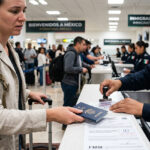
    Mexico Is Shortening Tourist Stays, and Politics May Be Why

    Reports from travelers and immigration attorneys are raising flags for anyone planning a trip to Mexico: airport officers are increasingly granting tourist permits for far fewer than the standard 180 days, and some say U.S.-Mexico tensions are feeding into that dynamic.

    Sonia Diaz, a licensed immigration attorney who practices in San Miguel de Allende, Puerto Vallarta, and Nayarit, recently posted a warning on social media that has been circulating widely among expats and travelers. She described receiving regular messages from visitors who arrive in Mexico only to find their tourist permit stamped with as few as 10 days — a number that cannot be changed once issued.

    “Weekly, I receive similar emails,” Diaz wrote.

    Tourist visas in Mexico can be valid for just a week or a few days. Photo illustration

    Officer Discretion Is the Rule, Not the Exception

    Under Mexico’s immigration law, specifically Article 43 of the Ley de Migración, the number of days written on a tourist permit — known as the Forma Migratoria Múltiple, or FMM — is entirely at the discretion of the officer on duty. The maximum is 180 days, but there is no floor. Officers may ask about travel plans, return flights, and accommodation, and they factor those answers into the number they stamp.

    That process has always existed. What is changing, according to Diaz and travelers reporting similar experiences, is the frequency with which officers are issuing far shorter stays than normal — and the airports where this is happening. This is not limited to any single entry point. Diaz was emphatic: it is happening across all airports, including those with automated passport scanners.

    Once the stamp is in your passport, the duration is final. There is no extension process available inside Mexico. If a traveler finds their return flight falls outside the allotted window, they face either paying an overstay fine or leaving Mexico early and re-entering on a new permit — assuming they can get a longer one on the next try.

    A Political Climate That Is Reaching Airport Counters

    Diaz points to the broader bilateral friction as a contributing factor in how some officers are making decisions. With the Trump administration reviewing all 53 Mexican consulates in the United States for potential closure — a move reported this month by CBS News and the Associated Press — resentment is running in both directions. Mexicans seeking a U.S. tourist visa currently face a roughly two-year wait and a fee of around MX$4,200 (about US$230), with no guarantee of approval.

    There is also the question of what happens to travelers who already hold a canje stamp in their passport, indicating they are in the process of obtaining Mexican residency. Diaz noted that some officers are logging those individuals as ordinary tourists rather than recording their correct immigration status — a potentially serious error that could complicate the residency process.

    “Immigration staff at airports have a lot of independence,” Diaz wrote. “They also have their personal beliefs and politics.”

    What Travelers and Prospective Residents Should Know

    For anyone traveling to Mexico as a tourist, immigration attorneys recommend arriving prepared. Have a printed or digital copy of your return ticket, hotel reservation, and a clear explanation of your itinerary ready before you reach the officer’s window. Be direct and polite about how long you intend to stay. Check the number in your passport stamp before leaving the immigration hall — you are entitled to know what was entered, and catching an error while still in the area gives you the best chance of resolving it.

    For those in the middle of the residency process — the canje stage, where a consulate-approved visa is being exchanged for a resident card — the stakes are even higher. Diaz and other immigration professionals have repeatedly advised those travelers to make clear at the counter that they are entering under a canje, not as tourists, and to confirm that the officer records their status correctly.

    Travelers who find themselves stranded with a very short permit and a return flight weeks away should seek legal counsel immediately. A qualified immigration attorney can sometimes find options depending on the specific circumstances, though there is no guaranteed remedy once the stamp is set.

    For a broader look at how Mexico’s residency and permit system works, here are the basics of Mexican residency options for readers considering a longer stay.

    More background on the diplomatic frictions between Washington and Mexico City — including the consulate review and drug-trafficking indictments of Mexican officials — is available from the Associated Press.


    FMM Quick Facts

    • The FMM (Forma Migratoria Múltiple) is a required entry permit, not a visa, for tourists and business visitors from the U.S., Canada, and other no-visa countries
    • Maximum authorized stay: 180 days — but the actual number is set by the officer at the counter
    • Once stamped, the number of days cannot be extended from inside Mexico
    • The 2026 FMM fee is MX$983 (about US$54), usually included in airfare; free for stays of 7 days or fewer
    • Always check your passport stamp before leaving the immigration hall
    • Travelers in the canje process must tell the officer they are not entering as tourists and confirm their status is recorded correctly
    • Those who overstay their permit face a fine before departure and possible re-entry complications

    Source: Mexico’s Instituto Nacional de Migración (INM), Yucatan Magazine