
Author: MxTrib Staff

  • Baby Left Alone in Rideshare, Father Flees on Motorcycle in Ecatepec

    Baby Left Alone in Rideshare, Father Flees on Motorcycle in Ecatepec

    A 6-month-old baby was found abandoned in the back seat of a rideshare taxi in Ecatepec, State of Mexico, after the man believed to be the child’s father slipped away on a motorcycle and disappeared into traffic, leaving the infant wet, dirty, and with only a backpack containing two bottles of alcohol and a baby bottle filled with spoiled atole.

    A 6-month-old boy was left alone in a rideshare taxi in Ecatepec, State of Mexico, on May 15. Photo: Social media

    The driver, operating a gray Nissan Versa, picked up the man in the colonia Luis Donaldo Colosio. The passenger asked to be taken to Laureles and, once they arrived at a repair shop along the way, stepped out to collect a motorcycle he had waiting there. He told the driver he couldn’t take the baby on the bike and asked him to follow. Within minutes, the man gunned the throttle on vía Morelos and was gone.

    The driver did the right thing. He headed toward the fraccionamiento Los Héroes Primera Sección and flagged down a patrol unit. Municipal police officer María Teresa Reséndiz Ramírez, a 20-year veteran, was on patrol in that quadrant when the driver intercepted her. She found the baby in the back seat — wet, soiled, and without any essentials.

    “I saw the child in the car, in the back seat, wet and dirty. Right away, I pulled out the wipes I keep in my patrol car and started cleaning him up, but his clothes were very dirty,” she said, according to El Universal. Her supervisors went out and bought diapers and baby food on the spot.

    Officers from the municipal Victim Services Unit transported the baby to the Ecatepec offices of the Procuraduría de Protección de Niñas, Niños, Adolescentes y Adultos Mayores — the local child and family protection agency that operates under the DIF system, Mexico’s national family welfare body.

    Five hours after the incident, a man identifying himself as Raúl Michell “N” showed up at the agency claiming to be the child’s father and asking for the baby back. He left empty-handed. Procuradora Mariana Uribe Bernal said the man could not establish parentage: the baby has no birth certificate, no official registration, and no CURP — Mexico’s unique population registry code assigned at birth. Authorities also requested the presence of the child’s mother, who has not appeared.

    Uribe Bernal told reporters a formal complaint will be filed with the Ministerio Público, the equivalent of a district attorney’s office, and that the baby will remain in the care of the Casa Hogar de Ecatepec, a municipal shelter. “We will initiate a complaint before the Ministerio Público,” she said. “The baby will remain under DIF care and sheltered at the Casa Hogar, where we will work to protect his safety and restore his rights.”

    Municipal authorities have not confirmed whether an active investigation is underway to locate Raúl Michell “N” or the child’s mother.

    Ecatepec, located just north of Mexico City in the State of Mexico, is one of the country’s most populous municipalities, with an estimated 1.7 million residents. The city has a long track record of elevated social vulnerability and crime. Child abandonment cases in Mexico are handled at the state and municipal level through the DIF network, which operates shelters and family protection offices across the country.

    Source: Excélsior.


    At a Glance

    • A 6-month-old baby boy was left alone in a rideshare taxi in Ecatepec, State of Mexico, on May 15
    • The man suspected to be his father fled on a motorcycle after stopping at a repair shop
    • The baby was wet, soiled, and without proper supplies; officers bought diapers and baby food
    • A man later identified as Raúl Michell “N” claimed paternity at the DIF office but could not prove it
    • The child has no birth certificate, no registration, and no CURP
    • The baby is in the custody of the Casa Hogar de Ecatepec pending a formal investigation
    • Authorities plan to file a complaint with the Ministerio Público
  • Chocolate Museum Built Over Aztec Skull Rack Is One of Mexico City’s Most Compelling New Spaces
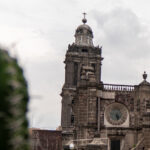
    Chocolate Museum Built Over Aztec Skull Rack Is One of Mexico City’s Most Compelling New Spaces

    The story of a chocolate museum rising above one of the most remarkable archaeological finds in recent Mexican history is worth telling in full.

    Choco-Story Zócalo, the Museo del Cacao y Chocolate, sits at República de Guatemala 24 in Mexico City’s Centro Histórico, a few steps from the Zócalo. A 17th-century colonial house, a discreet five-story contemporary addition, and underneath it all, more than 650 human skulls from the height of the Aztec empire.

    The skulls are part of the Huey Tzompantli — the great skull rack of Tenochtitlan, where the Mexica displayed the remains of people believed to have been sacrificed during the reigns of rulers Itzcóatl, Ahuízotl, and Moctezuma Ilhuicamina in the 15th century. Workers discovered a section of it during construction. The Mexican government has described it as one of the most important archaeological discoveries in the country’s history. Visitors can see it through a window near the ticket booth.

    An 11-Year Project Below the Surface

    The architect behind the renovation is Javier Sánchez, whose Mexico City firm JSa had already worked steps away on an expansion of the Centro Cultural de España — a project that turned up the ruins of a Prehispanic school for nobility. When the chocolate museum commission came in 2013 from Agustín Otegui, whose family owns the building, JSa already suspected what might be underground. The building’s tilt confirmed it. Many structures in the Centro Histórico sink gradually as the old lake bed beneath them compresses; the angle of this one suggested something solid below was holding it up.

    That something turned out to be the skull rack. What followed, according to Aisha Ballesteros — the JSa partner who led the museum’s design — was 11 years of excavating and stabilizing the Huey Tzompantli underground while simultaneously working on the building above. The team first stabilized the colonial house, which Ballesteros described as like sliding footings under the legs of a wobbly table. Then they drove 30-meter piles into the ground to create a solid foundation for the new five-story addition built behind the colonial structure.

    3 Histories in a Single Building

    The contemporary addition is clad in local travertine — a sandy-colored stone chosen to echo the volcanic tezontle that defines much of the Centro Histórico’s architecture. The two structures were deliberately kept separate, never touching. The gap between them serves a dual purpose: it lets visitors see the historic colonial walls in full, and it satisfies seismic requirements in a city built on unstable lake sediment.

    The contrast is intentional. Where the old building leans, the new one stands plumb, and the angles play against each other throughout the complex. “It becomes a game between old and new, oblique and straight,” said Ballesteros.

    Between the two buildings, an open courtyard lit by hand-hammered copper lamps leads to shaded seating. A cacaotería — a chocolate and coffee shop — anchors the ground floor. On the rooftop, JSa designed a new restaurant called Charco, with views of the Palacio Nacional, the Templo Mayor, the Metropolitan Cathedral, and the Torre Latinoamericana.

    For Otegui, the project’s meaning runs deeper than architecture or tourism. “Cacao offers a connection between past and present,” he said, describing the bean — sacred to the Maya and the Mexica, and now an everyday pleasure worldwide — as a thread that still runs through Mexican life.

    Cacao’s Peninsula Roots

    For readers in the Yucatán Peninsula, the story behind this museum is familiar territory. The Maya cultivated cacao for centuries, used it ceremonially, and traded the beans as currency long before Spanish contact. The Choco-Story network already operates in Uxmal, Valladolid, and Playa del Carmen — three Peninsula locations where that history is close at hand. Yucatán Magazine has covered the Peninsula’s deep cacao heritage in detail.

    The museum’s exhibitions begin on the second floor and trace the bean from its Mayan and Mexica origins through the Spanish conquest and on to the global chocolate industry today. Audio guides are included in admission and are available in English, French, Portuguese, and German. A 60-minute chocolate workshop, where visitors make and decorate their own bars under the guidance of professional chocolatiers, is also available.

    At a Glance

    • Address: República de Guatemala 24, Centro Histórico, Mexico City
    • Hours: Daily 10 a.m. to 6 p.m. (last entry 5 p.m.)
    • General admission: MX$300 (about US$15)
    • CDMX/Estado de México residents with ID: MX$250 (about US$12)
    • Students, teachers, seniors, people with disabilities: MX$200 (about US$10)
    • Children ages 6–12: MX$150 (about US$7.50)
    • Chocolate workshop (60 min., includes admission): MX$800 (about US$40)
    • Nearest metro: Zócalo–Tenochtitlan (Line 2)
    • Tickets: choco-story-zocalo.mx
  • Archaeologists demand action as looters strip ancient site near Mexico City
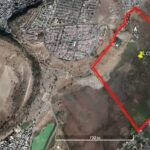
    Archaeologists demand action as looters strip ancient site near Mexico City

    A pre-Hispanic archaeological site in México state has been reduced to a fraction of its original size by years of looting, unauthorized development and illegal land sales — and researchers say government inaction has made things far worse.

    The site, Los Tlateles, sits on the former lakebed of what was once Lake Chalco, roughly 30 kilometers (19 miles) from Mexico City. It originally covered more than 200 hectares (nearly 500 acres) but has been whittled down to between 10 and 20 hectares today. About 150 earthen mounds remain, but archaeologists warn that even those could disappear within the year.

    Ceramics, bones, skulls — taken daily

    Archaeologist and independent researcher Ricardo Arredondo estimates that roughly 70% of pre-Columbian pieces currently listed on Facebook Marketplace and Mercado Libre originate from Los Tlateles. The citizen group Frente Común Tlalteles says ceramics, bones and sculptures are removed on a near-daily basis, calling the pattern of official inaction an “irreparable” failure.

    History and archaeology influencer Señor Blue — whose real name is Yaotzin Nell Mejía — documented irregular excavations at the site on video, showing bone fragments, pottery and skulls bearing stone tooth inlays that may indicate high-ranking Prehispanic burials. Outsiders with specialized equipment reportedly travel to the site specifically to pillage it.

    Among the most significant recent losses: a Prehispanic offering possibly dedicated to Tláloc, the rain deity, that reportedly included braziers, shells, obsidian figurines and human remains. According to local accounts, those objects quickly wound up on Facebook, offered for sale by a private individual.

    Why INAH can’t — or won’t — step in

    The National Institute of Anthropology and History (INAH) faces a legal tangle of its own. Residents have filed amparos — injunctions under Mexican law — blocking archaeologists from accessing the site. The cases are tied up before a federal district judge in Nezahualcóyotl. INAH has also acknowledged that Los Tlateles has never been officially declared a protected archaeological zone, which limits its legal tools.

    On its website, the agency posted an undated legal-defense text arguing that the site is being ravaged by unauthorized construction and looting on ejido (communally held) land, and that court orders, vandalism and internal legal shortcomings have all constrained its ability to act. As of this week, INAH had issued no public statement responding to the most recent accusations.

    Blame directed at specific officials

    The INAH labor union’s Commission for the Protection and Legislation of Archaeological, Historical and Paleontological Heritage went further, naming two officials directly. It accused Salvador Pulido, INAH’s director of archaeological salvage, and Nahúm Noguera, director of INAH’s México state office, of being “responsible for all the damage and looting caused to the archaeological heritage,” saying the two had failed to act under existing law and had in some cases authorized work that damaged protected monuments.

    Arredondo places the site’s occupation from roughly 2050 BCE to 1521 CE. He describes it as a precursor to the chinampa system — the network of artificial islands and canals later used in the Aztec capital of Tenochtitlán, precursor to present-day Mexico City. That lineage makes what’s happening at Los Tlateles all the more significant, say researchers tracking the illegal antiquities trade.

    Selling archaeological artifacts is a federal crime in Mexico and can carry penalties of up to 10 years in prison, but enforcement at Los Tlateles has remained essentially nonexistent.

    At a Glance

    • Site: Los Tlateles, Chalco municipality, México state
    • Original size: More than 200 hectares (nearly 500 acres)
    • Current size: 10–20 hectares, with further loss expected this year
    • Occupation period: Approx. 2050 BCE to 1521 CE
    • Status: Not officially a protected archaeological zone
    • Items stolen: Ceramics, bone fragments, skulls, obsidian objects, human remains
    • Online sales: An estimated 70% of pre-Columbian pieces on Facebook Marketplace and Mercado Libre traced to this site
    • Legal barrier: Community-filed amparos block INAH access; cases pending in federal court

    Sources: Excélsior, El Informador, La Voladora Noticias

  • U.S. Targets More Morena Governors in Cartel Probe

    U.S. Targets More Morena Governors in Cartel Probe

    The U.S. Department of Justice is preparing to formally charge at least one more governor from Mexico’s ruling Morena party over alleged ties to organized crime — and analysts say Baja California Gov. Marina del Pilar Ávila is near the top of that list.

    According to journalist Carlos Loret de Mola, Ávila has not held a U.S. visa for roughly a year. Washington revoked it as part of a money laundering investigation, he wrote — the first time in recent memory that a sitting Mexican governor was denied entry to the U.S. Loret de Mola also named Tamaulipas Gov. Américo Villarreal as a likely target, citing his alleged connection to fuel-theft networks and cartel financing of Morena campaigns. A Tamaulipas mayor, unnamed in the reporting, is said to round out the near-term list.

    The disclosure comes roughly two weeks after federal prosecutors in Manhattan unsealed charges against Sinaloa Gov. Rubén Rocha Moya and nine other current and former state officials. That April 29 indictment accused the group of conspiring with the Chapitos faction of the Sinaloa Cartel — the sons of imprisoned drug lord Joaquín “El Chapo” Guzmán — in exchange for millions of dollars in bribes and political support. Rocha Moya, 76, who has denied the allegations, temporarily stepped down from his governorship on May 2, a move that stripped him of the legal protections his office provided. The mayor of Culiacán, Juan de Dios Gamez, also stepped aside.

    U.S. Attorney Jay Clayton framed the indictment as a broader warning: “The Sinaloa Cartel is a ruthless criminal organization that has flooded this community with dangerous drugs for decades. As the indictment lays bare, organizations like it would not operate as freely or successfully without corrupt politicians and law enforcement officials on their payroll.”

    Political analyst Mario Maldonado wrote in El Universal this week that the Justice Department is now readying at least one additional Morena governor’s name, while also preparing extradition requests for other party-affiliated officials. He described the president’s inner circle as braced for impact. “The presidential cabinet is expecting a new offensive from Washington against Mexican politicians accused of alleged ties to drug trafficking,” he wrote. “President Claudia Sheinbaum already knows.”

    Loret de Mola wrote that both governors and the Tamaulipas mayor “appear to head the list of Morena politicians against whom the U.S. government would be initiating formal legal processes in its courts, according to information circulating in high-level Mexican and U.S. government circles.”

    The pressure extends beyond criminal proceedings. The White House released its 2026 National Drug Control Strategy this week, placing Mexico at the center of U.S. efforts to cut fentanyl trafficking and explicitly tying future security cooperation to results on drug enforcement. The timing matters: the U.S.-Mexico-Canada trade agreement is up for its mandatory review this summer, and the 2026 World Cup begins in weeks.

    The review of 53 Mexican consulates in the United States — confirmed by State Department officials — has added another layer of tension. Maldonado wrote that what might look like a routine administrative move “reads in the current context as part of a comprehensive strategy against Mexico.”

    Sheinbaum has pushed back publicly. Last week, her foreign ministry sent a diplomatic note to the Justice Department demanding concrete evidence against the Sinaloa officials. She has insisted that Mexico will not hand anyone over without what she calls “overwhelming and irrefutable proof.” Behind the scenes, her team is reportedly pushing for the accused to be tried in Mexico rather than extradited. Mexico’s attorney general has yet to move against any of the 10 officials named in the Sinaloa indictment.

    Maldonado warned that if the Justice Department moves against another sitting governor, Sheinbaum “will have to make more radical decisions.”

    Morena controls 22 of Mexico’s 31 state governorships — which means the scope of any sustained U.S. legal campaign could stretch across much of the country. Even Yucatán, long an outlier for safety, has seen rare signs of cartel activity, underlining how broadly organized crime has worked to extend its reach.


    At a Glance

    • Sinaloa Gov. Rubén Rocha Moya and 9 others were indicted by U.S. prosecutors on April 29, 2026
    • Charges include narcotics trafficking conspiracy and weapons offenses; potential penalty is life in prison
    • Rocha Moya stepped down temporarily on May 2; Culiacán Mayor Juan de Dios Gamez also left office
    • Analysts name Baja California Gov. Marina del Pilar Ávila and Tamaulipas Gov. Américo Villarreal as next likely targets for formal charges
    • Ávila’s U.S. visa was revoked roughly a year ago; she has not been charged with any crime
    • Mexico has refused extradition absent what it calls “irrefutable” evidence
    • The U.S.-Mexico-Canada trade agreement is up for review this summer, adding economic pressure to the standoff

    Sources: Diario de Yucatán, El Universal, NBC News, CBC News, U.S. Department of Justice, White House

  • U.S. Pressure on Mexican Officials Puts Sheinbaum in a Bind
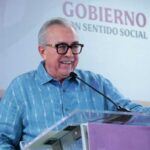
    U.S. Pressure on Mexican Officials Puts Sheinbaum in a Bind

    The U.S. Department of Justice indictment of Sinaloa Gov. Rubén Rocha Moya, unsealed in late April in a New York federal court, was historic by any measure. No American administration had ever charged a sitting Mexican governor before. But for many close observers of Mexican politics, the more unsettling question isn’t what happens to Rocha Moya — it’s who comes next.

    The charges accuse Rocha Moya of conspiring with the sons of jailed Sinaloa Cartel boss Joaquín “El Chapo” Guzmán — a faction known as Los Chapitos — to move narcotics into the United States in exchange for political support. According to prosecutors, cartel operatives kidnapped opposition candidates and stole ballots during the 2021 Sinaloa governor’s race to help him win. The U.S. Attorney for the Southern District of New York called it a “deliberate effort to undermine public institutions.”

    Rocha Moya stepped down from his post following the charges and has denied them, calling the indictment politically motivated and an attack on Mexico’s sovereignty.

    The governor of Sinaloa, Rubén Rocha Moya, participates in a working meeting at the National Palace, convened by the President Claudia Sheinbaum Pardo in May 2025.

    A List Nobody Is Surprised By

    Veteran journalist Carlos Loret de Mola reports that sources in high-level government circles on both sides of the border point to two more Morena officials as likely targets of formal U.S. legal proceedings. Neither name, he notes, comes as a surprise to anyone who follows Mexican politics.

    The first is Marina del Pilar Ávila, the Morena governor of Baja California. Her U.S. tourist visa was revoked roughly a year ago, along with that of her then-husband, Carlos Torres, who is now under federal investigation in Mexico for alleged ties to organized crime, including weapons and drug trafficking and money laundering. Ávila has said the visa cancellation was an administrative matter and that she has a clear conscience. She and Torres have since divorced.

    The second is Américo Villarreal, the Morena governor of Tamaulipas, a state with a long and well-documented history of cartel infiltration. Villarreal’s name has surfaced repeatedly in connection with huachicol — the large-scale theft and black-market sale of fuel, mostly siphoned from Pemex pipelines — as well as broader allegations of collusion with organized crime. According to Loret de Mola, a former Tamaulipas mayor publicly stated that Villarreal was involved. The governor has not been charged and has denied wrongdoing.

    A CIA Grievance, a Broken Bargain

    The column’s sharpest passage concerns the CIA. Loret de Mola writes that the agency is furious over what it sees as a double standard from President Claudia Sheinbaum. When U.S. agents working alongside a Chihuahua state government operation to dismantle a major narco laboratory were killed, Sheinbaum’s government launched legal and political attacks on the CIA, its operatives, and the opposition-led state that had hosted them. Meanwhile, when Rocha Moya — a Morena ally — was formally charged by U.S. prosecutors, Sheinbaum’s administration defended him and demanded “irrefutable proof” before any extradition process could begin.

    The CIA, Loret de Mola claims, is now taking note of which politicians and media figures are lining up to defend Rocha Moya.

    The column carries weight in part because of who wrote it. Loret de Mola is among Mexico’s best-known journalists — born in Mérida, grandson of a former Yucatán governor, and son of a prominent political writer. He spent nearly two decades as anchor of Televisa’s flagship morning newscast before leaving in 2019 to pursue independent work. He co-founded the digital platform Latinus, writes a widely read column for El Universal, and contributes to The Washington Post. He has reported from conflict zones including Afghanistan, Syria, and Libya, and won Mexico’s National Journalism Prize. For years, his primary focus has been the ties between Mexico’s political class and organized crime — a beat that has made him a target of the ruling party and one of the most closely watched voices in Mexican media.

    Sheinbaum’s Impossible Position

    It is a genuinely difficult spot for the president. Rocha Moya is a longtime Morena figure with close ties to former President Andrés Manuel López Obrador, who is Sheinbaum’s political mentor. All three belong to the same party, which controls 22 of Mexico’s 31 governorships and both chambers of the national legislature.

    Acting against Rocha Moya risks fracturing the coalition. Not acting deepens a rift with Washington at a moment when USMCA trade negotiations remain unresolved and the Trump administration has made cartel crackdowns a top priority — at times threatening military action inside Mexico.

    A poll by Mexican firm Massive Caller found that more than 70% of respondents believe Rocha Moya is guilty, and nearly 80% said he should be extradited to the U.S.

    So far, Sheinbaum has not moved to arrest or extradite him.


    At a Glance

    • U.S. charges against Sinaloa Gov. Rocha Moya were unsealed April 29, 2026, in the Southern District of New York
    • The indictment names 10 Mexican officials and alleges cartel cooperation during the 2021 Sinaloa election
    • Baja California Gov. Marina del Pilar Ávila lost her U.S. visa about a year ago; her ex-husband is under Mexican federal investigation for alleged organized crime ties
    • Tamaulipas Gov. Américo Villarreal has been repeatedly linked to huachicol and cartel collusion; no formal charges have been filed
    • Rocha Moya stepped down as governor after the charges were unsealed; he denies all allegations
    • Mexico’s Sheinbaum government has asked the U.S. Justice Department for “irrefutable” proof before pursuing extradition
    • Carlos Loret de Mola’s column appears in Diario de Yucatán and is among the most widely read in Mexico

    Source: Diario de Yucatán; Al Jazeera; Christian Science Monitor; Infobae; Mexico News Daily