Author: MxTrib Staff

  • Gringo Tax: Mexico City Club Hits Americans With $300 Cover, Story Goes Viral

    Gringo Tax: Mexico City Club Hits Americans With $300 Cover, Story Goes Viral

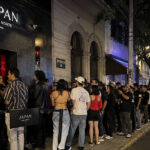
    A Mexico City nightclub is charging U.S. citizens MX$5,000 (about US$300) just to walk through the door, while visitors from any other country pay around US$20. The Instagram post announcing the policy racked up more than 26,000 likes and set off a fresh round of debate about tourism, gentrification, and the state of U.S.-Mexico relations.

    The venue is Club Japan in Roma Norte, one of the capital’s trendiest and most contested neighborhoods. Owner Federico Crespo told the Guardian the move was deliberate. “This is a response to a year of insults directed at us — as a country — by the United States,” he said. “It’s very much a response to the many attacks against Mexico from Trump.”

    Gringo tax
    A trendy nightclub in Mexico City has U.S. visitors paying a much higher cover charge than nationals. Photo: Social media

    Not a Surcharge — Technically

    The club was careful about how it framed the policy on social media. “It is not that ‘we charge more to the gringos,’ but that we offer discounts for those who need it,” the post read. Under the pricing structure, the base admission is MX$5,000 (about US$300). Citizens of countries other than the U.S. receive a 93% discount and pay MX$350 (about US$20). Mexicans and other Latin Americans get 95% off, paying MX$250 (about US$15). Students and teachers from outside the U.S. qualify for a 97% discount, bringing their cover down to MX$150 (about US$9). Americans simply don’t receive a discount.

    A follow-up post from the club was direct about the intent: “This policy in NO WAY responds toward animosity or any negative sentiment towards American citizens as INDIVIDUALS. This is a political positioning.” The club added that it was inviting U.S. citizens to “take the reins of their country.”

    Crespo also said any extra revenue from the full-price admissions goes directly to club workers. Rising rents in Roma Norte and surrounding neighborhoods have pushed many employees into longer commutes and steeper costs of living. “It’s a way to give that money to the people most affected by this issue,” he said.

    A Neighborhood Under Pressure

    Roma Norte didn’t become a flashpoint overnight. Since the pandemic, the neighborhood — along with nearby Condesa and Juárez — has absorbed a wave of American remote workers drawn by the peso’s favorable exchange rate and a quality of life that costs a fraction of what it would stateside. According to Georgetown University research, rents in those districts have climbed more than 60% in recent years, compared to roughly 30% across Mexico City as a whole.

    For many longtime residents, that math has a human cost. Landlords have converted apartments into short-term rentals. Cafés once serving the neighborhood now cater to a clientele that doesn’t speak Spanish. The number of Americans living in Mexico jumped 70% from 2019 to 2022 and has continued rising, reaching 1.6 million according to a 2024 U.S. State Department report.

    Frustration turned public last July when anti-gentrification protests broke out in Roma Norte and Condesa. Some demonstrations turned violent, with storefronts damaged and signs reading “My city is not your Airbnb” and “Gringos, stop stealing our home.” The U.S. Embassy issued a security alert ahead of a third planned march.

    Political Backdrop

    The club’s pricing lands against a backdrop of strained diplomatic relations. President Trump’s rhetoric about Mexico — including tariff threats and calls to designate cartels as foreign terrorist organizations — has sharpened public sentiment south of the border. Whether American tourists will actually line up and pay US$300 to get in is another question. But Crespo seems less interested in filling the room with U.S. passport holders than in making a point, and for now, the internet is paying attention.

    For background on the original protests, the Guardian’s full report has additional detail on Club Japan and the broader context.


    At a Glance: Club Japan’s Cover Charge Policy

    • U.S. citizens: MX$5,000 (about US$300) — no discount
    • Other international visitors: MX$350 (about US$20) — 93% off
    • Mexicans and Latin Americans: MX$250 (about US$15) — 95% off
    • Students and teachers (non-U.S.): MX$150 (about US$9) — 97% off
    • Location: Roma Norte, Mexico City
    • Owner: Federico Crespo
    • Club’s Instagram post received more than 26,000 likes

    Source: New York Post, the Guardian

  • Mexico Cuts School Year Short for Heat and the World Cup
    Mexico Cuts School Year Short for Heat and the World Cup

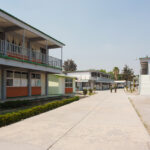
    Mexico is ending its school year nearly six weeks early, citing extreme heat and the looming start of the 2026 FIFA World Cup. Classes will wrap up June 5 — 40 days ahead of the original July 15 finish date.

    Education Secretary Mario Delgado announced the decision, saying the National Council of Educational Authorities voted unanimously to move the calendar after receiving widespread requests from parents, teachers, and school administrators. The next school year will begin Aug. 31, one day earlier than the Sept. 1 start date that applied in 2025.

    The World Cup kicks off June 11 with Mexico’s opening match in Mexico City, putting the tournament squarely in the middle of what would have been the final stretch of the academic year. Three Mexican cities — Mexico City, Guadalajara, and Monterrey — are hosting matches across a tournament that runs through July 19.

    Heat Is Already a Major Concern

    Mexico’s summers have always pushed the limits of classroom comfort, but 2026 is shaping up to be particularly brutal. Researchers studying the tournament’s host cities found that Monterrey’s afternoon temperatures could reach wet-bulb globe readings above 90°F (32°C) — a measure that factors in humidity, wind, and sun angle, not just air temperature. The same study found that 14 of the World Cup’s 16 host venues face conditions that could be dangerous for athletes and spectators alike.

    The 2022 World Cup in Qatar was moved from summer to winter specifically because of heat risks. No such option existed for a North American tournament timed around traditional June-July scheduling.

    For Mexican schools, most of which lack air conditioning, the combination of peak summer temperatures and World Cup excitement made a compressed calendar increasingly difficult to justify. The government’s move gives families more flexibility and removes any pressure on schools to keep students in sweltering classrooms while the country’s national team is playing on home soil.

    Yucatán Watching Closely

    The Peninsula has its own stake in how the summer plays out. Although no matches will be held in Yucatán, airspace restrictions tied to the tournament are already in effect for Cancún, where a FIFA Fan Festival at Malecón Tajamar will broadcast all 104 games on giant screens. Hotel prices across the region are expected to climb 40-60% during the tournament window, and Mérida is actively marketing itself as a destination for fans with downtime between matches.

    An earlier school release date may have a ripple effect on the Peninsula’s summer tourism numbers. Families freed up in early June — rather than mid-July — will have a longer window to travel domestically, potentially accelerating what analysts already expect to be a record season for Mexican beach destinations.

    A Historic Hosting Year

    The 2026 tournament marks the third time Mexico has served as a World Cup host, a distinction no other country holds. Mexico previously hosted in 1970 and 1986. Estadio Azteca — now officially rebranded — will become the first stadium in history to host matches across three separate World Cup tournaments.

    FIFA has mandated 3-minute hydration breaks midway through each half for all matches, regardless of temperature, as part of broader heat management protocols for the tournament.

    Source: Bloomberg


    At a Glance

    • Mexico’s school year will end June 5, 40 days earlier than the original July 15 close
    • The decision was unanimous among the National Council of Educational Authorities
    • Education Secretary Mario Delgado announced the change in response to widespread requests
    • The 2026 FIFA World Cup begins June 11 with Mexico’s opener in Mexico City
    • The next school year will start Aug. 31, one day ahead of the 2025 start date
    • Mexico City, Guadalajara, and Monterrey are hosting matches through July 19

  • Mexican Schindler: The Diplomat Who Saved 40,000 People from the Nazis

    Mexican Schindler: The Diplomat Who Saved 40,000 People from the Nazis

    Gilberto Bosques Saldívar, Mexico’s consul general in Marseille during World War II, issued roughly 40,000 visas to Jews and Spanish Republicans fleeing Nazi Germany and Francoist Spain. Photo: Archives

    Before Oskar Schindler became a household name, a Mexican diplomat in southern France was quietly doing something just as extraordinary — and the world barely noticed for 60 years.

    Gilberto Bosques Saldívar was born in 1892 in Chiautla de Tapia, Puebla, in a mountainous region southeast of Mexico City. He fought in the Mexican Revolution at 17, went on to become a journalist, a schoolteacher, a state legislator, and twice a federal deputy. In 1938, President Lázaro Cárdenas appointed him Consul General in Paris.

    When Nazi Germany swept into France in May 1940, Bosques fled Paris with the rest of the diplomatic corps. His government instructed him to set up a new consulate in Marseille, in what would become the German-controlled puppet state known as Vichy France. That relocation put him at the center of one of the worst refugee crises in modern history — and he made the most of it.

    A bust of Gilberto Bosques Saldívar is on view at the Ministry of Foreign Affairs, Mexico City. Photo: Wikimedia Commons

    Visas for Everyone

    Bosques ordered his consulate staff to issue a Mexican visa to anyone who needed one to escape. Jews fleeing the Third Reich, Spanish Republicans driven out by Francisco Franco’s forces after the Spanish Civil War, French political dissidents, Italians, Lebanese — all were eligible. Under his watch, roughly 40,000 visas were issued.

    He didn’t stop there. Bosques rented two châteaux outside Marseille to shelter the refugees under what he claimed, under international law, was Mexican territory. He chartered ships to carry people out of Europe, routed through African ports and on to Mexico, Argentina, and Brazil. He personally lobbied both President Cárdenas and his successor, Manuel Ávila Camacho, to keep the doors open.

    The consulate operated under constant surveillance. The Gestapo, Vichy police, and Franco’s agents all monitored its activities. In February 1943, after Mexico cut ties with the Vichy regime, German forces moved in as the staff was still burning files. Bosques, his wife, their 3 children, and about 40 consular employees were arrested and transferred to a hotel-prison in Bad Godesberg, near Bonn, where they were held for more than a year.

    Mexico negotiated their release in 1944, arranging a prisoner exchange that freed Bosques and his team in return for German nationals held in Mexico. When Bosques arrived back in Mexico City by train, thousands of Spanish refugees were waiting at the station to greet him.

    Recognition, Long Overdue

    Bosques returned to diplomatic work after the war, serving as ambassador to Portugal, Finland, Sweden, and Cuba. He lived to 102 — dying in 1995, just days before his 103rd birthday. His wartime role went largely unacknowledged for decades, even within academic circles.

    The turnaround began in 2003, when the city of Vienna named a street in his honor: the Gilberto-Bosques-Promenade, in recognition of his efforts to help Austrian refugees. In 2008, the Anti-Defamation League presented his family with a posthumous Courage to Care Award at a ceremony in Beverly Hills, California. A documentary, “Visa to Paradise,” followed in 2010.

    Today, he is often called the “Mexican Schindler,” a comparison to industrialist Oskar Schindler, though historians note that Bosques operated on a larger scale and with the backing — if sometimes just barely — of his government. Scholars continue to debate how much of his work was truly independent action versus official Mexican foreign policy. What is not debated is the outcome.

    Mexico’s role in World War II extended well beyond the consulate in Marseille. The country sent combat pilots to the Pacific theater and was the first in the world to formally protest Germany’s annexation of Austria. As covered in Mexico’s WWII role, the nation’s contributions to the Allied effort remain underappreciated outside Latin America.

    The U.S. Holocaust Memorial Museum describes Bosques as having saved tens of thousands of lives. For context on how few others did the same, the Raoul Wallenberg Foundation — which has honored Bosques alongside Swedish diplomat Raoul Wallenberg and Japanese consul Chiune Sugihara — notes that such acts of defiance were vanishingly rare among diplomats of the era.


    At a Glance: Gilberto Bosques Saldívar

    • Born: July 20, 1892, Chiautla de Tapia, Puebla, Mexico
    • Died: July 4, 1995, age 102
    • Role: Consul General of Mexico in Marseille, France, 1939–1943
    • Visas issued: Approximately 40,000
    • Refugees sheltered: Jews, Spanish Republicans, French, Italians, Lebanese, and others
    • Arrested by the Gestapo: February 1943; held near Bonn for over a year
    • Released: April 1944 via prisoner exchange
    • Honors: Vienna street named in his honor (2003); ADL Courage to Care Award (2008, posthumous)
    • Documentary: “Visa to Paradise” (Visa al paraíso), 2010
    • Nickname: “The Mexican Schindler”
  • Airline’s Stopover Program Turns Mexico City into a 2-for-1 Destination

    Airline’s Stopover Program Turns Mexico City into a 2-for-1 Destination

    International travelers flying through Mexico City will now be able to spend up to a week in the capital before continuing to a second Mexican destination — all under a single fare — thanks to a new program announced by Aeroméxico at last week’s Tianguis Turístico in Acapulco.

    The stopover program lets passengers on international itineraries add an extended stay in Mexico City before moving on to a connecting flight elsewhere in Mexico, subject to certain fare conditions. The airline billed it as a way for visitors to experience two destinations without paying for two separate trips.

    Aeromexico
    The 2026 Tianguis Turístico in Acapulco featured Aeroméxico.

    The announcement was part of a broader presentation at Mexico’s biggest annual tourism trade fair, where Aeroméxico outlined expansion across routes, fleet, and technology. The program could deliver a meaningful lift for Mexico City hotels, restaurants, and cultural attractions — exactly the kind of economic multiplier that tourism officials have long sought from the country’s main international hub.

    For travelers already planning a trip to destinations like Oaxaca, Mérida, or Los Cabos, the program removes a common friction point: the feeling that a long Mexico City layover is dead time. Now it can be a selling point.

    More Routes

    Aeroméxico has been expanding aggressively on both domestic and international routes. In 2025, it launched new services from Mexico City to Cartagena, Phoenix, Philadelphia, Cali, Panama City, and Punta Cana. So far in 2026, it has added routes to Tegucigalpa, Quito, and Barcelona, along with Monterrey–Paris. Monterrey–New York and Guadalajara–Seattle are in the pipeline.

    The airline also said it would operate 21 charter flights during the FIFA World Cup 2026, moving more than 1,600 fans and teams. Fleet size is projected to reach 171 aircraft by end of year, up 37% from pre-pandemic 2019 levels.

    On punctuality, Aeroméxico held the top spot among global carriers for the second straight year in the 2025 On-Time Performance Review by aviation analytics firm Cirium, finishing first worldwide in January and February 2026 and second in March.

    First-quarter 2026 financials were broadly positive: total revenue hit US$1.3 billion, up 13.2% from a year earlier. Net income came in at US$10.7 million, down from US$21.9 million in the prior-year quarter, with the drop attributed to higher administrative and sales costs from the network expansion.

    The carrier’s mobile app has surpassed 4.5 million downloads and now supports two-step check-in, document scanning, and itinerary management. Its Aeroméxico Rewards loyalty program has grown to 14.4 million members, with 38% of passengers enrolled — up 10 percentage points year over year.

    For Mexico’s broader tourism industry, which posted record numbers in recent years but has faced questions about the quality and distribution of that growth, a program that encourages visitors to linger longer in more places is a straightforward win.

    Fare conditions and eligible routes are available at aeromexico.com.

    Fast Facts

    • Aeroméxico’s stopover program lets international passengers stay up to 7 days in Mexico City at no extra airfare before continuing to a second destination
    • The program was announced at the Tianguis Turístico 2026 in Acapulco, Mexico’s annual tourism trade fair
    • New 2026 routes include Mexico City–Barcelona and Monterrey–Paris, with Monterrey–New York and Guadalajara–Seattle planned
    • Aeroméxico will operate 21 charter flights for the 2026 FIFA World Cup, transporting more than 1,600 passengers
    • Fleet projected to reach 171 aircraft by end of 2026, up 37% from pre-pandemic levels
    • Ranked world’s most punctual global airline for the second consecutive year by Cirium
    • Q1 2026 revenue: US$1.3 billion, up 13.2% year over year

    Sources: Mexico Business News, El Financiero, Excélsior

  • Bomb Scare Grounds Viva Aerobus Flight at Mexico City Airport

    Bomb Scare Grounds Viva Aerobus Flight at Mexico City Airport

    Mexico City airport
    Luggage is inspected on the tarmac at Mexico City airport during a bomb scare. Photo: Social media

    A bomb threat against a Viva Aerobus aircraft parked at Mexico City’s Benito Juárez International Airport triggered a full security response Saturday afternoon, mobilizing multiple specialized units before authorities cleared the plane and found nothing.

    The alert involved aircraft registration XA-VBM, which had arrived on flight VB1029 from Cancún and was preparing to depart as flight VB1104 to Mérida. The plane was parked at position 13 in Terminal 1 when the airline reported the threat to airport authorities.

    Units from Three Agencies Sweep the Aircraft

    Airport security personnel (AVSEC), members of the Naval Airport Protection Unit, and specialists from the Búsqueda, Localización y Neutralización de Artefactos Explosivos (BLONAE) team — a bomb disposal unit — carried out a thorough inspection of the aircraft and all passenger luggage. Working under the coordination of the airport’s General Command, the teams found no trace of any explosive device.

    Once the all-clear was given, Viva Aerobus confirmed that its security protocols had been activated immediately after receiving the report and that crew members resumed normal operations after receiving official authorization to do so. The airline said boarding of the Mérida-bound flight proceeded without further incident.

    The airport, known by its initials AICM, announced the outcome via its official social media channels, confirming there were no injuries and no devices found.

    False Alarms Are a Known Risk

    Bomb hoaxes at airports impose significant costs even when they turn out to be nothing — grounded aircraft, delayed passengers, and the diversion of emergency personnel from other duties. Saturday’s incident appeared to resolve quickly, with no widespread disruption to other flights reported.

    The AICM is currently in a period of intense preparation. With Mexico co-hosting the 2026 FIFA World Cup alongside the United States and Canada, the airport is expected to handle millions of additional travelers in the coming weeks. Officials recently approved an increase in hourly takeoff and landing slots — from 44 to 46 — to help manage peak summer demand. A project to install more than 3,600 AI-enabled surveillance cameras throughout the airport is scheduled for completion later this month.

    Saturday’s real-world response echoed a simulated bomb exercise the AICM conducted in August 2025 aboard the Aerotrén, the shuttle connecting Terminal 1 and Terminal 2. That drill was designed to identify gaps in the airport’s emergency plan ahead of the World Cup.

    Not Viva Aerobus’s First Dramatic Flight Story

    The incident is only the latest in a series of newsworthy events for the Monterrey-based budget carrier. Last year, a Viva Aerobus flight from Miami was forced to divert to Havana after experiencing engine trouble over the Caribbean, stranding more than 200 passengers.

    The airline operates dozens of routes across Mexico and to the U.S. and Central America, including regular service between Cancún, Mérida, and Mexico City.

    No arrests were reported in connection with Saturday’s threat, and authorities had not publicly announced any investigation into its origin as of Saturday evening. The AICM did not identify who made the threat or through what channel it was communicated.

    For more on Mexico City’s airport, see coverage from Expansión.


    At a Glance

    • Date: Saturday, May 2, 2026
    • Airport: Benito Juárez International Airport (AICM), Mexico City, Terminal 1
    • Airline: Viva Aerobus; aircraft registration XA-VBM
    • Flights affected: VB1029 (from Cancún) and VB1104 (bound for Mérida)
    • Response teams: AVSEC, Naval Airport Protection Unit, BLONAE bomb disposal unit
    • Outcome: No explosive device found; no injuries; flight resumed

    Source: Expansión, La Jornada, AICM official statement