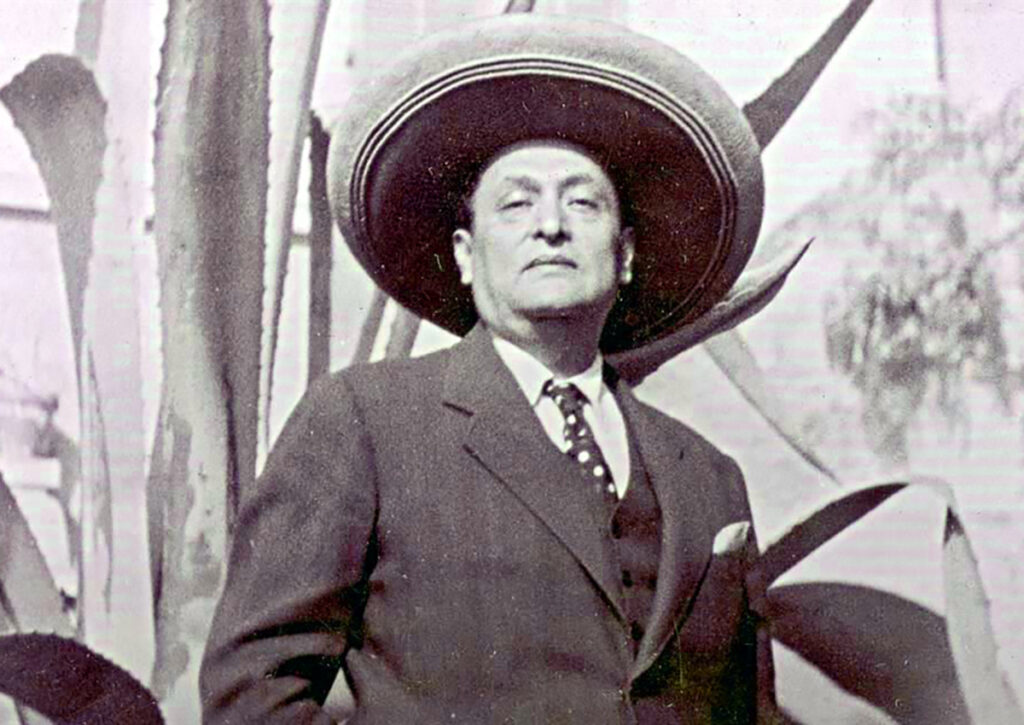
Before Oskar Schindler became a household name, a Mexican diplomat in southern France was quietly doing something just as extraordinary — and the world barely noticed for 60 years.
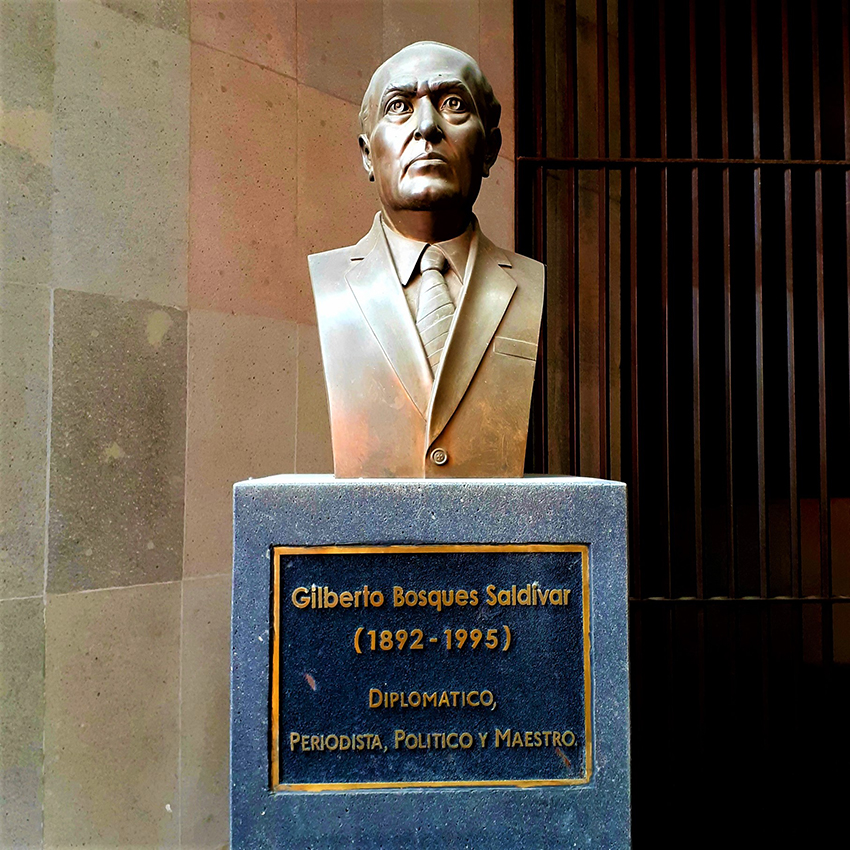
Gilberto Bosques Saldívar was born in 1892 in Chiautla de Tapia, Puebla, in a mountainous region southeast of Mexico City. He fought in the Mexican Revolution at 17, went on to become a journalist, a schoolteacher, a state legislator, and twice a federal deputy. In 1938, President Lázaro Cárdenas appointed him Consul General in Paris.
When Nazi Germany swept into France in May 1940, Bosques fled Paris with the rest of the diplomatic corps. His government instructed him to set up a new consulate in Marseille, in what would become the German-controlled puppet state known as Vichy France. That relocation put him at the center of one of the worst refugee crises in modern history — and he made the most of it.
Visas for Everyone
Bosques ordered his consulate staff to issue a Mexican visa to anyone who needed one to escape. Jews fleeing the Third Reich, Spanish Republicans driven out by Francisco Franco’s forces after the Spanish Civil War, French political dissidents, Italians, Lebanese — all were eligible. Under his watch, roughly 40,000 visas were issued.
He didn’t stop there. Bosques rented two châteaux outside Marseille to shelter the refugees under what he claimed, under international law, was Mexican territory. He chartered ships to carry people out of Europe, routed through African ports and on to Mexico, Argentina, and Brazil. He personally lobbied both President Cárdenas and his successor, Manuel Ávila Camacho, to keep the doors open.
The consulate operated under constant surveillance. The Gestapo, Vichy police, and Franco’s agents all monitored its activities. In February 1943, after Mexico cut ties with the Vichy regime, German forces moved in as the staff was still burning files. Bosques, his wife, their 3 children, and about 40 consular employees were arrested and transferred to a hotel-prison in Bad Godesberg, near Bonn, where they were held for more than a year.
Mexico negotiated their release in 1944, arranging a prisoner exchange that freed Bosques and his team in return for German nationals held in Mexico. When Bosques arrived back in Mexico City by train, thousands of Spanish refugees were waiting at the station to greet him.
Recognition, Long Overdue
Bosques returned to diplomatic work after the war, serving as ambassador to Portugal, Finland, Sweden, and Cuba. He lived to 102 — dying in 1995, just days before his 103rd birthday. His wartime role went largely unacknowledged for decades, even within academic circles.
The turnaround began in 2003, when the city of Vienna named a street in his honor: the Gilberto-Bosques-Promenade, in recognition of his efforts to help Austrian refugees. In 2008, the Anti-Defamation League presented his family with a posthumous Courage to Care Award at a ceremony in Beverly Hills, California. A documentary, “Visa to Paradise,” followed in 2010.
Today, he is often called the “Mexican Schindler,” a comparison to industrialist Oskar Schindler, though historians note that Bosques operated on a larger scale and with the backing — if sometimes just barely — of his government. Scholars continue to debate how much of his work was truly independent action versus official Mexican foreign policy. What is not debated is the outcome.
Mexico’s role in World War II extended well beyond the consulate in Marseille. The country sent combat pilots to the Pacific theater and was the first in the world to formally protest Germany’s annexation of Austria. As covered in Mexico’s WWII role, the nation’s contributions to the Allied effort remain underappreciated outside Latin America.
The U.S. Holocaust Memorial Museum describes Bosques as having saved tens of thousands of lives. For context on how few others did the same, the Raoul Wallenberg Foundation — which has honored Bosques alongside Swedish diplomat Raoul Wallenberg and Japanese consul Chiune Sugihara — notes that such acts of defiance were vanishingly rare among diplomats of the era.
At a Glance: Gilberto Bosques Saldívar
- Born: July 20, 1892, Chiautla de Tapia, Puebla, Mexico
- Died: July 4, 1995, age 102
- Role: Consul General of Mexico in Marseille, France, 1939–1943
- Visas issued: Approximately 40,000
- Refugees sheltered: Jews, Spanish Republicans, French, Italians, Lebanese, and others
- Arrested by the Gestapo: February 1943; held near Bonn for over a year
- Released: April 1944 via prisoner exchange
- Honors: Vienna street named in his honor (2003); ADL Courage to Care Award (2008, posthumous)
- Documentary: “Visa to Paradise” (Visa al paraíso), 2010
- Nickname: “The Mexican Schindler”