
Category: Sports

  • Isaac del Toro Makes History with Stunning Tour de France Stage Win

    Isaac del Toro Makes History with Stunning Tour de France Stage Win

    del toro
    Mexican cyclist Isaac del Toro took stage two of the Tour de France, making history.

    Cycling history was rewritten on the sun-drenched roads of northeastern Spain. Isaac del Toro, a prodigious twenty-two-year-old talent from Ensenada, etched his name alongside legends on Sunday afternoon. 

    By claiming the honors on Stage 2 of the 2026 Tour de France, the young Mexican shattered a decades-long drought. He ended a thirty-six-year wait for his country to taste victory on the sport’s most prestigious asphalt. In a race defined by grueling climbs and tactical warfare, Del Toro’s debut performance was a masterpiece. It signaled the arrival of a new powerhouse in the global peloton.

    A Stage Crafted for High Drama

    The second stage was never destined to be a quiet procession. The 168.5-kilometer trek from Tarragona to Barcelona was designed to separate the pretenders from the contenders. A punishing finale featured three laps around the steep slopes of Montjuic. 

    The route promised explosive action from the very start. However, no scriptwriter could have conjured the sheer pandemonium that unfolded midway through the afternoon. Disaster struck the young Mexican without warning. A sudden mechanical failure forced him to a complete halt on the roadside. Radio confusion with his support car left him stranded and isolated. As the main peloton surged forward, the optics were grim. For many, the dream of a stage win seemed to have evaporated in the Mediterranean heat.

    The Relentless Chase That Saved His Race

    What followed was a display of sheer willpower. Del Toro channeled an indomitable spirit instead of succumbing to frustration. Once his team car finally reached him with a replacement bicycle, he embarked on a frantic pursuit. His solo chase bordered on the superhuman. He covered the substantial gap in just over ten kilometers. 

    He powered through the Spanish countryside with the desperation of a man who refused to let his first Tour be defined by bad luck. His legs churned with relentless rhythm. His aerodynamic position was perfect as he sliced through the wind. Spectators gasped as his jersey emerged from the chase cars. He rejoined the main bunch against all odds. It was a pivotal moment that transformed potential tragedy into the foundation of epic triumph.

    Tactical Brilliance on the Montjuic Circuit

    With the chaos behind him, Del Toro settled back into the protective embrace of his teammates. The race approached the decisive climbs of Montjuic with tension building. The Barcelona circuit offered sweeping views of the city’s port and the iconic Olympic stadium. It became a gladiatorial arena for the sport’s elite. UAE Team Emirates-XRG played their hand with devastating precision. Brandon McNulty and Adam Yates took control of the front. They drilled an unforgiving tempo that fractured the elite group. Sprinters and climbers alike were shelled out the back, one by one. Only the true heavyweights remained to contest the finale. As the gradient kicked up toward the summit, momentum shifted dramatically. Del Toro launched a blistering acceleration. He surged past Mattias Skjelmose’s late bid for glory. His attack was so powerful that it created a decisive fissure in the leading pack.

    Emotions Run High for the Young Champion

    The emotional weight of the victory was not lost on the young champion. This was the culmination of a lifetime of sacrifice. Del Toro spoke with raw honesty about the surreal disbelief that washed over him. He emphasized that the win belonged to an entire ecosystem of support. His family in Baja California, the mechanics, and the soigneurs all shared in the glory. 

    In a charming twist, he acknowledged the day’s significance beyond cycling. Mexico’s national football team was simultaneously competing in the World Cup. Del Toro noted that this was a massive Sunday for Mexican sports. He humbly positioned his achievement alongside his compatriots on the pitch.

    Breaking a Barrier That Lasted Generations

    By securing this monumental victory, Del Toro has done more than just win a bike race. He has broken a barrier, standing firm since 1990. Raúl Alcalá was the last Mexican to win a Tour stage. At just twenty-two years of age, Del Toro has proven his tactical acumen. His physical resilience and mental fortitude are beyond question. This victory also marked a historic first for UAE Team Emirates-XRG. It delivered the organization’s inaugural one-two finish in the Tour de France. The race for the General Classification is still in its infancy. The mountains of the Pyrenees and Alps loom ominously on the horizon. Nevertheless, this single stage has transformed the landscape of the 2026 Tour.

  • Mexico’s World Cup Exit to England: Why Fans Are Celebrating Despite the Loss

    Mexico’s World Cup Exit to England: Why Fans Are Celebrating Despite the Loss

    mexico
    Mexico’s elimination from the 2026 World Cup was a bitter pill to swallow for fans, but the team’s performance and grit have won them near-universal praise.

    Mexico’s World Cup campaign ended on Saturday with a narrow 2-3 loss to England in the quarterfinals. The English players celebrated their advance to the semifinals, but the Mexican squad remained on the pitch. 

    Some had their heads in their hands, while others consoled each other. The final score marked a defeat, yet the crowd’s reaction and critics’ analysis have been unified in praise. By any reasonable measure, this Mexican team has delivered the most impressive performance in the nation’s World Cup history.

    Mexico’s Match Against England

    The match itself was a testament to the team’s character. After falling behind early to a well-taken goal, Mexico did not retreat. They pressed high, disrupted England’s rhythm, and created several chances. A brilliant equalizer from a set piece silenced the English supporters. When England took the lead again just before halftime, the momentum seemed to shift permanently.

    Mexico came out for the second half with renewed energy. They scored a second equalizer, a well-worked team goal that involved a series of quick passes before a clinical finish.

    It took a moment of individual brilliance from an English star in the 78th minute to finally break the deadlock. Even then, Mexico threw everything forward, winning corners and free kicks and forcing the English goalkeeper into two crucial saves in the dying minutes.

    A Tournament of Attacking Football

    The story of this tournament for Mexico has not been one of luck or defensive desperation. It has been a story of proactive, attacking football. In previous World Cup appearances, Mexico often exited in the round of sixteen. 

    Those performances were frequently defined by a defensive posture and a reliance on individual talent to see them through.

    This year was different. Mexico topped their group with a record of two wins and a draw, scoring seven goals in the process. In the round of sixteen, they dismantled a strong European side with a 3-1 victory. 

    That result was statistically and aesthetically their most complete knockout-stage performance in decades. They were not merely participants; they were protagonists, dictating the pace of play and creating better chances in every game they played.

    The Youngest Squad in the Tournament

    What makes this praise particularly significant is the composition of the team. This is not a squad of aging veterans attempting one last run. It is a young, vibrant, and fearless group of players. The average age of the starting lineup against England was just under 23 years old, an incredibly low statistic for a team in the quarterfinals of a World Cup.

    The most talked-about player for Mexico has been a seventeen-year-old forward, Gilberto Mora Zambrano, nicknamed “Morita.” He was introduced as a substitute in the opening game and quickly became a starter. 

    His pace, dribbling, and composure on the ball have drawn comparisons to some of the sport’s greatest young talents. Yet he is just one part of a larger wave. The midfield is anchored by a twenty-year-old who has shown the tactical intelligence of a player ten years his senior. 

    The fullbacks, both under the age of twenty-two, have provided constant width and energy, covering every blade of grass on the flanks. 

    Celebrated at Home and Abroad

    At home, the celebration has been immense. Streets were filled with fans watching on giant screens, and even after the final whistle, there was a sense of pride rather than despair.

    Mexican media have been effusive in their praise, focusing on the bright future these young players represent. The sentiment is that this team has laid a foundation for the next decade of Mexican football. 

    They have proven that they can compete with the best teams in the world on even terms, not merely by defending deep and countering, but by possessing the ball and imposing their own style.

    Internationally, the respect has been equally notable. Commentators from around the world have acknowledged that Mexico was the better team for large portions of the match against England. 

  • Iran Football Team Issues Emotional Thank You to Mexico for Tijuana Refuge
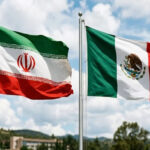
    Iran Football Team Issues Emotional Thank You to Mexico for Tijuana Refuge

    Iran
    Iran’s Soccer Team has expressed its gratitude to Mexico for its warm welcome during the FIFA World Cup. 

    Iran’s National Soccer Team Thanks Mexico for Hospitality During World Cup Ordeal

    Iran’s national football team left the 2026 World Cup with a deep sense of gratitude toward Mexico, a country that became its refuge after political tensions with the United States forced the team to abandon its original plans. 

    In a farewell message released before departing Tijuana, the team declared that Mexico would forever be “our second home and our second team”.

    A Forced Change of Plans

    Iran had originally planned to establish its World Cup training base in Tucson, Arizona. However, political tensions between Tehran and Washington created serious logistical problems. Several members of Iran’s delegation were denied US visas, making it impossible for the team to stay in the United States for an extended period.

    Just days before the tournament began, Iran was forced to relocate its base to Tijuana, Mexico. The team arrived in the border city on June 7 and settled at the Marriott Agua Caliente hotel, using the Xolos training facility at the Centro Xoloitzcuintle for their practices.

    The arrangement was far from ideal. For their first two matches in Los Angeles, Iran was allowed to enter the United States only one night before each game and was forced to return to Mexico immediately afterward. The US authorities later eased some restrictions, permitting the team to travel two days before their final group match in Seattle, but they were still required to return to their Mexican base after the game.

    The Warm Reception in Tijuana

    While Iran faced obstacles in the United States, the people of Tijuana offered a different experience entirely. During the 20 days the team spent in the border city, local residents embraced the Iranian squad with genuine warmth. Hundreds of fans gathered outside the team’s hotel to ask for autographs, take photographs, and offer encouragement.

    The Iranian team’s official statement expressed profound appreciation for this reception. “They received us with generosity and a genuine hospitality that made us feel at home,” the team said. “Leaving Tijuana is truly difficult,” they added, because they had formed friendships and memories they would carry “always in the heart”.

    The Iranian ambassador to Mexico, Abolfazl Pasandideh, also expressed his gratitude. “Our players will leave Tijuana with a very good memory of you,” he said. “The kindness you gave us, we will never forget. I hope that when you come to Tehran, we can receive you there. Our country is your second home, and we will receive you with much love”.

    A Message of Gratitude and Support

    After Iran’s elimination was confirmed, the team posted a message on its official Instagram account featuring an illustration of two hands shaking, one with a Mexico wristband and the other with an Iran wristband, under a sky lit by fireworks. “Thank you, Mexico, for opening your doors to us,” the team wrote in Spanish. “Your act stayed in our hearts”. In larger letters, they added, “Friendship needs no translation.”

    The team also released a longer statement on its WhatsApp channel. “To the noble people of Mexico and the city of Tijuana, thank you,” the message began. “You showed us that hosting the World Cup is not just about stadiums and tickets; it is about respect, humanity, and dignity. We will never forget the kindness of the people of Tijuana. From today, Mexico is not only our host, but also our second country and our second team”.

    The team also expressed support for Mexico’s continued run in the tournament, adopting the host nation as their “second team”. Coach Amir Ghalenoei said, “Our heart and our soul stay here.”

    Questions About Fairness

    While expressing gratitude to Mexico, Iran also raised concerns about the treatment they received during the tournament. “We leave this World Cup with pride, but with one serious question: Did all teams truly enjoy equal opportunities and equal standards?” the statement said.

    The team noted that “a series of decisions, logistical arrangements, and circumstances undermined the sense of fairness”. They also addressed the concept of fair play directly. “For us, fair play is not just a slogan on advertising boards; it is the identity of football,” the players wrote. “But this World Cup showed that there is still a great distance between beautiful slogans and genuine action”.

    A Lasting Bond

    The Iranian team’s gratitude toward Mexico was not a fleeting gesture. Hedayat Mombeini, secretary general of the Iranian Football Federation, asked for a bilateral relationship with Tijuana in sports matters. The Iranian ambassador echoed this sentiment, emphasizing that the connection formed during the World Cup would not be forgotten.

  • Mérida Man Tries to Trademark Mexico’s Viral World Cup Duck
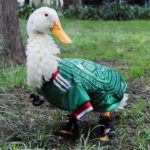
    Mérida Man Tries to Trademark Mexico’s Viral World Cup Duck

    World Cup duck
    FIFA may have spent a fortune on a cartoon jaguar, but the real World Cup mascot turns out to be a duck.

    A Mérida resident filed paperwork to claim the brand rights to Merlín, the duck who became Mexico’s unofficial mascot of the 2026 FIFA World Cup — a move that drew a swift rebuke from President Claudia Sheinbaum, who called it an abuse.

    David Sides Fuentes, who lives in the Santa Gertrudis Copó neighborhood of Mérida, submitted a trademark application to the Mexican Institute of Industrial Property (IMPI) on June 17, according to official records. The filing — expediente 3643308 — sought a 10-year registration for the brand and logo of “El Pato Merlín. El pato de la suerte” (Merlín the Duck. The Lucky Duck). The proposed trademark, records show, would cover advertising, political campaigns, business incubators, and management services for artists and athletes. The submitted logo depicts a duck wearing a green jersey with a Quetzalcóatl design, similar to the one worn by Mexico’s national soccer team, with the Aztec Calendar in the background.

    Sheinbaum made the application public and wasted no time in condemning it. “It’s an abuse,” she said during her morning press conference at the National Palace.

    A Street Vendor’s Duck Goes National

    Merlín’s rise from neighborhood pet to national symbol happened fast. The two-year-old Pekin duck first appeared in public during street celebrations after Mexico defeated South Africa 2-0 on June 11 in the tournament’s opening match at Estadio Azteca — the same stadium that will become the first venue ever to host matches in three separate World Cups. Videos of Merlín waddling through the crowds on Reforma Avenue spread across social media within hours, and the duck hasn’t been out of the spotlight since.

    His owner is Carla Gómez, a street vendor who sells beverages at a sidewalk stall. She was gifted the duck by a customer and, by her own account, never imagined the attention that would follow. “We thought we were passing by unnoticed,” she said in one interview. “It was a normal day for us.” She jokingly calls Merlín the “boss” of the family business and says he has a balanced diet — though he is allowed a pork taco on Sundays. As for footwear, Merlín typically wears shoes because, she says, “he likes to walk.”

    Merlín Meets the President

    On June 22, Gómez and her sons brought Merlín to the National Palace, where Sheinbaum had invited the family to appear at her daily press briefing. The duck arrived in his now-familiar green jersey and a FIFA tie, sat beside his owner at the podium, quacked occasionally, and reportedly attempted to peck the president when she tried to pet him. Sheinbaum used the moment to frame Merlín as more than a viral curiosity. “He has been a symbol of the World Cup, a symbol of what Mexican families stand for, of who we are as Mexican families,” she said.

    At the same event, Sheinbaum announced that the federal government would help Gómez’s family file their own trademark application with IMPI — and the family has since initiated that process.

    How Mexico’s Trademark System Works

    The timing of the Mérida resident’s filing puts into sharp relief a basic fact of Mexican intellectual property law: trademark rights in Mexico go to whoever registers first, not whoever uses a name or image first. IMPI, the autonomous federal agency that administers the country’s industrial property system, operates on a first-to-file basis. An application is published for a public opposition period of about one month before advancing to substantive examination, a process that typically takes between four and eight months in total. Third parties — including Gómez’s family — can file an opposition to block a registration they believe conflicts with their rights.

    Mexico has tightened its rules against marca piratas, or trademark squatting, in recent years, including a 2018 reform that requires trademark holders to file a formal declaration proving active commercial use within three years of registration or lose their rights. Whether the Merlín application proceeds, or is blocked by the family’s counterfiling or public opposition, remains to be seen.

    Those following the World Cup in Yucatán can keep up with the latest from the tournament and its cultural moments through Yucatán Magazine. For more on the mechanics of Mexican trademark law, the AP’s reporting on the Merlín story offers useful context from the family’s perspective.

    Fast Facts

    • Merlín is a two-year-old Pekin duck owned by Mexico City street vendor Carla Gómez
    • He went viral after appearing in crowd celebrations following Mexico’s 2–0 opening win over South Africa on June 11
    • David Sides Fuentes of Mérida’s Santa Gertrudis Copó neighborhood filed IMPI application expediente 3643308 on June 17
    • The application sought 10-year rights to use the Merlín brand for advertising, political campaigns, and artist management services
    • President Sheinbaum called the filing “an abuse” and pledged government support to help Gómez’s family register the trademark themselves
    • Mexico’s trademark system is first-to-file; prior use alone does not establish legal ownership
    • IMPI allows third parties to oppose trademark applications during a roughly one-month public comment window
    • The full trademark process in Mexico typically takes four to eight months if uncontested

    Sources: Diario de Yucatán, El Universal, Associated Press, Reuters, Gulf News

  • Korea vs Mexico World Cup 2026: The Story Behind an Unlikely Friendship 
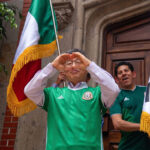
    Korea vs Mexico World Cup 2026: The Story Behind an Unlikely Friendship 

    korea
    South Korea’s national team and fans are being treated as locals in Mexico during the World Cup. But this friendship will soon be put to the ultimate test.

    The atmosphere across Mexico’s World Cup host cities has transformed into something far beyond a typical sporting event. 

    As the FIFA tournament unfolds, a particularly warm and palpable wave of affection has been directed toward the South Korean national team’s fans and players. 

    From the bustling streets of Guadalajara to the plazas of Mexico City, Korean supporters have been met with hospitality and genuine camaraderie that have surprised even the most seasoned football travelers. 

    This phenomenon, rooted in a profound sense of mutual respect and a shared historical underdog spirit, is creating some of the most memorable moments of the 2026 World Cup.

    The scenes of celebration have been remarkable. Videos circulating globally show that Korean fans have turned ordinary dining experiences into spontaneous international parties. In one viral incident, a group of South Korean supporters in a Guadalajara taqueria, enjoying authentic Mexican cuisine, heard the opening notes of PSY’s global hit Gangnam Style. Within seconds, what began as a simple dinner transformed into a full-blown dance party. 

    The Korean visitors immediately began following the rhythm, and the infectious energy quickly spread to the Mexican diners around them. Patrons of all ages and nationalities joined in, dancing together between tables, capturing the moment on their phones, and laughing as cultural barriers dissolved. 

    The restaurant’s staff, far from being bystanders, were reportedly seen dancing alongside the patrons, clapping to the beat and encouraging the impromptu celebration, a testament to the natural rhythm that defines Mexican hospitality. This scene was not isolated. At the legendary Arena Coliseo during a lucha libre wrestling night, Korean fans once again broke into the same dance, stealing the spotlight from the masked wrestlers and getting the entire crowd to groove along, showing that the love for joy knows no borders.

    This extraordinary welcome is not a spontaneous act of random friendliness; it is rooted in a specific and cherished moment of World Cup history. 

    The bond traces back to the 2018 Russia World Cup. In the group stage, Mexico was facing a tense elimination scenario. South Korea, already eliminated from the tournament, was playing its final group match against the heavily favored and defending champions, Germany. In a stunning upset, the Korean team defeated Germany two to zero, a result that directly propelled Mexico into the Round of 16. 

    In gratitude, Mexican fans famously gathered outside the South Korean embassy in Mexico City, sharing tequila and beer, and chanting a now legendary slogan: “Coreano, hermano, ya eres mexicano” (“Korean, brother, you are now Mexican”). This sentiment has been powerfully revived for this World Cup.

    During South Korea’s opening group match against the Czech Republic in Guadalajara, Mexican fans showed up in full force, waving Taegeukgi flags, wearing sombreros mixed with Korean red shirts, and cheering every Korean attack as if it were their own. Mexican supporters joined their Korean counterparts in jeering the opposition and performing the famous “Mexican wave” through the stands as one unified block of support. 

    Korean superstar Son Heung-min is treated with the same reverence as a local hero, with Mexican fans eagerly anticipating his every touch of the ball. This goodwill is further backed by organized diplomatic efforts. 

    The roots of this connection run deeper than pop culture, stemming from a shared history of struggle and resilience. Korean immigration to Mexico began in 1905 when over a thousand Korean laborers arrived as indentured workers on the henequen plantations of the Yucatán Peninsula

    However, this goodwill is about to face its most severe test. On Thursday, June 18th, at the Akron Stadium in Guadalajara, South Korea will face off against Mexico in a critical Group A match with massive stakes for advancing to the knockout rounds. 

    Both teams won their opening matches, and the atmosphere will shift from open-armed embrace to competitive fervor.