Category: Sports

  • The $1 Billion Mexico World Cup Gamble… Will It Pay Off?

    The $1 Billion Mexico World Cup Gamble… Will It Pay Off?

    With fewer than five months to go before Mexico welcomes the world as co-host of the 2026 FIFA World Cup, a construction frenzy is underway that will test the limits of the country’s planning and building capabilities. The Sheinbaum administration and governments across the three host cities have committed more than US $1 billion to infrastructure improvements, cultural exhibits, and tourist amenities, all in the hopes of ensuring that upgrades to public transport systems, airports, and urban services will not only make for a memorable experience for the nearly six million additional visitors expected in June and July 2026, but also provide lasting benefits for residents.

    It’s an ambitious undertaking. From the US $460 million renovation of Mexico City International Airport (AICM) to the unprecedented transformation of the iconic Estadio Banorte (formerly Estadio Azteca), crews are working around the clock to meet looming deadlines. In Guadalajara, the Chapala Highway connecting the international airport to the metropolitan area is being expanded to six lanes at a cost of 2.6 billion pesos (US $137 million), complete with new sidewalks, a dedicated bike lane, and enhanced lighting. Monterrey is doubling its metro rail network from 38 kilometres (24 miles) to over 80 kilometres (50 miles) with the construction of Lines 4 and 6, which will form the longest monorail system in the Americas once complete.

    The stakes couldn’t be higher. Mexico is poised to become the first country in history to host the FIFA World Cup three times, having previously welcomed the tournament in 1970 and 1986. Estadio Banorte itself will become the only stadium on the planet to have hosted three World Cup opening matches when it kicks off the tournament on June 11, 2026. Whether the country can pull off this massive infrastructure overhaul in time remains to be seen. Here’s a comprehensive look at the projects racing toward completion.

    Airport Overhauls Across Host Cities

    Naturally, as the Mexican hub of the 2026 FIFA World Cup, Mexico City is getting the lion’s share of attention when it comes to airport improvements. AICM is undergoing a massive 8.5 billion peso renovation that began in May 2025, with Grupo Aeroportuario Marina (GAM) overseeing the work. According to AICM General Director Juan José Padilla Olmos, the project is expected to reach 70 to 80 percent completion by the time the tournament starts.

    The renovation focuses on structural rehabilitation, drainage upgrades, and reconfiguration of passenger areas to improve efficiency. Terminal 1’s main security area now has 13 inspection lines, up from six, while Terminal 2’s checkpoint has received new X-ray equipment. Officials project a 25 percent reduction in passenger waiting times once the upgrades are in place. Other improvements include new flooring, lighting, air conditioning, baggage belts, and restrooms, as well as the expansion of Terminal 2 parking capacity from 2,437 to 4,837 spaces.

    To mark the World Cup, a 30 foot (9.14 metre) Adidas Trionda soccer ball now stands at Terminal 2’s traffic circle, while murals throughout both terminals celebrate Mexico City’s role as host of the opening match.

    In GuadalajaraGrupo Aeroportuario del Pacífico (GAP) is continuing its expansion project at Miguel Hidalgo y Costilla International Airport, with Terminal 2 currently under construction. The airport is also using a special carbon-absorbing paint that releases oxygen on select surfaces.

    Monterrey International Airport has seen significant investment as well. Grupo Aeroportuario Centro Norte (OMA) has spent 15 billion pesos (US $815 million) during the 2021 to 2025 period on operational infrastructure, certifications, security, equipment, runways, platforms, and the complete renovation of Terminal A.

    Estadio Banorte’s Transformation

    The legendary Estadio Banorte is undergoing one of the most important renovations in its history. Closed in May 2024 for a comprehensive overhaul, the stadium is scheduled to reopen on March 28, 2026, when Mexico hosts Portugal in a friendly match intended to serve as a full-scale rehearsal ahead of the World Cup.

    The renovation will cost approximately 3 billion pesos (US $160 million) and includes the demolition of one of the lower stands, installation of new seating throughout (with the stadium’s characteristic red seats being fitted in the lower sections), high-resolution LED screens, advanced lighting systems, and the redevelopment of press areas and entrances. New locker rooms are being constructed under the suites, along with a modernized player tunnel. Once complete, the stadium is expected to accommodate around 90,000 spectators with improved comfort and safety.

    The venue’s name change has proven controversial. On March 14, 2025, the stadium changed from Estadio Azteca to Estadio Banorte after a sponsorship deal with Grupo Financiero Banorte, the bank financing the renovation work. Banorte provided a US $105 million loan, repayable over 12 years, to support the upgrades, in addition to an earlier US $75 million loan secured by the stadium’s owners, Grupo Ollamani. Surveys show around 84.6 percent of the public oppose the name change. During the World Cup itself, FIFA’s policy on corporate sponsored names means the venue will be known as Mexico City Stadium.

    Cycling and Pedestrian Infrastructure

    Mexico City is making significant investments in cycling infrastructure ahead of the tournament. The city government has set aside 500 million pesos for various cycling projects totalling 300 kilometres (186 miles). Eighty kilometres (50 miles) of new bike lanes will be ready by June, increasing the capital’s total cycling routes to 613 kilometres (381 miles).

    The most prominent (and controversial) among these new projects is the Gran Tenochtitlán bike path, a 34 kilometer (21 mile) route running along Tlalpan Avenue, one of the city’s principal north-south causeways. The project also includes the restoration of green areas along the avenue, with street lights being upgraded throughout.

    The city is also rehabilitating 34 pedestrian underpasses along Tlalpan Avenue with the goal of improving mobility and safety. Twelve crossings located in the 2 kilometre (1.2 mile) stretch between Plaza Tlaxcoaque (just south of the Zócalo) and the Chabacano Metro station were being refurbished as of November.

    In Monterrey, the “FIFA Corridor” initiative will link public spaces and tourist attractions throughout the metropolitan area, with a focus on pedestrian-friendly, cyclist-friendly, and transit-oriented design.

    Metro and Transit Upgrades

    Public transit improvements form the backbone of Mexico’s World Cup preparation strategy. President Claudia Sheinbaum has announced federal government allocations of between 1.5 billion pesos and 2 billion pesos (US $81.7 million to US $109 million) to each host state to strengthen public transportation and mobility networks.

    In Mexico City, 23 billion pesos have been earmarked for metro upgrades, including new trains, improved stations, and better service. The capital is also rehabilitating its light rail service connecting the Taxqueña multi-modal hub to the southern borough of Xochimilco and building a new trolleybus line linking the National Autonomous University of Mexico campus with the Santa Úrsula neighbourhood adjacent to Estadio Banorte. Metro Line 2 will gain a better connection to the light rail ending near the stadium, making match-day transit more efficient for the hundreds of thousands of fans expected at each event.

    Guadalajara is advancing the new Line 5 of its electric BRT public transport system, which will connect the airport with Estadio Akron (also known as Estadio Guadalajara), downtown, and Expo Guadalajara. The new line is expected to reduce travel time by 50 minutes. An electric train link between Paseo Chivas and the stadium is also in the works.

    Monterrey’s transit improvements are the most ambitious. Construction on Metro Lines 4 and 6 was 57 percent and 61 percent complete respectively as of October. Once finished, Line 6 will connect the municipalities of Monterrey, Guadalupe, San Nicolás de los Garza, Apodaca, and Escobedo with the international airport. According to Nuevo León’s Mobility and Urban Planning Minister Hernán Villarreal, the extension will also connect BBVA StadiumFundidora Park, and other key areas designated for the FIFA Fan Festival.

    Governor Samuel García has announced a budget of 150 billion pesos (US $8 billion) for his six-year term, which includes funding for all planned World Cup projects. He has also promised to expand the city’s bus network by delivering 4,000 new buses, developing 30 transfer centers, and installing 500 bus stops.

    World Cup Accommodation: A Growing Concern

    With millions of visitors expected, accommodation capacity remains a pressing concern for all three host cities. Mexico City currently has approximately 61,500 hotel rooms, and hoteliers are working to add 3,300 new rooms in luxury properties before the tournament. World Cup 2026 hotels Mexico searches have surged online as fans scramble to secure accommodations.

    “All luxury hotel brands are looking at Mexico City as a tourist investment hub,” said Alfredo Martínez, president of the Mexico City Hotel Association, to Forbes México. The association is working with the Territorial Planning Ministeron an infrastructure roundtable to accelerate hotel real estate investment.

    For those searching “Mexico City hotels June 2026” or “World Cup accommodation,” officials recommend booking early. The government is assessing potential options on the city’s outskirts, looking at neighbourhoods such as TláhuacXochimilcoMagdalena Contreras, and Coyoacán for accommodation alternatives. Short-term rentals through platforms like Airbnb are expected to ease the room shortage, though a recently passed regulation has raised concerns about available inventory.

    In Jalisco, 83,000 hotel rooms are already available, with another 38 hotels planned representing an estimated investment of 20 billion pesos. Monterrey’s tourism sector is receiving an additional US $8.74 million investment in hotels, restaurants, and cultural sites.

    The Road Ahead

    The infrastructure push represents more than just World Cup preparation. Mexican officials have consistently emphasized that these investments are designed to leave a long-term legacy of social and urban improvement.

    “This isn’t just about a month of football,” Jalisco Governor Pablo Lemus stated. “This is about building a legacy that continues to benefit Jalisco long after the final whistle.”

    Whether all projects will be completed on time remains uncertain. Recent reports indicate potential delays in the renovation of stands and VIP areas at Estadio Banorte, with some works potentially extending beyond initial deadlines. Airport renovations at AICM will pause from May 31 to July 31, 2026, to accommodate increased passenger flow during the tournament, with construction resuming in August.

    Still, authorities across all three host cities remain confident. Mexico will host 13 matches across Mexico City (five games), Guadalajara (four), and Monterrey (four), with Estadio Banorte serving as the focal point when it hosts the opening match on June 11.

    For visitors planning their trips, the message from Mexican officials is clear: the country is ready to welcome the world. Whether the infrastructure can keep pace with the ambition will be answered in the coming months.

  • Mexico Makes History as Estadio Azteca Prepares for World Cup Opening Match

    Mexico Makes History as Estadio Azteca Prepares for World Cup Opening Match

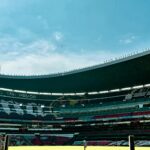
    Photo: Estadio Azteca, by Ruben Ramirez / Unsplash

    The iconic Estadio Azteca in Mexico City will write another chapter in football history on June 11, 2026, when it becomes the first stadium ever to host three FIFA World Cup opening matches. Mexico will face South Africa in a rematch of their 2010 encounter, kicking off the largest tournament the sport has ever seen.

    This World Cup marks Mexico‘s third time hosting the event, following tournaments in 1970 and 1986. No other country can claim that distinction. The 2026 edition will be co-hosted with the United States and Canada, featuring 48 teams across 104 matches in 16 cities. Mexico will host 13 of those games in three cities: Mexico City, Guadalajara, and Monterrey.

    El Tri’s Group A Draw and Schedule

    Mexico was placed in Group A alongside South Africa, South Korea, and the winner of UEFA Playoff Path D (to be determined from Denmark, Czech Republic, Republic of Ireland, or North Macedonia in March 2026). As co-hosts, El Tri automatically qualified and were seeded in Pot 1, avoiding the tournament’s heavyweights in the group stage.

    The opening fixture against South Africa carries particular significance. The two teams met on June 11, 2010, in the opening match of that year’s World Cup at Soccer City Stadium in Johannesburg. That game ended in a 1-1 draw, with Siphiwe Tshabalala scoring a memorable goal for the hosts before Rafael Márquez equalized for Mexico. Sixteen years later, to the exact day, they will meet again.

    Mexico’s Full Group Stage Schedule

    Thursday, June 11, 2026 Mexico vs. South Africa | 1:00 p.m. local time (3:00 p.m. ET) | Estadio Azteca, Mexico City

    Thursday, June 18, 2026 Mexico vs. South Korea | 9:00 p.m. local time (11:00 p.m. ET) | Estadio Akron, Zapopan

    Wednesday, June 24, 2026 Mexico vs. UEFA Playoff D Winner | 7:00 p.m. local time (9:00 p.m. ET) | Estadio Azteca, Mexico City

    Should Mexico win Group A, they would remain at Estadio Azteca for both the Round of 32 match on June 30 and a potential Round of 16 fixture on July 5. Finishing second or third in the group would send them north to continue their campaign in the United States.

    Additional Matches at Estadio Azteca

    Beyond Mexico’s group stage matches, the venue will host five total World Cup fixtures:

    • June 11 – Mexico vs. South Africa (Group A)
    • June 24 – Mexico vs. UEFA Playoff D Winner (Group A)
    • June 30 – Round of 32: Group A Winner vs. Third Place (Group C/E/F/H/I)
    • July 5 – Round of 16: Winner of Match 79 vs. Winner of Match 80

    The Cathedral of Football Gets a Renovation

    Estadio Azteca, often called the “Coloso de Santa Úrsula,” opened in 1966 and has hosted some of football’s most celebrated moments. It remains the only stadium in the world where both Pelé (1970) and Diego Maradona (1986) lifted the World Cup trophy. The venue also witnessed Maradona’s infamous “Hand of God” goal and his solo effort later voted the “Goal of the Century,” both against England in the 1986 quarterfinals.

    The stadium is undergoing its most extensive renovation in decades to meet FIFA’s requirements. The project, estimated at approximately 3 billion Mexican pesos (roughly $170 million USD), includes new seating throughout the venue, LED screens on the exterior facade, a hybrid pitch designed for intensive use, upgraded player facilities, modernized media and hospitality areas, and new lighting systems.

    The renovated stadium will accommodate approximately 87,500 to 90,000 spectators. Due to FIFA sponsorship rules, the venue will be referred to as “Mexico City Stadium” during the tournament rather than its current commercial name, Estadio Banorte. A friendly match between Mexico and Portugal scheduled for March 28, 2026, will serve as the venue’s dress rehearsal before the World Cup begins.

    How to Purchase Tickets

    FIFA manages all official ticket sales through its dedicated portal at FIFA.com/tickets. The process operates through several phases:

    Current Phase (Random Selection Draw) From December 11, 2025, through January 13, 2026, fans can submit applications for specific matches. This is not first-come, first-served. Instead, successful applicants are determined through a random draw, with results communicated in early February 2026.

    Last-Minute Sales (Spring 2026) Any remaining tickets will be released on a first-come, first-served basis. FIFA has not confirmed which matches or how many seats will be available during this final phase.

    To participate, fans must create a FIFA account, apply for their desired matches and categories, and have a valid payment method ready. If selected in the draw, payment is processed automatically.

    Ticket Categories and Pricing

    FIFA has structured seating into four categories based on location within the stadium:

    • Category 1 – Lower tier, closest to the pitch (most expensive)
    • Category 2 – Upper and lower tiers outside Category 1 areas
    • Category 3 – Upper tier, beyond Categories 1 and 2
    • Category 4 – Upper tier, furthest from the pitch (most affordable)

    For group stage matches in Mexico City, prices start around $370 USD for Category 4 seats and can reach approximately $1,825 USD for Category 1, based on reported figures from ticket sales phases. Mexico’s involvement tends to drive prices higher due to demand. The tournament’s final at MetLife Stadium in New Jersey has the steepest prices, ranging from approximately $2,030 to $6,370 USD.

    FIFA has reported record-breaking demand, with approximately 150 million ticket requests received from fans across 200 countries. The organization has also launched an official resale platform at FIFA.com/tickets for fans who need to sell tickets they can no longer use or who missed the initial sales phases.

    Additional Ticket Options

    Team-Specific Tickets National football federations receive ticket allocations for their supporters. Fans wanting to sit in designated sections with fellow national team supporters should check with their country’s football association for availability and registration requirements.

    Hospitality Packages ON Location, FIFA’s official hospitality partner, offers premium packages that guarantee seats along with dining and entertainment. These packages carry significant premiums, with hospitality tickets for Mexico’s opening match against South Africa listed through various resellers starting above $5,000 USD.

    Conditional Tickets Available for knockout rounds, these secure a seat for fans whose team advances past the group stage.

    Getting to Estadio Azteca

    The stadium sits in the southern Coyoacán borough of Mexico City. Public transportation remains the recommended option given match-day traffic:

    Take Metro Line 2 (Blue Line) to Tasqueña station, then transfer to the Xochimilco Light Rail. The Estadio Azteca stop is located directly outside the venue.

    The stadium sits at approximately 2,250 meters (7,380 feet) elevation. Visitors arriving from lower altitudes should plan to arrive several days early to acclimate, as the thin air affects physical exertion. The Mexican government has announced infrastructure improvements around the stadium, including upgraded roadways and public transportation access, ahead of the tournament.

    Mexico’s World Cup Ambitions

    Under head coach Javier Aguirre, who previously led the national team at the 2002 and 2010 World Cups, Mexico enters the tournament with significant expectations. The team has reached the Round of 16 in seven consecutive World Cups (1994-2018), but has not advanced to the quarterfinals since hosting in 1986, when they lost on penalties to West Germany.

    The 2022 World Cup in Qatar marked a disappointment, as Mexico failed to advance from the group stage for the first time since 1978. Goals from the opening two matches (a 0-0 draw with Poland and a 2-0 loss to Argentina) proved costly. Despite defeating Saudi Arabia 2-1 in their final group game, Mexico was eliminated on goal difference.

    Playing on home soil with passionate crowds at Estadio Azteca has historically boosted El Tri’s fortunes. In both 1970 and 1986, Mexico reached the quarterfinals while hosting. The format change in 2026, which allows the top two teams plus some third-place finishers to advance from each group, provides slightly more margin for error than previous tournaments.

    The Bigger Picture

    The 2026 World Cup represents a significant moment for football in North America. The tournament runs from June 11 through July 19, 2026, with the final at MetLife Stadium in East Rutherford, New Jersey. The United States will host 78 matches, including everything from the quarterfinals onward, while Canada and Mexico each host 13 fixtures.

    This is the first World Cup to feature 48 teams, expanded from the previous 32-team format. The group stage consists of 12 groups of four teams each, with 32 teams advancing to the knockout rounds. The tournament will feature 104 total matches, a record for any FIFA World Cup.

    For Mexico and its football-mad population, the opportunity to host and compete in another World Cup holds deep meaning. Estadio Azteca stands ready to add to its unmatched legacy, and for fans wanting to witness history, securing tickets now is essential.