Category: Health

  • Why Sargassum is Causing Skin Irritation on Caribbean Beaches 

    Why Sargassum is Causing Skin Irritation on Caribbean Beaches 

    Sargassum
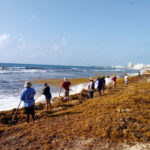
    Sargassum is known to have adverse health effects, manifesting most commonly as skin irritation, but those most at risk are those charged with cleaning it up.

    Playa del Carmen has become one of the most affected destinations in Mexico by the massive influx of sargassum, which this year has been worse than ever.

    Aside from its foul smell and serving as an obstacle to entering the ocean, sargassum is now presenting a new problem: skin conditions. 

    As sargassum rots, it releases compounds like hydrogen sulfide and ammonia. Direct contact with the decaying algae can cause skin redness, itching, rashes, and irritation, especially in individuals with sensitive skin or eczema.

    José Gómez Burgos, president of the Cooperativa Turística del Mar Caribe, stated that an increasing number of fishermen and tourists have been presenting skin issues, despite navigating and swimming in areas away from the coast where sargassum concentrates. 

    “We already have colleagues with skin issues — they go into the sea and have to board their boats in that condition. It’s a serious problem that causes skin irritation lasting several days, but we have to keep working,” Gómez Burgos told Sipse.

    Making matters even worse is the fact that even contact with dry sargassum on beaches can have adverse effects, as it contains small, rough, calcified structures that can scratch or chafe the skin, leading to minor cuts or abrasions. These breaks in the skin can then become entry points for bacteria or other pathogens.

    Medical experts advise avoiding direct skin contact with washed-up sargassum, wearing protective clothing and gloves during cleanup, rinsing immediately with fresh water and soap after exposure, and seeking medical attention for persistent rashes or signs of infection.

    Evidence suggests that those most at risk for developing health issues related to sargassum are not tourists, but rather the large number of people employed by private companies and governments to collect it for disposal or processing. 

    The Inter-American Development Bank estimates that Mexico’s Caribbean region in the state of Quintana Roo has suffered economic losses of nearly 12% due to declining tourism. The hotel sector spends approximately 135 million dollars annually on beach cleaning. By July 2025 alone, 44,000 tons of sargassum had been removed from beaches and coastal waters in Quintana Roo

    Despite ongoing efforts, authorities warn that the arrival of sargassum will not disappear anytime soon. On the contrary, it is expected to increase due to ocean currents and weather conditions as temperatures continue to rise over the next few weeks. 

    Sargassum and Its Effects  Beyond Mexico

    At the regional level, Caribbean nations are moving toward coordinated action. In October 2025, the Association of Caribbean States established a Sargassum Sub-Commission, the first intergovernmental mechanism with a regional political mandate to comprehensively address sargassum impacts on ecosystems, public health, the economy, and coastal communities. 

    The Sub-Commission will guide the formulation of a Regional Plan for Sargassum Management, defining common approaches to monitoring, prevention, mitigation, and sustainable use. 

    The United Nations Environment Programme is also advocating for strengthening regional action plans, early warning systems, and sustainable response strategies.

    West Africa, while less studied, faces significant but underreported impacts. Scientific research indicates that West African countries, including Ghana, Nigeria, and Senegal, experience substantial sargassum inundations that affect fisheries, tourism, and public health.

  • Why Air Pollution in Mexico City Has Been So Bad This Year
    Why Air Pollution in Mexico City Has Been So Bad This Year

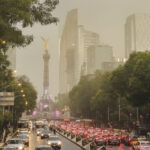
    Mexico City has faced repeated air quality emergencies during the first two months of 2026, with multiple environmental contingencies activated due to high ozone and particle pollution. But why is this happening, and what are the authorities doing to combat this perennial problem? 

    Back-to-Back Pollution Emergencies

    The year started badly. On January 1, authorities declared the first environmental contingency of 2026. According to authorities, this was mainly caused by fireworks used during New Year celebrations and emissions from high volumes of traffic, which released large amounts of pollutants into the air.

    Just one week later, on January 8, a second contingency was activated. This time, it was due to high ozone concentrations. A monitoring station in Cuajimalpa recorded 160 parts per billion (ppb) of ozone at 4:00 p.m., well above the 90 ppb standard that triggers emergency measures.

    By mid-February, the pollution problem had not gone away. On February 13 and 14, another Phase I contingency remained in effect, with ozone reaching 156 ppb in Atizapán. As of February 16, the air quality index remained rated “MALO” (bad) in several parts of the city, with PM2.5 particles as the primary concern.

    Pollution and Weather 

    The primary reason for this bad air is not that people are polluting more than usual. Rather, weather conditions have trapped pollution close to the ground.

    A high-pressure system has been sitting over central Mexico. This creates atmospheric stability, which means weak winds and poor ventilation. Normally, wind helps scatter pollutants. Without it, emissions just build up.

    Additionally, temperatures have been unusually warm for winter. On January 8, it reached 25 degrees Celsius. Sunlight triggers chemical reactions that form ozone from vehicle exhaust and industrial emissions. More sun means more ozone.

    The dry season makes everything worse. Without rain to wash pollutants out of the air, they just keep accumulating day after day.

    Geography Traps Pollution in the Valley

    Mexico City’s location is a fundamental part of the problem. The city sits in a basin at more than 2,200 meters above sea level, surrounded by mountains and volcanoes. This geography acts like a bowl. Pollutants get released into the air but cannot easily escape because the surrounding walls block wind from flowing through.

    During winter and early spring, temperature inversions make this even worse. Normally, the air gets cooler as you go higher. But during an inversion, a layer of warm air sits on top of cooler air near the ground. This warm layer acts like a lid, trapping pollutants underneath. These inversions can last for days, causing pollution levels to climb steadily.

    The ‘Hoy No Circula’ Program

    When a Phase I environmental contingency is declared, the main tool the government uses is the ‘Doble Hoy No Circula’ program. This restricts vehicle use to reduce emissions.

    On a normal day, Mexico City implements a ‘Hoy No Circula’ program that bans the use of vehicles based on their license plate numbers and verification stickers. However, during a contingency, the restrictions tighten, effectively doubling the number of vehicles forced off the road. 

    For example, on February 16, the restrictions applied to:

    All vehicles with verification hologram 2

    Vehicles with hologram 1 whose last digit is 1, 3, 5, 6, 7, or 9

    Vehicles with hologram 0 or 00 that have yellow stickers and plates ending in 5 or 6 

    The restrictions run from 5:00 a.m. to 10:00 p.m. Some vehicles are exempt, including electric and hybrid vehicles, vehicles with ecological plates, and emergency vehicles.

    When contingencies fall on weekends, the restrictions follow a set rotation of sticker colors so that over time, all vehicle types share the burden equally.

    Does the Program Work?

    Experts who study this issue say the ‘Hoy No Circula’ program has limits. It was created 37 years ago when Mexico City had roughly 1.5 million vehicles on the road. Currently, the metropolitan area has approximately 6.5 million vehicles, plus more than 700,000 motorcycles that are not covered by the program.

    In 2025, the worst year on record for environmental contingencies since tracking began in 1993. There were 12 days when Phase I was activated due to ozone. The first two months of 2026 suggest this year could be similar.

    Researchers at the UNAM Atmospheric Sciences Institute note that although vehicle emissions have become cleaner over the decades, the number of vehicles continues to increase. Additionally, many public transport operators are not effectively regulated.

  • Mexico City Smog Sets Off ‘Double No Driving Day’ Contingency
    Mexico City Smog Sets Off ‘Double No Driving Day’ Contingency

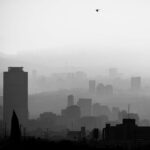
    Millions of drivers in the Mexico City metropolitan area faced expanded traffic restrictions Friday as environmental authorities kept a Phase 1 pollution contingency in place.

    The Megalopolis Environmental Commission (CAMe) said high ozone concentrations across the Valley of Mexico showed no signs of easing, blaming low wind, strong sunshine and temperatures around 80°F for trapping pollutants close to the ground. That meant a “Doble Hoy No Circula” — or double no-driving day — remained in effect from 5 a.m. to 10 p.m.

    Under the expanded restrictions, all vehicles with hologram 2 verification stickers were barred from the road, along with hologram 1 vehicles whose plates end in 1, 3, 5, 7, 9 or 0. Vehicles with hologram 0 and 00 stickers and blue engomado decals with plates ending in 9 or 0 were also pulled from circulation. Cars without any hologram — including those with out-of-state or foreign plates — could not drive at all.

    Electric and hybrid vehicles, emergency services, authorized school transport and motorcycles were exempt.

    What is the Hoy No Circula program?

    Mexico City’s no-driving day program dates back to 1989, when record ozone levels pushed the government to act fast. The idea was simple: ban most private cars from the road one weekday per week based on the last digit of their license plates. Officials hoped it would cut weekday traffic by roughly 20%.

    The program applies across all 16 boroughs of Mexico City and 18 neighboring municipalities in the State of Mexico. On a normal day, vehicles are restricted based on a color-coded sticker system tied to emissions verification. Newer, cleaner cars with “00” or “0” hologram stickers can generally drive without limits, while older or higher-emitting vehicles face one restricted weekday and some Saturday bans.

    When pollution spikes — as it did this week — authorities escalate the restrictions. A Phase 1 contingency doubles the number of cars pulled off the road. In the worst cases, a Phase 2 can restrict even more vehicles.

    Does it work?

    Researchers have long debated the question. A widely cited study from the University of Chicago found no evidence that the restrictions improved air quality, noting many households simply bought a second car — often an older, dirtier one — to dodge the weekly ban.

    Still, the program has survived more than three decades and inspired similar efforts in Bogotá, Santiago and São Paulo. Authorities have gradually tightened it, lowering the ozone threshold for triggering a contingency and adding Saturday restrictions for high-emission vehicles.

    Mexico City sits in a mountain-ringed basin at about 7,350 feet above sea level. Roughly 5.5 million vehicles circulate daily, and the dry season — typically February through May — brings the worst air quality of the year. High-pressure systems trap pollutants in the valley, and intense sunlight drives the chemical reactions that create ground-level ozone.

    On Jan. 1, a new expansion of Hoy No Circula took effect across 22 municipalities in the Valley of Toluca and Santiago Tianguistenco, restricting vehicles with hologram 1 and 2 stickers six days a week. That same day, CAMe activated a separate contingency for fine particulate matter driven by New Year’s Eve fireworks.

    CAMe said the current contingency would remain in place until atmospheric conditions improve.

    What to know about Mexico City’s Doble Hoy No Circula:

    • The program bans certain vehicles from driving between 5 a.m. and 10 p.m. based on plate numbers and emissions stickers.
    • A “double” restriction kicks in when ozone exceeds 150 parts per billion.
    • Fines for violations can run several thousand pesos, and vehicles may be towed and impounded.
    • Electric vehicles, hybrids, emergency services and motorcycles are exempt.
    • The dry season, roughly February through May, is the worst period for ozone in the Valley of Mexico.
    • Residents can check real-time air quality through the city’s “Aire” app or the CAMe website.
  • Face Mask and Antiviral Sales Jump 17% as Mexico Measles Outbreak Spreads

    Face Mask and Antiviral Sales Jump 17% as Mexico Measles Outbreak Spreads

    Sales of face masks, hand sanitizer and common medications have surged across Mexico’s pharmacy chains as a measles outbreak that began last year continues to grow, with confirmed cases now reported in all 32 states.

    The National Union of Pharmacy Businesses (Unefarm) reported a 17% spike in demand for face masks, antibacterial gel, ibuprofen, paracetamol, antivirals and antibiotics starting last weekend and picking up steam on Monday. The increase is tied directly to rising measles cases across the Mexico City metropolitan area and several other states.

    Juvenal Becerra Orozco, president of Unefarm, said the buying trend is being driven by two things: parents stockpiling supplies out of concern, and schools in several states now requiring students to wear masks. “Parents are in a bit of a panic and are buying face masks as reserves, along with ibuprofen, antibiotics or paracetamol,” Becerra Orozco said.

    National outbreak grows

    Mexico has confirmed more than 9,000 measles cases since the outbreak began in early 2025, with 28 deaths across seven states. The surge originally centered in the northern border state of Chihuahua, where officials traced the outbreak to an unvaccinated 8-year-old Mennonite boy who had visited relatives in Seminole, Texas.

    Chihuahua still accounts for nearly half of all confirmed cases since 2025, but the western state of Jalisco has become the current epicenter. Jalisco alone has logged more than 1,600 confirmed cases in 2026 — roughly 58% of this year’s national total. Schools in Guadalajara, Mexico’s second-largest city, have made face masks mandatory.

    The state of Mexico, which surrounds the capital on three sides, announced this week it is screening students’ temperatures at school entrances and ramping up vaccination campaigns. Mexico City has launched an aggressive vaccination push after confirming more than 160 cases.

    Through Feb. 6, there were more than 2,100 confirmed cases nationwide in 2026 and nearly 6,000 suspected cases.

    Pharmacy supply holding — for now

    Across Unefarm’s more than 5,600 affiliated pharmacies in 18 states, supplies remain adequate. Pharmacy owners have increased their orders to stay ahead of demand, and prices have held steady so far. Becerra Orozco compared the current situation to the early days of the Covid-19 pandemic, when demand for similar products spiked 70% to 80% almost overnight, causing widespread shortages at laboratories and pharmacies.

    The current 17% increase is specific to measles-related buying, he said, though it overlaps with the winter respiratory illness season, which was already driving higher sales of some medications.

    Vaccination campaign accelerates

    Deputy Health Minister Ramiro López Elizalde said this week that Mexico has 28 million vaccine doses ready for immediate use, on top of the 14.3 million already administered since 2025. The priority group is children ages 6 months to 12 years.

    The state of Mexico reported that within five days of launching its vaccination week, it had administered 352,111 doses covering measles, influenza, Covid-19, rubella, pneumococcal disease, tetanus, hexavalent and rotavirus vaccines. Officials expected to hit their 400,000-dose target by Thursday.

    Yucatán Peninsula largely spared

    In Southeast Mexico, the Yucatán Peninsula has experienced minimal impact to date. Yucatán state has confirmed only five cases since the outbreak began—three in 2026 and two in 2025 —in the municipalities of Mérida, Kanasín, and Izamal. That represents 0.05% of the national total, the lowest incidence rate in the country.

    Campeche has recorded 14 confirmed cases and Quintana Roo has 12. Quintana Roo recently joined the national vaccination campaign, with authorities focusing on schools and rural communities.

    The Pan American Health Organization issued an epidemiological alert on Feb. 4, calling on countries across the Americas to intensify surveillance and vaccination. PAHO noted that measles cases in the first three weeks of 2026 were 43 times higher than the same period in 2025. Among confirmed cases with vaccination data, 78% were unvaccinated.

    A PAHO panel is expected to convene on April 13 to review whether Mexico and the United States will lose their measles-free status — a designation Mexico has held for three decades. The meeting falls less than two months before the 2026 FIFA World Cup, which Mexico is co-hosting.

    Measles in Mexico: Key Facts

    • More than 9,000 confirmed cases since early 2025; 28 deaths
    • Jalisco is the current epicenter with 58% of 2026 cases
    • All 32 states have reported confirmed cases
    • 28 million vaccine doses available for immediate use
    • Priority vaccination group: children ages 6 months to 12 years
    • The MMR vaccine is 98% effective against measles
    • Yucatán state: 5 confirmed cases, lowest rate in the country
    • PAHO will review Mexico’s measles-free status on April 13
  • Measles Crisis in Jalisco Raises Health Concerns Ahead of 2026 World Cup

    Measles Crisis in Jalisco Raises Health Concerns Ahead of 2026 World Cup

    Photo:

    The state of Jalisco has declared a health alert as Mexico‘s worst measles outbreak in decades tightens its grip on the capital, Guadalajara. And it’s bad timing, with just four months to go before the city welcomes tens of thousands of international soccer fans for the 2026 FIFA World Cup.

    According to Mexico’s federal government, Jalisco has recorded 1,163 confirmed measles cases so far in 2026, along with more than 2,000 suspected cases. The state accounts for the bulk of the country’s total, which the Pan American Health Organization (PAHO) pegged at 1,981 confirmed and over 5,200 suspected cases as of early February.

    The outbreak traces back to 2025, when a child from a Mennonite community in the northern state of Chihuahua contracted the virus while visiting family in Texas during an active outbreak there. The disease then spread rapidly through Mennonite communities, where vaccine hesitancy runs high, before reaching the broader population in what has become Mexico’s largest measles event in more than 30 years.

    Schools Shut Down, Masks Mandated

    On February 5, Jalisco’s health authorities ordered face masks to be worn in schools across seven neighborhoods in Guadalajara for a minimum of 30 days. The directive makes Jalisco the first Mexican state to impose a public health mandate of this kind since the COVID-19 pandemic.

    Fifteen schools in Jalisco and the central state of Aguascalientes have already suspended in-person classes due to localized outbreaks. Schools in ZapopanAtlacomulcoTlaquepaque, and Tonalá all reported sharp increases in January.

    In response, the Jalisco Ministry of Health, the Mexican Social Security Institute (IMSS), and other providers have ramped up a mass vaccination campaign across the Guadalajara Metropolitan Area. The effort includes house-to-house healthcare brigades, 670 fixed vaccination centers statewide, and 40 mobile units stationed in high-traffic public spaces. By mid-January, the campaign was delivering up to 12,000 doses per day.

    A Continental Problem, a Global Event

    The timing is particularly concerning. Guadalajara’s Estadio Akron, home to Chivas of Liga MX, is set to host four group-stage matches beginning June 11, including Mexico vs. South Korea on June 18 and a high-profile Uruguay vs. Spain fixture on June 26. The city is expected to draw large international crowds to a region already under heavy epidemiological strain.

    With the World Cup bringing visitors from dozens of countries to the three co-host nations, all of which are dealing with rising case counts, the risk of introducing new chains of transmission is real.

    Canada lost its measles-free status in November 2025. Both the U.S. and Mexico now face the same prospect and have requested a two-month extension from global health authorities to bring their outbreaks under control. That request comes at a complicated moment after President Donald J. Trump took the US out of the World Health Organization in January, the parent body of PAHO.

    What Expats and Travelers Should Know

    PAHO reported that in the first three weeks of 2026 alone, 1,031 new measles cases were confirmed across seven countries in the Americas with no reported deaths. That figure is 43 times higher than the same period last year.

    Mexico’s federal government has set up vaccination stations in airports and bus terminals across the country and continues to urge residents and visitors alike to ensure they have received both doses of the MMR vaccine. Measles is preventable with two doses, but declining vaccination rates across the hemisphere have allowed the disease to regain a foothold in communities that were once considered protected.

    For expats living in Mexico and those planning to travel for the World Cup, checking immunization records and consulting a healthcare provider before June would be a wise precaution.