
Category: Sports

  • Will the Mexico World Cup be Safe for Overseas Visitors? Here’s What We Know…  

    Will the Mexico World Cup be Safe for Overseas Visitors? Here’s What We Know…  

    The killing of Nemesio Oseguera Cervantes, the leader of the Jalisco New Generation Cartel (CJNG) and one of the world’s most wanted drug lords, has triggered a wave of retaliatory violence across Mexico and raised pointed questions about whether the country can safely host World Cup matches this summer. 

    Oseguera, known as “El Mencho“, was fatally wounded during a dawn military raid on Sunday in Tapalpa, roughly 55 miles (90 kilometers) south of Guadalajara, the Jalisco state capital that is scheduled to host four group-stage games at the 2026 FIFA World Cup. According to The Guardian, he died while being airlifted to hospital.

    Within hours of his death, CJNG gunmen blocked close to 100 major roads and attacked National Guard bases across multiple states, killing at least 25 soldiers. More than 70 people died in total over the weekend, and over 200 flights to Jalisco were cancelled or diverted. For the millions of international fans planning trips to Mexico for the tournament, which kicks off on June 11 at Estadio Azteca in Mexico City, the violence could not have come at a worse time. 

    What happened in Guadalajara

    Guadalajara and the resort city of Puerto Vallarta were all but shut down on Sunday. Jalisco state Governor Pablo Lemus suspended public transport, in-person schooling, and mass events. Liga MX postponed four professional football matches, including the women’s derby between Chivas and Club América at Estadio Akron – the same venue where Mexico will play South Korea on June 18 and where Uruguay will face Spain on June 26. 

    An international friendly between Mexico and Iceland, scheduled for Wednesday at the Corregidora Stadium in Querétaro, was also cancelled. The U.S. Embassy issued a shelter-in-place order for American citizens in Jalisco, including Guadalajara, Puerto Vallarta, and Chapala, as well as parts of TamaulipasMichoacánGuerrero, and Nuevo León.

    In Puerto Vallarta, residents reported gunshots and columns of black smoke as more than ten vehicles and several businesses were set alight. Prison breaks were also reported. Tourists found themselves stranded, with some American visitors describing the scenes as terrifying. Steve Perkins of Oklahoma told reporters from his hotel room in Puerto Vallarta: “There’s a lot of Americans trapped here.” By Monday, the violence had largely subsided, though The Guardianreported sporadic episodes in several rural municipalities of Jalisco overnight. Mexico’s security minister confirmed that all cartel roadblocks had been cleared by Monday, and airlines were beginning to resume limited service. 

    What does this mean for the World Cup?

    Mexican President Claudia Sheinbaum moved quickly to reassure international visitors. At her daily press conference on Tuesday, she stated there are “all the guarantees” for the World Cup to be held in Mexico and that there is “no risk” for those attending. “

    Little by little the situation in Jalisco is returning to normal,” she said, as reported by The Guardian. A FIFA spokesperson told Reuters on Monday that the organization was “closely monitoring the situation in Jalisco” and remained in “constant communication with the authorities.” FIFA has not announced any changes to the match schedule or venue locations. Under its own tournament regulations, FIFA retains the right to cancel, reschedule, or relocate matches due to safety or security concerns.

    Tim Meehan, security director at International SOS, told FOX 4 that while the retaliatory violence was expected, the scale was surprising. He said Mexican authorities are expected to increase their military presence in Guadalajara significantly ahead of the tournament. But Meehan also noted that public perception could be just as damaging as the violence itself, with potential fans thinking twice about the trip. 

    The CJNG, he pointed out, is not the largest cartel in Mexico, but it is considered the most violent and the best armed. With a leadership vacuum now in place, analysts warn that internal power struggles or encroachment by rival groups like the Sinaloa Cartel could provoke further instability in the coming months.

    Sheinbaum pushed back against comparisons between this operation and the broader “war on drugs” strategy pursued by former president Felipe Calderón two decades ago. “A situation arose in which, during the arrest of a member of an organized crime group who had an arrest warrant out against him, members of the army were attacked and responded, and he died during transport,” she told reporters. “We’re looking for peace, not war. That is the difference.” Whether that distinction holds up over the next four months, with the eyes of the football world turning toward Mexico, remains to be seen.

  • NASCAR at Tulum Airport: More Than 30,000 Fans Expected
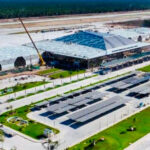
    NASCAR at Tulum Airport: More Than 30,000 Fans Expected

    Stock cars are heading to the Caribbean coast, and the venue might surprise you: an active international airport. The Tulum airport, to be exact.

    Felipe Carrillo Puerto International Airport in Tulum, Quintana Roo, will be transformed into a temporary oval track on April 25 and 26 for rounds of the 2026 NASCAR México Series and Challenge Series. The races are part of the Tulum Air Show (Airshow Tulum 2026), a four-day event organized by the Mexican Air Force and the Mexico Aerospace Fair, known as Famex. Organizers are projecting more than 30,000 attendees across the full April 23–26 program.

    The combination of motorsport and military aviation is unusual by any standard. Along with the stock-car races, the air show will feature aerobatic displays by F-5 jets, helicopters, drones, and other aircraft. Aerospace exhibitions and safety workshops are also planned at Military Air Base No. 20, which adjoins the airport facilities.

    NASCAR México president Jimmy Morales said the invitation to race at Tulum came from Famex, not from his organization. “The project has accumulated over six months of joint work with the Air Force,” Morales said at a February news conference, “and the intention is to turn this participation into a recurring relationship with Famex.” He added that the event would position the Mexican Caribbean as “an international benchmark for motorsport.”

    The races in Tulum will be the third weekend of NASCAR México’s 12-race 2026 season. The series opener is scheduled for March 14–15 in San Luis Potosí, with the season finale set for November 14–15 in Puebla. Tickets for the Tulum races will be sold separately from the largely free air show programming.

    NASCAR México has long served as a proving ground for Mexican drivers. The series produced Daniel Suárez, who went on to compete in the NASCAR Cup Series in the United States — a path that has raised the profile of the Mexican series with fans on both sides of the border.

    This event is a different animal from last year’s high-profile NASCAR Cup race in Mexico City. That June 2025 race at Autódromo Hermanos Rodríguez was a points-scoring event featuring all of the top Cup Series talent. The Tulum races involve the domestic Mexican series rather than the premier Cup circuit, which dropped Mexico City from its 2026 schedule, citing scheduling conflicts around the FIFA World Cup and travel logistics.

    The airport itself has had a complicated few years since opening in December 2023. Airlines have scaled back service at the facility, which sits nearly 30 miles from the resort town of Tulum and has struggled to match initial demand projections. Whether a NASCAR weekend will give the airport some promotional momentum remains to be seen. For now, at least, the runways are getting a very different kind of use.

    Security, logistics, and hotel coordination are already being worked out, according to officials at the February announcement. Representatives from the federal tourism secretariat, the state government of Quintana Roo, and the Tulum tourism secretariat were all present, signaling broad government backing for the event.

    For more on NASCAR in Mexico, The Athletic has followed the series’ efforts to expand its footprint south of the border.


    Factbox: NASCAR at Tulum Airport 2026

    • Event: Airshow Tulum 2026 / Tulum Air Show
    • Dates: April 23–26, 2026 (NASCAR races: April 25–26)
    • Venue: Felipe Carrillo Puerto International Airport, Tulum, Quintana Roo
    • Organizers: Mexican Air Force and Famex (Mexico Aerospace Fair)
    • Racing: NASCAR México Series and NASCAR Challenge Series
    • Projected attendance: More than 30,000 across all four days
    • Admission: Air show is largely free; NASCAR race tickets are sold separately
    • NASCAR México 2026 season opener: March 14–15, San Luis Potosí
    • Season finale: November 14–15, Puebla
  • Measles Crisis in Jalisco Raises Health Concerns Ahead of 2026 World Cup

    Measles Crisis in Jalisco Raises Health Concerns Ahead of 2026 World Cup

    Photo:

    The state of Jalisco has declared a health alert as Mexico‘s worst measles outbreak in decades tightens its grip on the capital, Guadalajara. And it’s bad timing, with just four months to go before the city welcomes tens of thousands of international soccer fans for the 2026 FIFA World Cup.

    According to Mexico’s federal government, Jalisco has recorded 1,163 confirmed measles cases so far in 2026, along with more than 2,000 suspected cases. The state accounts for the bulk of the country’s total, which the Pan American Health Organization (PAHO) pegged at 1,981 confirmed and over 5,200 suspected cases as of early February.

    The outbreak traces back to 2025, when a child from a Mennonite community in the northern state of Chihuahua contracted the virus while visiting family in Texas during an active outbreak there. The disease then spread rapidly through Mennonite communities, where vaccine hesitancy runs high, before reaching the broader population in what has become Mexico’s largest measles event in more than 30 years.

    Schools Shut Down, Masks Mandated

    On February 5, Jalisco’s health authorities ordered face masks to be worn in schools across seven neighborhoods in Guadalajara for a minimum of 30 days. The directive makes Jalisco the first Mexican state to impose a public health mandate of this kind since the COVID-19 pandemic.

    Fifteen schools in Jalisco and the central state of Aguascalientes have already suspended in-person classes due to localized outbreaks. Schools in ZapopanAtlacomulcoTlaquepaque, and Tonalá all reported sharp increases in January.

    In response, the Jalisco Ministry of Health, the Mexican Social Security Institute (IMSS), and other providers have ramped up a mass vaccination campaign across the Guadalajara Metropolitan Area. The effort includes house-to-house healthcare brigades, 670 fixed vaccination centers statewide, and 40 mobile units stationed in high-traffic public spaces. By mid-January, the campaign was delivering up to 12,000 doses per day.

    A Continental Problem, a Global Event

    The timing is particularly concerning. Guadalajara’s Estadio Akron, home to Chivas of Liga MX, is set to host four group-stage matches beginning June 11, including Mexico vs. South Korea on June 18 and a high-profile Uruguay vs. Spain fixture on June 26. The city is expected to draw large international crowds to a region already under heavy epidemiological strain.

    With the World Cup bringing visitors from dozens of countries to the three co-host nations, all of which are dealing with rising case counts, the risk of introducing new chains of transmission is real.

    Canada lost its measles-free status in November 2025. Both the U.S. and Mexico now face the same prospect and have requested a two-month extension from global health authorities to bring their outbreaks under control. That request comes at a complicated moment after President Donald J. Trump took the US out of the World Health Organization in January, the parent body of PAHO.

    What Expats and Travelers Should Know

    PAHO reported that in the first three weeks of 2026 alone, 1,031 new measles cases were confirmed across seven countries in the Americas with no reported deaths. That figure is 43 times higher than the same period last year.

    Mexico’s federal government has set up vaccination stations in airports and bus terminals across the country and continues to urge residents and visitors alike to ensure they have received both doses of the MMR vaccine. Measles is preventable with two doses, but declining vaccination rates across the hemisphere have allowed the disease to regain a foothold in communities that were once considered protected.

    For expats living in Mexico and those planning to travel for the World Cup, checking immunization records and consulting a healthcare provider before June would be a wise precaution.

  • Real Madrid Foundation Brings Elite Soccer Training to Tulum Country Club

    Real Madrid Foundation Brings Elite Soccer Training to Tulum Country Club

    Photos courtesy Tulum Country Club

    Tulum Country Club has launched a partnership with the Real Madrid Foundation, bringing world-class soccer training to Mexico‘s Caribbean coast. The collaboration kicked off with the first Real Madrid Foundation Clinics from January 30 to February 2, combining professional-level coaching with character development for young athletes.

    The four-day program attracted approximately 60 participants aged 6 to 17 from Mexico, the United States, and Argentina, offering more than 20 hours of intensive field training at the resort’s facilities.

    Rodrigo Blanco Robles, Technical Coach for Schools and Clinics of the Real Madrid Foundation and a UEFA PRO licensed coach, led the training sessions. Blanco Robles coordinated a team of certified coaches who implemented the Foundation’s methodology, which emphasizes collective play and cognitive development through real game situations rather than isolated drills.

    Each participant received individual evaluation throughout the program, with coaches focusing on technical skills, tactical awareness, and habits of discipline and continuous improvement.

    Values-Based Training Philosophy

    “At Tulum Country Club we are committed to sports as a lifestyle, because we trust in its transformative power, especially for young people, and particularly with a partner like the Real Madrid Foundation, with whom we share values such as effort, teamwork, improvement, and never giving up,” commented Álvaro Moya, Country Manager of Tulum Country Club.

    The program integrated eight core values promoted by the Real Madrid Foundation: respect, commitment, companionship, solidarity, sportsmanship, discipline, responsibility, and health and well-being. This approach mirrors the training philosophy used at Real Madrid’s youth academies in Spain.

    Building Long-Term Development

    Pablo Gil Sarrión, technical director of Real Madrid Foundation Tulum, emphasized the comprehensive nature of the program. 

    “The objective of these Clinics is for each boy and girl to have a complete experience: improve their game with a recognized methodology and, at the same time, take away tools and values that serve them in their daily lives. At Tulum Country Club we take this first step with a clear foundation: respect, commitment, and companionship as part of the training,” he stated.

    The clinic represents the first of what Tulum Country Club plans as an ongoing sports initiative. The partnership positions the resort as a destination for families seeking high-quality athletic programs alongside traditional vacation amenities.

    About the Partnership

    The Real Madrid Foundation operates soccer training programs in more than 80 countries worldwide, serving over 70,000 children annually through its network of schools, clinics, and social programs. The Foundation’s methodology has been developed over decades at Real Madrid’s La Fábrica youth academy, which has produced players including Raúl GonzálezIker Casillas, and Dani Carvajal.

    Tulum Country Club’s commitment to this partnership demonstrates the resort’s broader strategy of offering experiences that extend beyond beach activities and spa services, appealing to families prioritizing active lifestyles and youth development during their travels to the Riviera Maya region.

  • As Calls for World Cup 2026 Boycott Grow, What’s at Stake for Mexico?

    As Calls for World Cup 2026 Boycott Grow, What’s at Stake for Mexico?

    Photo: Fauzan Saari / Unsplash

    Growing international pressure to boycott FIFA World Cup 2026 matches in the United States has raised questions about what such a movement could mean for Mexico, one of three co-hosts for the tournament. While boycott calls target US policy decisions, Mexico stands to gain significantly if fans redirect their travel plans south of the border.

    Former FIFA president Sepp Blatter added his voice to the growing chorus of critics in late January when he endorsed a proposed fan boycott of World Cup matches in the United States. Blatter, who led FIFA from 1998 to 2015, supported comments made by Swiss attorney Mark Pieth, an anti-corruption expert who previously chaired FIFA’s Independent Governance Committee. Pieth had advised fans to avoid traveling to the US for the tournament, warning that supporters who displease officials could face deportation upon arrival.

    The tournament runs from June 11 to July 19, 2026, with 16 host cities spread across Mexico, Canada, and the United States. Mexico will host 13 matches in three cities: Mexico CityGuadalajara, and Monterrey. The US will host 78 of the 104 total matches, including both semifinals and the final at MetLife Stadium in East RutherfordNew Jersey.

    Travel Restrictions Complicate the Picture

    The Trump administration expanded US travel restrictions in December 2025 to include 39 countries and Palestinian Authority travel documents. Four nations that qualified for the World Cup now face severe restrictions: IranHaitiIvory Coast, and Senegal. Fans from Iran and Haiti face full travel bans, while supporters from Ivory Coast and Senegal face partial restrictions linked to visa overstay concerns.

    An additional 12 World Cup-qualified countries have been hit with indefinite bans on immigrant visa processing: Algeria, Brazil, Cape Verde, Colombia, Egypt, Ghana, Guatemala, Jordan, Morocco, Tunisia, Uruguay, and Uzbekistan. While athletes, coaches, and support staff remain exempt from most restrictions, ordinary fans from these nations will struggle to attend matches in US cities.

    The restrictions have prompted Oke Gottlich, a vice president of the German Football Association, to suggest it was time to seriously consider a boycott. Gottlich compared the current situation to Olympic boycotts during the Cold War, arguing that the potential threat now exceeds what existed during the 1980s.

    Mexico’s Historic Role as World Cup Host

    The 2026 tournament marks a historic milestone for Mexico. Estadio Azteca in Mexico City will host the opening match on June 11, making it the only stadium in the world to host World Cup matches in three separate tournaments, following 1970 and 1986. The country will also host group stage matches at Estadio Akron in Guadalajara (capacity 48,071) and Estadio BBVA in Monterrey.

    Mexico has been placed in Group A alongside South Korea, South Africa, and the winner of UEFA playoff path D (which could be Czech Republic, Republic of Ireland, Denmark, or North Macedonia). El Tri will play all three-group stage matches at Estadio Azteca, giving home fans the opportunity to support the national team without crossing international borders.

    The Mexican government has invested heavily in preparation. Estadio Azteca is undergoing a $175 million renovation to increase seating capacity from 87,500 to 90,000. Mexico City neighborhoods surrounding the stadium have received more than $350 million in infrastructure upgrades focused on security, mobility, and public services.

    Economic Stakes for Mexico

    Official projections estimate the tournament will attract more than 5.5 million visitors to Mexico and inject between $1.8 billion and $3 billion into the national economy. However, the Confederation of National Chambers of Commerce, Services and Tourism (CONCANACO SERVYTUR) believe the economic impact could reach nearly 200 billion Mexican pesos (approximately $11.3 billion) if benefits extend beyond the three host cities.

    Guadalajara alone expects to attract one million visitors, with local economic revenues estimated at up to $7 billion and approximately 40,000 temporary jobs. Foreign direct investment from the United States during the first half of 2025 reached $14.7 billion, representing a 7% increase compared to the same period in 2024. Investment in cultural, sports, and recreational services nearly tripled the flow recorded the previous year.

    International tourists typically spend nearly three times more per purchase than domestic consumers. Data shows foreign visitors spend around 1,015 Mexican pesos (approximately $55) per transaction, compared to 356 pesos ($19.33) by domestic shoppers. This spending differential makes international fan attendance particularly valuable for Mexican businesses.

    Could a US Boycott Benefit Mexico?

    If significant numbers of international fans choose to avoid US matches while still attending the tournament, Mexico could emerge as a primary beneficiary. Some advocacy groups have called for matches scheduled in the United States to be moved to Canada and Mexico. While such a dramatic shift remains unlikely given FIFA’s existing agreements and infrastructure plans, fans who are uncomfortable traveling to the US could choose to attend only matches in Mexican or Canadian cities.

    The geographic distribution of matches creates natural travel patterns. Fans following teams playing in Group A, which includes Mexico, will already be concentrated in Mexico City. Similarly, fans from countries facing US travel restrictions could focus their World Cup experience on Mexican venues, where entry requirements remain more accessible.

    Mexico’s Plan Concanaco: Un Mundial Muy Mexicano (A Very Mexican World Cup) aims to distribute economic benefits beyond the three host cities through community tourism, cultural experiences, and local gastronomy. The plan targets neighborhood economies and family-owned businesses rather than concentrating revenue in large international chains. Seven additional cities have been designated as training hubs: Puebla, Torreon, Queretaro, Pachuca, Cancun, Toluca, and Tijuana.

    Practical Realities of a Boycott

    Despite growing rhetoric, most analysts believe a coordinated boycott remains unlikely. FIFA President Gianni Infantino has maintained close ties with the Trump administration, including opening a FIFA office in Trump Tower in New York City. In 2025, Infantino presented Trump with an inaugural FIFA Peace Prize during a ceremony in Washington, DC.

    The Trump administration has attempted to address visa concerns by launching the FIFA PASS (Priority Appointment Scheduling System), which prioritizes visa interviews for ticket holders. More than 400 additional consular officers have been deployed to US embassies worldwide to handle World Cup-related visa requests.

    Fans from 212 countries and territories submitted ticket requests during the random selection draw phase, with FIFA reporting an average of 15 million ticket requests per day over a 33-day application window. Residents of the three host countries drove the most purchases, followed by fans in England, Germany, Brazil, Colombia, Spain, Argentina, and France.

    France’s Sports Minister Marina Ferrari stated there is currently no desire for a boycott of the tournament. The Danish Football Association has acknowledged the situation as sensitive but stopped short of advocating withdrawal.

    Mexico’s Opportunity Amid Uncertainty

    For Mexico, the World Cup arrives at a difficult time in US-Mexico relations. The tournament offers an opportunity to showcase the country’s infrastructure, culture, and hospitality to a global audience. Secretary of Economy Marcelo Ebrard has described the event as a chance to compete against negative narratives and demonstrate what kind of country Mexico really is.

    Cultural programming will accompany the matches. The Mexico of My Flavors gastronomic festival runs from June 5 to July 22 in Mexico City, uniting cuisine, crafts, and folk art from all Mexican states. A beautification program called Rutas Magicas de Color will enhance public spaces, and football tournaments will be held in Pueblos Magicos, towns recognized for their historical and cultural significance.

    Whether or not boycott calls gain traction, Mexico appears positioned to benefit from the tournament. Fans who wish to experience the World Cup while avoiding political tensions in the US will find an alternative in Mexican host cities. For supporters from countries facing travel restrictions, Mexico offers the only North American option for watching their teams in person.

    The tournament will test whether sport can remain separate from geopolitics. For 39 days this summer, the world of football will be watching closely, and Mexico will be ready to welcome whoever arrives.

    Visit the official FIFA website for match details and ticket information.