
Category: Nature

  • Nuns Are Saving a Critically Endangered Salamander in Mexico, and It’s Working

    Nuns Are Saving a Critically Endangered Salamander in Mexico, and It’s Working

    salamander
    Dominican nuns in Pátzcuaro are leading the conservation of one of the country’s rarest salamanders.

    For more than two decades, a community of Dominican nuns in Pátzcuaro has quietly been leading one of Mexico’s most extraordinary conservation efforts. 

    Tucked behind the walls of their monastery, adjacent to a 16th-century basilica, the sisters care for and breed the critically endangered Lake Pátzcuaro salamander. This species, known locally as the achoque, exists nowhere else on Earth. 

    While the salamander’s wild population has collapsed due to pollution, invasive species, and habitat loss, the convent has become an unexpected ark. 

    Today, the largest known captive population of this amphibian is maintained not in a university laboratory or a government facility, but in rows of glass aquaria and white enamel bathtubs inside a religious order. 

    The story of how these sisters became the species’ primary guardians is a testament to the unexpected ways that faith, tradition, and science can converge in the service of conservation.

    A Centuries-Old Remedy

    The achoque, scientifically known as Ambystoma dumerilii, is a paedomorphic salamander.

    This means it retains its larval features, including its feathery external gills, throughout its entire adult life. It is a close relative of the better-known axolotl, another Mexican amphibian that has captivated scientists worldwide for its remarkable ability to regenerate lost limbs and even portions of its brain and heart. 

    For centuries, long before the species was formally described by French herpetologist Alfredo Dugès in 1870, the Indigenous Purépecha people of the Lake Pátzcuaro region revered the achoque as both a food source and a vital ingredient in their traditional medicine.

    The salamander even held spiritual significance, with some accounts linking it to pre-Columbian deities. This deep cultural connection to the lake and its creatures laid the groundwork for the salamander’s later role in the monastery.

    The Dominican sisters at the Monastery of Our Lady of Health have used achoques to produce a traditional cough syrup, known as jarabe, for generations. Some sources indicate that this practice dates back 150 years. 

    The syrup, believed to treat respiratory ailments such as asthma, coughs, and even anemia, became the convent’s main source of income, selling for approximately 200 pesos per bottle. The nuns would traditionally collect salamanders from the lake to make their remedy. However, in the 1980s, the wild population of achoques in Lake Pátzcuaro crashed dramatically. 

    The lake, the species’ only natural home, was shrinking and becoming increasingly polluted by sewage, agricultural fertilizer runoff, deforestation in the surrounding watershed, and the introduction of invasive fish species such as Asian carp. In the 1980s, fishermen were still extracting as much as 20 tonnes of axolotls from the lake each year. Today, fewer than 150 adult achoques are thought to remain in the wild.

    When the Lake Began to Die

    Faced with the collapse of both the species and their own livelihood, the nuns took decisive action. With guidance from a friar who was also a trained biologist, they began breeding the salamanders in captivity, establishing the colony that now thrives within the monastery. 

    What started as a practical measure to preserve their syrup business evolved into something far more significant. Sister Ofelia Morales Francisco, who has cared for the achoques for nearly 20 years, and her fellow sisters mastered the amphibians’ complex reproductive biology through patient observation and hands-on experience. 

    They developed their skills through a combination of independent trial and error and consistent support from local universities and research centers. “Being part of a religious order is not an obstacle for scientific progress,” Sister Ofelia has said. For her and the other nuns, the work has taken on a deeper meaning beyond commerce. “It’s about protecting a species from nature,” she explained in an interview with the New York Times. “If we don’t work to take care of it, to protect it, it will disappear from creation.”

    The transformation in their mission was gradual but profound. The sisters moved from being harvesters of a wild resource to being its most dedicated custodians. Their daily routine now includes meticulous monitoring of water quality, feeding schedules, and health checks for hundreds of individual salamanders. 

    Faith Meets Science

    The nuns’ achievement has not gone unnoticed by the international scientific community. Biologists from the nearby University of San Nicolás de Hidalgo in Michoacán discovered that the sisters were expert breeders and began collaborating with them on a formal conservation program. 

    The United Kingdom’s Chester Zoo, which has a long history of amphibian conservation, also recognized the monastery’s thriving colony as an invaluable resource. Dr. Gerardo Garcia, a curator and expert on endangered species at the zoo, has described the nuns as “very vital” to the salamanders’ prospects in the wild.

  • Indigenous Groups in San Luis Potosí Mobilize Against New Fracking Policy

    Indigenous Groups in San Luis Potosí Mobilize Against New Fracking Policy

    fracking
    “Not here, not there, not anywhere”: the slogan capturing indigenous resistance to hydraulic fracturing in Mexico’s Huasteca region

    A political confrontation is unfolding in northeastern Mexico, where indigenous communities in the Huasteca Potosina region are challenging President Claudia Sheinbaum’s decision to legalize and promote hydraulic fracking. 

    After years of an official ban and widespread political opposition to the practice, the current administration has reversed course, citing national energy sovereignty. However, indigenous leaders from the Tének and Náhuatl peoples maintain that the government has violated their constitutional rights by failing to conduct legally mandated consultations before approving extraction projects on their ancestral lands.

    The Dangers of Fracking

    Opponents cite severe environmental and health risks associated with fracking. Hydraulic fracturing involves injecting a mixture of water, sand, and chemical additives at extremely high pressure to fracture rock formations and release trapped oil and gas. For a single well, this process requires approximately 29 million liters of water and over 600 toxic chemicals.

    Environmental impact assessments indicate that the proposed polygons (Castaña and Maguey) contain 200 perennial bodies of water and 1,306 intermittent streams. Indigenous leaders warn that these water sources—including the Valles, Pujal, Coy, Tampaon, Huichihuayan, and Moctezuma rivers—would face severe contamination from chemical injection and methane release.

    “The fracking requires millions of liters of fresh water per well that will be extracted from aquifers vital for human consumption and agricultural activity,” indigenous representatives stated in a formal declaration. “There is no sovereignty possible if we sacrifice the health of our population”.

    The coalition further warns that claims of ecological fracking or non-damaging extraction techniques are scientifically false. “There is no way that the exploration of shale gas and oil can be a clean activity. The injection of chemicals and the release of methane are undeniable technical realities,” they assert.

    Indigenous Leadership and the Slogan of Resistance

    At the forefront of the opposition is Jaquelina Fernández Acosta, a Tének teacher from Tamaletón and a vocal defender of indigenous rights. During the International Day of Indigenous Women ceremony in September 2025, while receiving an award from the state’s Indigenous Development Institute (INDEPI), Fernández Acosta used the platform to protest fracking projects. She held up a sign written in her native Tének language expressing her community’s rejection of the practice.

    Fernández Acosta has popularized the slogan “not here, not there, not anywhere” (aquí no, allí no, en ningún lado), which has become a rallying cry for affected communities. 

    The slogan summarizes a position of total opposition to hydraulic fracturing, rejecting any compromise that would permit the practice in some locations while prohibiting it in others. This position reflects the community’s understanding that water systems are interconnected and that contamination in one area inevitably affects surrounding regions.

    Fracking and Consultation Rights

    The central legal argument made by indigenous groups rests on the absence of prior consultation. Mexican constitutional law, particularly Article 2 of the Constitution, along with international instruments such as the International Labor Organization’s Convention 169 (ratified by Mexico), requires that indigenous communities be consulted before any project that could affect their territories or ways of life. These consultations must be “prior, free, informed, culturally appropriate, and in good faith.”

    Indigenous leaders assert that no such consultation process has occurred regarding the fracking projects planned for the Huasteca. “We warn that any attempt to implement fracking on indigenous territories without prior, free, and informed consultation is born with a defect of origin,” the communities declared in an April 2026 statement. 

    Rejection Despite Government Claims

    Despite the federal government’s efforts to move forward with planning, resistance on the ground remains firm. On June 5, the 5th Regional Forum, titled “No to Fracking, in Defense of Territory, Water, and Life,” was held in Huehuetlán, drawing massive participation from Tének and Náhuatl communities, agrarian authorities, municipal officials, civil organizations, agricultural producers, tourism representatives, and researchers. 

    The assembly reached a unanimous agreement to reject and prevent fracking in their territories.

  • New Evidence Shows Continuous Fallout from Cantarell Spill Contaminating Protected Reserves
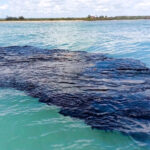
    New Evidence Shows Continuous Fallout from Cantarell Spill Contaminating Protected Reserves

    cantarell
    Many questions still surround Cantarell and the platform’s explosion, but one thing is for certain: the damage is done. 

    For two months, the Mexican government maintained a steadfast narrative: the oil staining hundreds of miles of Gulf coastline was the result of an illegal ship dump and natural seabed seeps. But on April 16, that narrative collapsed. 

    Federal authorities were forced to admit that a decaying 36-inch pipeline owned by state oil giant Pemex, located within the Cantarell complex off the Campeche coast, was the source of a disaster that has quietly grown into one of Mexico’s most significant environmental crises in years.

    The admission of what occurred at Cantarell has torn open a widening gap between the government’s initial assurances of limited damage and the stark reality of a “continuous fallout.” Evidence now confirms that previously unaffected areas along the Gulf are showing signs of toxicity as the slick continues to expand, threatening the delicate ecological balance of protected wetlands and coral reefs.

    Cantarell: The Perfect Storm of Negligence

    The accident did not occur suddenly. According to the investigation released by the federal Interinstitutional Group, the rupture began as early as Feb. 4 near the Abkatún platform. While an aerial survey spotted hydrocarbons on Feb. 6, a chaotic chain of operational failures ensued.

    It took divers 48 hours to locate the breach in the labyrinth of seabed pipes at Cantarell. Even then, the response was hobbled by what Pemex Director General Víctor Rodríguez described as a “chain of specific misconduct.” Senior management was not informed of the severity of the leak. Critically, the main pipeline valve was not shut until Feb. 14—eight days after the leak was detected—allowing crude to billow into the Gulf virtually unchecked.

    Internal reports indicate that at least 350 cubic meters of oily water recovered by containment barriers were deliberately hidden from records. When tar balls began washing ashore in Veracruz and Tabasco in early March, officials denied a pipeline breach, instead blaming a “mystery ship” and natural “chapopoteras.”

    Expanding Fallout and Ecological Devastation

    The delay in response at Cantarell allowed the slick to metastasize. Satellite imagery and drift models show that the spill has now impacted more than 600 kilometers of coastline, stretching from Tamaulipas down through Veracruz and Campeche.

    More alarmingly, the contamination is reaching regions previously untouched by the initial wave. Environmental groups report that the toxic sheen has infiltrated seven federally protected natural reserves, including the Los Tuxtlas Biosphere Reserve and the Veracruz Reef System, a UNESCO-recognized biosphere that is home to the most biodiverse marine ecosystems in the western Atlantic.

    Oceana and local environmental organizations have documented the deaths of sea turtles, a manatee, and dozens of fish species. The economic fallout is equally severe; fishing cooperatives have been paralyzed, and the tourism industry along the once-pristine beaches is facing an existential threat as cleanup crews dig tar out of the sand.

    Cantarell
    The true scope of the Cantarell disaster is becoming evident not through official data, but through the remains of dead fish washing ashore

    Shifting the Blame over Cantarell

    Mexico has mobilized a massive, albeit belated, force. Over 3,000 military and cleanup personnel, 47 vessels, and thousands of meters of containment barriers have been deployed along the affected shores.

    President Claudia Sheinbaum, who as recently as March 31 defended Pemex and denied a pipeline leak at Cantarell, has pivoted to damage control. Officials announced a 30-million-peso fund to support displaced fishermen and insisted that beaches remain safe for tourists. However, environmentalists argue these measures are superficial. Greenpeace and other organizations have lambasted the government’s approach, stating that financial aid does not equate to ecosystem restoration, especially when the total volume of oil spilled remains unknown.

    As the cleanup continues, the federal government has promised to create a permanent environmental observatory to monitor the Gulf. But for the coastal communities of Campeche, watching the black tide rise against their shores, the promise feels hollow. 

    With Information from Reforma.

  • Mexican Scientists Tackle the Sargassum Crisis to Turn the Scurge into Profit
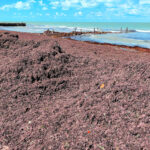
    Mexican Scientists Tackle the Sargassum Crisis to Turn the Scurge into Profit

    sargassum
    Scientists in Mexico have found a way to get over the biggest hurdle in turning stinky, unsightly sargassum into biofuels and more.

    The beaches of Mexico’s Caribbean coast, famous for their white sand and turquoise water, face a recurring threat. Every year, massive amounts of brown seaweed known as sargassum wash ashore. 

    It rots in the sun, releasing a smell like rotten eggs, harming wildlife, and driving away tourists. In 2025, authorities in Quintana Roo collected over 80,000 tons of the stuff, and 2026 is projected to be even worse. However, researchers are turning this problem into a solution. Scientists in Mexico have developed methods to extract heavy metals from the seaweed and convert the remaining organic material into biofuel.

    Getting Over the Heavy Metal Hurdle

    To understand the solution, you first have to understand the problem: the seaweed is toxic. According to Dr. Raul Tapia-Tussell, a senior researcher at Mexico’s Secretariat of Science, Humanities, Technology and Innovation, “Heavy metals in sargassum pose serious risks to human health. As this seaweed decomposes on beaches, it can leach toxic substances like arsenic and cadmium into the environment”. These metals mean you cannot simply grind up the sargassum and use it as fertilizer or fuel. If you burned raw sargassum, you would release those toxins into the air.

    This is where the new research comes in. Scientists are treating the sargassum like an ore that needs refining. The first step is a cleaning process to remove the heavy metals, particularly arsenic. Because the cell walls of Sargassum act like magnets for dissolved metals in the ocean, they hold onto these pollutants tightly. Researchers use pre-treatment methods—sometimes involving water washes or chemical baths—to pull the arsenic and cadmium out of the biomass. Once the dangerous metals are removed, the remaining material is largely cellulose and carbohydrates, which are perfect for energy production.

    The cleaned seaweed is then processed in a device called an anaerobic digester. This is essentially a sealed tank without oxygen. Naturally occurring bacteria are added to the tank, which eat the seaweed. As the bacteria digest the carbohydrates, they produce a gas mixture primarily composed of methane. This gas, known as biogas, can be burned to generate electricity or further purified into renewable natural gas to power vehicles. The leftover solid material can even be used as a soil amendment, provided the heavy metals were successfully removed.

    Other Uses for Sargassum

    Beyond fuel, the seaweed has other uses. The Mexican government has officially declared sargassum a “fishery resource” to encourage its harvesting. Entrepreneurs are currently using it to make construction materials. Specifically, researchers have tested using sargassum ash as a substitute for cement in concrete, which reduces the carbon footprint of building. The algae can also be turned into biofertilizers for crops or processed into paper and colored pencils.

    Despite these useful applications, the amount of seaweed keeps increasing every year. There are two main reasons for this. First, climate change is warming the ocean. Second, and more specifically, there is a natural cycle involving phosphorus. An international team led by the Max Planck Institute for Chemistry recently published findings in Nature Geoscience explaining the driver. Upwelling—a process where wind pushes surface water away and pulls deep, cold water up—brings phosphorus to the surface near the equator.

    This phosphorus feeds tiny bacteria that live on the sargassum. These bacteria have a special ability: they can pull nitrogen from the air and turn it into fertilizer for the seaweed. The study notes that these cyanobacteria “capture atmospheric gaseous nitrogen and convert it into a form usable by the algae”. This symbiotic relationship gives sargassum a competitive advantage over other seaweeds, allowing it to reproduce rapidly and form the “Great Atlantic Sargassum Belt” that drifts toward the Caribbean.

    Rosa Rodríguez Martínez, a coastal ecologist at the National Autonomous University of Mexico (UNAM), sums up the shift in perspective required to fix the issue. “Sargassum isn’t just a problem — it’s a resource,” she said. “But only if we learn how to manage it sustainably”. The race is now on to build the facilities needed to process the millions of tons arriving each year before they hit the shore, turning a smelly liability into a source of biofuel and building materials.

    sargassum
    Even resorts and hotels like Xcaret, which have plenty of resources, struggle to contain the scourge that is sargassum.

    Impact on Tourism

    But despite these innovations and new ways of thinking about sargassumm, the fact remains that it is, and likely will continue to be, a problem for Mexico’s vital tourism sector. 

    Once pristine beaches like Cancun are increasingly overrun with the foul-smelling seaweed, and partnerships between hotels and governments spend millions to clean up the mess, the best they can; but only achieve a modest measure of success. 
    To make things even more complicated, changing sea currents and rising temperatures threaten beaches that have historically not been hit by large amounts of sargassum, as is the case with Isla Mujeres.

  • Zoo at Villahermosa’s Parque-Museo La Venta Under Scrutiny

    Zoo at Villahermosa’s Parque-Museo La Venta Under Scrutiny

    Zoo
    Because of their size, Jaguars are especially difficult to keep healthy in captivity, which is why authorities are recommending a transfer to Tabasco’s Yumká sanctuary.

    In Villahermosa, Parque-Museo La Venta functions as both a zoo and an archaeological park. The site houses several Olmec colossal heads and other artifacts from what is considered Mesoamerica’s “mother culture,” alongside living animals, including jaguars, monkeys, and crocodiles. Recent investigations by federal environmental authorities have focused on whether the park is doing enough to ensure animal welfare.

    The Profepa Investigation

    In response to allegations that the park is not ensuring animal well-being, the Procuraduría Federal de Protección al Ambiente (Profepa) conducted a inspection of the zoo on April 21, 2026. The inspection was carried out with state and federal authorities, including the Secretaría de Medio Ambiente y Recursos Naturales (Semarnat) and the Tabasco Secretariat of Culture.

    According to the official report released that same day, federal inspectors performed a complete count of the animals. They conducted physical reviews to verify nutritional and health conditions, and they audited the enclosures and feeding areas.

    Following the inspection, authorities confirmed that the park operates under current regulations, which, nevertheless, inspectors added should perhaps be reviewed, especially when it comes to larger species. Officials present included Aída Elba Castillo Santiago, Secretary of Culture in Tabasco; Salvador Heredia Domínguez, Semarnat delegate; and Mayra Villagómez, acting head of Profepa in Tabasco.

    The Culture Secretary described the inspection as a productive transparency exercise, stating that the physical verification allows the government to build solid records demonstrating Tabasco’s compliance with federal environmental policy. However, the inspection did find irregularities.

    The Administrative Dispute and Animal Transfers

    Despite the positive findings from Profepa, allegations of negligence have not disappeared. The controversy relates to an edict declaring that the 134 animals under the Secretariat of Culture’s care were “no longer useful” to that department and should be transferred to Yumká, a larger wildlife interpretation center managed by the environmental agency Semades.

    Critics, including activists, interpreted this as a plan to empty the zoo to make way for a proposed National Olmec Museum. However, state officials have denied this. In June 2025, Secretary of Environment Sheila Cadena Nieto explained that the transfer is administrative—changing which department pays for the animals’ care—not a physical relocation. “The animals will remain there; they will just now be attended to by Yumká,” Cadena Nieto said. She acknowledged that the “form of captivity” at La Venta has been criticized for years and argued the change could improve animal welfare.

    The April 2026 Profepa inspection appears to have established a baseline record of the animals’ condition before this administrative transfer takes effect.

    A Dual Mission: Zoo and Archaeological Park

    Parque-Museo La Venta was inaugurated in 1958. The park serves two functions. First, it is an open-air museum displaying Olmec monumental art. It holds four Olmec colossal heads, basalt sculptures weighing up to 40 tons, along with altars, stelae, and mosaics. These pieces were moved from the original La Venta archaeological site, which was threatened by oil exploration.

    Second, the park operates as a wildlife conservation and management institute. This legal designation allows it to keep species such as jaguars, howler monkeys, crocodiles, and various tropical birds. The combination of archaeology and live animals is intended to illustrate the connection between Olmec culture and the region’s wildlife.

    Current Status

    Parque-Museo La Venta remains open to the public. The recent inspection confirmed that the enclosures meet legal safety and hygiene requirements. However, the ongoing scrutiny reflects a broader debate about whether a small, urban park designed in the 1950s can provide adequate welfare for wild animals, or whether its educational and archaeological value justifies the current arrangement.

    For now, authorities maintain the site is safe, and the animals are in stable condition. But as the government moves forward with plans for a National Olmec Museum, the living collection at La Venta will likely remain under close watch.