Category: Nature

  • From Opposition to Open Door: Sheinbaum’s New Fracking Policy Sparks Backlash from 80+ Civil Groups

    From Opposition to Open Door: Sheinbaum’s New Fracking Policy Sparks Backlash from 80+ Civil Groups

    fracking
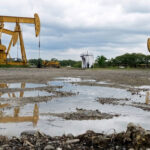
    President Sheinbaum has opened the door to fracking in Mexico—but activists and experts warn it’s an environmental dead end, especially under Pemex’s watch.

    President Claudia Sheinbaum has signaled a major policy shift by opening the door to new natural gas extraction technologies, a decision that environmental groups and energy experts warn could be a dangerous leap into an environmental “dead end.”

    During her daily press conference this week, Sheinbaum defended the exploration of non-conventional gas extraction techniques, arguing they are essential to “fortify” the nation’s energy sovereignty. This marks a significant reversal from her previous staunch opposition to hydraulic fracturing, the controversial process more commonly known as fracking.

    While the President insists she is rejecting “traditional fracking” due to its severe environmental impacts, she has proposed a scientific committee, including experts from UNAM and the IPN, to evaluate newer, purportedly “low-impact” methods. However, more than 80 civil society organizations, including the Mexican Alliance Against Fracking, immediately condemned the proposal.

    “The idea of a ‘sustainable’ version of fracking may sound promising in a speech, but in reality, it does not exist,” the coalition said in a blistering statement, accusing the administration of a “political U-turn” that breaks campaign promises.

    What is Fracking and Why is it a Problem?

    Hydraulic fracturing, or fracking, is the process of injecting a high-pressure mixture of water, sand, and toxic chemicals deep into underground rock formations to crack them open and release trapped oil or gas.

    While the industry has hailed it as a bridge to energy independence, the technique is deeply controversial due to a catastrophic list of side effects documented over the last 15 years across more than 2,300 scientific studies.

    In the United States, the cradle of the fracking boom, the consequences have been dire. The disposal of fracking wastewater—so chemically laden it cannot be returned to the water cycle—has been directly linked to a dramatic surge in earthquakes in states like Oklahoma and Texas.

    Furthermore, the industry is currently facing a wastewater crisis. In the Permian Basin, for every barrel of oil extracted, up to five to six barrels of toxic brine are produced. Disposal wells are overloading, leading to leaks, ground deformation, and the potential contamination of freshwater reserves. These “new technologies” touted by the government—such as using treated wastewater or seawater—have been tested in the US but have not become standard practice due to prohibitive costs, ranging from $5 to $10 million per installation.

    The Pemex Factor: Corruption and Catastrophe

    Even if the technical hurdles of fracking could be overcome, experts argue that Mexico is uniquely ill-equipped to manage the risks, primarily due to the state of Petróleos Mexicanos (Pemex). The state-owned giant has a notoriously poor environmental and safety record, raising profound questions about its ability to regulate a process as volatile as fracking.

    The skepticism is not unfounded. Just this week, Pemex admitted that one of its undersea pipelines caused a massive oil spill in the Gulf of Mexico, which has already soiled beaches and threatens biosphere reserves like Los Tuxtlas. This incident is merely the latest in a long history of disasters.

    Furthermore, a 2024 fatal incident at the Pemex Deer Park Refinery in Texas, which released over 27,000 pounds of hydrogen sulfide gas, killing two workers, highlighted the company’s ongoing struggles with maintenance and safety protocols.

    Critics argue that entrusting Pemex with the high-stakes, precision-dependent task of fracking is reckless. Analysts point to the soaring costs and operational failures of the Dos Bocas refinery as evidence that Pemex cannot handle complex projects.

    “The President, blinded by ideology, starts from an error,” one political analysis noted. “The enormous limitations of Pemex are not being considered. The overcosts and operational problems of the Dos Bocas refinery should be enough not to entrust a single project more to them”.

    The Numbers Don’t Add Up

    Beyond the environmental and institutional risks, the coalition of NGOs argues that the economic rationale for fracking in Mexico is fundamentally flawed. Currently, Mexico imports 75% of its natural gas, creating a dependency Sheinbaum wishes to break.

    However, the math does not support the plan. According to Pemex’s own Strategic Plan, by 2035, Mexico would only produce 4.988 billion cubic feet per day (MMpcd) of gas. This falls drastically short of the current national demand of 9,000 MMpcd.

    “Energy sovereignty will not be achieved by extracting Mexico’s dwindling gas reserves,” the NGOs argued. “Even if we could extract all the gas in our subsoil, it would be insufficient to supply the growing demand for fossil gas”.

  • Celebrity Wedding at Mexico’s ‘Desert Galápagos’ Triggers Shutdown of Protected Reserve

    Celebrity Wedding at Mexico’s ‘Desert Galápagos’ Triggers Shutdown of Protected Reserve

    A celebrity wedding in one of Mexico’s most ecologically sensitive nature reserves has set off a firestorm of criticism — and touched off a federal crackdown that closed popular natural sites just as the Semana Santa holiday season kicked off.

    The controversy centers on Alfredo Cantú, a Mexican content creator known online as “Un Tal Fredo,” who married his partner, Adrián Álvarez, at Cuatro Ciénegas, a federally protected biosphere reserve in the northern state of Coahuila. Days after the event, environmental authorities moved in and shuttered several natural areas within the reserve, citing possible irreversible ecological damage.

    Alfredo Cantú, a Mexican content creator known online as “Un Tal Fredo,” married his partner, Adrián Álvarez, at Cuatro Ciénegas, a federally protected biosphere reserve in the northern state of Coahuila. Photo: Courtesy

    Profepa, Mexico’s consumer-protection environmental enforcement agency, acting in coordination with Semarnat, the National Commission of Protected Areas, and the National Water Commission, closed the popular Río Mezquites corridor and sealed 3 water wells operating without legal permits. The agencies said the intervention was aimed at halting illegal water extraction and protecting the reserve’s fragile systems — but the timing, coming immediately after the wedding, was impossible to ignore.

    Profepa acknowledged that an event was held in the reserve and that it prompted an environmental inspection. Officials said temporary structures, artificial lighting, and heavy vehicles had been deployed in protected zones — including near gypsum dune formations and natural pozas, or spring pools, that took thousands of years to form. Dinners were reportedly held inside marble mines within the protected area. The agency stopped short of formally blaming Cantú for the damage, saying it was still evaluating the scope of the impact.

    The influencer has not commented publicly. Some of his followers pushed back on the criticism, pointing out that the same-sex wedding represented an important moment of visibility for the LGBTQ+ community. In Mexico, where marriage equality is now recognized nationally but social acceptance remains uneven, the wedding drew both admiration and scrutiny before the ecological fallout became news.

    Alfredo Cantú, a Mexican content creator known online as “Un Tal Fredo,” married his partner, Adrián Álvarez, at Cuatro Ciénegas, a federally protected biosphere reserve in the northern state of Coahuila. Photo: Courtesy

    What made the story resonate beyond celebrity gossip is where it happened. Cuatro Ciénegas is no ordinary vacation destination. Designated as a UNESCO Biosphere Reserve in 1994, the area encompasses roughly 84,347 hectares (208,425 acres) and is home to more than 500 spring pools, or pozas, packed with organisms found nowhere else on Earth. Scientists have compared it to the Galápagos Islands. Researchers describe it as having the highest level of endemic biodiversity in North America, with microbial life varying pond to pond — each pool, in effect, a small experiment in evolution. NASA has noted potential links between the basin’s microbial forms and the search for life on Mars.

    The closure landed at the worst possible moment for local business owners. The shutdown came at the start of spring break season, when Cuatro Ciénegas — also a designated Pueblo Mágico — draws its heaviest tourist traffic. Municipal president Víctor Manuel Leija Vega acknowledged that the closures hit the local economy hard, as tourism is the community’s primary source of income. Tour operators, hoteliers, and service providers were left scrambling.

    The episode has reignited a broader debate in Mexico about the tension between tourism, celebrity culture, and conservation. Profepa has been stepping up enforcement of Mexico’s protected natural areas — including along the coasts of the Yucatán Peninsula, where unauthorized development has repeatedly threatened fragile ecosystems. Environmental specialists note that even brief human intrusion in places like Cuatro Ciénegas can trigger damage that outlasts the event by decades. The combination of crowds, infrastructure, noise, and vehicle traffic can alter soil chemistry, disturb endemic species, and disrupt water systems that took geological time to develop.

    Whether Cantú’s wedding was the direct cause of the closures or whether federal authorities simply used the moment to act on preexisting violations — the three unsealed wells, for example, were already operating without permits — remains an open question. Profepa has not published a formal determination. What is clear is that the story put Cuatro Ciénegas in the national spotlight, and that a protected reserve of unique global scientific value paid a very public price for it.

    Alfredo Cantú, a Mexican content creator known online as “Un Tal Fredo,” married his partner, Adrián Álvarez, at Cuatro Ciénegas, a federally protected biosphere reserve in the northern state of Coahuila. Photo: Courtesy

    At a Glance: Cuatro Ciénegas Biosphere Reserve

    • Located in Coahuila, in northern Mexico
    • Covers approximately 84,347 hectares (208,425 acres)
    • Designated a UNESCO Biosphere Reserve in 1994
    • Home to more than 500 pozas (spring pools) with species found nowhere else on Earth
    • Contains stromatolites — ancient microbial structures rare on the modern planet
    • Classified as a Pueblo Mágico (Magical Town)
    • Tourism is the municipality’s primary economic driver

    Sources: Revista FAMA / Infobae

  • Jaguar Spotted in Guanajuato for First Time: Cameras Capture Rare Sighting in Sierra Gorda Reserve

    Jaguar Spotted in Guanajuato for First Time: Cameras Capture Rare Sighting in Sierra Gorda Reserve

    For the first time, scientists have recorded a jaguar in the state of Guanajuato, marking a significant expansion of the species’ range in central Mexico.

    The National Commission of Natural Protected Areas (Conanp) confirmed that camera traps captured images of the jaguar inside the Sierra Gorda Biosphere Reserve. The reserve is in northeastern Guanajuato and spans nearly 237,000 hectares across five municipalities.

    Researchers installed 75 camera traps between August 2024 and May 2025 with assistance from community monitors. The project was led by Juan Felipe Charre-Medellín and received funding from Toyota and Mexico’s science agency.

    The jaguar was photographed in an area with large sections of continuous forest and low human disturbance. According to Charre-Medellín, the location lies within a corridor connecting jaguar populations in central Mexico to those in the eastern part of the country.

    With this discovery, all six wild cat species found in Mexico have now been recorded in the Sierra Gorda reserve. The others are the ocelot, the tiger cat, the jaguarundi, the bobcat, and the puma.

    Why This Matters

    Jaguars are what scientists call an apex predator. They sit at the top of the food chain and help keep ecosystems balanced by controlling populations of deer, peccaries, and other herbivores. Without them, overgrazing can damage forests and reduce biodiversity.

    The Sierra Gorda reserve is home to nearly 2,900 species of fungi, plants, and animals. Twelve of those species are classified as endangered, 39 as threatened, and 51 under special protection.

    Jaguar
    Over the past couple of decades, attitudes towards jaguars have shifted considerably, even among the cattle ranchers who once hunted them.

    Jaguar Populations in Mexico

    The jaguar’s situation in Mexico is mixed. Recent census data indicate that the population has grown significantly over the past decade; however, the species still faces serious threats.

    According to the National Alliance for Jaguar Conservation (ANCJ), Mexico had an estimated 5,326 jaguars in 2024. That represents a 30 percent increase since 2010, when the government first listed the species as endangered, and an 11 percent increase since 2018.

    However, experts warn that the population remains vulnerable. The ANCJ estimates it will take 15 to 30 years of steady growth for the species to be considered no longer in danger. Reaching a stable population of 8,000 jaguars could take more than three decades.

    At the same time, the species has lost more than half of its historical range in Mexico due to human development, deforestation, and habitat fragmentation. A book published in February 2026 by the Universidad Intercultural del Estado de México describes the jaguar’s situation as “critical,” with some of the lowest genetic diversity found across the species’ entire range from the southwestern United States to Argentina.

    The largest jaguar populations in Mexico are in the Yucatán Peninsula, where an estimated 1,699 individuals live, followed by the South Pacific region with 1,541 individuals.

    Ongoing Threats for Jaguars

    Habitat destruction remains the biggest threat to jaguars in Mexico. Agricultural expansion, cattle ranching, and urban growth continue to reduce the areas where jaguars can live.

    Conflict with ranchers is another major problem. When jaguars lose their natural prey, they sometimes attack cattle. Ranchers may kill jaguars in retaliation. Illegal trafficking of jaguar skins, skulls, claws, and teeth also continues.

    Conservation groups have called for stronger protections, including incentives to preserve wildlife corridors that allow jaguars to move between habitats, and stricter enforcement against the sale of jaguar parts on social media platforms.

    Community Role in Conservation

    In the Selva Lacandona region of Chiapas, community-based conservation projects have helped reduce conflict between ranchers and jaguars. A program called Jaguardianes has trained residents to monitor jaguars with camera traps. Some former hunters now help document jaguar activity and assist ranchers in filing livestock insurance claims when jaguars attack cattle.

    Similar community monitoring efforts in Guanajuato helped confirm the jaguar’s presence in the Sierra Gorda reserve. Conanp said the discovery reflects the work of landowners, academics, civil organizations, and government agencies working together.

    Conanp stated that the first recorded jaguar in Guanajuato confirms the Sierra Gorda reserve’s status as the state’s most biodiverse and best-preserved natural area.

  • Thirst for Growth: Mezcal’s Global Appeal Strains Oaxaca’s Land and Water
    Thirst for Growth: Mezcal’s Global Appeal Strains Oaxaca’s Land and Water

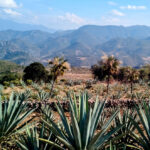
    What was once a small-scale tradition is now a global phenomenon. International demand has pushed Mexican mezcal production from approximately 1 million liters in 2010 to over 11 million liters in 2024, according to the Mexican Regulatory Council for Mezcal Quality (Comercam). Nearly 75 percent of exports head to the United States, and less than 30 percent of total production remains in Mexico.

    Along roads leading to communities like San Luis del Río—where celebrity-backed brands such as Dos Hombres, co-founded by Breaking Bad actors Bryan Cranston and Aaron Paul, are produced—vast agave plantations now cover hillsides that were forest just years ago.

    Forests Cleared, Water Stressed

    Research led by Rufino Sandoval-García, a forestry engineer and professor at the Technological University of the Central Valleys of Oaxaca, documents the scale of change. In two major mezcal-producing areas, more than 86 acres of tropical dry and pine-oak forests have disappeared over two decades to make room for agave cultivation—an area roughly the size of Monterrey. Agave plantations expanded by over 400 percent in three decades, with most new plantings devoted to espadín, a variety used in commercial mezcal.

    The consequences extend beyond tree loss. Deforestation is accelerating soil erosion, reducing carbon capture by an estimated 4 million tons annually in the studied region, limiting groundwater recharge, and creating heat islands in heavily planted areas.

    Mezcal production has always demanded significant resources. Producing one liter requires at least 10 liters of water for fermentation and distillation, according to industry estimates. The process also generates waste: bagasse (the pulpy residue) and vinazas (acidic wastewater) often end up untreated in rivers.

    A 2025 report from Oaxaca’s Network of Interpreters and Cultural Promoters warned that the industry is extracting more than 50 million liters of water annually without adequate regulation, while over 70 million tons of vinazas are discharged into rivers. The organization identified transnational companies—including Britain’s Diageo, France’s Pernod Ricard, and Mexico’s Becle (formerly José Cuervo)—as linked to brands contributing to environmental damage.

    The Shift From Milpa to Monoculture

    Félix Monterrosa, a third-generation producer from Santiago Matatlán who owns the Oaxacan brand CUISH, describes how industrial mezcal displaced the traditional milpa system he learned from his ancestors—a method where corn, beans, and squash were cultivated alongside agave.

    “Now everything is monoculture, and that is the real problem,” Monterrosa said.

    Mezcal
    The mezcal industry in Oaxaca generates approximately 30,000 jobs in Oaxaca alone. But as this precious crop starts eating up more land, many are starting to wonder if these not particularly well-paid jobs are even worth it.

    The shift has left visible scars. In his town, decades of dumping mezcal waste into the river left the water so contaminated that residents nicknamed it “Nilo”—short for “ni lo huelas,” or “don’t even smell it”. Monterrosa now plants wild agaves alongside corn and trees to restore biodiversity, though he acknowledges that scaling this approach remains difficult.

    Scientific research supports concerns about biodiversity loss. A genomic study published in October 2025 found that espadín—the dominant agave used in commercial mezcal—represents a clonal lineage selected by farmers for desirable production traits, resulting in considerable genetic differentiation from wild agave populations. This genetic uniformity increases vulnerability to pests and disease while reducing resilience to climate change.

    Economic Lifeline or Environmental Toll?

    For many in Oaxaca—where poverty rates remain among Mexico’s highest—the mezcal boom has brought unprecedented economic opportunity.

    Luis Cruz Velasco, a producer from San Luis del Río who works with Mexican brands like Bruxo, said the industry’s growth has created jobs for nearly every family in his town of about 300 residents. “Before, people in this town lived in houses with thatched roofs. Then we were able to build with sheet metal, and now they are made of cement,” said Luis Cruz Ruiz, 62, reflecting on the changes. “We survived because of the maguey”.

    Velasco acknowledges the environmental trade-offs. “There are many people who criticize us and ask what we do to reforest,” he said. “But we have to look for a livelihood and food”.

    He points to a lack of public incentives as a core problem. “We know it has an impact,” Velasco said, adding that large brands have done more than the government to support marginalized areas, but farmers need support to adopt sustainable practices like planting native trees or maintaining traditional systems.

    Efforts Toward Sustainability

    In 2018, Garnica founded a women’s collective called Guardians of Mezcal. The group promotes mezcal production using sustainable practices: using only fallen trees for firewood, planting agave alongside other crops, and avoiding monoculture.

    With support from Tierra de Agaves and local community officials from Santa María Zoquitlán, the collective secured protected status for 26,000 hectares of forest surrounding the municipality.

    “If there is a funeral, a wedding, a party, mezcal is a drink you are going to share with others, and above all, many families depend on it,” Garnica said. “Mezcal is a way of life, like a form of work that our parents taught us, so it really means a lot”.

    As the thirst for Mezcal arround the world continues to grow, so does pressure on ecosystems.

  • Mexico’s Fracking Reversal: Why President Sheinbaum Changed Course

    Mexico’s Fracking Reversal: Why President Sheinbaum Changed Course

    The decision by the government of President Claudia Sheinbaum to permit fracking is not merely a minor policy change. It signals a willingness to prioritize practical economic results over long-held ideological promises, including those of her predecessor and political ally, Andrés Manuel López Obrador. 

    For a country that relies heavily on imported gas and has a state oil company, Pemex, in financial trouble, this debate is now about real-world governance.

    The issue is particularly sensitive because it strikes at the heart of the political project that brought Sheinbaum to power. For years, rejecting fracking was a key environmental and ethical symbol for the ruling party, beyond just its economic feasibility. Reopening this door means accepting internal political costs and acknowledging that the new government’s early stages will involve uncomfortable decisions that break from the promise of pure continuity.

    What Is Fracking?

    Fracking, or hydraulic fracturing, is a method to extract oil and natural gas from deep underground. It involves drilling vertically and then horizontally into shale rock formations. A high-pressure mixture of water, sand, and chemicals is then injected to fracture the rock and release the trapped hydrocarbons, which flow back to the surface.

    Fracking is legal in many countries, including the United States, Australia, and Canada. However, it’s countries like France, Germany, and the Netherlands that have enacted national bans. But it’s not only wealthy European countries that have banned the practice; South Africa, Bangladesh, Uruguay, and Tunisia, among many others, have also closed the door to it. 

    Why Is Fracking So Controversial?

    Environmental and public health groups strongly oppose fracking due to several documented risks:

    • The process of hydraulic fracturing uses large volumes of water and generates wastewater that can contaminate groundwater with chemicals and naturally occurring radioactive materials.
    • Methane leaks from fracking, extraction, and transport can undermine climate goals.
    • Fracking is associated with air pollution, heavy truck traffic, and community disruption.
    • The injection of wastewater into deep disposal wells has been linked, though not conclusively, to increased seismic activity.

    Political Costs and Redefining the Path

    Beyond the immediate political noise, this episode marks a turning point in Sheinbaum’s leadership style. The decision to proceed, even without complete consensus, suggests a leader willing to tolerate internal friction to preserve decision-making capacity. 

    The practical message is clear: the government’s stability will not rest solely on ideological loyalty, but on its effectiveness in securing energy, investment, and economic functioning.

    This is not just about an extraction technique, but about defining priorities in a context of real constraints. If the government can manage the resulting tensions without paralyzing its agenda, it will have consolidated its authority. If it cannot, the cost could weaken the ruling coalition and the narrative of transformation it is still trying to redefine.