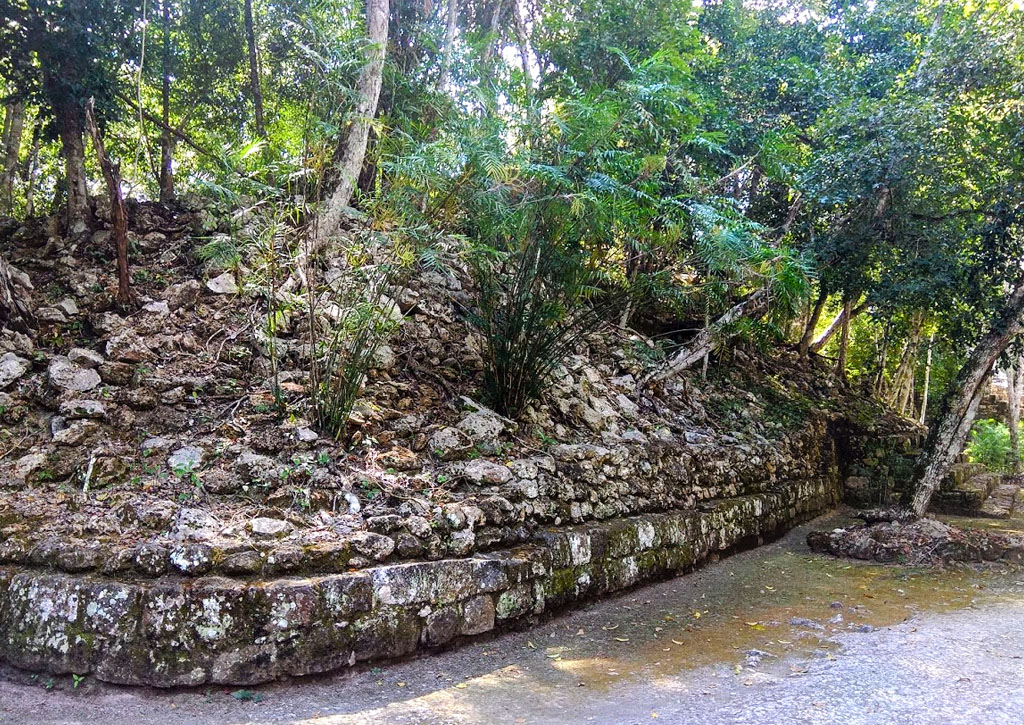
Minanbé, a name derived from the Yucatec Maya words mina’an, meaning “there is no,” and be, meaning “road,’ has emerged from the dense jungle of the Calakmul Biosphere Reserve in the Mexican state of Campeche.
The 37-hectare or 91-acre site, which flourished during the Late Classic to Terminal Classic period between 600 and 900 CE, represents one of the most significant archaeological discoveries in recent years. Unlike many other Maya sites that have been looted over the centuries, Minanbé remains completely intact, offering researchers an unprecedented window into the final centuries of Maya civilization.
The discovery was made by an international team led by the Slovenian archaeologist Ivan Šprajc, affiliated with the Research Center of the Slovenian Academy of Sciences and Arts, and authorized by Mexico’s National Institute of Anthropology and History (INAH). The find culminates three decades of research during which Šprajc has identified more than 80 Maya sites across the largely unexplored Central Maya Lowlands of the Yucatán Peninsula. Among his previous discoveries are the nearby sites of Chactún, reported in 2013, and Ocomtún, discovered in 2023.
The Challenge of Access
The name Minanbé was chosen precisely because of the extreme difficulty the team faced in reaching the location. The site is situated in such a remote section of the Calakmul Biosphere Reserve that no roads or even logging paths exist. To access the ruins, the archaeologists and workers from the community of Constitución had to cut a five-kilometer trail through the jungle using machetes and chainsaws. After clearing this initial path, they advanced on all-terrain vehicles and then walked an additional six kilometers under the scorching sun.
Šprajc explained that the absence of callejones, the dirt roads opened decades ago for logging operations that had guided them to other sites, was actually a positive sign. In his own words, the lack of access routes meant the site had remained undisturbed. For the last three years, this was the first intact site his team had found, with no evidence of looting pits.
What Minanbé Reveals
The urban core of Minanbé covers approximately 15 hectares (37 acres) and includes plazas surrounded by palace-like buildings and religious structures, as well as terraces and wetlands with hydraulic canalization systems. The tallest structure is a pyramid temple exceeding 13 meters in height, built in the Río Bec architectural style, which is characterized by finely cut masonry, smooth facade panels, steep stairways, and decorative moldings.
The team documented 14 stone monuments, including stelae and altars, many of which bear hieroglyphic texts and iconographic elements. These monuments were arranged at the end of a causeway that connects the central and northeastern sectors of the site. The epigrapher Octavio Esparza Olguín has been working to decipher the inscriptions, and some of the monuments show evidence of intentional alterations.
For example, a fractured altar depicting a ruler wearing a headdress and jewelry has been identified. This could indicate the incursion of groups from the northern part of the peninsula during a later period, who modified the city’s political symbolism.
A Glimpse Into the Final Years
One of the most significant finds is Stela 1, which depicts a decapitation alongside a calendar date corresponding to the year 849 CE. The monument shows a figure beheading another with an axe or knife. According to the project’s epigrapher, this suggests that at least some of the monuments were erected shortly before Maya sites were abandoned in the 10th century C.E. The discovery of this stela, still readable, was particularly notable to the team. The archaeologist Vitan Vujanović remarked that it was the first time he had registered a reasonably well-preserved temple and a stela still containing glyphs.
The region that now holds Minanbé was once home to an estimated nine to 11 million people during the Late Classic period. The sheer density of archaeological remains in the area makes it frequently impossible to determine where one ancient community ends and another begins. More than 500 archaeological sites of varying sizes have been identified within the Calakmul Biosphere Reserve alone, a testament to the complexity and scale of Maya civilization in this region.
The Role of Technology
The identification of Minanbé was made possible through Light Detection and Ranging (LiDAR) surveys, a remote sensing technology that allows archaeologists to see through dense vegetation. As Šprajc explained, LiDAR is a powerful scanning method that enables researchers to identify features that stand out from the natural terrain. The initial LiDAR data for this area was acquired 13 years ago, but it was only during this recent field season that the team was able to verify the information on the ground.
Future Research at Minanbé
While the discovery of Minanbé has already provided valuable insights, further research will be necessary to understand its significance fully. Šprajc has noted that more in-depth excavations are highly desirable, but they would face considerable logistical challenges. Building an access road to the site would require authorization from the reserve authorities, and the remote location would make sustained archaeological work difficult.
At 71, Šprajc has stated that he has no immediate plans for another project, though he has not ruled it out entirely. For now, Minanbé stands as a remarkable testament to the enduring mysteries of the Maya world, a city that lay hidden in the jungle for more than a thousand years, untouched and unseen, only to finally reveal its secrets to those willing to cut a path through the wilderness.