Category: Culture

  • Archaeologists Unearth Minanbé, a 1,200-Year-Old Maya City Hidden in the Jungle

    Archaeologists Unearth Minanbé, a 1,200-Year-Old Maya City Hidden in the Jungle

    Minanbé
    The Calakmul Biosphere is home to an enormous number of Maya archaeological sites, dating from the dawn of Maya civilization to the so-called classical collapse. 

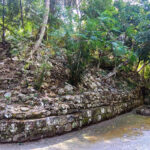
    Minanbé, a name derived from the Yucatec Maya words mina’an, meaning “there is no,” and be, meaning “road,’ has emerged from the dense jungle of the Calakmul Biosphere Reserve in the Mexican state of Campeche. 

    The 37-hectare or 91-acre site, which flourished during the Late Classic to Terminal Classic period between 600 and 900 CE, represents one of the most significant archaeological discoveries in recent years. Unlike many other Maya sites that have been looted over the centuries, Minanbé remains completely intact, offering researchers an unprecedented window into the final centuries of Maya civilization.

    The discovery was made by an international team led by the Slovenian archaeologist Ivan Šprajc, affiliated with the Research Center of the Slovenian Academy of Sciences and Arts, and authorized by Mexico’s National Institute of Anthropology and History (INAH). The find culminates three decades of research during which Šprajc has identified more than 80 Maya sites across the largely unexplored Central Maya Lowlands of the Yucatán Peninsula. Among his previous discoveries are the nearby sites of Chactún, reported in 2013, and Ocomtún, discovered in 2023.

    The Challenge of Access

    The name Minanbé was chosen precisely because of the extreme difficulty the team faced in reaching the location. The site is situated in such a remote section of the Calakmul Biosphere Reserve that no roads or even logging paths exist. To access the ruins, the archaeologists and workers from the community of Constitución had to cut a five-kilometer trail through the jungle using machetes and chainsaws. After clearing this initial path, they advanced on all-terrain vehicles and then walked an additional six kilometers under the scorching sun.

    Šprajc explained that the absence of callejones, the dirt roads opened decades ago for logging operations that had guided them to other sites, was actually a positive sign. In his own words, the lack of access routes meant the site had remained undisturbed. For the last three years, this was the first intact site his team had found, with no evidence of looting pits.

    What Minanbé Reveals

    The urban core of Minanbé covers approximately 15 hectares (37 acres) and includes plazas surrounded by palace-like buildings and religious structures, as well as terraces and wetlands with hydraulic canalization systems. The tallest structure is a pyramid temple exceeding 13 meters in height, built in the Río Bec architectural style, which is characterized by finely cut masonry, smooth facade panels, steep stairways, and decorative moldings.

    The team documented 14 stone monuments, including stelae and altars, many of which bear hieroglyphic texts and iconographic elements. These monuments were arranged at the end of a causeway that connects the central and northeastern sectors of the site. The epigrapher Octavio Esparza Olguín has been working to decipher the inscriptions, and some of the monuments show evidence of intentional alterations. 

    For example, a fractured altar depicting a ruler wearing a headdress and jewelry has been identified. This could indicate the incursion of groups from the northern part of the peninsula during a later period, who modified the city’s political symbolism.

    A Glimpse Into the Final Years

    One of the most significant finds is Stela 1, which depicts a decapitation alongside a calendar date corresponding to the year 849 CE. The monument shows a figure beheading another with an axe or knife. According to the project’s epigrapher, this suggests that at least some of the monuments were erected shortly before Maya sites were abandoned in the 10th century C.E. The discovery of this stela, still readable, was particularly notable to the team. The archaeologist Vitan Vujanović remarked that it was the first time he had registered a reasonably well-preserved temple and a stela still containing glyphs.

    The region that now holds Minanbé was once home to an estimated nine to 11 million people during the Late Classic period. The sheer density of archaeological remains in the area makes it frequently impossible to determine where one ancient community ends and another begins. More than 500 archaeological sites of varying sizes have been identified within the Calakmul Biosphere Reserve alone, a testament to the complexity and scale of Maya civilization in this region.

    The Role of Technology

    The identification of Minanbé was made possible through Light Detection and Ranging (LiDAR) surveys, a remote sensing technology that allows archaeologists to see through dense vegetation. As Šprajc explained, LiDAR is a powerful scanning method that enables researchers to identify features that stand out from the natural terrain. The initial LiDAR data for this area was acquired 13 years ago, but it was only during this recent field season that the team was able to verify the information on the ground.

    Future Research at Minanbé

    While the discovery of Minanbé has already provided valuable insights, further research will be necessary to understand its significance fully. Šprajc has noted that more in-depth excavations are highly desirable, but they would face considerable logistical challenges. Building an access road to the site would require authorization from the reserve authorities, and the remote location would make sustained archaeological work difficult.

    At 71, Šprajc has stated that he has no immediate plans for another project, though he has not ruled it out entirely. For now, Minanbé stands as a remarkable testament to the enduring mysteries of the Maya world, a city that lay hidden in the jungle for more than a thousand years, untouched and unseen, only to finally reveal its secrets to those willing to cut a path through the wilderness.

  • Museo Textil de los Pueblos Indígenas y Afromexicanos 2026 Guide Hours Cost and Highlights

    Museo Textil de los Pueblos Indígenas y Afromexicanos 2026 Guide Hours Cost and Highlights

    museo
    Mexico City just added yet another world-class museum to its already thriving cultural scene.

    The Museo Textil de los Pueblos Indígenas y Afromexicanos, or MUT in Mexico City, opened its doors with the mission: to celebrate and preserve the rich, living heritage of the nation’s indigenous and Afro-Mexican textile arts. 

    The MUT was designed as a dynamic space that places the knowledge and traditions of these communities at the very center of the national conversation about identity, art, and history.

    Visitors will find the museum in the Casa del Marqués del Apartado, a magnificent neoclassical palace built between 1795 and 1805 by the renowned architect Manuel Tolsá. 

    This historical setting, located on República de Argentina street in the Cuauhtémoc borough, provides a stunning backdrop for a collection that looks to the future by honoring the past. Inside, the museum is a treasure trove of culture, systematically spread across sixteen permanent exhibition halls distributed over three floors. 

    These halls are not simply displays; they are guided narratives that guide the visitor through the science, history, and spirituality of textile creation. Room titles such as “The Loom and the Virtuous Society,” “Indigenous Science on the Loom,” and “The Heritage of Ixcuina: Mexican Textile Fibers” hint at the deep intellectual and cultural journey that awaits.

    The museum’s collection is anchored by over two hundred pieces, each one representing techniques, knowledge, and artistic traditions passed down through countless generations. 

    These works are a testament to the skill of the artisans who have kept these cultural expressions alive, often against great odds. The museum’s narrative powerfully highlights the contributions of both indigenous and Afro-Mexican communities, ensuring that their stories and artistic legacies are woven into the broader tapestry of Mexican history. This commitment extends beyond the permanent collection. 

    The museum’s first temporary exhibition is dedicated to Trine Ellitsgaard, a weaver and textile artist celebrated for her profound connection to contemporary textile art, a choice that beautifully bridges ancestral techniques with modern artistic expression.

    The MUT is far more than a static repository. It is designed as a living cultural center, complete with a children’s library and dedicated spaces for educational workshops and community gatherings. True to its mission of holistic education, the museum also features a unique archaeological window, allowing visitors to glimpse the pre-Hispanic vestiges that lie beneath the very ground on which they stand, connecting the art of textiles to the deep geological and historical roots of the land. 

    This integration of past and present underscores the museum’s message that cultural heritage is not a relic, but a continuous, evolving dialogue.

    For those planning a visit, the MUT is open Tuesday through Sunday, welcoming guests from ten in the morning until six in the evening. 

    Admission and Opening Hours

    A general admission ticket costs ninety-five pesos, a modest sum for access to such a wealth of cultural heritage. Demonstrating a strong commitment to accessibility, the museum offers free entry to children, artisans, students, teachers with valid identification, senior citizens, and people with disabilities. The museum also schedules guided tours for school groups on Mondays, Wednesdays, and Fridays, further cementing its role as an educational pillar in the community.

  • One of Mexico’s Most Famous Archaeologists is Sounding the Alarm at INAH

    One of Mexico’s Most Famous Archaeologists is Sounding the Alarm at INAH

    INAH
    One of the most venerated voices in Mexican archaeology is sounding the alarm at INAH.

    Eduardo Matos Moctezuma, the 86-year-old emeritus professor of the National Institute of Anthropology and History (INAH) and the legendary director of the Templo Mayor Project, has broken a long silence to issue a devastating critique of the institution to which he dedicated his life. 

    In a series of statements, he warns that INAH is undergoing cumulative deterioration, hindered by chronic budget shortages, bureaucratic paralysis, and political pressures that threaten to erode its ability to protect the country’s ancient heritage.

    The Conscience of a Master

    In a recent article titled “These Times We Live In,” published in the magazine Arqueología Mexicana, Matos Moctezuma pulls no punches. He describes as “desolate” the relocation of archaeological facades and elements to so-called “Memory Parks” as part of the Mayan Train megaproject. Beyond this specific project, he expressed a deep-seated “disenchantment” at seeing museums and archaeological sites lack the necessary resources for maintenance, while young graduates of the National School of Anthropology and History (ENAH) cannot get hired because the Ministry of Finance refuses to open permanent positions.

    His criticism also takes aim at what he sees as attempts to rewrite history for political ends.

    “I stopped hearing my voice when they tried to change the founding date of Tenochtitlán,” he states, referring to official attempts to place the event in 1325 to align with a presidential term. Similarly, he recently condemned the sanitization of pre-Hispanic history, specifically the denial of the well-documented practice of human sacrifice among the Mexica.

    An Accumulated Crisis

    For Matos, these are symptoms of a deep, systemic illness. During a recent forum titled “These Times We Live In,” held at the INAH’s own Directorate of Historical Studies, he explained that the institution’s problems are not merely circumstantial. 

    “I have seen different administrations come and go, with differences between them,” he reflected, “but today we face problems reflected in the lack of renewal of positions, in increasing administrative obstacles, and in conditions that make academic work difficult.” 

    He added, “After 66 years in the INAH and having seen about 10 directors pass, some better, others worse or in between, of course, I have a disenchantment, because I see that support for everything concerning our institution is waning.”

    A Rebellion of Archaeologists

    Matos Moctezuma’s lament echoes a broader insurrection brewing within the ranks of INAH professionals. A collective of researchers has issued a sharp public letter denouncing the agency’s current state. Their grievances paint a picture of an institution brought to a near-standstill by its own weight.

    They denounce an “absurd” internal bureaucracy, stating that research has become “an extremely difficult task” due to excessive and unnecessary administrative red tape. The collective also demands the resignation of the president and members of the Council of Archaeology, whom they accuse of exceeding their authority as a mere consultative body, covering up the destruction of archaeological heritage, and making authoritarian decisions that “denigrate archaeological work”.

    More than a year ago, in November 2025, the group requested meetings with the general director of the INAH, Joel Omar Vázquez Herrera, to address these issues. After six months without a response, they have gone public. “After six months without receiving a concrete response, we publicly denounce that our authorities, in addition to being deaf, are insensitive and incompetent,” the letter states.

    A Pact of Silence and a Question of Survival

    The frustration is palpable. An anonymous letter from academic staff, presented at the forum by ethnologist Rosa María Garza Marcué, denounced that colleagues not only face contracts that violate labor laws but are sometimes expected to work for months without pay and to pay for supplies out of their own pockets. This precariousness, critics say, drives away new talent, leaving INAH an aging institution that is failing to renew itself.

    In his article, Matos Moctezuma wrote that profound sadness is his main feeling upon observing the reality of INAH. “Deep down, it is not only a matter of resources,” he said. “It is a matter of will… of understanding that what is at stake is the memory of a country.” His words constitute a final, desperate call to reverse what he sees as a slow sinking. The question now, resounding through the halls of Mexican archaeology, is whether anyone in a position of power is still listening.

  • Ancient Shaft Tombs Discovered Near Ancient Tula During Train Network Construction

    Ancient Shaft Tombs Discovered Near Ancient Tula During Train Network Construction

    Tula
    This rare domestic cemetery from Teotihuacan’s golden age offers an intimate look at the beliefs and social ties of ordinary people, not just elites.

    A residential neighborhood from the height of the Teotihuacán civilization, complete with a collection of intricate shaft tombs and human remains near Tula, has been uncovered during salvage work for a new railway line in central Mexico.

    The find was made in the community of Ignacio Zaragoza, near the ancient Toltec capital of Tula in Hidalgo state, roughly 90 kilometers (50 miles)  north of Mexico City. Since September, a team from the National Institute of Anthropology and History (INAH) has been systematically exploring a 2,400-square-meter area, about half the size of a football field, that lies directly in the path of the new Mexico City-Querétaro passenger train. 

    What they discovered was not a grand ceremonial center like that at Tula, but something arguably more intimate: a 1,800-year-old domestic compound, providing a rare window into the daily lives and death rituals of common people living in the shadow of a vast empire.

    “Every burial, every offering, and every context recovered by the INAH provides information about the ways of life, beliefs, and social organization of those who inhabited this region over a thousand years ago,” said Claudia Curiel de Icaza, Mexico’s Secretary of Culture, as quoted by INAH. “It confirms that infrastructure development can go hand in hand with rigorous research and the care of our heritage.”

    Led by field archaeologist Laura Magallón Sandoval, the team found the first clues in plain sight: fragments of pottery scattered on the surface. Test pits soon revealed the faint outlines of walls, leading to full-scale excavations augmented by drone flights and orthophotography for precise mapping. 

    What emerged was a pattern of small residential units clustered around central and side patios, with doorways aligned north-south and east-west. The main period of occupation dates back to between 225 and 550 C.E., during the Tlamimilolpan and Xolalpan phases—the very apogee of the great metropolis of Teotihuacan. The site also saw minor reoccupation much later, during the Postclassic period, as evidenced by Coyotlatelco and Mexica ceramics, as was also the case in Tula itself.

    Tula
    Tula is famous for being the capital of the enigmatic peoples, who would become known as the Toltec.

    The ancient inhabitants of the area surrounding Tula took advantage of the area’s rocky terrain, digging their most sacred spaces deep into the soft volcanic stone known as tepetate. Among the most significant discoveries are five shaft tombs, named for the vertical entrance shafts that lead down to burial chambers. Inside one residence, archaeologists found two such tombs. The northern tomb contained a particularly striking scene: the skeletal remains of eight individuals, most of them adults, placed inside its chambers alongside 47 miniature vessels. Remarkably, six of the bodies were found in a seated position, with the ceramic offerings placed at their feet.

    The tomb itself appears to have been a family crypt, used and reused over generations. “When they were going to deposit the last individual, they removed the funerary bundle of the previous one,” explained Juana Mitzi Serrano Rivero, an archaeologist on the team. This practice resulted in a complex mix of remains, including complete and incomplete skeletons from adults, juveniles, and at least one child between eight and 11 years old. Among the offerings found with the burials were a small shell, part of a pendant made of mother-of-pearl, and several engraved vessels.

    The discoveries near Tula do not exist in isolation. Archaeologist Jonathan Velázquez Palacios noted that the area has been exploited since pre-Hispanic times as a source of lime, a crucial material for the plaster coatings of Teotihuacan’s monumental buildings, located 90 kilometers away. 

    The find adds to a growing list of Classic-period settlements in the region north of Tula, including the significant Teotihuacan center of Chingú, as well as sites like El Tesoro, Acoculco, El Llano, and La Malinche. For the researchers, the work is far from over. The funerary contexts will be key to unlocking the beliefs, social structure, and culture of a people who lived and died in the orbit of one of the ancient world’s most influential cities, their memories now unearthed by a modern train.

  • After Dropping New Single, Bloody Benders is Heading to Japan and England

    After Dropping New Single, Bloody Benders is Heading to Japan and England

    Mexico City’s all-female horror punk band Bloody Benders is releasing softer sounds and bigger plans. Their new single, “Strangers in the Night,” arrived this week as the lead track from the group’s fifth studio album — and it marks a notable shift for a band built on raw, distortion-heavy punk.

    The song is a tribute to anyone who has ever felt like they don’t quite fit in. “It’s like a tribute to all those different or strange people, to what is socially established,” vocalist Taty said in an interview with Diario de Yucatán. “Those people who don’t feel adapted to society.” The track tells the story of two strangers who recognize something familiar in each other — whether through friendship, love, or the shared experience of feeling out of place.

    Mexico’s Bloody Benders hits the road. Photo: Courtesy

    Taty, who goes by the full stage name Taty Bloody Batty, drew on personal memories when writing the lyrics. She recalled being teased for loving horror stories and collecting insects. The song touches on rejection and bullying but frames those experiences as ultimately bringing people together. “You’ve been bullied, people made fun of you, but here I am, taking your hand,” she said, describing one passage.

    A New Sound, Same Essence

    Getting the song to its final form wasn’t straightforward. The track started growing into something longer and stranger than the band expected. So they brought in Poncho from Los Daniels — a collaboration that was new territory for the group. “It was the very first one we worked on together,” Taty said. “It’s an experiment because it’s something we step outside of what we usually do.”

    Despite the outside influence, she’s clear that the band’s identity stayed intact. “The essence will always be there because at the end of the day, we all put our art into it.” The response from fans has been positive. Taty described it as representing a kind of evolution for the band, even as they stay anchored to their punk roots.

    The follow-up single, “Blood Brother,” drops May 22, along with a video. That track returns to the heavier, more aggressive sound Bloody Benders are known for — “rough, raw, pretty loud, and very energetic,” as Taty put it. Both songs are part of the upcoming fifth album, which includes a range of outside collaborators alongside the core punk sound.

    Stage to Stage, Country to Country

    Beyond the new music, the band has a packed schedule. They’re set to open a show at Teatro Metropolitan in Mexico City before heading out on international tour dates. The biggest stops: Japan and England, where they’ll perform at Rebellion Festival, held each August at the Winter Gardens in Blackpool. This year, the festival marks its 30th anniversary, running August 6-9, 2026, with more than 300 bands across nine indoor stages.

    For Bloody Benders, landing a slot at Rebellion is a notable milestone. The festival draws punk acts from around the world and has helped launch more than a few careers through its dedicated new-band showcase.

    Taty sees the band’s work as more than sound. Punk, she says, is a way of life. “Punk has some very important principles: self-management, doing it yourself, and community.” That self-reliance has helped them build an audience in Mexico and abroad without relying on major-label infrastructure. The band has been active since 2011 and built their following through DIY touring and collaboration — the kind of independent spirit that runs deep in Mexico’s live music scene.

    Her message to listeners: “Be true to yourselves, no matter what people think. You will always find someone who thinks similarly to you.” That, she says, is the whole point of “Strangers in the Night.” The misunderstood find each other.

    The single is available now on all major streaming platforms.


    At a Glance: Bloody Benders

    • Genre: Horror punk / punk rock
    • Origin: Mexico City, founded 2011
    • Members: Taty Bloody Batty (vocals), and bandmates on guitar, bass, and drums
    • New single: “Strangers in the Night” — streaming now
    • Next single: “Blood Brother,” releases May 22, with music video
    • Upcoming album: Fifth studio release, featuring collaborations and mixed styles
    • Upcoming shows: Teatro Metropolitan (Mexico City); Japan tour; Rebellion Festival, Blackpool, England, August 6-9, 2026

    Source: Diario de Yucatán