
Category: Culture

  • Mexico Bans AI Voices in Film Dubbing and Animation

    Mexico Bans AI Voices in Film Dubbing and Animation

    dubbing
    In Mexico, most TV shows and movies are dubbed into Spanish, but a new law naw guarantees that these voices will be human, not the result of artificial intelligence. 

    Mexico’s Congress has approved a new law that bans the use of artificial intelligence for voice dubbing in foreign films and for creating AI-generated characters in animated movies and shorts. The measure makes Mexico one of the first countries in the world to put such a clear legal limit on AI in the voice acting industry.

    The rule is part of a broader update to Mexico’s Federal Film and Audiovisual Law, which replaces a 1992 measure. The Mexican Congress approved Article 29 of the new law, which states that dubbing for foreign movies into Spanish or any indigenous language must be done by real people – actors, interpreters, or performers. AI is now completely excluded from this work.

    The law also protects voice actors against voice cloning or any unauthorized use of their voices without their clear permission and fair payment. It recognizes the human voice as a unique and unrepeatable artistic tool that cannot be replaced by artificial intelligence. 

    “This is a real victory for voice actors, the public, and not just Mexico, but consumers of Spanish-language media everywhere,” said Mario Catañeda, who over the decades has voiced famous Hollywood actors like Bruce Willis and anime characters like Goku of Dragon Ball.

    President Claudia Sheinbaum announced the initiative during a morning press conference in February, saying that Mexico has some of the best dubbing actors in the world and that they deserve protection. The push for the law came from voice actors themselves, who had grown worried about companies using AI to copy their voices without consent.

    One case that drew attention involved Amazon Prime Video, which used AI for dubbing some of its productions. The move was met with strong criticism from both audiences and actors. That backlash helped push lawmakers to act.

    The new law does more than just ban AI dubbing. It also changes the Federal Labor Law and the Federal Copyright Law to give voice actors more rights over how their voices are used. The National Institute of Copyright, known as INDAUTOR, will be responsible for resolving disputes when voices are used without permission. Companies that break the law can face fines ranging from 1,000 to 5,000 times Mexico’s daily minimum wage, and repeat violators can be fined double that amount.

    The law also requires companies to be transparent in their contracts. They cannot include hidden clauses that give them the right to use an actor’s voice to train AI systems.

    Mexico’s dubbing industry is the largest in Latin America, with most work centered in Mexico City. For decades, Mexican voice actors have dubbed foreign films and TV shows for audiences across the Spanish-speaking world. The new law aims to protect those jobs from being replaced by machines.

    The rule applies to all foreign movies shown in Mexico, as well as any animated films or shorts made in the country. Streaming platforms like Netflix, Amazon, and Disney+ must also follow the law if they want to distribute content in the Mexican market.

    Some film companies have expressed concerns that AI could make dubbing faster and cheaper. But the Mexican government has said that saving money is not more important than protecting people’s jobs and the country’s cultural heritage.

    The law is part of a larger effort by the Sheinbaum administration to update Mexico’s film industry. The new law also guarantees that Mexican films receive at least 10 percent of theater screen time, requires theaters to show those films for at least 14 days instead of seven, and ensures they are shown at reasonable hours rather than early-morning “ghost hours”.

    The government has also created new financial incentives for film production, with public support of up to 40 million pesos available for certain projects.

    Voice actors in Mexico have celebrated the new law. As one industry representative put it, AI voices may be cheaper, but they cannot match the emotion and feeling that real human actors bring to a performance.

    Other countries are now watching to see how Mexico’s law works in practice. For now, audiences in Mexico can be sure that the voices they hear in their favorite dubbed movies and cartoons are real, not machine-generated.

  • New DNA Discovery Reveals Twin Sacrifices at Chichén Itzá
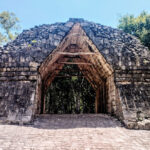
    New DNA Discovery Reveals Twin Sacrifices at Chichén Itzá

    What started as a routine examination of ancient remains at Chichén Itzá turned into something much more surprising. Scientists analyzing DNA from a burial site found not one but two pairs of identical twins.

    The discovery came from a place called Serie Inicial, also known as Chichén Viejo—the older section of the famous Maya ruins. Researchers had been studying remains found in an underground chamber, and the genetic results caught them off guard.

    Chichén Itza
    The fact that the uncovered human remains were found within one of Chichén Itzá’s ceremonial centers points to the fact that these were people of elevated social status.

    What Scientists Found at Chichén Itzá

    The study, published in the journal Nature, examined 64 sets of remains from a burial site first uncovered in 1967. The location of most of the remains was within a chultún—an underground water storage chamber—connected to a small cave near a cenote.

    The DNA analysis, led by Rodrigo Barquera from the Max Planck Institute and Julio Lara from the Autonomous University of Yucatán, revealed several key facts. All the remains found in this specific burial at Chichén Itzá were male, which is unusual in itself. Included were children between three and six years old when they died. At least a quarter were closely related—brothers or cousins buried together. Among them, two pairs were identical twins, a rare find that got researchers’ attention.

    Identical twins occur in only about 0.4 percent of births. Finding two pairs in a single burial of 64 individuals is far higher than chance would predict.

    Connection to Maya Mythology

    The discovery of twins points to a famous Maya story. The Popol Vuh, the sacred book of the Kʼicheʼ Maya, tells of the Hero Twins—Hunahpu and Xbalanque. In the story, the twins travel to the underworld, where they face repeated cycles of sacrifice and resurrection.

    The burial site at Chichpen Itzá itself matters too. Underground chambers and caves were seen as entrances to the underworld in Maya belief. Putting twins in such a place suggests that the people performing these rituals were reenacting the story of the Hero Twins.

    “It doesn’t get any cooler than that,” archaeologist Jaime Jose Awe told Science magazine. “We couldn’t have known this without ancient DNA.”

    How They Died

    One puzzle remains: the cause of death. The bones show no cut marks or other signs of how these children were killed. Unlike remains from the nearby Sacred Cenote, which show clear trauma, these bodies were placed in the chamber without visible injury. Researchers suggest poisoning as one possibility, though more testing is needed.

    Connection to Modern Maya People

    The study didn’t just look at ancient remains at Chcichén Itzá. Scientists also worked with 68 volunteers from the modern Maya community of Tixcacaltuyub, a town near Chichén Itzá. The results showed something remarkable: the ancient children and modern residents share a direct genetic link. The same population has lived in the area for more than 1,000 years.

    “Their genomic legacy of Chichén Itzá and the Maya is still present,” the Nature study states.

    But there were differences, too. Modern Maya people carry genetic variants that help resist certain diseases—specifically, protection against Salmonella infection. Their ancestors from 1,000 years ago did not have these same protections.

    This tells a clear story. When Spanish colonizers arrived, they brought new diseases, including the Salmonella strain that caused the deadly 1545 cocoliztli epidemic. The Maya who survived passed on genetic adaptations to their descendants. The DNA of modern Maya people still carries that history.

    Chichén Itzá
    The fact that the uncovered human remains were found within one of Chichén Itzás ceremonial centers points to the fact that these were people of elevated social status.

    Why This Discovery at Chichén Itzá Matters

    This discovery is important for several reasons. It overturns the old myth that Maya sacrifice focused on young women or virgins. That idea came from early Spanish accounts and has stuck in popular imagination, but the DNA evidence shows a different reality.

    It also confirms that ancient DNA can work in tropical climates. Heat and humidity usually destroy genetic material, but advances in technology now allow scientists to recover and analyze DNA from Maya sites. This opens the door for more studies across Chichén Itzá, the Maya region, and Mesoamerica more broadly.

    Excavations of recently discovered human remains in Dziblichalún from roughly the same period have also been announced to have potential for comparative DNA analysis. 

    The research also shows the value of working with Indigenous communities. The Maya people of Tixcacaltuyub were partners in the research, not just subjects. They permitted the DNA comparison of samples from Chichén Itzá and were instrumental in shaping the study. For these communities, seeing their ancient connection confirmed matters. “It’s very valuable to know and be sure of their roots,” said Ermila Moo Mezeta, a Maya co-author of the study.

  • Mayapán Remains Closed After Nearly 6 Years as INAH Talks Stall
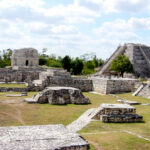
    Mayapán Remains Closed After Nearly 6 Years as INAH Talks Stall

    Mayapan
    Mayapán is one of the most important archaeological zones in Yucatán. Still, it has been closed for the better part of a decade due to a dispute between federal and ejido authorities over who should operate it. 

    The Mayapán archaeological zone has been closed to the public for nearly six years, with no signs of a resolution between the community of Telchaquillo and the National Institute of Anthropology and History (INAH).

    According to local authorities in Telchaquillo, although INAH has new directors at the national and local levels, officials have not reached out or provided any information regarding a way forward. 

    The community maintains total control of this pre-Prehispanic Maya city, which has been closed almost entirely since the 2020 pandemic. At the heart of the conflict is a fight over ownership and stewardship of the archaeological zone. 

    Simply put, the Telchaquillo ejido is demanding control over the archaeological zone of Mayapán; however, Mexico’s constitution does not permit this, as all archaeological zones are under federal control and may be administered only by INAH. 

    According to a communications advisor for the community, INAH stated a few months ago on the radio that the institute was seeking dialogue with the community to resolve the problem. However, when residents learned of this statement, they immediately denied the notion that there was no ongoing communication or dialogue. 

    “The community of Telchaquillo remains open to talks to reach an agreement on the co-administration of the archaeological zone, which is a non-negotiable demand,” the communications advisor reported. “Dialog must follow proper procedures, in writing and formally.”

    While indigenous communities should benefit from tourism, the idea of handing over archaeological zones like Mayapán to ejidos is untenable because they lack the expertise and legal framework to maintain the site. 

    In Mexico, the difference between archaeological sites and archaeological zones is that the latter are designated as national parks and fall entirely under federal jurisdiction. Some archaeological sites and communities, like Yaxuna, have a tacit deal that allows locals to work at the site, give tours, and charge admission, with the understanding that the monuments themselves are entirely under the control of INAH. 

    “We do not want a repeat of what Diego Prieto (Hernández, former director general of INAH) did, which was everything verbal and private. We see that Diego Prieto continues to manage INAH from his new position because he was in Chichén Itzá and Mérida mediating conflicts with communities, but he persists with his strategy of private meetings and nothing in writing,” said a spokesperson and legal counsel for the community of Telchaquillo

    Corruption allegations within Techaquillo’s own government have also come up on more than one occasion, which is likely not making the process any smoother. 

    “The only ones losing out are INAH and tourism, because the community has never benefited from the archaeological site,” the ejido spokeswoman said. “The archaeological zone is well cared for. We do not know what INAH’s intention is because, in its tourism promotions, it states that Mayapán is open. Many people come to the community and find it closed. We explain that there is an ownership dispute with INAH, and they have to leave.”

    “INAH deceives tourists because it publishes that the archaeological zone is open. Agencies include Mayapán in their tour packages, but when they arrive, they see it is closed,” she sai. “We believe this is a form of pressure that INAH exerts on the community to create problems with tourists. But fortunately, the residents know how to explain the problem, and the visitors understand.”

  • New Museum: MUNET Opens, Sort Of, in the Bosque de Chapultepec

    New Museum: MUNET Opens, Sort Of, in the Bosque de Chapultepec

    New museum in Mexico City
    Mexico City inaugurates a new cultural and scientific space. The MUNET (National Museum of Energy and Technology) officially opened its doors in February 2026 in the Second Section of Chapultepec Forest. Photo: Courtesy

    A long-awaited science museum has quietly opened its doors in Mexico City’s Bosque de Chapultepec, giving visitors their first look at what promises to be one of the capital’s most ambitious cultural spaces.

    The Museo Nacional de Energía y Tecnología — known as MUNET — has begun receiving visitors with an initial exhibition while it prepares for a full opening in the coming weeks. The museum occupies a revamped building in the second section of Chapultepec, situated between the Papalote Museo del Niño and the newer Parque Aztlán.

    For now, the draw is Blow Up Experience, an immersive, interactive walkthrough through 8 diverse rooms with unique artistic installations. Tickets run from MX$210 to MX$286 (roughly US$10 to US$14) and are available through the museum’s official website.

    The full museum, once open, is designed to do far more than display equipment behind glass. Its mission is to spotlight the different types of energy — and the technologies used to generate, distribute, and harness them — while sparking vocational interest among young people and showing off the country’s energy capacity and the workers who power it.

    Thematic galleries will cover everything from hydraulic and geothermal energy to solar and wind power, alongside a deep dive into electricity and nuclear energy. A section dedicated to biotechnology and fossil fuels is also planned, framed around questions of ecological balance.

    The building itself is part of the story. The architectural and museographic design was chosen through a competition among 11 prominent Mexican architects, with the winning project going to Enrique Norten, in collaboration with the firm of Ralph Appelbaum. Norten, who runs the Mexico City studio TEN Arquitectos, designed the structure to blend into the forest setting while serving as what one description calls “a lesson in energy efficiency and sustainability.”

    The MUNET replaces the old Museo Tecnológico de la CFE — better known as MUTEC — which was inaugurated in November 1970 and shuttered in September 2015. It had been considered the first interactive science museum in Latin America.

    For its development, Mexico’s Secretaría de Cultura recommended that the museum operate through a trust. That led to the formation of FIMUNET — the Fideicomiso del Museo Nacional de Energía y Tecnología — with Banco Mercantil del Norte acting as trustee. The CFE’s governing board authorized use of the property where the old Museo Tecnológico once stood, which remains CFE-owned land. A 15-member technical committee — drawn from both the private sector and government, including representatives from the CFE, Banobras, the Secretaría de Energía, and the Instituto Nacional de Electricidad y Energías Limpias — oversees the trust.

    The museum will also serve as an event venue, with rooms equipped with interactive whiteboards and high-definition screens available for conferences and workshops.

    The MUNET adds to an already dense constellation of museums in Chapultepec, which includes the National Museum of Anthropology, one of the world’s premier collections of pre-Columbian artifacts. The new science museum, though, is aiming at a different audience — families, students, and anyone curious about where the country’s energy comes from and where it’s headed.

    The museum currently receives visitors Tuesday through Sunday, 10 a.m. to 6 p.m., and is closed Mondays. Holiday hours will be posted through official channels. A formal ribbon-cutting date for the full museum has not been announced, but the complete programming schedule will reportedly be shared via the museum’s social media accounts once confirmed.

    MUNET at a Glance

    • Address: Av. de los Compositores s/n, Segunda Sección del Bosque de Chapultepec, Alcaldía Miguel Hidalgo, CDMX
    • Hours: Tuesday–Sunday, 10 a.m.–6 p.m.; closed Monday
    • Current attraction: Blow Up Experience immersive exhibition
    • Tickets: From MX$210 (~US$10) per person; available at museomunet.com
    • Metro: Constituyentes or Auditorio (Line 7)
    • Cablebús: Los Pinos station (Line 3)
    • Full museum opening: To be announced