Category: Culture

  • Chocolate Museum Built Over Aztec Skull Rack Is One of Mexico City’s Most Compelling New Spaces

    Chocolate Museum Built Over Aztec Skull Rack Is One of Mexico City’s Most Compelling New Spaces

    The story of a chocolate museum rising above one of the most remarkable archaeological finds in recent Mexican history is worth telling in full.

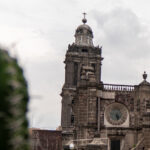
    Choco-Story Zócalo, the Museo del Cacao y Chocolate, sits at República de Guatemala 24 in Mexico City’s Centro Histórico, a few steps from the Zócalo. A 17th-century colonial house, a discreet five-story contemporary addition, and underneath it all, more than 650 human skulls from the height of the Aztec empire.

    The skulls are part of the Huey Tzompantli — the great skull rack of Tenochtitlan, where the Mexica displayed the remains of people believed to have been sacrificed during the reigns of rulers Itzcóatl, Ahuízotl, and Moctezuma Ilhuicamina in the 15th century. Workers discovered a section of it during construction. The Mexican government has described it as one of the most important archaeological discoveries in the country’s history. Visitors can see it through a window near the ticket booth.

    An 11-Year Project Below the Surface

    The architect behind the renovation is Javier Sánchez, whose Mexico City firm JSa had already worked steps away on an expansion of the Centro Cultural de España — a project that turned up the ruins of a Prehispanic school for nobility. When the chocolate museum commission came in 2013 from Agustín Otegui, whose family owns the building, JSa already suspected what might be underground. The building’s tilt confirmed it. Many structures in the Centro Histórico sink gradually as the old lake bed beneath them compresses; the angle of this one suggested something solid below was holding it up.

    That something turned out to be the skull rack. What followed, according to Aisha Ballesteros — the JSa partner who led the museum’s design — was 11 years of excavating and stabilizing the Huey Tzompantli underground while simultaneously working on the building above. The team first stabilized the colonial house, which Ballesteros described as like sliding footings under the legs of a wobbly table. Then they drove 30-meter piles into the ground to create a solid foundation for the new five-story addition built behind the colonial structure.

    3 Histories in a Single Building

    The contemporary addition is clad in local travertine — a sandy-colored stone chosen to echo the volcanic tezontle that defines much of the Centro Histórico’s architecture. The two structures were deliberately kept separate, never touching. The gap between them serves a dual purpose: it lets visitors see the historic colonial walls in full, and it satisfies seismic requirements in a city built on unstable lake sediment.

    The contrast is intentional. Where the old building leans, the new one stands plumb, and the angles play against each other throughout the complex. “It becomes a game between old and new, oblique and straight,” said Ballesteros.

    Between the two buildings, an open courtyard lit by hand-hammered copper lamps leads to shaded seating. A cacaotería — a chocolate and coffee shop — anchors the ground floor. On the rooftop, JSa designed a new restaurant called Charco, with views of the Palacio Nacional, the Templo Mayor, the Metropolitan Cathedral, and the Torre Latinoamericana.

    For Otegui, the project’s meaning runs deeper than architecture or tourism. “Cacao offers a connection between past and present,” he said, describing the bean — sacred to the Maya and the Mexica, and now an everyday pleasure worldwide — as a thread that still runs through Mexican life.

    Cacao’s Peninsula Roots

    For readers in the Yucatán Peninsula, the story behind this museum is familiar territory. The Maya cultivated cacao for centuries, used it ceremonially, and traded the beans as currency long before Spanish contact. The Choco-Story network already operates in Uxmal, Valladolid, and Playa del Carmen — three Peninsula locations where that history is close at hand. Yucatán Magazine has covered the Peninsula’s deep cacao heritage in detail.

    The museum’s exhibitions begin on the second floor and trace the bean from its Mayan and Mexica origins through the Spanish conquest and on to the global chocolate industry today. Audio guides are included in admission and are available in English, French, Portuguese, and German. A 60-minute chocolate workshop, where visitors make and decorate their own bars under the guidance of professional chocolatiers, is also available.

    At a Glance

    • Address: República de Guatemala 24, Centro Histórico, Mexico City
    • Hours: Daily 10 a.m. to 6 p.m. (last entry 5 p.m.)
    • General admission: MX$300 (about US$15)
    • CDMX/Estado de México residents with ID: MX$250 (about US$12)
    • Students, teachers, seniors, people with disabilities: MX$200 (about US$10)
    • Children ages 6–12: MX$150 (about US$7.50)
    • Chocolate workshop (60 min., includes admission): MX$800 (about US$40)
    • Nearest metro: Zócalo–Tenochtitlan (Line 2)
    • Tickets: choco-story-zocalo.mx
  • Temple of the Feathered Serpent in Teotihuacán Could Disappear Within 100 Years
    Temple of the Feathered Serpent in Teotihuacán Could Disappear Within 100 Years

    Teotihuacán
    Teotihuacán’s Temple of Quetzalcóatl has stood for nearly two millennia, but according to archaeologists, it is now under extreme risk.

    In the fall of 2003, archaeologist Sergio Gómez Chávez arrived at work after a heavy rainstorm to find a sinkhole had opened at the foot of the Temple of the Feathered Serpent in Teotihuacán.

    The three-foot-wide collapse was an accident that led to one of the most significant discoveries of his career: a tunnel system that ran hundreds of feet below the pyramid. But today, what Gómez Chávez sees when he looks at the same temple is not just an opportunity for discovery, but the slow, steady disintegration of the building itself. He now warns that the structure could disappear almost entirely within a century.

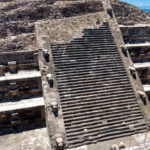
    The Temple of the Feathered Serpent at Teotihuacán, also known as the Temple of Quetzalcóatl, is the third-largest pyramid at Teotihuacán, a Prehispanic archaeological site located in central Mexico. Built between 150 and 200 CE, the pyramid consists of seven stepped bodies with a talud-tablero architectural style and features one of the most complex sculptural programs of its time. 

    The pyramid in Teotihuacán takes its name from the numerous representations of the feathered serpent deity that cover its sides, which are among the earliest-known depictions of a figure later associated with the Aztec (Mexica) god Quetzalcoatl. 

    The four sides of the structure were originally covered in stone reliefs depicting multi-colored feathered serpents that appear to slide among seashells. Alternating with the serpent heads are large sculptures of a separate figure with prominent fangs and two rings on its forehead, which some researchers have interpreted as the rain god Tlaloc or other deities.

    Teotihuacán
    Quetzalcoatl was one of the most venerated deities in Mesoamerica and went by many names, including Kukulkán in the Maya world. 

    The pyramid was originally hidden behind a later construction known as the Adosada platform, and the sculptures that were once visible were intentionally destroyed or covered, a fact that paradoxically helped preserve the rest. The temple also sits within the Ciudadela, a massive walled courtyard capable of holding the estimated 100,000 inhabitants of Teotihuacán at its peak.

    In May 2026, Gómez Chávez told La Jornada that the Temple of the Feathered Serpent at Teotihuacán “could cease to exist in about 100 years” due to “very severe” damage. The primary cause of the deterioration is moisture accumulation. Studies conducted with scanning electron microscopes have revealed that the stone is in a critical process of disintegration and sandification. 

    The moisture penetrates the subsoil and then rises into the structure through capillary action, fracturing the stone and causing it to lose its cohesion. Temperature fluctuations in the region, ranging from freezing to over 30 degrees Celsius in a single day, exacerbate the problem, as do constant humidity levels around 65%. The damage is not always visible to the naked eye, but particles of the original material are now detaching from the temple daily.

    The origins of the moisture problem are partly modern. Gómez Chávez noted that when Manuel Gamio first excavated the temple in Teotihuacán in the 1910s, he altered the original platform structure, creating openings that allowed water to filter into the subsoil. The tunnel discovered beneath the temple in 2003 has also become an entry point for humidity. Further compounding the problem, conservation interventions in the 1940s and 1980s inadvertently damaged the stone. In the 1980s, a chemical product was applied to the facade to protect it, but it instead accelerated the stone’s deterioration.

    An international competition was held to evaluate proposals, and one was selected, but it was the cheapest option and did not actually solve the underlying problem. Gómez Chávez told La Jornada that the project was evaluated, postponed, and ultimately forgotten as administrations changed at the National Institute of Anthropology and History. 

    “We have taken photographs with scanning electron microscopes, where you can see that the stone is completely disintegrated—that is, turned to sand. For this reason, we called attention to the need to address this problem,” Gómez Chávez said. “An international competition was held where many proposals were presented, of which one was selected that did not solve the problem, but it was the cheapest; the issue is that nothing has been done yet; the temple continues to be damaged, and the deterioration process cannot be stopped”.

    In October 2024, the INAH and its board launched a campaign called “Let’s Save the Feathered Serpent Pyramid” to raise funds for a fluoropolymer roof over the west facade. The roof would cover 700 square meters. But even that effort remains preliminary, with the INAH stating that studies of soil mechanics and other projections are still required before any installation can take place. 

    Gómez Chávez has noted that the solution he proposed was to cover only the facade, discreetly, restoring the building’s original shape. But bureaucratic inertia has left the temple exposed. “The solution that was proposed some time ago, to reduce the temple’s deterioration, was to place a roof; the project was evaluated, postponed, and finally forgotten as administrations changed at the National Institute of Anthropology and History,” he said.

  • Mexican Schindler: The Diplomat Who Saved 40,000 People from the Nazis
    Mexican Schindler: The Diplomat Who Saved 40,000 People from the Nazis

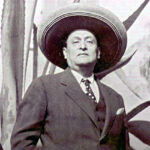
    Gilberto Bosques Saldívar, Mexico’s consul general in Marseille during World War II, issued roughly 40,000 visas to Jews and Spanish Republicans fleeing Nazi Germany and Francoist Spain. Photo: Archives

    Before Oskar Schindler became a household name, a Mexican diplomat in southern France was quietly doing something just as extraordinary — and the world barely noticed for 60 years.

    Gilberto Bosques Saldívar was born in 1892 in Chiautla de Tapia, Puebla, in a mountainous region southeast of Mexico City. He fought in the Mexican Revolution at 17, went on to become a journalist, a schoolteacher, a state legislator, and twice a federal deputy. In 1938, President Lázaro Cárdenas appointed him Consul General in Paris.

    When Nazi Germany swept into France in May 1940, Bosques fled Paris with the rest of the diplomatic corps. His government instructed him to set up a new consulate in Marseille, in what would become the German-controlled puppet state known as Vichy France. That relocation put him at the center of one of the worst refugee crises in modern history — and he made the most of it.

    A bust of Gilberto Bosques Saldívar is on view at the Ministry of Foreign Affairs, Mexico City. Photo: Wikimedia Commons

    Visas for Everyone

    Bosques ordered his consulate staff to issue a Mexican visa to anyone who needed one to escape. Jews fleeing the Third Reich, Spanish Republicans driven out by Francisco Franco’s forces after the Spanish Civil War, French political dissidents, Italians, Lebanese — all were eligible. Under his watch, roughly 40,000 visas were issued.

    He didn’t stop there. Bosques rented two châteaux outside Marseille to shelter the refugees under what he claimed, under international law, was Mexican territory. He chartered ships to carry people out of Europe, routed through African ports and on to Mexico, Argentina, and Brazil. He personally lobbied both President Cárdenas and his successor, Manuel Ávila Camacho, to keep the doors open.

    The consulate operated under constant surveillance. The Gestapo, Vichy police, and Franco’s agents all monitored its activities. In February 1943, after Mexico cut ties with the Vichy regime, German forces moved in as the staff was still burning files. Bosques, his wife, their 3 children, and about 40 consular employees were arrested and transferred to a hotel-prison in Bad Godesberg, near Bonn, where they were held for more than a year.

    Mexico negotiated their release in 1944, arranging a prisoner exchange that freed Bosques and his team in return for German nationals held in Mexico. When Bosques arrived back in Mexico City by train, thousands of Spanish refugees were waiting at the station to greet him.

    Recognition, Long Overdue

    Bosques returned to diplomatic work after the war, serving as ambassador to Portugal, Finland, Sweden, and Cuba. He lived to 102 — dying in 1995, just days before his 103rd birthday. His wartime role went largely unacknowledged for decades, even within academic circles.

    The turnaround began in 2003, when the city of Vienna named a street in his honor: the Gilberto-Bosques-Promenade, in recognition of his efforts to help Austrian refugees. In 2008, the Anti-Defamation League presented his family with a posthumous Courage to Care Award at a ceremony in Beverly Hills, California. A documentary, “Visa to Paradise,” followed in 2010.

    Today, he is often called the “Mexican Schindler,” a comparison to industrialist Oskar Schindler, though historians note that Bosques operated on a larger scale and with the backing — if sometimes just barely — of his government. Scholars continue to debate how much of his work was truly independent action versus official Mexican foreign policy. What is not debated is the outcome.

    Mexico’s role in World War II extended well beyond the consulate in Marseille. The country sent combat pilots to the Pacific theater and was the first in the world to formally protest Germany’s annexation of Austria. As covered in Mexico’s WWII role, the nation’s contributions to the Allied effort remain underappreciated outside Latin America.

    The U.S. Holocaust Memorial Museum describes Bosques as having saved tens of thousands of lives. For context on how few others did the same, the Raoul Wallenberg Foundation — which has honored Bosques alongside Swedish diplomat Raoul Wallenberg and Japanese consul Chiune Sugihara — notes that such acts of defiance were vanishingly rare among diplomats of the era.


    At a Glance: Gilberto Bosques Saldívar

    • Born: July 20, 1892, Chiautla de Tapia, Puebla, Mexico
    • Died: July 4, 1995, age 102
    • Role: Consul General of Mexico in Marseille, France, 1939–1943
    • Visas issued: Approximately 40,000
    • Refugees sheltered: Jews, Spanish Republicans, French, Italians, Lebanese, and others
    • Arrested by the Gestapo: February 1943; held near Bonn for over a year
    • Released: April 1944 via prisoner exchange
    • Honors: Vienna street named in his honor (2003); ADL Courage to Care Award (2008, posthumous)
    • Documentary: “Visa to Paradise” (Visa al paraíso), 2010
    • Nickname: “The Mexican Schindler”
  • Megapuente: May Brings a 6-Day Break, If You Bend the Rules
    Megapuente: May Brings a 6-Day Break, If You Bend the Rules

    Mexico’s official school calendar has handed families a generous stretch of days off in early May, and a lot of people are quietly turning it into a six-day megapuente — even if the government only signed off on part of it.

    In Mexico, a puente (literally, “bridge”) is what happens when a public holiday lands close enough to a weekend that families and workers can stitch the two together into an extended break. May offers an unusually good opportunity for that.

    Labor Day in Mexico. Photo illustration for MxTrib

    The Secretaría de Educación Pública, the federal education ministry known as the SEP, publishes a binding school calendar each year that governs public schools at the preschool, primary, and secondary levels. This year, two official holidays fall within days of each other in early May — and the timing is hard to ignore.

    The Megapuente Begins

    May 1 is Labor Day, or Día del Trabajo, a mandatory national holiday enshrined in the Ley Federal del Trabajo. This year it lands on a Friday. Combined with the weekend that follows, that’s already four consecutive days without school.

    Then comes May 5. Commemorating the Mexican army’s surprise defeat of French forces at the Battle of Puebla in 1862, Cinco de Mayo is an official school holiday — though, as many visitors to Mexico quickly discover, it is observed far more enthusiastically north of the border than in Mexico itself. This year it falls on a Tuesday, which puts it right up against that long weekend.

    That leaves Monday, May 4, as the only thing standing between a four-day break and a six-day one. The SEP’s official calendar marks May 4 in bold, indicating a day of reflection and civic commemoration — but not an official suspension of classes. Many families take it off anyway.

    April 30, Día del Niño (Children’s Day), adds one more unofficial wild card. Schools often use the date for parties and special events, and attendance tends to be loosely enforced. Some families treat it as the informal start of the whole stretch.

    So the practical picture: if a family pulls their kids from school on April 30, takes the Labor Day weekend, skips Monday the 4th, and observes Cinco de Mayo, they get six consecutive days off. Whether that’s a megapuente or just creative scheduling depends on who you ask — and whether the school notices.

    The month doesn’t end there. May 15 is Día del Maestro, Teacher’s Day, when classes are officially suspended at the basic education level across Mexico to honor the country’s teachers.

    For expats and foreign residents with children enrolled in Mexican schools, the SEP school calendar is worth bookmarking. Private schools sometimes follow a modified version, so it’s worth checking with individual institutions about which dates apply.

    May 2026 School Breaks at a Glance

    • April 30Día del Niño; informal, not an official suspension; many schools hold events or allow children to skip
    • May 1 — Labor Day (Día del Trabajo); mandatory national holiday; falls on Friday
    • May 2–3 — Weekend
    • May 4 — No official suspension; listed as a day of civic reflection on the SEP calendar; many families treat it as a holiday
    • May 5Cinco de Mayo; official school holiday commemorating the Battle of Puebla; falls on Tuesday
    • May 15 — Teacher’s Day (Día del Maestro); official suspension of basic-level classes
  • INAH Disvovers ‘El Jefeciño’: Massive Maya Site with Murals in Quintana Roo
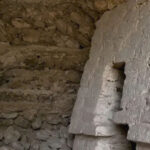
    INAH Disvovers ‘El Jefeciño’: Massive Maya Site with Murals in Quintana Roo

    INAH
    The recently discovered Maya site, nicknamed “El Jefeciño,” is currently being surveyed. While no restoration plans have been announced, its relatively well-preserved murals and stucco reliefs make it a likely candidate for more extensive research in the future.

    The National Institute of Anthropology and History (INAH) has announced the discovery of a large-scale pre-Hispanic Maya city in the municipality of Othón P. Blanco, in the southern state of Quintana Roo, Mexico. The site, known as “El Jefeciño” (roughly translating to “The Little Boss”.

    The discovery of the site, nicknamed El Jefeciño, or “little boss,” came after a citizen report during the initial surveys for the Maya Train archaeological salvage project.

    Scale and Architecture

    According to the statement released by INAH, El Jefeciño is a site of monumental architecture comprising at least 80 structures distributed across an area of approximately 100 hectares. Officials note, however, that the extension could be considerably larger and that exploration is ongoing. 

    The architecture corresponds to the Petén style, typically dated to the Early and Late Classic periods (250–900 A.D.). This style features large vaulted buildings, rounded and recessed corners, and the presence of sloping stonework.

    Archaeologists Sonny Moisés Ojeda González (head of the Dzibanché Kinichná Archaeological Zone) and Diana Karina Blancas Olvera (head of the Kohunlich zone) served as co-directors of the site’s initial prospection. They identified a specific “nuclear area” within the larger hectare count, consisting of five major buildings. These structures range in height from 11 to 14 meters and measure between 16 and 40 meters in length, arranged in a “C” shape plaza formation.

    Murals and Human Remains

    While the site requires more exploration, researchers have already documented significant features in specific structures. In a building cataloged as No. 53035, located in the northeast section of the property, archaeologists discovered painted stucco reliefs. 

    Unlike the narrative murals found at sites like Bonampak, the painting at El Jefeciño is described as “decorative and not narrative.” The visible pigments include white, orange, and red stripes. Adjacent to these mural fragments, researchers also identified fragments of a human skeleton, which they theorize may be part of a funerary context or burial.

    Ojeda González explained that within this section of the site, the team identified three distinct construction stages through surface observation. The first and deepest layer (approximately eight meters down) features the classic Petén apron molding. The second layer corresponds to the mural painting remains, while the third layer is mostly collapsed. Based on the size of the buildings, the specialists infer that the structures likely contain between four and five total construction phases.

    INAH
    The architecture of El Jefeciño corresponds to the Petén style, a form most famously on display at the grand Maya city of Tikal.

    Conservation Status and Methodology

    In a crucial clarification for the archaeological community, the INAH specialists emphasized that the work conducted so far constitutes registration and prospection, not a salvage excavation. No in-depth analysis or recovery of the materials (including the mural and bones) has been conducted. The evidence is currently designated to remain in situ (in its original place) to preserve the context until a formal excavation project is approved.

    Future Research

    The site’s discovery was facilitated by the Proyecto de Salvamento Arqueológico Tren Maya (Maya Train Archaeological Salvage Project), coordinated by archaeologist Manuel Pérez Rivas, specifically along front 1 of Section 7.

    Looking ahead, the INAH team plans to request a mapping project utilizing LiDAR (Light Detection and Ranging) technology. This laser-based remote sensing method has become indispensable in the dense jungles of Quintana Roo, as it allows archaeologists to define the settlement pattern and confirm the full extent of the structures without physical excavation.

    Secretary of Culture Claudia Curiel de Icaza stated that the registration of El Jefeciño, “Working with INAH strengthens the protection of archaeological heritage and expands knowledge about the Maya presence in southern Quintana Roo,” while also recognizing the role of local communities in safeguarding the historical memory.