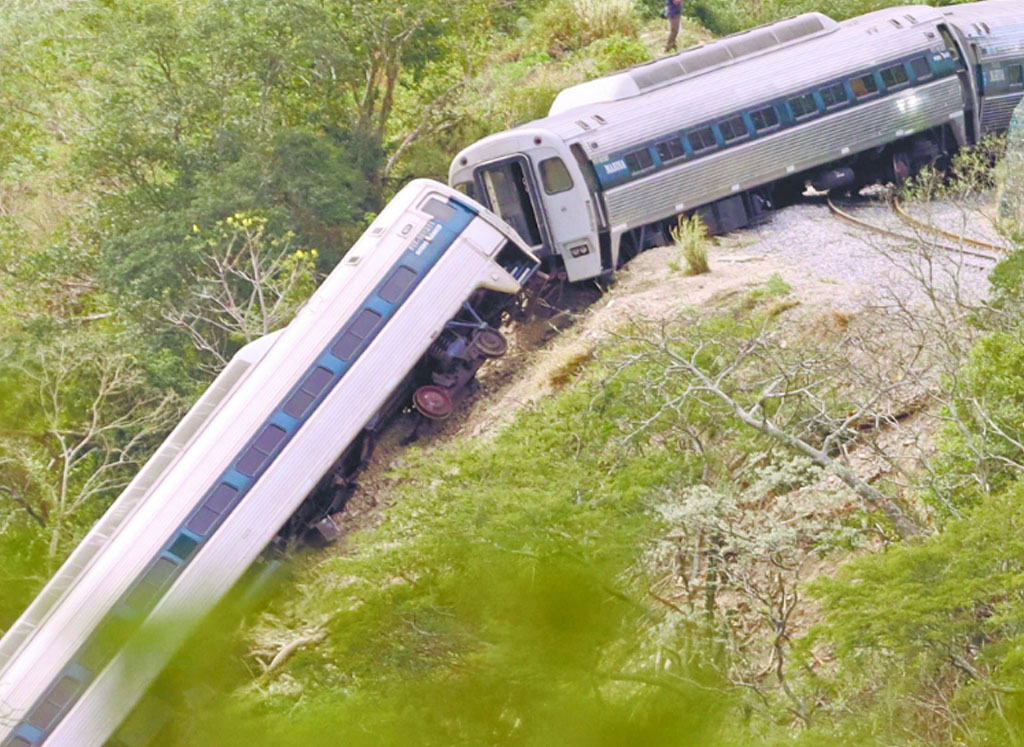
On a late December morning, a train on Mexico’s flagship Interoceanic Railway, a major infrastructure project connecting the Gulf of Mexico to the Pacific Ocean, derailed. The accident left 14 people dead and 98 more injured, casting an immediate shadow over a project that has been a cornerstone of the current administration’s development agenda.
President Claudia Sheinbaum Pardo has called for patience, urging the public to wait for the first official findings while outlining a framework for potential responsibility.
The President’s Position: Awaiting the Facts
Addressing the accident during her regular morning press conference, Sheinbaum provided an update on the investigation. The president stated that the head of the Attorney General’s Office (FGR), Ernestina Godoy, informed her that a preliminary report would be ready this week or next. Sheinbaum emphasized a cautious approach, saying, “We must wait so as not to get ahead of ourselves: what were the reasons for the accident?”
However, she also sketched a potential path for accountability. She asserted that if the investigation concludes the derailment was related to the railway track itself, “it is the engineers who supervised the train who would be responsible, and there would be a delineation of responsibilities.” This statement directly points the finger at technical oversight, seeking to isolate the issue from the project’s political management.
Her comments came alongside questions about a complaint filed by opposition politicians from the PAN party. They targeted Gonzalo López Beltrán, the son of former President Andrés Manuel López Obrador. López Beltrán had an “honorary role” in reviewing the project’s construction timelines.
Sheinbaum dismissed the need for a separate complaint, noting that an investigation had already been opened automatically due to the accident. She sharply distinguished his role, calling it an “honorary supervision” of schedules, and reiterated, “The technical supervision of the train’s construction was the responsibility of engineers.”
Infrastructure, Politics, and Accountability
Sheinbaum’s statements highlight several critical issues common in large public works projects, not just in Mexico but globally.
First, there is the tension between political symbolism and technical execution. The Interoceanic Train, like the Tren Maya, is more than a rail project; it is a symbol of the administration. As noted by analysts at the Wilson Center, such “legacy projects” are often accelerated to meet political deadlines, which can sometimes pressure construction timelines and testing phases. Sheinbaum’s effort to separate the “honorary” timeline supervision from the hands-on technical oversight is an attempt to manage this very tension. She seeks to protect the project’s symbolic value while directing scrutiny toward its concrete execution.
Second, her focus on the “black box” data recorder underscores the modern reliance on forensic engineering. Independent transport safety experts, like those cited in reports from the International Railway Journal, stress that derailment causes are often complex. They can stem from a combination of factors: track integrity (welds, alignment, bed stability), train speed, wheel conditions, or signal failures. Isolating a single cause is a technical challenge. By highlighting the black box, Sheinbaum frames the investigation as a scientific, apolitical process aimed at building public trust in its conclusions.
Public Perception
The involvement of the former president’s son, even in an honorary role, inevitably fuels suspicions of nepotism or lax oversight. A Brookings Institution study on infrastructure governance suggests that transparency is crucial in such scenarios. The mere appearance of favored access for relatives of influential figures can undermine faith in the entire accountability process, regardless of the factual findings. The opposition’s complaint, even if legally redundant as Sheinbaum claims, is a political action capitalizing on this perception.