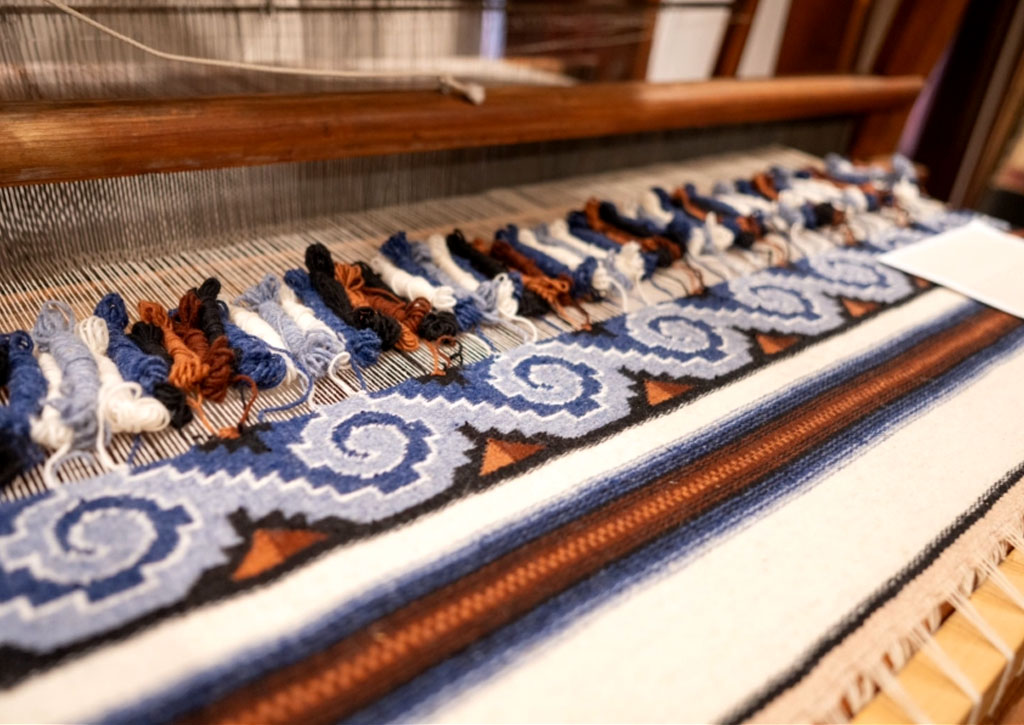
The Museo Textil de los Pueblos Indígenas y Afromexicanos, or MUT in Mexico City, opened its doors with the mission: to celebrate and preserve the rich, living heritage of the nation’s indigenous and Afro-Mexican textile arts.
The MUT was designed as a dynamic space that places the knowledge and traditions of these communities at the very center of the national conversation about identity, art, and history.
Visitors will find the museum in the Casa del Marqués del Apartado, a magnificent neoclassical palace built between 1795 and 1805 by the renowned architect Manuel Tolsá.
This historical setting, located on República de Argentina street in the Cuauhtémoc borough, provides a stunning backdrop for a collection that looks to the future by honoring the past. Inside, the museum is a treasure trove of culture, systematically spread across sixteen permanent exhibition halls distributed over three floors.
These halls are not simply displays; they are guided narratives that guide the visitor through the science, history, and spirituality of textile creation. Room titles such as “The Loom and the Virtuous Society,” “Indigenous Science on the Loom,” and “The Heritage of Ixcuina: Mexican Textile Fibers” hint at the deep intellectual and cultural journey that awaits.
The museum’s collection is anchored by over two hundred pieces, each one representing techniques, knowledge, and artistic traditions passed down through countless generations.
These works are a testament to the skill of the artisans who have kept these cultural expressions alive, often against great odds. The museum’s narrative powerfully highlights the contributions of both indigenous and Afro-Mexican communities, ensuring that their stories and artistic legacies are woven into the broader tapestry of Mexican history. This commitment extends beyond the permanent collection.
The museum’s first temporary exhibition is dedicated to Trine Ellitsgaard, a weaver and textile artist celebrated for her profound connection to contemporary textile art, a choice that beautifully bridges ancestral techniques with modern artistic expression.
The MUT is far more than a static repository. It is designed as a living cultural center, complete with a children’s library and dedicated spaces for educational workshops and community gatherings. True to its mission of holistic education, the museum also features a unique archaeological window, allowing visitors to glimpse the pre-Hispanic vestiges that lie beneath the very ground on which they stand, connecting the art of textiles to the deep geological and historical roots of the land.
This integration of past and present underscores the museum’s message that cultural heritage is not a relic, but a continuous, evolving dialogue.
For those planning a visit, the MUT is open Tuesday through Sunday, welcoming guests from ten in the morning until six in the evening.
Admission and Opening Hours
A general admission ticket costs ninety-five pesos, a modest sum for access to such a wealth of cultural heritage. Demonstrating a strong commitment to accessibility, the museum offers free entry to children, artisans, students, teachers with valid identification, senior citizens, and people with disabilities. The museum also schedules guided tours for school groups on Mondays, Wednesdays, and Fridays, further cementing its role as an educational pillar in the community.