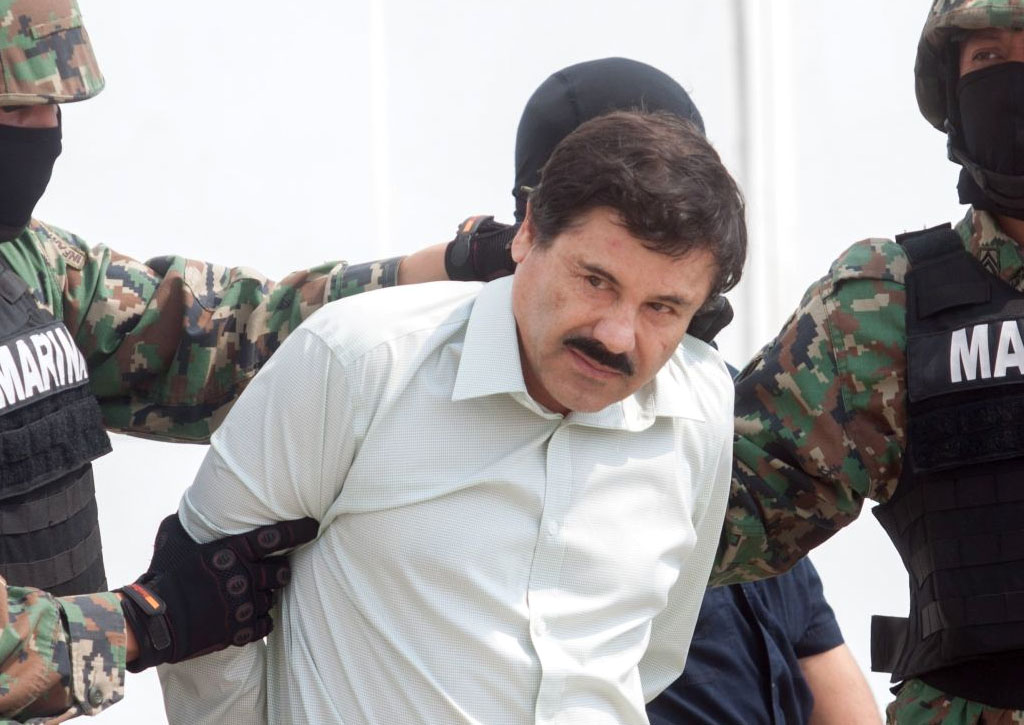
During the past week, Joaquin “El Chapo” Guzman sent a handwritten letter from the ADX Florence supermax prison in Colorado to the Federal Court for the Eastern District of New York. In the letter, his thirteenth such communication, he requested that judicial authorities reach out to President Sheinbaum’s office to explore options for him to finish his sentence in his home country.
Guzman has been serving a life sentence since his 2019 conviction on drug trafficking, money laundering, organized crime, and firearms charges. His current facility, known as the “Alcatraz of the Rockies,” is one of the strictest prisons in the world. Inmates spend 23 hours a day in solitary confinement inside small concrete cells measuring roughly seven by twelve feet.
Guzman has a history of escaping from Mexican prisons. In 2001, he was smuggled out of a prison in Jalisco, reportedly hidden in a laundry cart pushed by maintenance workers he had bribed. In 2015, he escaped from the Altiplano maximum security prison through a mile-long tunnel equipped with lighting and ventilation, using a motorcycle modified to run on rails.
That escape was considered a major embarrassment for the Mexican government. In 2016, he was recaptured and extradited to the United States the following year.
Even if Guzman did not plan another escape, a transfer to Mexico would likely make his detention much more comfortable.
In many Mexican prisons, inmates can bribe guards for privileges, and drug cartels often control facilities through corruption and intimidation. A 2012 report from Mexico’s National Human Rights Commission found that 65 of the country’s 101 most populated prisons were under the control of convicts.
One prison was found to have sex workers, large plasma screen televisions, and drugs available for inmates. In contrast, at ADX Florence, Guzman is isolated in a concrete cell with minimal human contact, has only one hour of exercise per day, and has complained of headaches, lack of clean air, depression, memory loss, and discrimination for not receiving legal documents in Spanish.
This is not Guzman’s first request to be returned to Mexico. In April 2025, he sent a handwritten letter in English to the same federal court, asking the district judge to respect his rights and send him back to his country.
Judge Brian Cogan rejected that petition along with four other letters sent around the same time, stating that some of the documents “lack meaning and none of them have legal validity,” and dismissing all of them. In his most recent letter, Guzman repeated his claims of rights violations during his extradition process and added that the violence attributed to his cartel was actually the responsibility of the Mexican government during that period. He wrote, “The supposed violence was unfair regarding my sentence, when the Mexican government did all the deaths, and I was blamed for trying to protect my life and my family in Mexico.”
His letter also asked for family visits to be restored and questioned his living conditions, arguing that basic principles of equality and rights should be respected for all incarcerated people. He thanked Judge Brian M. Cogan for considering his health in future appeals, though his previous requests have all been dismissed. So far, neither the Mexican presidency nor U.S. judicial authorities have publicly responded to the request outlined in the letter.
Who is El Chapo?
Joaquin Archivaldo Guzman Loera was born in the 1950s in La Tuna, a mountain village in Sinaloa, Mexico.
Under Guzman’s leadership, the Sinaloa Cartel became one of the most powerful drug trafficking organizations in the world, moving billions of dollars’ worth of cocaine, heroin, methamphetamine, and marijuana across the U.S. border. Forbes magazine estimated his fortune at $1 billion in 2009, and U.S. prosecutors later put the figure at nearly $13 billion. For years, he was considered the world’s most wanted drug lord, known for both his ruthlessness and his ability to evade capture.