
Category: Sports

  • The World Cup’s Ugly Side: FIFA’s Exorbitant TV Fees Spark Outrage in Mexico

    The World Cup’s Ugly Side: FIFA’s Exorbitant TV Fees Spark Outrage in Mexico

    FIFA
    Business owners in Mexico face steep fees if they don’t pay up to allow their patrons to enjoy FIFA World Cup matches.

    As Mexico prepares to co-host the 2026 FIFA World Cup, a bitter fight is brewing far from the manicured lawns of the stadiums. While the national team gears up for the opening match, anger and injustice are boiling over among the country’s bar owners, restaurateurs, and even local governments. They are the latest targets of what many are calling FIFA’s aggressive and “anti-soccer” licensing tactics.

    The debate centers on the exorbitant fees FIFA demands for the right to broadcast matches in public spaces — practices that have turned what should be a nationwide celebration into a legal and financial nightmare for small business owners.

    The Price Tag for Patriotism

    For decades, watching El Tri at the local cantina was a sacred, affordable ritual. That tradition is now under threat. According to the Mexican National Chamber of the Restaurant and Seasoned Food Industry (CANIRAC), the costs to legally show the games are prohibitive.

    Israel López García, president of CANIRAC Yucatán, recently outlined the strict locks FIFA places on broadcasting. Businesses cannot use domestic cable or streaming services like VIX; they are forced to contract specialized commercial packages from providers like Izzi Negocios or Sky Business.

    The pricing is tiered by size but is universally steep, ranging from 5,000 pesos (US$290) per TV in small venues to 25,000 pesos (US$1,450) at venues with 20 tables or more. 

    For a family-owned restaurant hoping to attract a few extra diners, these costs are devastating. Even municipal governments have been forced to cancel public viewings in town squares because they cannot afford the licensing fees.

    The “Anti-Mexico” Sentiment

    Beyond the transmission fees, businesses face draconian penalties for simply using World Cup imagery in their advertising. The fear of the Instituto Mexicano de la Propiedad Industrial (IMPI) has swept through the hospitality industry.

    “Those who are not registered and linked to FIFA… the restrictions related to the unauthorized use of these logos and trademarks through advertising can lead to fines exceeding 28 million pesos,” López García warned. This staggering figure—roughly US$1.6 million — is the sword hanging over every mom-and-pop shop.

    In response, the atmosphere in cities like Mexico City has been described as surreal. Instead of festive decorations, many establishments have stripped their walls clean. A manager for the Wingstop chain in Mexico City told EFE that the World Cup “doesn’t even seem like a World Cup in Mexico; everything is prohibited”. Bars on Paseo de la Reforma have removed flags and balls to avoid the IMPI inspectors, who have the authority to impose these massive fines or even close businesses for 90 days.

    “It is disappointing on the part of FIFA and the Government that they allow all this,” said Raúl Torres, a supervisor in Mexico City. The widespread sentiment is that FIFA is prioritizing short-term profit over the game’s cultural spirit, leading many to label the practices “anti-soccer” and punishing the very fans who create the atmosphere FIFA profits from.

    A Call to Resist

    Ironically, while the chamber of commerce is advising its members to comply to avoid bankruptcy, the grassroots sentiment is shifting toward resistance. Many business owners feel that FIFA is acting as a bully and plan to test their luck. 

    As one supervisor lamented, the area around the stadium is totally apagada (turned off) and lonely, devoid of the foreign tourists and local energy that was expected.

  • Mexico City Protestors Destroy FIFA Effigies
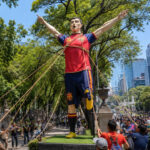
    Mexico City Protestors Destroy FIFA Effigies

    Fifa world cup
    Members of the CNTE have destroyed several effigies of the FIFA World Cup in Mexico’s capital, worsening security concerns.

    The 2026 FIFA World Cup is now just days away, but Mexico City is far from being in a festive mood.

    Coordinated protests by the National Coordinator of Education Workers (CNTE) have intensified in the capital. The situation has escalated to the point that FIFA has been forced to cancel in-person training for its volunteers at the main Zócalo Fan Fest and move it to a virtual format exclusively due to security concerns.

    The in-person sessions for the volunteers were scheduled for Thursday and Friday. The FIFA message to the volunteers was clear: “For safety reasons and to avoid putting anyone at risk, we have decided to hold these sessions virtually”.

    This decision is a significant blow to the tournament’s preparations, signaling that the global sporting event cannot proceed as planned without addressing the social unrest in the host country.

    The Zócalo Fan Fest is the flagship fan zone for all of Mexico. This massive complex in the nation’s central square is expected to be the primary gathering point for fans, with an anticipated capacity of up to 60,000 people during match days. The site is designed to feature live music, local gastronomy, and large screens broadcasting the games.

    This sprawling installation has effectively become the physical and symbolic front line of the conflict. For the CNTE, it is a highly visible target for demonstrating its grievances against the government.

    The week’s events began with the CNTE significantly escalating its protest tactics. On Tuesday, teachers blocked major avenues in Mexico City, including Paseo de la Reforma and Circuito Interior, causing severe traffic chaos.

    The most symbolic act of defiance was the toppling and vandalism of several large World Cup statues of soccer players. 

    Videos of hooded individuals toppling 5-meter-high plastic effigies with ropes circulated widely online. The protesters scrawled a potent message on the fallen figures: “If there is no solution, the ball will not roll”.

    The underlying demands center on a national salary dispute. The teachers are calling for a significant wage increase and the reversal of a new pension law, with some leaders demanding a 100% salary increase. The union has threatened to disrupt the World Cup, promising to bring “millions” of teachers to the capital to protest.

    The government has confirmed it is in dialogue with the CNTE to seek a resolution. However, with the opening match less than two weeks away, security is now a critical concern. The cancellation of the volunteer training is a clear message that the path to the 2026 World Cup in Mexico City is proving to be much more turbulent than anyone anticipated.

  • 5 Indigenous Mexican Athletes Sweep Great Wall Marathon

    5 Indigenous Mexican Athletes Sweep Great Wall Marathon

    Rarámuri
    Rarámuri athletes have a long history of dominating long-distance races both at home and abroad.

    Five Indigenous Mexican runners have returned home as heroes after a stunning performance at the 23rd Great Wall Marathon in China, sweeping the podium in multiple categories and shattering a long-standing record.

    The team, made up of three Rarámuri athletes—Sabina, Mario, and Antonio—alongside Mixtec runners Miriam and Balbina, secured two gold medals, two silver medals, and one bronze across the 21K and 42K events. Twenty-year-old Miriam delivered the most remarkable performance of the day, setting a new women’s half-marathon record in 1:38:49, nearly six minutes faster than the previous mark.

    The athletes are part of México Imparable (Unstoppable Mexico), a government-backed program launched in August 2025 to elevate Indigenous talent onto the global stage. Photos of the five women and men, standing proudly before the ancient fortress in their traditional attire, have since gone viral, sparking widespread celebration across Mexico as a powerful symbol of Indigenous identity and national pride.

    The Rarámuri: The ‘running people’ of the Copper Canyons

    The Rarámuri, often historically referred to as Tarahumara, are a Uto-Aztecan people who inhabit the remote, rugged terrain of the Sierra Madre Occidental in Chihuahua, Mexico. The name Rarámuri translates to “those who run fast” or “foot-runners,” and it is a title earned through centuries of necessity.

    When Spanish colonizers arrived in the 16th century, the Rarámuri retreated into the labyrinthine canyons of the Copper Canyon, a natural fortress where they largely avoided subjugation. Historically, they were never fully conquered by the Spanish conquistadors or the Jesuits, preserving much of their ancestral culture. In this isolated environment, running was not a sport but a key survival tool for hunting, inter-village communication, and transportation across dispersed settlements.

    Scientific theories: Why are they so unstoppable?

    Researchers have long been fascinated by the Rarámuri’s seemingly superhuman endurance—often comparing them to “modern Spartans”—and have offered several explanations for their legendary stamina.

    First and foremost is lifestyle. While modern athletes dedicate hours to regimented training, the Rarámuri are simply living their lives. Their day-to-day existence in the high-altitude canyons, often above 2,000 meters (6,500 feet), involves constant, low-intensity activity, from herding cattle to transporting goods. This has imbued them with a remarkable cardiovascular efficiency.

    Furthermore, the Rarámuri’s diet of corn, beans, and pinole (a powdered maize drink) offers a steady release of complex carbohydrates without processed fats or sugars. National Geographic studies have noted that Rarámuri communities experience virtually zero rates of diabetes, heart disease, or cancer, a testament to this organic, high-resilience fuel.

    Their minimalist footwear, huaraches made from recycled tire rubber, forces a natural mid-foot strike that avoids the heavy heel impact common in modern running shoes, potentially reducing the risk of long-term injuries. Combined with a cultural ethos where running holds deep spiritual and ceremonial importance (such as the ancient ball-kicking game rarajipari), the Rarámuri have effectively trained their bodies for ultra-marathons for centuries.

  • Mexico’s 2026 World Cup: Host Cities, Protest Snubs and Broken Promises
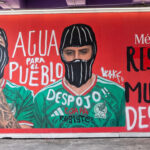
    Mexico’s 2026 World Cup: Host Cities, Protest Snubs and Broken Promises

    Fifa
    The FIFA World Cup is coming to Mexico this summer, but not everyone is thrilled, and they are letting it be known.

    For a nation about to become the first to host three World Cups, the expected excitement is notably muted. The 2026 tournament, co-hosted with the United States and Canada, has triggered protests and disappointment over three main issues: the misallocation of resources that ignores urgent local needs, the prohibitive cost of tickets that locks out average fans, and a pervasive sense of national snub as Mexico is given a diminished role despite having hosted the tournament alone twice before.

    The strongest opposition to the World Cup in Mexico comes from those who see vital public funds diverted to a sporting event while basic crises remain unaddressed. The three host cities have made costly investments. Renovations at Mexico City’s Estadio Banorte have cost an estimated 150 to 180 million dollars, funded by sponsorship deals and public money. In Monterrey, activists have criticized the rushed construction of expensive tourist-focused projects like new monorail lines, which they say bypass environmental assessments. Meanwhile, overall federal infrastructure investment outside of the state oil company PEMEX fell by 33.5% in early 2025 compared to the previous year, from 147.6 billion to 101.8 billion pesos, raising concerns about the country’s ability to handle the event.

    Fifa
    In Monterrey, monorail lines promised to be ready in time for the World Cup are nowhere near being ready and have already suffered several collapses. 

    The starkest contrast is visible around the Banorte Stadium in the Santa Ursula Coapa neighborhood. While authorities build luxury boxes and cycle paths, residents receive water from local wells only two to three times a week. The government grants the stadium 450,000 cubic meters of water per year, enough to supply the entire neighborhood for a month. This perceived priority has fueled a “World Cup of Dispossession” protest movement, with activists blocking major highways to denounce the lack of housing, water, transport, and electricity. One banner read, “Global event, local eviction,” capturing the fear that World Cup development accelerates gentrification and displacement. A protester summarized the sentiment: “We want decent transport. We want water. We want electricity. We want to be able to get home.”

    For many Mexicans, attending a World Cup match on home soil has become financially impossible. Tickets for the opening match in Mexico City ranged from 3,000 to 10,000 dollars, an exorbitant sum in a nation where the average monthly income is around 1,000 dollars. Data indicates that watching Mexico play is the most expensive fan experience in the entire tournament, with an average cost of 5,189 dollars per match. Fans who fondly remember attending the 1970 and 1986 World Cups can no longer afford to go. One retired fan lamented, “For Mexico’s economic reality, the only people who have the most means will be able to get in. It doesn’t feel the same. This World Cup basically belongs to the United States.” This sentiment ties directly to the issue of perceived snub: the tournament feels like an event happening in Mexico, not one that belongs to Mexico.

    Perhaps the most bitter aspect is the sense that Mexico is being treated as a secondary partner. The numbers are clear: the United States will host 78 of the 104 matches across 11 cities, while Mexico will host only 13 across three cities: Mexico City, Guadalajara, and Monterrey. This would feel like a demotion for any nation, but for one that has successfully hosted the tournament alone twice, it is especially pointed. 

    Mexican journalists and fans have also expressed anger over the quality of matches allocated to the country. Prominent ESPN critic José Ramón Fernández called the schedule “not attractive at all,” arguing that the tournament is not really “ours.” Monterrey was assigned group-stage matches, including Japan versus Tunisia and South Africa versus South Korea. Fernández said these matches are “ridiculous compared with the stadium and infrastructure they have.” Fans on social media have protested that there are no big matches and the lineup is full of mediocre games.

    Mexico’s 2026 World Cup experience is far from the celebrations of 1970 and 1986. The narrative has shifted from national pride to resource misallocation, economic exclusion, and a profound sense of being undervalued by larger partners. As the world prepares for kickoff, a large segment of the Mexican population will be watching from the outside, questioning whether the sacrifices made were truly worth it.

  • The Slow and Steady Rise of Women’s Soccer in Mexico

    The Slow and Steady Rise of Women’s Soccer in Mexico

    Soccer
    A mural in the changing room for Las Rayadas de Monterrey portrays a player in an astronaut uniform—waiting metaphorically for her change to take the next great leap. Photo: Carlos Rosado van der Gracht / MxTrib

    For most of its history, women’s soccer in Mexico barely registered in the public consciousness. That has started to change. The sport is growing, slowly but steadily, fueled by a simple fact that is hard to ignore: the women’s national team has been performing at a higher level than the men’s team in several international tournaments.

    Mexico’s women have qualified for the FIFA Women’s World Cup three times, in 1999, 2011, and 2015. The men’s team has qualified for more tournaments overall, but the women have matched or exceeded the men’s results in several Concacaf regional competitions. The women have finished as runners-up in the Concacaf W Championship twice, in 1998 and 2010. More significantly, the women reached the quarterfinals of the 2004 Olympics, a stage the men’s team has not reached since 2012. In 2031, Mexico will host the Women’s World Cup, and the director of Liga MX Femenil has stated publicly that she believes Mexico’s women will win that tournament before the men ever win theirs. Whether or not that prediction comes true, the confidence reflects a real shift in perception.

    Audiences have noticed. Liga MX Femenil, the professional women’s league, launched in 2017. As of 2025, it is the third-most-attended women’s soccer league in the world, trailing only the United States’ NWSL and Germany’s Frauen-Bundesliga. Average attendance sits near 3,100 spectators per match, and total viewership grew by nearly 177% between 2021 and 2023. The league has expanded its broadcast presence to free platforms like YouTube and TikTok, drawing over 22 million views across digital and television platforms during the Clausura 2025 tournament alone. One telling statistic: women’s team jerseys have started to outsell men’s jerseys at some clubs, like Monterrey.

    soccer
    Las Rayadas de Monterrey remain undefeated in Liga MX Femenil, while their male counterparts sit in 13th place. Yet, in some cases, the men earn hundreds of times more money and have access to far better facilities.

    Disparities Remain

    Yet for all the growth in visibility, the material conditions for female players lag far behind those of their male counterparts. The gap shows up in salaries, facilities, medical care, and basic respect.

    Consider wages. A FIFA report released in early 2025 surveyed 86 leagues and 669 teams worldwide. It found that the average gross salary for a professional women’s soccer player globally was USD $10,900 per year. That number is misleadingly high because it includes top-tier clubs. When broken down, players at Tier 2 clubs averaged USD $4,361 annually, and those at Tier 3 averaged just USD $2,805. By contrast, the average male player in Mexico’s Liga MX earns a base salary in the hundreds of thousands of dollars annually. The top men’s clubs operate with payrolls exceeding $37 million per season.

    The inequality extends beyond paychecks. Former professional player Paola Espino described the early years of Liga MX Femenil, noting that training regimens were copied directly from men’s teams without any adjustment for physiological differences. Players were trained as if they were small men, not women with different biomechanical and hormonal profiles. Yet most clubs in Mexico have not adopted training protocols or medical monitoring that account for these differences.

    The physical infrastructure for women’s teams also remains uneven. In March 2025, during a match against Yucatán, the Tijuana women’s team reported that the visiting locker room at their stadium, which featured photos of each female player, had been vandalized. The damage occurred after the men’s team used the same locker room. It was not clear whether players, coaches, or staff were responsible, but the message was unmistakable: the women’s presence was not respected. Incidents like this do not happen in isolation. They reflect a broader culture in which women’s soccer is still treated as an afterthought.

    Why the Pay Gap Exists

    The reasons for these disparities are no mystery. The men’s game generates more revenue, and it has done so for over a century. But that explanation is incomplete. Liga MX Femenil has demonstrated that it can attract audiences and sponsors. A report from the World Football Summit noted that investing in women’s soccer generates 35% more purchase intent than equivalent investment in men’s soccer, with an average return on investment between 15 and 18 to one. Brands are seeing results. The league doubled its sponsorship agreements and grew its audience from 10 million to 30 million viewers. So the revenue argument is weakening.

    A more accurate explanation is structural. Liga MX Femenil was not created because clubs believed in it. It was created because the Mexican Football Federation required men’s first-division clubs to field a women’s team. That mandate launched the league, but it also created a system where some clubs treat their women’s teams as a compliance exercise rather than a genuine investment. 

    Yet there are reasons for cautious optimism. The gap in facilities and pay is not lost on players or on the public. Stories like Claudia Cid’s receive attention. The director of Liga MX Femenil has acknowledged the need for continued professionalization. And the 2031 Women’s World Cup, which Mexico will host, is expected to accelerate investment and infrastructure. The institutions that govern the sport will be challenged with growing quickly enough to catch up with the players and fans who have already arrived.