A bomb threat against a Viva Aerobus aircraft parked at Mexico City’s Benito Juárez International Airport triggered a full security response Saturday afternoon, mobilizing multiple specialized units before authorities cleared the plane and found nothing.
The alert involved aircraft registration XA-VBM, which had arrived on flight VB1029 from Cancún and was preparing to depart as flight VB1104 to Mérida. The plane was parked at position 13 in Terminal 1 when the airline reported the threat to airport authorities.
Units from Three Agencies Sweep the Aircraft
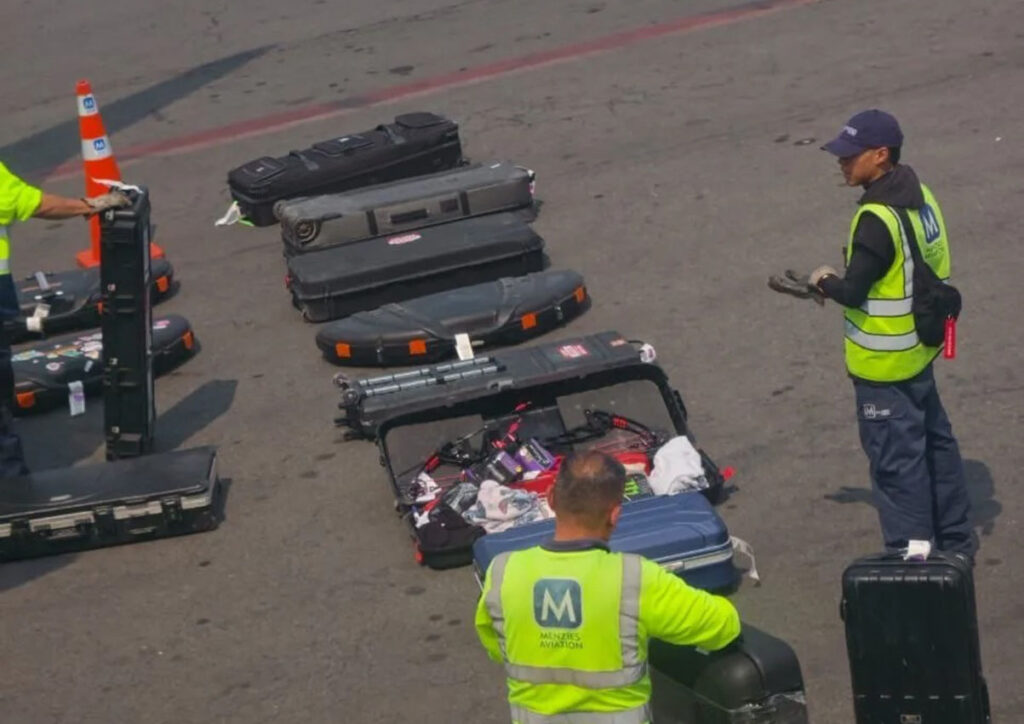
Airport security personnel (AVSEC), members of the Naval Airport Protection Unit, and specialists from the Búsqueda, Localización y Neutralización de Artefactos Explosivos (BLONAE) team — a bomb disposal unit — carried out a thorough inspection of the aircraft and all passenger luggage. Working under the coordination of the airport’s General Command, the teams found no trace of any explosive device.
Once the all-clear was given, Viva Aerobus confirmed that its security protocols had been activated immediately after receiving the report and that crew members resumed normal operations after receiving official authorization to do so. The airline said boarding of the Mérida-bound flight proceeded without further incident.
The airport, known by its initials AICM, announced the outcome via its official social media channels, confirming there were no injuries and no devices found.
False Alarms Are a Known Risk
Bomb hoaxes at airports impose significant costs even when they turn out to be nothing — grounded aircraft, delayed passengers, and the diversion of emergency personnel from other duties. Saturday’s incident appeared to resolve quickly, with no widespread disruption to other flights reported.
The AICM is currently in a period of intense preparation. With Mexico co-hosting the 2026 FIFA World Cup alongside the United States and Canada, the airport is expected to handle millions of additional travelers in the coming weeks. Officials recently approved an increase in hourly takeoff and landing slots — from 44 to 46 — to help manage peak summer demand. A project to install more than 3,600 AI-enabled surveillance cameras throughout the airport is scheduled for completion later this month.
Saturday’s real-world response echoed a simulated bomb exercise the AICM conducted in August 2025 aboard the Aerotrén, the shuttle connecting Terminal 1 and Terminal 2. That drill was designed to identify gaps in the airport’s emergency plan ahead of the World Cup.
Not Viva Aerobus’s First Dramatic Flight Story
The incident is only the latest in a series of newsworthy events for the Monterrey-based budget carrier. Last year, a Viva Aerobus flight from Miami was forced to divert to Havana after experiencing engine trouble over the Caribbean, stranding more than 200 passengers.
The airline operates dozens of routes across Mexico and to the U.S. and Central America, including regular service between Cancún, Mérida, and Mexico City.
No arrests were reported in connection with Saturday’s threat, and authorities had not publicly announced any investigation into its origin as of Saturday evening. The AICM did not identify who made the threat or through what channel it was communicated.
For more on Mexico City’s airport, see coverage from Expansión.
At a Glance
- Date: Saturday, May 2, 2026
- Airport: Benito Juárez International Airport (AICM), Mexico City, Terminal 1
- Airline: Viva Aerobus; aircraft registration XA-VBM
- Flights affected: VB1029 (from Cancún) and VB1104 (bound for Mérida)
- Response teams: AVSEC, Naval Airport Protection Unit, BLONAE bomb disposal unit
- Outcome: No explosive device found; no injuries; flight resumed
Source: Expansión, La Jornada, AICM official statement