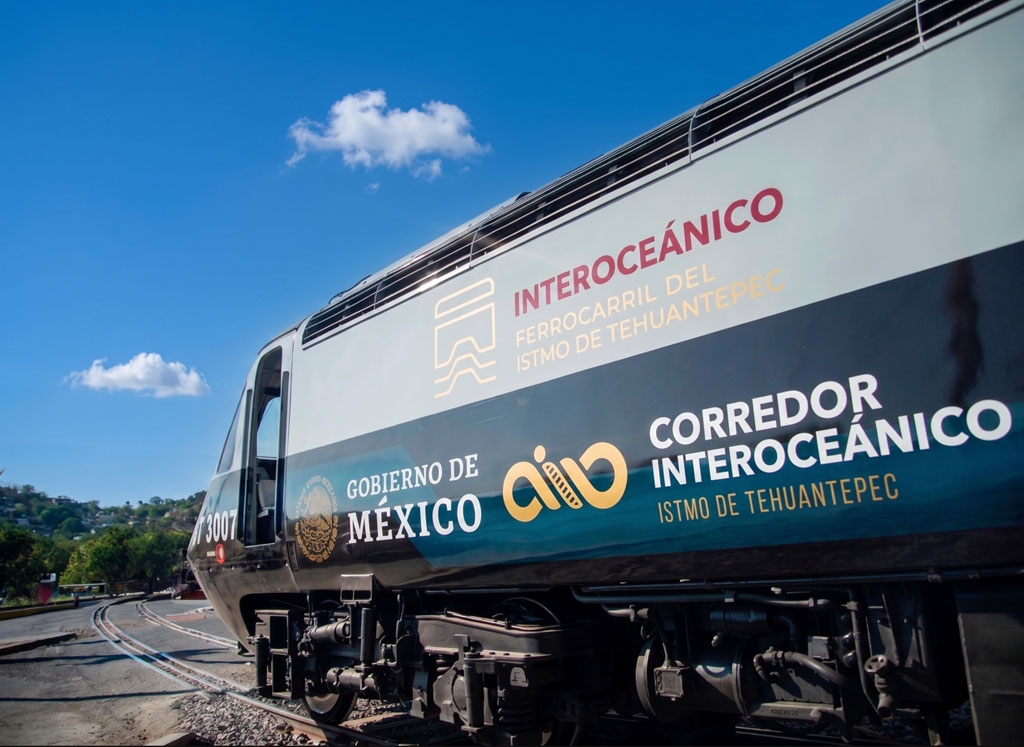
In a significant milestone for international logistics, the first major shipment of vehicles has successfully traversed Mexico’s Interoceanic Corridor of the Isthmus of Tehuantepec (CIIT). A shipment of 900 Hyundai vehicles covered the 308-kilometer (approximately 191.4-mile) land crossing between the Pacific and Atlantic oceans in just nine hours by rail, marking a turning point for the ambitious infrastructure project and positioning it as a serious challenger to the Panama Canal.
The operation, which took place between March 28 and April 3, 2025, was executed by Hyundai Motor Company and its logistics division, Hyundai Glovis. The vehicles arrived from South Korea at the Pacific port of Salina Cruz, Oaxaca, on the vessel Glovis Cosmos. There, crews loaded the units onto more than 50 specialized BI-MAX double-deck freight wagons. The train then traveled along Line Z of the interoceanic railway to the Gulf port of Coatzacoalcos, Veracruz, a 308-kilometer (191.4-mile) journey completed in roughly nine hours. From there, the vehicles were transferred to a second ship for the final voyage to Brunswick, Georgia, on the U.S. East Coast, bringing the total door-to-door transit time from Asia to approximately 72 hours.
A Faster, More Flexible “Dry Canal”
The success of this test is not merely a logistical achievement; it is a direct challenge to the status quo of global shipping, which the Panama Canal has dominated for over a century. The waterway, which relies on a system of locks fed by Gatún Lake, has faced severe operational constraints in recent years due to droughts. In 2023, canal operators were forced to slash daily ship transits from 38 to as few as 22, causing weeks-long delays for some cargo. A 2025 study in Geophysical Research Letters projects that such drought conditions could occur twice as often by century’s end under high-emission scenarios, highlighting the vulnerability of sea-based routes.
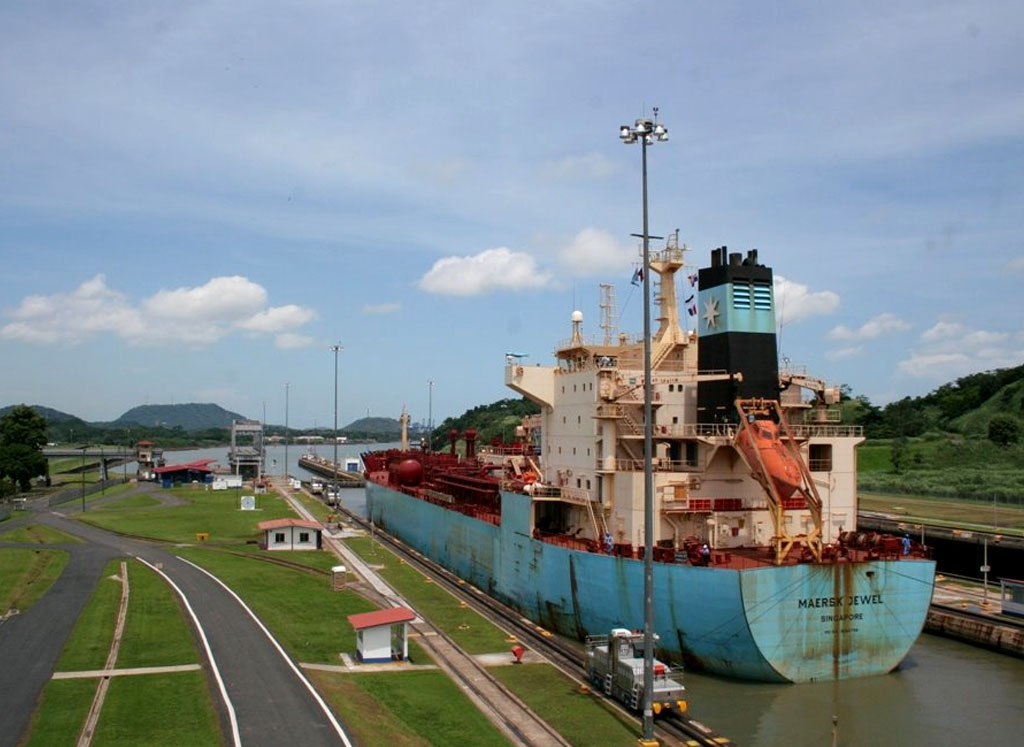
In contrast, Mexico’s “dry canal” is immune to water shortages. By using a modernized railway, the CIIT offers a faster and more predictable alternative for time-sensitive cargo like finished vehicles and electronics. The operation “provided an alternative to the Panama Canal… a faster and more reliable option for certain types of cargo,” confirmed a report from Logistics Insider. The 9-hour rail transit across the isthmus is significantly faster than the typical day-long passage through the Panama Canal, representing a strategic advantage for shippers prioritizing speed and reliability.
A Strategic Vision for North American Trade
The Interoceanic Corridor is a centerpiece of Mexico’s national development strategy, designed to position the country as a new continental logistics hub. President Claudia Sheinbaum has championed the project, noting that “it’s an exceptional project — it provides an alternative to the Panama Canal.” The corridor is not just a single rail line but a multimodal logistics platform administered by the Mexican Navy, stitching together the ports of Salina Cruz, Coatzacoalcos, Dos Bocas, and Puerto Chiapas.
The success of the Hyundai test is already yielding results. Following the successful pilot, the CIIT is preparing for a second, much larger shipment. Mexico’s port authority, ASIPONA, is planning to move 3,000 Hyundai vehicles in May 2026, tripling the volume of the initial operation. Authorities estimate that the corridor could soon handle up to 5,000 units per month.
The corridor is one of the two largest projects, along with the Tren Maya (Maya Train), spearheaded by the Mexican government, designed to modernize the nation’s rail infrastructure.
Positioning for the Future
Mexico’s interoceanic corridor is leveraging the global trend of nearshoring, where companies are moving production and supply chains closer to their primary markets—especially the United States. This route provides a direct, efficient, and geopolitically stable pathway for Asian manufacturers to reach the entire East Coast of North America.
President Sheinbaum has articulated that the vision for the corridor extends far beyond a single transit route. The government’s plan includes developing 14 industrial parks along the railway, creating a manufacturing belt that will attract foreign investment and generate thousands of jobs. “The corridor is conceived as a dry canal… a port‑to‑port rail link designed to move containers coast‑to‑coast,” reported Newsweek, adding that the $7.5 billion project could eventually divert up to five percent of typical Panama Canal traffic.
The first crossing of the 900 Hyundais has proven that the Corredor Interoceánico del Istmo de Tehuantepec is no longer just a project—it is a functional, competitive reality. As global trade adapts to climate change and shifting economic pressures, this Mexican “dry canal” is poised to become a dominant artery for commerce between the world’s largest economies.