
Author: MxTrib Staff

  • Citigroup Sells Another Chunk of Banamex — What It Means for Your Account

    Citigroup Sells Another Chunk of Banamex — What It Means for Your Account

    Banamex is becoming a fully Mexican bank. For the millions of customers it serves, including expats and foreign residents who have relied on its Citigroup connection for years, that transition just moved significantly closer to completion.

    Citigroup confirmed Wednesday that it has closed the sale of 22.6% of Grupo Financiero Banamex to a group of institutional investors and family offices, including Blackstone, General Atlantic, Afore Sura, the Qatar Investment Authority, and others. The transaction finalizes most of the 24% equity stake Citi announced in February for approximately 43 billion pesos (about US$2.5 billion). The remaining 1.4% is expected to be sold through a public offering in the coming months.

    A 4-Year Exit, Nearly Complete

    The sale is the culmination of a process Citigroup began in January 2022, when it announced plans to exit Mexico’s consumer banking market as part of CEO Jane Fraser’s broader effort to simplify the company and focus on institutional clients. What followed was a drawn-out search for buyers, failed negotiations, regulatory hurdles, and repeated delays.

    The breakthrough came in stages. In December 2025, prominent Mexican businessman Fernando Chico Pardo — chairman of airport operator Grupo Aeroportuario del Sureste — purchased a 25% stake for approximately US$2.3 billion, becoming Banamex’s largest individual shareholder and chairman of its board. The latest sale brings the total divestiture to 49%, just below the threshold that would require Citi to deconsolidate the bank from its balance sheet.

    Citi retains just over 50% for now. The company has said it does not plan further sales this year, giving the new investor group time to focus on operations before an eventual initial public offering, expected to list Banamex on the Mexican Stock Exchange.

    “We are pleased to finalize these investments from a group of renowned investors,” said Ernesto Torres Cantú, head of Citi International, pointing to confidence in the bank’s strategic direction and Mexico’s financial sector overall.

    Chico Pardo, who participated in selecting the new minority investors, added that he takes “great pride in these partners’ commitment to Mexico.”

    What Changes for Account Holders

    Banamex, founded in 1884 as Banco Nacional de México, is the country’s fourth-largest financial group with around 1,300 branches, 9,000 ATMs, and 13 million active clients.

    For most everyday customers, the practical impact will be minimal in the short term. Accounts, services, and branch operations continue as normal. But the longer-term picture matters particularly for foreign residents.

    For years, Citigroup’s ownership of Banamex gave American expats and international residents a sense of familiarity. In practical terms, U.S. Citibank account holders could make ATM withdrawals at Banamex branches without fees. As Citi’s ownership share diminishes toward zero, that arrangement becomes less certain. The bank has already rebranded from Citibanamex to simply Banamex, and a recent update reportedly removed the app’s English-language option.

    As a guide to banking for expats notes, Banamex’s reach is unmatched, but foreign residents should be aware they are now banking with an institution in the middle of its most significant structural change in two decades.

    Also announced last week: Manuel Romo is stepping down as Banamex’s director general. He will be replaced by Edgardo del Rincón, who previously served as director of Banbajío, with the transition expected in May.

    Banamex at a Glance

    • Founded: 1884
    • Rank: 4th-largest financial group in Mexico by total assets
    • Active clients: 13 million retail banking customers
    • Branches: approximately 1,300
    • ATMs: approximately 9,000
    • Majority shareholder: Fernando Chico Pardo (25%), with Blackstone, General Atlantic, Qatar Investment Authority, Afore Sura, and others holding additional minority stakes
    • Citi’s remaining ownership: just over 51%
    • IPO: planned, timing subject to market conditions and regulatory approvals

    With information from El País

  • Sheinbaum Defends Governor Accused of Cartel Ties, Cites Sovereignty

    Sheinbaum Defends Governor Accused of Cartel Ties, Cites Sovereignty

    Mexican President Claudia Sheinbaum. File photo

    A sweeping U.S. indictment targeting a sitting Mexican governor has set off one of the sharpest diplomatic confrontations of President Claudia Sheinbaum’s administration, forcing her to publicly balance national sovereignty against mounting American pressure over drug-trafficking allegations.

    Federal prosecutors in Manhattan unsealed charges Wednesday against Rubén Rocha Moya, the 76-year-old governor of Sinaloa, along with nine current and former state officials. The indictment accuses them of conspiring with the Sinaloa Cartel’s “Chapitos” faction — led by the sons of imprisoned drug lord Joaquín “El Chapo” Guzmán — to move large quantities of narcotics into the United States in exchange for bribes and political backing. Prosecutors allege cartel operatives helped rig Rocha Moya’s 2021 election by threatening opposition candidates and stealing ballot papers. One official named in the case is accused of receiving $11,000 a month from the cartel. Rocha Moya has flatly denied the accusations, calling them baseless and politically motivated.

    Mexico Pushes Back on Extradition

    Sheinbaum addressed the case at her Friday morning press conference, pushing back firmly on calls to hand Rocha Moya over to U.S. authorities. She invoked the principle of presumption of innocence and insisted that any investigation must proceed through Mexican legal channels.

    “Everyone is innocent until proven guilty. That is how justice works in Mexico,” she said, adding that responsibility must be established within the country’s legal framework. She directed any further action to the Fiscalía General de la República, Mexico’s attorney general’s office, which she said must gather and evaluate evidence before any steps are taken.

    Mexico’s Foreign Ministry confirmed it had received provisional arrest requests from the U.S. related to the potential extraditions, noting that no supporting evidence had been included with the documents.

    The Opposition Draws Historical Comparisons

    Sheinbaum reserved some of her sharpest language for Mexico’s political opposition, which she accused of turning to foreign courts to score domestic points. She called it “truly lamentable” that right-wing parties would lean on a New York federal court or the U.S. Justice Department to advance their positions.

    Drawing on Mexican history, she compared her opponents to 19th-century conservatives who sought foreign intervention to shape the country’s politics — figures like Antonio López de Santa Anna and Porfirio Díaz. By contrast, she aligned herself and the ruling Morena party with independence heroes Miguel Hidalgo, Benito Juárez, and Emiliano Zapata.

    “We will never subordinate ourselves,” she said, framing the case as a matter of national dignity. “Sovereignty is not negotiable.”

    A Diplomatic Tightrope

    The indictment puts Sheinbaum in a difficult position. Rocha Moya is a Morena stalwart with close ties to former President Andrés Manuel López Obrador, whose political movement Sheinbaum inherited. Refusing to act against him risks deepening tensions with Washington at a particularly sensitive time, with U.S.-Mexico trade negotiations under the USMCA agreement still ongoing. Acting against him could fracture the party’s base.

    Standard & Poor’s placed Sinaloa’s credit rating under special negative review following the U.S. charges, signaling the economic ripple effects of the case.

    The U.S. and Mexican governments have an extradition treaty, though Mexico has historically been reluctant to extradite sitting elected officials. For context on how earlier extraditions played out in Mexico’s relationship with Washington, see our coverage here.

    The full scope of the indictment, reported by Al Jazeera, includes allegations tied to a May 2022 shipment that was eventually intercepted in Phoenix, Arizona, containing nearly 189,000 fentanyl pills, along with cocaine and methamphetamine.


    The Rocha Moya Case at a Glance

    • Sinaloa Gov. Rubén Rocha Moya, 76, indicted by federal prosecutors in Manhattan’s Southern District
    • 9 other current and former Sinaloa officials named in the same indictment
    • Charges include drug trafficking and weapons counts linked to the Sinaloa Cartel’s Chapitos faction
    • Cartel allegedly helped Rocha Moya win the 2021 governorship through threats and ballot fraud
    • Mexico’s Foreign Ministry says U.S. extradition requests arrived without supporting evidence
    • Rocha Moya denies all charges; Sheinbaum says the attorney general’s office must lead any investigation
    • S&P placed Sinaloa’s credit rating under special negative review following the indictment

    Source: El Universal

  • Megapuente: May Brings a 6-Day Break, If You Bend the Rules
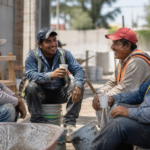
    Megapuente: May Brings a 6-Day Break, If You Bend the Rules

    Mexico’s official school calendar has handed families a generous stretch of days off in early May, and a lot of people are quietly turning it into a six-day megapuente — even if the government only signed off on part of it.

    In Mexico, a puente (literally, “bridge”) is what happens when a public holiday lands close enough to a weekend that families and workers can stitch the two together into an extended break. May offers an unusually good opportunity for that.

    Labor Day in Mexico. Photo illustration for MxTrib

    The Secretaría de Educación Pública, the federal education ministry known as the SEP, publishes a binding school calendar each year that governs public schools at the preschool, primary, and secondary levels. This year, two official holidays fall within days of each other in early May — and the timing is hard to ignore.

    The Megapuente Begins

    May 1 is Labor Day, or Día del Trabajo, a mandatory national holiday enshrined in the Ley Federal del Trabajo. This year it lands on a Friday. Combined with the weekend that follows, that’s already four consecutive days without school.

    Then comes May 5. Commemorating the Mexican army’s surprise defeat of French forces at the Battle of Puebla in 1862, Cinco de Mayo is an official school holiday — though, as many visitors to Mexico quickly discover, it is observed far more enthusiastically north of the border than in Mexico itself. This year it falls on a Tuesday, which puts it right up against that long weekend.

    That leaves Monday, May 4, as the only thing standing between a four-day break and a six-day one. The SEP’s official calendar marks May 4 in bold, indicating a day of reflection and civic commemoration — but not an official suspension of classes. Many families take it off anyway.

    April 30, Día del Niño (Children’s Day), adds one more unofficial wild card. Schools often use the date for parties and special events, and attendance tends to be loosely enforced. Some families treat it as the informal start of the whole stretch.

    So the practical picture: if a family pulls their kids from school on April 30, takes the Labor Day weekend, skips Monday the 4th, and observes Cinco de Mayo, they get six consecutive days off. Whether that’s a megapuente or just creative scheduling depends on who you ask — and whether the school notices.

    The month doesn’t end there. May 15 is Día del Maestro, Teacher’s Day, when classes are officially suspended at the basic education level across Mexico to honor the country’s teachers.

    For expats and foreign residents with children enrolled in Mexican schools, the SEP school calendar is worth bookmarking. Private schools sometimes follow a modified version, so it’s worth checking with individual institutions about which dates apply.

    May 2026 School Breaks at a Glance

    • April 30Día del Niño; informal, not an official suspension; many schools hold events or allow children to skip
    • May 1 — Labor Day (Día del Trabajo); mandatory national holiday; falls on Friday
    • May 2–3 — Weekend
    • May 4 — No official suspension; listed as a day of civic reflection on the SEP calendar; many families treat it as a holiday
    • May 5Cinco de Mayo; official school holiday commemorating the Battle of Puebla; falls on Tuesday
    • May 15 — Teacher’s Day (Día del Maestro); official suspension of basic-level classes
  • U.S. Charges Sinaloa Governor With Drug Trafficking in Cartel Case

    U.S. Charges Sinaloa Governor With Drug Trafficking in Cartel Case

    Rubén Rocha Moya
    Rubén Rocha Moya. Photo: Courtesy

    The governor of Mexico’s Sinaloa state is facing U.S. federal drug charges, marking one of the most significant corruption cases to reach a sitting Mexican official in years.

    Rubén Rocha Moya, who has served as Sinaloa’s governor since November 2021, was among 10 current and former Mexican officials charged Wednesday in a U.S. indictment unsealed in Manhattan federal court. Prosecutors allege that Rocha and the others conspired with leaders of the Sinaloa Cartel to import massive quantities of narcotics into the United States in exchange for political support and cash bribes. None of the defendants is currently in U.S. custody.

    What the Indictment Alleges

    The charges, announced by the U.S. Attorney’s Office for the Southern District of New York and the DEA, allege that the defendants collectively received millions of dollars from the Chapitos, the faction of the Sinaloa Cartel run by the sons of Joaquín “El Chapo” Guzmán, whose father is serving a life sentence in a U.S. prison. In exchange, the officials allegedly used their government and law enforcement positions to shield cartel operations, share sensitive information, and facilitate drug shipments of fentanyl, heroin, cocaine and methamphetamine into the United States.

    One co-defendant, Juan Valenzuela Millán, a senior commander in the Culiacán Municipal Police, is accused of accepting more than $1,600 a month from the Chapitos faction in exchange for conducting arrests, kidnappings and killings on the cartel’s behalf. In October 2023, according to the indictment, Millán helped the Chapitos abduct a DEA confidential source and that source’s relative, who was subsequently tortured and killed.

    Political Ties

    At least three of those charged — Rocha, the mayor of Culiacán (Sinaloa’s capital), and a senator — are affiliated with Morena, the party of Mexican President Claudia Sheinbaum. The governor’s office said Wednesday it had not yet been notified of the accusations and could not offer additional comment. Sheinbaum’s administration was not named in the indictment.

    U.S. Attorney Jay Clayton framed the charges in sweeping terms. “The Sinaloa Cartel would not operate as freely or successfully without corrupt politicians and law enforcement officials on their payroll,” he said.

    U.S. Ambassador to Mexico Ron Johnson called combating corruption and transnational crime a shared priority, adding that citizens on both sides of the border “deserve” accountability.

    A Cartel Already in Turmoil

    The charges come days after the U.S. ambassador said Washington would launch an anti-corruption campaign targeting Mexican officials with alleged cartel ties. The Sinaloa Cartel was designated a Foreign Terrorist Organization by the U.S. State Department in February 2025. The cartel has been in internal turmoil since mid-2024, when founding boss Ismael “El Mayo” Zambada was arrested in the United States after allegedly being lured into a trap by Joaquín Guzmán López, a son of El Chapo. Bloody territorial fighting erupted in Culiacán in September 2024, leaving much of the city paralyzed for weeks.


    Fast Facts

    • Gov. Rubén Rocha Moya of Sinaloa charged by U.S. federal prosecutors Wednesday
    • 10 current and former Mexican officials indicted in total
    • Charges unsealed in Manhattan federal court
    • Defendants allegedly received millions from the Chapitos cartel faction
    • Drugs cited: fentanyl, heroin, cocaine and methamphetamine
    • None of the defendants are in U.S. custody as of Wednesday
    • Rocha has been Sinaloa’s governor since November 2021
    • At least 3 of those indicted are members of President Sheinbaum’s Morena party

    Source: Associated Press, U.S. Department of Justice

  • Mexico Slowly Opens Its Doors to Travelers With Disabilities
    Mexico Slowly Opens Its Doors to Travelers With Disabilities

    Mexico welcomes tens of millions of tourists a year. For the roughly 20.8 million Mexicans who live with some form of disability — about 16% of the population, according to the 2020 national census — the country has been considerably harder to navigate. That is starting to change, driven by a mix of private operators, municipal initiatives, and a push at the federal level that advocates say is long overdue.

    The picture on the ground is uneven. Only 14 of Mexico’s 440 beaches have any accessibility features for travelers with disabilities, according to the Instituto Mexicano de Turismo y Accesibilidad (IMETAC), and only about 1 in 736 tourism businesses is equipped to serve travelers with disabilities. The gap between what exists and what’s needed is wide — but the momentum, at last, is building.

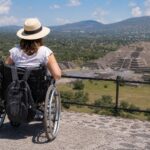
    Mexico makes strides in allowing disabled tourists enjoy its major sites. (Illustrative image generated with AI)

    Legislative Push

    In February 2026, lawmakers in the Chamber of Deputies introduced legislation that would create a public registry of accessible tourism providers under Mexico’s National Tourism Registry. The proposed rules — put forward by Morena legislator Magda Erika Salgado Ponce — would require certified providers to document their accessibility features by disability type, covering physical, visual, hearing, and cognitive conditions. The initiative also seeks to ensure that travelers with disabilities can access lodging, restaurants, transportation, and recreational areas under the same conditions as anyone else.

    Mexico’s current Sectoral Tourism Program for 2025–2030 includes accessibility goals, and the country ratified the UN Convention on the Rights of Persons with Disabilities in 2007. But critics note that formal commitments have rarely translated into on-the-ground results.

    Quintana Roo Leads on Beaches

    The Caribbean coast has moved further than most regions. In Quintana Roo, Playa Delfines in Cancún has become a widely cited example of inclusive beach infrastructure, with adapted access, amphibious wheelchairs, and trained staff. Playa Fundadores in Playa del Carmen has added designated wheelchair spaces, signage, and shaded accessible zones. The beach towns of Mahahual and Cozumel have made similar investments.

    A Cancún-based operator called Cancún Accesible has been working in the space for more than 15 years, offering wheelchair-accessible van transport from the airport, adapted tours to sites including Chichén Itzá and Tulum, and equipment rentals ranging from beach wheelchairs to oxygen systems. The company also runs a program called Tour Con Causa, through which local residents with disabilities can join a tourist’s excursion, at no cost to them, if the traveler consents.

    Major resorts in the region, including Hotel Xcaret México and the Hyatt Ziva Cancún, have added adapted rooms, staff training, Braille menus, and digital assistance tools. The Museo Maya de Cancún has ramps, elevators, and some sign-language guided tours. Archaeological sites including Tulum and San Gervasio on Cozumel have introduced flatter pathways and adapted information modules, though terrain remains a practical challenge at many sites.

    Mexico City and Beyond

    In Mexico City, accessible tourism has progressed through a combination of museum upgrades, cultural routes with sign-language guides, and improvements on some Metro lines. The Museo Frida Kahlo in Coyoacán is wheelchair accessible, and Chapultepec Park, one of the largest urban green spaces in Latin America, has added ramps and paved paths. The Anthropology Museum — arguably the country’s most important — is accessible via Metrobús.

    In San Luis Potosí, the municipal government released an accessible tourism guide in late 2025, the product of four years of work. Sites were evaluated using the international ISO 21902 standard for accessible tourism, with assessments conducted in collaboration with residents with disabilities and the local DIF (Mexico’s family welfare agency). City officials described it as a model they hope other Mexican municipalities will replicate.

    In Ensenada, Baja California, the hotel industry association president announced in April 2026 the development of a Sensory Tourism Route — a circuit designed to integrate accessibility across the full travel chain, including nature experiences, gastronomy, and lodging. Andrés Martínez Bremer, president of Ensenada’s hotel association, noted that inaccessibility directly limits the competitiveness of tourist destinations and that the industry needs to move from symbolic gestures to verifiable, measurable standards.

    Where Yucatán Fits

    In Yucatán, the work is largely in the hands of individuals rather than institutions. Progreso became the first disability-inclusive beach in the state after installing adapted beach equipment and a boardwalk accessible to mobility device users. And in Mérida, Raúl Espejo Andrade has spent nine years building a small but specialized ecotourism operation called Aguas Sagradas Expeditions that takes travelers with a wide range of disabilities — including quadriplegia — into cenotes, caves, and jungle terrain south of the city.

    Espejo, originally from Jonacatepec, Morelos, came to the work after noticing that the adaptive tourism options he was seeing internationally had no equivalent in Mexico. Working with his daughter Saknité, who is certified in technical rescue and diving, he designs each tour around the individual traveler’s needs, using professional-grade equipment and conducting a full assessment before every outing. Tours cover cenotes, archaeological zones, beaches, and nature reserves in the communities of Abalá, Telchaquillo, and Tecoh. Groups are private and family-based, allowing for the flexibility that one-size-fits-all tours can’t provide.

    His answer to why such experiences are possible when most operators don’t offer them is the same one he gives to clients who assume the answer will be no: there are no limits.


    At a Glance: Aguas Sagradas Expeditions

    • Operator: Raúl Espejo Andrade and Saknité Espejo
    • Address: Calle 57 #588-D x 78 y 76, Centro, Mérida
    • Phone: (999) 290-6751
    • Activities: Cenote tours, rappelling, snorkeling, cave exploration, jungle bike tours
    • Specialties: Inclusive tours for travelers with motor and other disabilities; private and family tours
    • Areas visited: Abalá, Telchaquillo, Tecoh, and surrounding communities south of Mérida
    • Email: aguas.sagradas@yahoo.com.mx

    With Information from Diario de Yucatán