
Author: MxTrib Staff

  • What the Forecasters Are Saying About the 2026 Hurricane Season

    What the Forecasters Are Saying About the 2026 Hurricane Season

    Forecasters have weighed in on the 2026 hurricane season. File photo

    Hurricane season is still weeks away, but the major forecasting organizations have already weighed in — and most of them are telling a similar story. For the Atlantic basin, 2026 looks to be a calmer-than-average year. Mexico’s Pacific coast, on the other hand, is shaping up to be busier.

    Here’s a look at what each of the major forecasters has put out so far.

    Mexico’s Weather Service: Pacific Heats Up, Atlantic Quiet

    Mexico’s National Meteorological Service (SMN), part of the national water agency Conagua, released its seasonal outlook this week with numbers that stand out for one reason: the Eastern Pacific is forecast to far outpace the Atlantic.

    On the Pacific side, the SMN is calling for 18 to 21 named systems in total, including nine to 10 tropical storms, five or six Category 1-2 hurricanes, and four or five major hurricanes of Category 3 or higher. That’s a notably busy outlook for the coast that runs down Mexico’s Pacific flank — Jalisco, Sinaloa, Guerrero, and the waters off the Yucatán Peninsula’s opposite shores.

    For the Atlantic, the picture is far more subdued. The SMN is forecasting 11 to 15 total systems, with seven to eight tropical storms, three to five lower-category hurricanes, and just one or two major storms. For residents and visitors on the Peninsula — from Progreso to Cancún to Tulum — that means a season that looks less threatening on paper, though that’s never a guarantee.

    For context, last year the Atlantic produced 13 named storms and five hurricanes, four of which reached major status, including the catastrophic Hurricane Melissa, which slammed Jamaica as a Category 5 storm before the World Meteorological Organization retired its name.

    Colorado State University: El Niño in the Driver’s Seat

    The first major U.S. outlook came April 9 from Colorado State University’s Department of Atmospheric Science, which has been issuing seasonal hurricane forecasts since 1984. Its team called for 13 named storms, six hurricanes, and two major hurricanes in the Atlantic — slightly below the 30-year average of 14 named storms, seven hurricanes, and three major storms.

    The main reason, according to CSU, is the anticipated development of El Niño. The Pacific is currently in weak La Niña conditions, but that pattern is expected to shift to El Niño — possibly a moderate or strong one — right at the season’s peak from August through October. El Niño increases upper-level wind shear across the Atlantic, which tears developing storms apart before they can organize.

    The probability of a major hurricane tracking through the Caribbean is put at 35% this season, well below the historical average of 47%. Still, CSU’s researchers were careful to note that their April forecast is the least reliable of the updates they’ll issue, and that “it only takes one storm near you to make it an active season for you.”

    AccuWeather and The Weather Company: Watching for a Super El Niño

    Other forecasting groups tracked closely with CSU’s assessment. AccuWeather and The Weather Company, along with its partner Atmospheric G2, both called for a below-average Atlantic season, again pointing to El Niño as the dominant factor.

    What sets the 2026 outlook apart is the possibility — estimated at roughly 15% — of a so-called Super El Niño, in which Pacific water temperatures run more than 2 degrees Celsius above normal. If that scenario develops late in the season, activity could pick up in the fall months. AccuWeather forecaster Paul Pastelok noted the transition to El Niño could arrive as early as June, unusually early for a pattern that typically kicks in during autumn.

    The Bottom Line

    The consensus going into 2026 points toward a below-average Atlantic hurricane season, shaped largely by El Niño’s suppressing effect on storm formation. Mexico’s Pacific coast faces a more active outlook. NOAA, the U.S. government’s main forecasting agency, is expected to release its own seasonal prediction in late May.

    As with every season, forecasters are quick to remind residents that the numbers are probabilities, not promises. Preparation along the Yucatán Peninsula’s coasts remains essential regardless of where the seasonal totals land.

    2026 Hurricane Season at a Glance

    • Atlantic season runs June 1 – Nov. 30; Eastern Pacific opens May 15
    • SMN Atlantic forecast: 11-15 named systems, 1-2 major hurricanes
    • SMN Eastern Pacific forecast: 18-21 named systems, 4-5 major hurricanes
    • Colorado State University Atlantic forecast: 13 named storms, 6 hurricanes, 2 major
    • El Niño development — possibly a “Super El Niño” — is the key variable to watch
    • Caribbean major hurricane probability: 35% (historical average: 47%)
    • NOAA’s outlook expected in late May

    Source: Servicio Meteorológico Nacional / Colorado State University / AccuWeather

  • Mexico Workers Lost Ground on Taxes in 2025, OECD Finds
    Mexico Workers Lost Ground on Taxes in 2025, OECD Finds

    Working in Mexico are losing ground to taxes, a new study finds. File photo

    Mexican workers saw their buying power shrink last year even as their nominal wages rose, according to a new report from the Organization for Economic Co-operation and Development. The finding places Mexico among a small group of countries where labor taxes grew faster than wages in 2025 — a dynamic that economists say quietly erodes living standards without making headlines.

    The OECD’s annual Taxing Wages report, released this week, tracks what workers across its 38 member countries actually take home after income taxes and social security contributions. For Mexico, the picture for 2025 was a net real income loss of 2.4% — meaning the average worker ended the year with less purchasing power than they started with, despite earning more pesos on paper.

    Mexico was one of only seven OECD nations where that happened. The others were Spain, Austria, Estonia, Germany, South Korea, and the United Kingdom. Estonia led the group with an 11.5% real income decline, followed by the United Kingdom at 2.7%. Mexico came in third.

    How the Tax Wedge Works

    The report’s central measure is the “tax wedge” — the gap between what an employer pays to hire someone and what that worker actually takes home. It combines income tax and Social Security contributions from both the employee and the employer, then subtracts any cash benefits the worker receives.

    For context, Mexico’s overall tax wedge remains well below the OECD average. In 2024 — the most recent year with full comparative data — a single worker without children in Mexico faced a tax wedge of about 20.9%, compared to the OECD average of 34.9%. Belgium topped the list at over 52%, followed by Germany and Austria.

    So Mexico isn’t taxing workers heavily in absolute terms. The problem identified in the 2026 report is a different one: the rate at which taxes increased in 2025 exceeded the rate at which wages grew. When wages rise, but tax brackets don’t adjust proportionally for inflation, workers drift into higher effective tax rates — a phenomenon sometimes called “fiscal drag.” That’s what happened in Mexico last year.

    Low Wages Compound the Problem

    The real-income squeeze matters more in Mexico because baseline wages are already modest. As covered previously on Yucatán Magazine, wage inequality in the state remains stark, with the average statewide salary around 7,390 pesos (about US$370) per month in 2024 — well below what researchers estimate a family needs for basic necessities.

    At those income levels, even a modest erosion in purchasing power hits harder than it would in a higher-wage economy. A 2.4% real decline on a 7,000-peso monthly salary is roughly 170 pesos (about US$8.50) — not trivial for a household already stretched thin.

    The Broader Picture

    The news wasn’t all grim globally. The OECD found that in 28 of its 38 member countries, post-tax real incomes rose in 2025, as wage growth outpaced tax increases in most places. And across the full OECD, effective tax rates rose for all eight household types the report examines — the fourth consecutive year of increases for single workers — though the increases were modest in most cases.

    Mexico’s tax-to-GDP ratio, which captures the overall burden relative to the size of the economy, remains among the lowest in the OECD at around 17% of GDP, far below the OECD average of roughly 34%. In that sense, the structural tax burden on Mexicans is light. But as the Taxing Wages 2026 report makes clear, the direction of travel in 2025 worked against workers — and that’s the number that showed up in people’s wallets.

    At a Glance

    • Mexico was one of 7 OECD countries where taxes on wages grew faster than wages in 2025
    • Workers lost an estimated 2.4% in real purchasing power after taxes last year
    • Mexico’s tax wedge for a single worker: ~20.9% (OECD average: 34.9%)
    • Countries with higher real-income losses: Estonia (11.5%), United Kingdom (2.7%)
    • Mexico’s tax-to-GDP ratio remains among the lowest in the OECD at ~17% of GDP
    • 28 of 38 OECD countries saw post-tax real incomes rise in 2025
  • Gunman Kills Canadian at Teotihuacán, 13 Injured
    Gunman Kills Canadian at Teotihuacán, 13 Injured

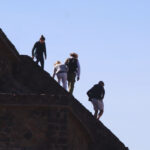
    Tourists climb the Pyramid of the Moon in Teotihuacan in 2025.
    Photo: Carlos Rosado van der Gracht / Yucatán Magazine

    A gunman opened fire Monday at the ancient pyramids of Teotihuacán, killing a Canadian woman and wounding 13 others at one of Mexico’s most visited archaeological sites before turning the weapon on himself.

    The shooting happened around 11:30 a.m. at the Pyramid of the Moon, roughly 50 kilometers (30 miles) northeast of Mexico City. According to a tour guide who spoke to the Associated Press anonymously for safety reasons, the man was standing on the pyramid’s platform when he began firing upward at tourists. As people scrambled to descend the steep stone steps, he turned and continued shooting at them.

    Witnesses described scenes of panic. Tim Chung, an American tourist visiting from Seattle, told reporters he saw a person fall from one of the viewing platforms, then heard a shot, then another fall. “I knew something bad was happening,” Chung said. A Vancouver resident named Brenda Lee, who was near a vendor’s stand when she heard what she thought were firecrackers, got a swift reality check. “Somebody asked, ‘Was that gunfire?’” she told CBC News. “And the vendor said: ‘Yes, that’s gunfire — run.’”

    Local prosecutors identified the gunman as Julio Cesar Jasso Ramirez, a Mexican national, who died from a self-inflicted gunshot wound. Security officials recovered a firearm, a knife, and live cartridges at the scene.

    Among those hospitalized were six Americans, three Colombians, two Brazilians, one Russian, and a Canadian. Mexico’s Secretary of Government said eight people remained hospitalized Monday evening.

    Canada’s Foreign Affairs Minister Anita Anand confirmed that one Canadian was killed and another wounded. “My thoughts are with their family and loved ones,” Anand wrote on social media.

    President Claudia Sheinbaum said she was in contact with the Canadian Embassy and directed federal, state, and local authorities to respond and investigate. Mexico State Gov. Delfina Gómez Álvarez said security forces would maintain a presence at the site. By late Monday, local officials described the archaeological zone as “calm and under control.”

    World Cup Timing Adds Scrutiny

    The attack lands at a sensitive moment. Mexico is co-hosting the 2026 FIFA World Cup alongside the United States and Canada this summer, and the prospect of millions of international visitors has brought renewed attention to public security. Teotihuacán, a UNESCO World Heritage Site, drew more than 1.8 million international visitors last year and is considered one of the country’s flagship tourist destinations.

    The site itself has been a cultural touchstone for tourists across the Americas and beyond. Built by three successive ancient civilizations, its two towering pyramids — the Pyramid of the Sun and the Pyramid of the Moon — attract visitors year-round, particularly during the spring equinox.

    Canada’s travel advisory for Mexico urges travelers to exercise a high degree of caution “due to high levels of criminal activity and kidnapping.” That guidance was last updated March 31, weeks before Monday’s attack.

    Authorities said the investigation is ongoing.

    At a Glance

    • What: Shooting at the Pyramid of the Moon, Teotihuacán archaeological site
    • When: Monday, April 21, around 11:30 a.m. local time
    • Dead: 1 Canadian woman; gunman (self-inflicted)
    • Injured: 13 total, including 6 Americans, 3 Colombians, 2 Brazilians, 1 Russian, 1 Canadian
    • Gunman: Identified as Julio Cesar Jasso Ramirez, Mexican national
    • Site: UNESCO World Heritage Site, ~50 km (30 miles) northeast of Mexico City; 1.8 million international visitors in 2024
    • Status: Site secured; federal, state, and local investigation underway

    Source: CNN, CBC News, PBS/AP

  • 2 US Embassy Officials Die in Chihuahua Crash After Drug Lab Raids
    2 US Embassy Officials Die in Chihuahua Crash After Drug Lab Raids

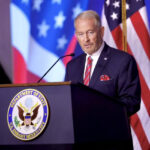
    Ronald Johnson, United States Ambassador to Mexico. Photo: Special

    A car crash in the northern Mexican state of Chihuahua on Sunday killed two U.S. Embassy instructors and two members of a Chihuahua state law enforcement agency, just hours after a joint operation dismantled a series of clandestine methamphetamine laboratories in the area.

    The four men were traveling in a convoy returning from the municipality of Morelos when the lead vehicle skidded off the road and plunged into a ravine on the Chihuahua–Ciudad Juárez highway. Chihuahua state Attorney General César Jáuregui Moreno confirmed the deaths at a Sunday press conference.

    The American victims were identified only as “instructor officers” — advisers embedded in a bilateral training program between the U.S. Embassy and Mexican law enforcement. Their names have not been publicly released. Jáuregui identified the two Mexican officials as Pedro Román Oseguera Cervantes, director of the state’s Agencia Estatal de Investigación, and his bodyguard, Manuel Genaro Méndez Montes.

    A Rare Joint Operation

    The crash followed a two-day operation on Friday and Saturday in which Chihuahua state investigators and Mexican military forces, working together with U.S. Embassy personnel, raided six clandestine synthetic drug laboratories hidden in the mountainous terrain between the towns of Guachochi and Morelos, in the rugged southwest corner of the state near the Sinaloa border. Authorities described the operation as the result of a three-month investigation. The facilities were reportedly divided into multiple sections, equipped with ovens, gas cylinders, and on-site campgrounds.

    The arrangement reflected a broader pattern of U.S.-Mexican security collaboration that has gained momentum under Mexican President Claudia Sheinbaum. The two governments have expanded joint training programs and intelligence-sharing in recent months, with U.S. officials saying the relationship has reached what they call an “unprecedented level” of cooperation. Chihuahua, which borders Texas and New Mexico, has long been one of the states most affected by drug cartel activity.

    Ambassador Responds

    U.S. Ambassador Ronald Johnson addressed the deaths in a post on X, calling them “a tragic loss” and honoring the victims for their commitment to “confronting one of the greatest challenges of our time.”

    “This tragedy is a solemn reminder of the risks faced by those Mexican and U.S. officials who are dedicated to protecting our communities,” Johnson wrote. “It strengthens our resolve to continue their mission and advance our shared commitment to security and justice.”

    The Chihuahua state attorney general’s office also issued a statement mourning Oseguera Cervantes and Méndez Montes, praising their “bravery, dedication and commitment to keeping our state safe.” As of Sunday evening, authorities had not disclosed a cause for the accident.

    The deaths come at a fraught moment in U.S.-Mexico relations. The Trump administration has pushed hard for visible results on drug interdiction and cartel disruption, linking progress on security cooperation to trade negotiations under the United States-Mexico-Canada Agreement. Mexico’s government has responded with a series of high-profile operations, including the February killing of Jalisco New Generation Cartel leader “El Mencho,” which drew praise from U.S. officials even as it set off waves of retaliatory cartel violence across several states.

    The causes of the Sunday crash are under investigation.


    At a Glance

    • 4 killed: 2 U.S. Embassy instructors, 2 Chihuahua state agents
    • Crash occurred on the Chihuahua–Ciudad Juárez highway on Sunday, April 19
    • Victims were returning from a drug lab operation in the municipality of Morelos, Chihuahua
    • 6 clandestine methamphetamine labs dismantled over 2 days following a 3-month investigation
    • Mexican officials killed: AEI Director Pedro Román Oseguera Cervantes and Officer Manuel Genaro Méndez Montes
    • U.S. victims not publicly identified; described as training advisers
    • Cause of accident still under investigation

    Source: El Universal, CNN

  • Backlash Follows When Juárez Mayor Arrests Artists Behind an Unflattering Mural

    Juarez mural
    A satirical mural in Ciudad Juárez depicts the city’s mayor with the face of the artist who got the artists arrested. The mural was painted over by authorities. Photo: Social media

    A satirical mural in Ciudad Juárez depicting the city’s mayor with the face of a pig probably would have been seen by a few thousand commuters and forgotten. Then the mayor’s police force arrested the artists, and things got a lot more interesting.

    Officers detained Miguel Martínez — known as Mick Martínez — and his collaborator Chuchito Psy on April 11 in the Las Torres neighborhood. The two had painted Mayor Cruz Pérez Cuéllar, a Morena party stalwart, on the wall of a private home with the nose, mouth, and ears of a pig. It was cheeky. It was local. It was, until the police showed up, not particularly newsworthy.

    Then came the arrest, the outrage, and the national spotlight — none of which the mayor appears to have anticipated.

    The Official Story

    Pérez Cuéllar, facing reporters at a news conference, denied ordering the arrest. He said he found out about it later that day and immediately called the city’s public safety secretary to have everyone released. The official explanation for the detention? The artists were drinking in public.

    Few people bought it.

    “Freedom of expression has limits,” the mayor said. The MRK Crew, a local graffiti collective, said plainly that Martínez was arrested for the mural’s political content, full stop. Witnesses said the artists had permission from the homeowner. The drinking story quietly fell apart under scrutiny.

    The Backlash

    Before city workers could slap a coat of paint over the mural — which they did, without explanation — photos and video had already escaped into the wild. The arrest itself was the accelerant. What might have faded quietly off a wall in south Juárez was suddenly ricocheting across Mexican social media, landing in news feeds from Tijuana to Cancún.

    The mayor’s “freedom of expression has limits” line became an instant meme. Users gleefully paired it with the image of the pig-faced portrait, sharing it in exactly the quantities and places Pérez Cuéllar had hoped to avoid. The Streisand Effect — the phenomenon where trying to suppress something makes it far more visible — claimed another victim.

    Opposition politicians sharpened their knives. PAN leaders in Chihuahua called the arrest illegal and the mural’s erasure an open act of censorship. State PAN leader Daniela Álvarez pointed out that the artists had the property owner’s blessing, which made the whole intervention even harder to spin. Art collectives added their voices. So did just about everyone on the internet with an opinion about free speech, which, it turns out, is a lot of people.

    The episode landed with particular awkwardness for Morena, a party that has made no small amount of noise about democratic values and open government at the federal level. A pig caricature on a wall in Juárez became, somehow, a national conversation about all of it.

    This Is Kind of Mexico’s Thing

    Political satire painted on walls is not exactly a foreign concept in Mexico. The country invented modern political muralism. Diego Rivera spent decades making powerful people uncomfortable with a paintbrush, and his legacy echoes in the street art found on city walls across the country today. Mick Martínez and Chuchito Psy were working in a tradition that predates the mayor’s party by about a century.

    Article 6 of Mexico’s constitution protects freedom of expression. The exceptions are narrow — content that incites crime or disturbs public order. A pig face on a politician doesn’t come close. Juárez is a reminder that constitutional guarantees don’t always survive contact with a thin-skinned local official.

    As of this writing, no charges have been filed. The wall is blank. The mural lives on in every screenshot.

    Source: Latinus

    At a Glance

    • Artists detained: Miguel “Mick Martínez” Martínez and Chuchito Psy
    • Date of arrest: April 11, 2026
    • Location: Las Torres neighborhood, Ciudad Juárez, Chihuahua
    • Mayor involved: Cruz Pérez Cuéllar, Morena party
    • Official reason for arrest: Public consumption of alcohol
    • Artists’ claim: Detained for political content of the mural
    • Outcome: Artists released same day; mural painted over
    • No charges filed as of publication