Author: MxTrib Staff

  • Mexico’s London Embassy Scandal: A Ghost Company, Diverted Funds, and 40 Ignored Warnings

    Mexico’s London Embassy Scandal: A Ghost Company, Diverted Funds, and 40 Ignored Warnings

    A former Mexican ambassador to the United Kingdom has formally accused a network of diplomats and foreign ministry officials of running a corruption scheme that diverted public funds through a fictitious cleaning company — and claims her warnings went unanswered for more than a year.

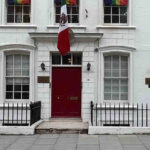
    The Mexican Embassy in London. File photo

    Josefa González-Blanco Ortiz-Mena, who served as Mexico’s ambassador in London from March 2021 until January 2026, filed an administrative handover report in February accusing former Administrative Attaché Érika Pardo Rodríguez of operating what the document describes as a “power fiefdom” within the embassy. A copy of the report was obtained by Aristegui Noticias.

    The Shell Company

    At the center of the alleged scheme is a firm called Easy Steps Cleaning Service LTD, which the report identifies as a shell company. According to the filing, the original contract with Easy Steps was signed in January 2021 by then-chargé d’affaires Aureny Aguirre O. Sunza. Over time, payments to the firm totaled approximately £140,950 — roughly MX$4 million (about US$197,000) — but the money appears to have gone elsewhere.

    González-Blanco says she and embassy staff personally verified that the bank accounts tied to Easy Steps actually belonged to Pardo Rodríguez and her daughter, spread across four accounts at HSBC, Wise, and Metro Bank. When staff attempted to transfer funds using the company name as the beneficiary, the bank flagged a mismatch. Substituting Pardo Rodríguez’s name resolved the alert.

    The alleged fraud didn’t stop there. The report describes doctored utility invoices — a British Gas bill for £26.37 was apparently altered to £2,026.37, with the difference deposited into a personal account. The report also accuses Pardo Rodríguez of using the credentials of former ambassador Aníbal Gómez Toledo — who left the London post in 2019 — to authorize transactions through at least late 2024, years after his departure.

    A visa sponsorship certificate was also issued in November 2024 to a person with no employment relationship to the embassy. British authorities confirmed the sponsorship, raising concerns about a possible immigration violation on top of the financial misconduct.

    A Year of Warnings

    González-Blanco says she began raising the alarm in December 2024 and followed up with formal audit requests in January 2025. Over the course of her effort to have Pardo Rodríguez removed, she sent more than 40 official communications and made two separate trips to Mexico City. Former Foreign Minister Juan Ramón de la Fuente, she states in the report, refused to meet with her on three occasions.

    The Secretaría de Relaciones Exteriores (SRE), Mexico’s foreign ministry, tells a different story. The ministry says its deputy secretary and finance chief did meet with González-Blanco, which led to a supervisory visit in June 2025 and a formal audit that same month. The SRE says that audit is still being reviewed and that administrative processes will follow as warranted.

    What is not disputed is the timeline: Pardo Rodríguez did not leave her post until Aug. 1, 2025, months after the initial complaints. González-Blanco argues the delay amounted to institutional cover.

    A financial and compliance audit conducted between 2021 and 2025 identified 74 control actions — 46 corrective and 28 preventive. As of the embassy handover in January 2026, 31 remained unresolved.

    A Complicated Exit

    The ambassador’s own departure was not without controversy. El País reported that González-Blanco faced 16 workplace harassment complaints from embassy staff, with multiple resignations dating to late 2022. The SRE noted that six formal complaints were filed against her between June 2024 and January 2025.

    González-Blanco, for her part, argues the harassment allegations were a retaliation strategy by those she had accused of corruption. President Claudia Sheinbaum, asked about the case in early 2026, said the ambassador’s conduct had been reviewed and found acceptable.

    The former ambassador has been replaced by Alejandro Gertz Manero, former attorney general of Mexico.

    At a Glance

    • Former Ambassador Josefa González-Blanco Ortiz-Mena served in London from March 2021 to January 2026
    • The alleged scheme centered on shell company Easy Steps Cleaning Service LTD
    • Estimated funds diverted: £140,950 (roughly MX$4 million / US$197,000
    • González-Blanco sent 40+ official warnings; the SRE did not remove the accused official until August 2025
    • An internal audit found 74 compliance issues; 31 were unresolved at the time of the ambassador’s departure
    • A fraudulent visa sponsorship was confirmed by British authorities
    • The former ambassador herself faced 16 workplace harassment complaints filed by staff
    • She has been replaced by former Attorney General Alejandro Gertz Manero

    Source: Aristegui Noticias / Grupo Animal

  • Tijuana Beyond the Border: What Travelers Actually Need to Know
    Tijuana Beyond the Border: What Travelers Actually Need to Know

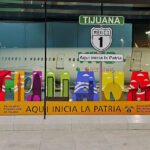
    Tijuana reality is more nuanced than either the old reputation or the new boosterism suggests. File photo

    Tijuana has always been a city that people think they understand before they’ve ever set foot there.

    For generations of Americans, the mental image was fixed: a rowdy border town of cheap drinks, questionable nightlife, and little else. That picture was always incomplete. Today, it’s also increasingly outdated, though the full truth about Tijuana is more nuanced than either the old reputation or the new boosterism suggests.

    Start with the history. Tijuana found its footing during Prohibition, when Americans flooded south looking for legal liquor and jazz. It was a city born of appetite and proximity, and that energy never really left. What did emerge alongside it was something genuinely surprising: culinary innovation. The Caesar salad was invented here in the 1920s by Italian immigrant Caesar Cardini, and Tijuana’s craft beer culture predates the American craze by decades, with Tecate — brewed just 45 minutes east — among its most famous exports.

    The modern city has even more to offer. The Valle de Guadalupe wine country to the south has become one of Mexico’s most celebrated culinary destinations, drawing serious food and wine travelers from across North America. Baja-style fish and shrimp tacos — the genuine article — are worth the trip on their own. The city has a thriving arts scene, a pro baseball team, and direct beach access. Increasingly, travel content creators with serious followings are documenting a Tijuana that feels urban, energetic, and genuinely fun. They’re not wrong.

    But let’s be honest about the other side of the ledger.

    Tijuana recorded roughly 1,600 homicides in 2024 — the highest total of any city in Mexico, and a rate of nearly 96 per 100,000 residents. That puts it among the most violent cities in the world by that measure, not just in Latin America. For context, Chicago — a city Americans often cite as dangerously violent — has a homicide rate closer to 18 per 100,000. It’s also worth noting that Tijuana’s overall crime index, according to Numbeo, sits at 82.47 — significantly higher than Cancún, which registers at 54.61 and is itself considered one of Mexico’s more dangerous tourist destinations. In other words, Tijuana isn’t just edgier than the resort towns most Americans visit — it’s in a different category entirely.

    The city is also sharply divided by neighborhood in ways that Google Maps won’t always warn you about. Areas like Zona Río, Avenida Revolución, and Playas de Tijuana are where tourists tend to stay, eat, and move around relatively comfortably. A few blocks in the wrong direction can change the equation entirely. This is not a city for aimless wandering. It rewards visitors who do their research and stay oriented.

    Practical advice from people who know the city well: use Uber rather than unmarked taxis, avoid displaying expensive items in public, skip the bridges near the Tijuana River after dark, and don’t let a great evening push you into unfamiliar neighborhoods late at night. These aren’t extraordinary precautions — they’re the same common sense that applies in any major city with economic inequality and a visible criminal underclass. Tijuana simply has less margin for error than most.

    None of this should stop a curious, informed traveler from going. The food alone makes a compelling argument, and the region’s cultural richness — from the wine valleys to the Pacific coast — is genuine. But the travelers who have the best experiences in Tijuana tend to be the ones who went in clear-eyed, not the ones who were told there was nothing to worry about.

    Know what you’re walking into. Then go enjoy the tacos.

  • Masculinity Event Comes to Guadalajara — and Stirs Debate

    Masculinity Event Comes to Guadalajara — and Stirs Debate

    Fearless Congress
    A gathering billed as Latin America’s largest masculinity event has sparked a broader debate about how Mexican society thinks about men, manhood, and the weight of tradition. Collage from the organizers.

    A masculinity conference billed as the largest of its kind in Latin America is coming to Guadalajara this month — and it has sparked a broader debate about how Mexican society thinks about men, manhood, and the weight of tradition.

    Fearless Congress 2026 runs April 17–19 at the Santuario de los Mártires in Tlaquepaque, a suburb of Guadalajara, Jalisco. Organizers expect more than 10,000 attendees. Tickets range from MX$1,450 to MX$7,490 (about US$82–US$422).

    The speaker lineup includes Canadian psychologist Jordan Peterson, retired Spanish footballer Carles Puyol, Spanish psychologist Isabel Rojas Estapé, Catholic speaker Christopher West, and Mexican actor and activist Eduardo Verástegui, who has publicly supported U.S. President Donald Trump.

    The event is promoted as addressing a male identity crisis. “We are living through a silent crisis,” reads the Fearless website: “men confused, empty and disconnected from their purpose.” Andrés Villaseñor, the organizer, says men have “lost their way” and face depression, addiction, and lack of purpose — and must “return to the original plan” to become “defenders, protectors and providers.”

    The event drew controversy before it opened. Government logos from Jalisco, Guadalajara, and Zapopan appeared on the Fearless website, suggesting official backing, though they were removed by April 7. The nature of any institutional support has not been publicly confirmed. The sponsoring governments all belong to Citizens’ Movement (MC), a party nominally classified as center-left and social-democratic, but Jalisco has long been a socially conservative state with deep Catholic roots, and critics questioned whether public platforms should be used to promote an event with such a specific ideological and religious focus.

    Critics have also linked the conference to the broader “manosphere” — a network of online communities that, according to the United Nations, promotes masculinity while trivializing gender-based violence and reinforcing discriminatory stereotypes. The UN has labeled the manosphere a serious threat to gender equality.

    Machismo and Its Discontents

    The timing puts a spotlight on something Mexico has been wrestling with for decades. Machismo — a cultural code built around dominance, stoicism, and male authority — remains one of the more persistent forces in Mexican social life. Its roots trace back to the Spanish conquest, when colonial structures combined with Catholic doctrine to lock in rigid expectations for men and women alike.

    At its most benign, the code encourages men to work hard, protect their families, and carry their burdens without complaint. At its most destructive, it has been linked to elevated rates of domestic violence, femicide, mental health struggles among men, and the systematic exclusion of women from economic and political life. Mexico records roughly 10 femicides per day, according to government data — a figure that advocates tie directly to entrenched gender norms.

    Those norms are shifting, if slowly. Feminist marches across Mexico have brought sustained public pressure, and President Claudia Sheinbaum’s election in 2024 as the country’s first female head of state was widely seen as a cultural turning point. Women now hold roughly half the seats in Mexico’s Senate and nearly half in the Chamber of Deputies.

    Yet legislative progress and cultural change don’t always move together. Groups like Gendes A.C. in Mexico City have worked for years to reach men directly — running Alcoholics Anonymous-style meetings to help men understand and confront how gender-based violence operates. Their director has put it plainly: “A macho in rehabilitation is a man in deconstruction.”

    2 Visions of Manhood

    What makes Fearless interesting — and contested — is that it enters this debate from the opposite direction. Rather than interrogating machismo, it frames traditional masculinity as something worth recovering. Critics say that framing glosses over the harm those traditional roles have caused, particularly to women. Others argue that addressing male alienation and mental health shouldn’t be dismissed simply because it comes wrapped in conservative theology. Men in Mexico — and across Latin America — do face real crises: higher rates of suicide than women, lower rates of therapy use, and persistent pressure to perform a version of strength that leaves little room for vulnerability.

    What’s clear is that the conversation isn’t going away. Whether the forum is a feminist rally on the Paseo de Montejo, a therapy circle in Roma, or a weekend conference in Jalisco, more and more Mexicans are asking the same question from different angles: What should it actually mean to be a man here?

    That debate, for better or worse, just got a very large stage.

    At a Glance: Fearless Congress 2026

    • Dates: April 17–19, 2026
    • Venue: Santuario de los Mártires, Tlaquepaque, Jalisco
    • Expected attendance: 10,000+
    • Ticket prices: MX$1,450–MX$7,490 (approximately US$82–US$422)
    • Speakers include Jordan Peterson, Carles Puyol, Isabel Rojas Estapé, Christopher West, Eduardo Verástegui
    • More information: fearlessmasculinity.com

    Sources: El Occidental, Mexico News Daily

  • Truckers, Farmers Blockade Mexico’s Highways, Disrupting Holiday Traffic

    Truckers, Farmers Blockade Mexico’s Highways, Disrupting Holiday Traffic

    Truckers in Mexico declare a massive blockade for Easter Monday 2026.

    Hundreds of truckers and farm workers fanned out across Mexico early Monday morning, setting up blockades on major highways in at least 20 states to demand better security on the roads and fairer conditions for agricultural producers — and putting a difficult cap on the Semana Santa holiday weekend for thousands of returning vacationers.

    The action was organized by two national groups: ANTAC, the National Association of Transporters, and the FNRCM, the National Front for the Rescue of the Mexican Countryside. Both confirmed the protest in a joint statement Sunday, saying the federal government had failed to deliver meaningful solutions after talks with a senior aide to President Claudia Sheinbaum on April 1 produced no agreements.

    Blockades began intensifying at around 7 a.m. and targeted high-traffic corridors, including the Mexico City–Querétaro, Mexico City–Puebla, and Mexico City–Guadalajara autopistas, as well as access roads into Nuevo Laredo near the U.S. border. Customs facilities and border crossings were also expected to be affected.

    ANTAC leader David Estévez Gamboa had specifically chosen Easter Monday to minimize disruption to holiday travelers. “We want people to be able to go on vacation, we’re not irresponsible,” he said in a video message before the protest. “But after, on April 6, we have the need to protest.” Despite that gesture, the timing still caught tens of thousands of people heading home after the school break.

    The action is not the first of its kind. A similar mega-blockade in November 2025 shut down highways across more than half of Mexico’s states for several days, costing an estimated MX$3 billion to MX$6 billion (roughly US$163 million to US$327 million) in losses according to business groups. That standoff ended after marathon negotiations produced preliminary agreements — agreements that protesters now say the government has not kept.

    Truckers cite a dangerous working environment as the core of their grievance. ANTAC reports between 54 and 70 cargo robberies per day on Mexican highways, a figure the federal government disputes. Protesters also accuse state, municipal, and even National Guard officers of participating in extortion at roadside checkpoints. A Yucatán Magazine report on the Mérida-Cancún highway showed how truckers in the Peninsula have faced similar pressures for years, with rising tolls and security gaps squeezing commercial drivers on one of the country’s most expensive road corridors.

    Farmers come to the protest with their own list of grievances: unfair grain prices, diesel costs, potholed roads, what they describe as predatory lending, and competition from subsidized agricultural imports. The FNRCM also wants the government to scrap what it considers a punishing tax on diesel fuel.

    The government’s response has been firm. Mexico’s Interior Ministry, known as Segob and headed by Rosa Icela Rodríguez Velázquez, issued a statement Sunday night saying flatly that there was “no reason” for the protest. The ministry argued that it had already dispensed MX$3.41 billion (about US$185 million) in direct payments to more than 40,000 farmers to compensate for grain price shortfalls, and that dialogue channels with both sectors remain open. In the case of Sinaloa specifically, Segob said an agreement benefiting producers in the upcoming harvest had been reached.

    “The majority of organizations have decided not to mobilize,” the ministry’s statement read. “Without any reason, there are some that maintain their position despite the fact that there are no grounds” for the action.

    President Sheinbaum, speaking at her morning press conference Tuesday following November’s blockade, pointed to government data showing a 54% drop in violent truck robberies since 2018 — an average of 14 per day in 2025, down from more than 30 per day under the previous administration. Protesters counter that underreporting is widespread and the actual numbers remain far higher.

    For travelers on Mexican highways today, officials recommend anticipating significant delays and seeking alternate routes where possible.

    More details on the megabloqueo are available from Excélsior.

    At a Glance

    • Who is protesting: ANTAC (National Association of Transporters) and FNRCM (National Front for the Rescue of the Mexican Countryside)
    • When: Monday, April 6, 2026, starting at 7 a.m.
    • Where: 20-plus states; key routes include Mexico City–Querétaro, Mexico City–Puebla, and Mexico City–Guadalajara autopistas, plus border access roads near Nuevo Laredo
    • Key demands (truckers): Permanent National Guard presence on high-crime routes; end to extortion; access to IMSS Bienestar health services; development bank loans for owner-operators
    • Key demands (farmers): Fair grain prices; diesel tax relief; repair of potholes; halt to unfair imports; elimination of predatory loan structures
    • Government position: Segob says no grounds exist for the protest; cites MX$3.41 billion in direct farm payments and active dialogue with industry groups
    • Advisories: Travelers should plan for delays and consider alternate routes

    Source: Excélsior

  • Harfuchmania Explodes Over Mexico’s Heartthrob Security Minister

    Harfuchmania Explodes Over Mexico’s Heartthrob Security Minister

    Harchufmania
    Omar García Harfuch, Mexico’s security minister, is now available as a miniature doll, a blanket or even a concha sweet bread. Photo: Social media

    Walk through almost any street market in Mexico City right now, and you’ll find him staring back at you — not from a campaign poster or a newspaper front page, but from a flannel blanket. Omar García Harfuch, Mexico’s 44-year-old Secretary of Security and Citizen Protection, has become one of the country’s most improbable pop culture phenomena, and vendors across the country are cashing in.

    The craze goes by several names — Harfuchmanía, Harfuchitos — but the basic idea is the same: the face of Mexico’s top cop has migrated from the nightly news onto cushions, towels, cardboard cutouts, plush dolls, party decorations, and AI-generated social media montages. On MercadoLibre, Latin America’s largest online marketplace, a García Harfuch blanket has ranked among the platform’s top sellers. One Mexico City factory, staffed entirely by women, has been producing more than 150 García Harfuch blankets a day, with orders arriving from the United States and Costa Rica.

    “All the ladies love him,” designer Ingrid Rebeca Sánchez told Reuters. “They want to sleep with him, they want to dry themselves off with him.”

    How Did This Start?

    The immediate spark was Feb. 22, when Mexican Army special forces raided a compound in Tapalpa, Jalisco, and killed Nemesio “El Mencho” Oseguera Cervantes, the founder of the Jalisco New Generation Cartel (CJNG) and Mexico’s most-wanted drug lord. The operation — backed by U.S. intelligence — was widely credited to García Harfuch, who oversees national security under President Claudia Sheinbaum.

    It was personal for him. In 2020, CJNG gunmen ambushed his armored vehicle on a busy Mexico City avenue, firing more than 400 bullets. He was hit 3 times and 2 of his escorts were killed. He survived and publicly blamed the cartel — and specifically El Mencho. When the operation in Jalisco succeeded, García Harfuch had, in the public imagination, closed that chapter.

    The merchandise surge was nearly immediate. Towels selling for around MX$100 (about US$6) and travel blankets for MX$180 (about US$10) began moving fast through street stalls and online platforms. By mid-March, Google Trends was recording search spikes across Guanajuato, Jalisco, the State of Mexico, and Mexico City.

    Omar García Harfuch, Mexico's security minister,
    Omar García Harfuch, Mexico’s security minister. Photo: Courtesy

    The Backstory Goes Back Further

    The current wave didn’t emerge from a vacuum. García Harfuch has been building this image for years. In 2022, Green Party lawmaker Jesús Sesma called him a “superhero” — then built a Batman-modified action figure in his likeness, which promptly went viral. The doll established a template: García Harfuch as a vigilante-style protector, a bit larger than life. Vendors are now selling that Batman doll alongside the newer “Harfuchito” plush figures, some of which depict him shirtless.

    The dolls carry their own precedent in Mexican culture. Being immortalized as a miniature figure is an honor that has traditionally gone to presidents — former President Andrés Manuel López Obrador inspired his own collectibles, the “Amlitos” — and to beloved mascots like Dr. Simi, the cartoonish giant from the Farmacias Similares pharmacy chain. Now García Harfuch has joined that company.

    There’s a political dimension, too. A December 2025 poll placed him as the leading Morena party contender for the 2030 presidential race, when Sheinbaum’s term ends, ahead of Economy Minister Marcelo Ebrard. Security analysts at México Evalúa have called him the most visible leader of Sheinbaum’s tougher-on-cartels strategy. The merch, in that light, looks less like a joke and more like an early political brand.

    A concha sweet bread is decorated in the likeness of Omar García Harfuch, Mexico’s security minister. Photo: Bestcake CDMX

    And Now, Sweet Bread

    The latest addition to the García Harfuch product universe comes from a panadería. Baker Jonathan Barrera, who runs Bestcake CDMX in the capital’s Iztapalapa borough, has been producing made-to-order conchas — Mexico’s iconic dome-shaped pan dulce — with the minister’s face molded into the sugary crust on top. He’s calling them “Harfuchas.”

    The concha, a shell-patterned sweet bread dating to the colonial era and a fixture at panaderías from Mexico City to the Yucatán Peninsula, doesn’t change much in flavor here. As our pan dulce guide explains, the classic recipe is built on butter and a crumbly sugar topping — and Barrera says he kept that intact. The design is the only thing that’s different.

    The Harfuchas sell in boxes of 6 for MX$350 (about US$19), or in a more elaborate 4-piece set for MX$370 (about US$21). They’re available by advance order only, through Bestcake CDMX’s social media accounts. Barrera handles most of the production himself, so wait times have climbed as the orders piled up.

    It’s a fitting capstone to a phenomenon that has run from army operations to street markets to breakfast tables. For a deeper look at the man behind all the merchandise, Reuters has the full profile.


    At a Glance: Harfuchas from Bestcake CDMX

    • Baker: Jonathan Barrera, Bestcake CDMX
    • Where: Iztapalapa borough, Mexico City
    • Order: By advance order only via Instagram @bestcake_cdmx; no individual pieces sold
    • Price: Box of 6, MX$350 (about US$19); box of 4 (elaborate set), MX$370 (about US$21)
    • Wait times: Variable; high demand means orders can take several days

    Source: Gastrolab, Infobae, Eje Central, Reuters