
Author: MxTrib Staff

  • Celebrity Wedding at Mexico’s ‘Desert Galápagos’ Triggers Shutdown of Protected Reserve

    Celebrity Wedding at Mexico’s ‘Desert Galápagos’ Triggers Shutdown of Protected Reserve

    A celebrity wedding in one of Mexico’s most ecologically sensitive nature reserves has set off a firestorm of criticism — and touched off a federal crackdown that closed popular natural sites just as the Semana Santa holiday season kicked off.

    The controversy centers on Alfredo Cantú, a Mexican content creator known online as “Un Tal Fredo,” who married his partner, Adrián Álvarez, at Cuatro Ciénegas, a federally protected biosphere reserve in the northern state of Coahuila. Days after the event, environmental authorities moved in and shuttered several natural areas within the reserve, citing possible irreversible ecological damage.

    Alfredo Cantú, a Mexican content creator known online as “Un Tal Fredo,” married his partner, Adrián Álvarez, at Cuatro Ciénegas, a federally protected biosphere reserve in the northern state of Coahuila. Photo: Courtesy

    Profepa, Mexico’s consumer-protection environmental enforcement agency, acting in coordination with Semarnat, the National Commission of Protected Areas, and the National Water Commission, closed the popular Río Mezquites corridor and sealed 3 water wells operating without legal permits. The agencies said the intervention was aimed at halting illegal water extraction and protecting the reserve’s fragile systems — but the timing, coming immediately after the wedding, was impossible to ignore.

    Profepa acknowledged that an event was held in the reserve and that it prompted an environmental inspection. Officials said temporary structures, artificial lighting, and heavy vehicles had been deployed in protected zones — including near gypsum dune formations and natural pozas, or spring pools, that took thousands of years to form. Dinners were reportedly held inside marble mines within the protected area. The agency stopped short of formally blaming Cantú for the damage, saying it was still evaluating the scope of the impact.

    The influencer has not commented publicly. Some of his followers pushed back on the criticism, pointing out that the same-sex wedding represented an important moment of visibility for the LGBTQ+ community. In Mexico, where marriage equality is now recognized nationally but social acceptance remains uneven, the wedding drew both admiration and scrutiny before the ecological fallout became news.

    Alfredo Cantú, a Mexican content creator known online as “Un Tal Fredo,” married his partner, Adrián Álvarez, at Cuatro Ciénegas, a federally protected biosphere reserve in the northern state of Coahuila. Photo: Courtesy

    What made the story resonate beyond celebrity gossip is where it happened. Cuatro Ciénegas is no ordinary vacation destination. Designated as a UNESCO Biosphere Reserve in 1994, the area encompasses roughly 84,347 hectares (208,425 acres) and is home to more than 500 spring pools, or pozas, packed with organisms found nowhere else on Earth. Scientists have compared it to the Galápagos Islands. Researchers describe it as having the highest level of endemic biodiversity in North America, with microbial life varying pond to pond — each pool, in effect, a small experiment in evolution. NASA has noted potential links between the basin’s microbial forms and the search for life on Mars.

    The closure landed at the worst possible moment for local business owners. The shutdown came at the start of spring break season, when Cuatro Ciénegas — also a designated Pueblo Mágico — draws its heaviest tourist traffic. Municipal president Víctor Manuel Leija Vega acknowledged that the closures hit the local economy hard, as tourism is the community’s primary source of income. Tour operators, hoteliers, and service providers were left scrambling.

    The episode has reignited a broader debate in Mexico about the tension between tourism, celebrity culture, and conservation. Profepa has been stepping up enforcement of Mexico’s protected natural areas — including along the coasts of the Yucatán Peninsula, where unauthorized development has repeatedly threatened fragile ecosystems. Environmental specialists note that even brief human intrusion in places like Cuatro Ciénegas can trigger damage that outlasts the event by decades. The combination of crowds, infrastructure, noise, and vehicle traffic can alter soil chemistry, disturb endemic species, and disrupt water systems that took geological time to develop.

    Whether Cantú’s wedding was the direct cause of the closures or whether federal authorities simply used the moment to act on preexisting violations — the three unsealed wells, for example, were already operating without permits — remains an open question. Profepa has not published a formal determination. What is clear is that the story put Cuatro Ciénegas in the national spotlight, and that a protected reserve of unique global scientific value paid a very public price for it.

    Alfredo Cantú, a Mexican content creator known online as “Un Tal Fredo,” married his partner, Adrián Álvarez, at Cuatro Ciénegas, a federally protected biosphere reserve in the northern state of Coahuila. Photo: Courtesy

    At a Glance: Cuatro Ciénegas Biosphere Reserve

    • Located in Coahuila, in northern Mexico
    • Covers approximately 84,347 hectares (208,425 acres)
    • Designated a UNESCO Biosphere Reserve in 1994
    • Home to more than 500 pozas (spring pools) with species found nowhere else on Earth
    • Contains stromatolites — ancient microbial structures rare on the modern planet
    • Classified as a Pueblo Mágico (Magical Town)
    • Tourism is the municipality’s primary economic driver

    Sources: Revista FAMA / Infobae

  • MUNAE Reborn: Mexico City’s Printmaking Museum Gets a Facelift at 40

    MUNAE Reborn: Mexico City’s Printmaking Museum Gets a Facelift at 40

    Mexico City’s Museo Nacional de la Estampa — one of the country’s premier destinations for graphic arts — is getting a significant makeover as it marks its 40th anniversary. The National Institute of Fine Arts and Literature, known as Inbal, has launched a MX$3 million (roughly US$150,000) renovation that is expected to wrap up by May 30.

    The work covers a wide range of improvements. New lighting will be installed in all exhibition halls, the facade will be repainted, and gallery floors will be replaced. Workers will also clean Vitral para el Munae, a stained-glass artwork by the late visual artist Salvador Piñoncelly, who spent more than five decades creating glass works for public buildings across Mexico. The renovation also includes carpentry and metalwork on the building’s windows, new awnings, restroom upgrades, and a redesigned ticketing area.

    MUNAE

    According to Inbal, the projects are being supervised by the Dirección de Arquitectura, the Dirección de Recursos Materiales, and Cencropam — the national center responsible for the conservation of Mexico’s movable artistic heritage.

    Munae opened Dec. 17, 1986, by presidential decree, with the stated mission of collecting, preserving, and promoting the graphic work of Mexican and foreign artists. It sits on Av. Hidalgo 39, on the Plaza de la Santa Veracruz in the capital’s historic center — a colonial-era square that also includes the Franz Mayer Museum and the Church of Santa Veracruz. The 19th-century Neoclassical building that houses the museum was remodeled at its founding to accommodate galleries while preserving its original character.

    Over nearly four decades, Munae has assembled a collection of more than 12,500 works, spanning Prehispanic clay seals, colonial-era woodcuts, lithographs from the Academy of San Carlos period, and contemporary prints. The museum has organized some 350 temporary and traveling exhibitions, making it a steady anchor in Mexico City’s cultural calendar. Among its curiosities is an 1800 Washington printing press, one of the oldest engraving machines still on display anywhere.

    MUNAE
    Mexico City’s Museo Nacional de la Estampa is getting a significant makeover as it marks its 40th anniversary celebrating graphic arts. Photo: Courtesy

    Printmaking has deep roots in Mexican artistic identity. Long before the muralist movement of the 20th century, graphic art served as a vehicle for social commentary and popular culture — most famously in the work of José Guadalupe Posada, whose skeletal caricatures helped define a national visual language. The medium later shaped artists like José Clemente Orozco and David Alfaro Siqueiros, whose graphic works are held in related collections at the nearby Museo Nacional de Arte.

    Mexico City is second only to London in total number of museums, and Munae occupies a distinctive niche in that crowded field. It’s compact by the standards of the megalopolis — a focused collection rather than an encyclopedic one — and it regularly draws visitors who want to try their hand at printmaking in its public workshop. Those interactive sessions, where visitors can carve or press their own linocut, have made it a favorite stop for travelers looking for something beyond the usual tourist circuit. For more on the capital’s museum scene, Yucatán Magazine has covered Mexico City’s National Museum of Anthropology, widely regarded as one of the world’s finest.

    The museum will remain closed during the renovation. Inbal has not announced a formal reopening event, though the May 30 target would position Munae for a summer reopening. More details are available through Inbal’s official site.


    Museo Nacional de la Estampa — At a Glance

    • Address: Av. Hidalgo 39, Plaza de la Santa Veracruz, Centro Histórico, Mexico City
    • Founded: Dec. 17, 1986, by presidential decree
    • Collection: More than 12,500 works from Prehispanic seals to contemporary prints
    • Renovation budget: MX$3 million (approx. US$150,000)
    • Projected reopening: May 30, 2026
    • Supervising agencies: Dirección de Arquitectura, Dirección de Recursos Materiales, Cencropam

    Source: Excélsior

  • Oceana Calls Gulf of Mexico Oil Spill a Transparency Crisis
    Oceana Calls Gulf of Mexico Oil Spill a Transparency Crisis

    Gulf of Mexico bill
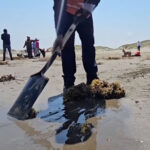
    Workers clean tar trapped in sand on a beach in Veracruz.

    Nearly three weeks after crude oil began washing up on Mexico’s Gulf Coast, the federal government still cannot say where it came from — and a major ocean conservation group says that silence is making a bad situation worse.

    Oceana, the international ocean protection organization, called on President Claudia Sheinbaum to establish transparent, binding interagency coordination mechanisms and take structural steps to ensure the Gulf of Mexico never again faces a crisis without clear responsibility, information, or accountability.

    The oil first appeared on March 2, when fishermen near the Veracruz municipality of Pajapan reported tar in the sea and on beaches. What followed was a slow-moving environmental and political emergency. More than a dozen individual spill sites have since been identified, affecting 39 communities across Veracruz and Tabasco and contaminating roughly 230 kilometers (143 miles) of shoreline.

    The oil spill in the Gulf of Mexico has so far spared Yucatán’s coast, but the ecological and political fallout is being felt across the Peninsula.

    The timing could hardly be worse for coastal communities. The Lent season is typically the most important period of the year for local fishermen, who now face contaminated nets and suspended fishing operations. Fishing cooperative leaders in Alvarado say many nets have been so saturated with tar as to be completely unusable in just a matter of days.

    Renata Terrazas, Oceana’s executive director, said the lack of government transparency is compounding the damage. “The opacity surrounding this spill generates impunity,” she said. “Without clarity about who is responsible, the causes of the accident, and the scope of the damage, it is impossible for authorities to be held accountable, design effective response strategies, or guarantee reparations to affected communities.”

    The organization went further, framing the crisis in terms that go well beyond a single incident. Oceana characterized the spill as not only a socio-environmental emergency but also a crisis of transparency and government accountability that violates the right of coastal communities to a healthy environment.

    On the question of responsibility, official accounts have shifted repeatedly. Veracruz Gov. Rocío Nahle initially suggested a natural oil seep might be to blame, then said the source was a private tanker conducting exploration activities off the Tabasco coast — a claim she later had to walk back after the navy told her that investigation findings were inconclusive. President Sheinbaum has said that Pemex, Mexico’s state oil company, is not responsible and that a criminal investigation is underway.

    Federal cleanup operations are now roughly 85% complete, authorities say, with more than 90 tonnes of contaminated waste removed from beaches in the Coatzacoalcos area alone. But with Holy Week approaching and coastal towns expecting a surge of visitors, officials have put cleanup efforts into high gear.

    The ecological damage documented so far is significant. Communities associated with the Reef Corridor Network report the deaths of sea turtles, a manatee, and multiple fish species, as well as damage to 17 coral reefs in the Southwest Gulf reef corridor and contamination of the Laguna del Ostión, a vital ecosystem for nine fishing communities.

    Oceana’s warning comes with a longer-lens argument about what unchecked spills mean over time. The organization cited its own research indicating that the effects of hydrocarbon spills can persist for years or even decades, with contaminants accumulating in marine organisms and coastal sediments and eroding biodiversity, fishing productivity, and food security. Mexico News Daily has been tracking the response.

    Terrazas called on the government to fundamentally rethink how development in the Gulf is managed. “The Gulf of Mexico and its coastal communities cannot continue to be treated as a sacrifice zone — a territory where hydrocarbon spills happen without consequences, while thousands of fishing and indigenous families pay with their health, livelihoods, and cultural heritage for a wealth that does not belong to them,” she said.


    Gulf of Mexico Oil Spill: Key Facts

    • First reports of oil on beaches: March 2, 2026
    • States affected: Veracruz and Tabasco
    • Coastline contaminated: approximately 230 km (143 miles)
    • Communities affected: 39
    • Cleanup status: approximately 85% complete as of mid-March
    • Source: Still under criminal investigation; a private tanker is suspected
    • Yucatán coast: No contamination reported as of late March

    With reporting from Diario de Yucatán

  • Mexico Moves to Ban Cash at Gas Stations and Toll Booths

    Mexico Moves to Ban Cash at Gas Stations and Toll Booths

    President Claudia Sheinbaum announced this week that Mexico plans to make digital payments mandatory at gas stations and highway toll booths — a sweeping shift that would affect millions of drivers nationwide and mark one of the country’s boldest moves yet away from a cash-based economy.

    Sheinbaum made the announcement during the opening of the 89th Banking Convention on Thursday, saying her administration is working with the Bank of Mexico (Banxico) and private banks to design the new payment framework. She said the goal is to have it in place sometime this year, though no specific date was given.

    “Our objective is that this year, through the schemes we work out with the banking sector, we make payment for gasoline and highway tolls mandatory through digital means,” Sheinbaum said. “This will allow us to advance in the digitalization of the country.”

    The tools being promoted include CoDi, Banxico’s QR-code-based digital payment platform, DiMo — its newer phone-number-based transfer system — as well as debit and credit cards and mobile payment apps.

    To sweeten the deal for consumers, the president of the Mexican Banking Association (ABM), Emilio Romano Mussali, said banks would temporarily waive interchange fees on card transactions at gas stations. That’s the commission charged to merchants — and sometimes passed on to customers — each time a card is used. Romano Mussali said the savings should flow to drivers, but added that would require buy-in from the gas station sector.

    “We will request the commitment of the gas station sector to adopt CoDi as an immediate payment method,” he said.

    The announcement comes as Mexico wrestles with what analysts are calling the country’s worst huachicol fiscal crisis in years — a sophisticated fuel-theft scheme in which organized crime imports fuel through fraudulent paperwork to dodge the federal excise tax, known as the IEPS. Analysts estimate the scheme costs Mexico’s treasury roughly US$24 million a day in lost revenue. By tracking fuel transactions digitally, the government aims to make illegal cash-based fuel sales easier to detect and harder to conceal. A recent investigation by InSight Crime found that Mexico’s fuel black market has gone increasingly transnational, with cartels mislabeling shipments at Gulf ports and border crossings to evade taxes.

    The policy also fits into a broader financial modernization drive. Despite growing smartphone adoption, cash still dominates everyday commerce in Mexico. Nearly half of Mexican households do not have a bank account, relying exclusively on cash for their purchases. That reality means the new policy could prove difficult for older Mexicans and those in rural areas who are less accustomed to card and phone payments.

    The gas station industry’s response will be key. Romano Mussali said digital payment terminals would need to be widely deployed at service stations, and that operators would need to agree to pass the fee savings along to customers rather than absorbing them as additional margin.

    If it moves forward, the policy would effectively end cash as an option at Mexico’s roughly 13,500 gas stations and hundreds of toll plazas on federal highways — a transaction volume that, until now, has been overwhelmingly cash-dependent.

    Expats and foreign residents who may be weighing their banking options in light of this shift can find guidance at Yucatán Magazine’s roundup of best Mexican banks for foreigners.

    No implementation date has been confirmed. The government said the rollout will proceed in coordination with the banking sector, gas station operators, and highway concessionaires.

    Digital Payment Plan at a Glance

    • What’s changing: Cash payments at gas stations and toll booths will be phased out in favor of cards and digital payments
    • When: Sometime in 2026; no firm date announced
    • Who’s involved: President Sheinbaum, Banxico, the ABM, and the gas station industry
    • Key tools: CoDi (QR-based), DiMo (phone transfer), debit/credit cards, mobile apps
    • Incentive: Banks will temporarily waive card transaction fees at gas stations
    • Catch: Gas stations must agree to pass savings on to customers and install compatible terminals
  • New Museum: MUNET Opens, Sort Of, in the Bosque de Chapultepec

    New Museum: MUNET Opens, Sort Of, in the Bosque de Chapultepec

    New museum in Mexico City
    Mexico City inaugurates a new cultural and scientific space. The MUNET (National Museum of Energy and Technology) officially opened its doors in February 2026 in the Second Section of Chapultepec Forest. Photo: Courtesy

    A long-awaited science museum has quietly opened its doors in Mexico City’s Bosque de Chapultepec, giving visitors their first look at what promises to be one of the capital’s most ambitious cultural spaces.

    The Museo Nacional de Energía y Tecnología — known as MUNET — has begun receiving visitors with an initial exhibition while it prepares for a full opening in the coming weeks. The museum occupies a revamped building in the second section of Chapultepec, situated between the Papalote Museo del Niño and the newer Parque Aztlán.

    For now, the draw is Blow Up Experience, an immersive, interactive walkthrough through 8 diverse rooms with unique artistic installations. Tickets run from MX$210 to MX$286 (roughly US$10 to US$14) and are available through the museum’s official website.

    The full museum, once open, is designed to do far more than display equipment behind glass. Its mission is to spotlight the different types of energy — and the technologies used to generate, distribute, and harness them — while sparking vocational interest among young people and showing off the country’s energy capacity and the workers who power it.

    Thematic galleries will cover everything from hydraulic and geothermal energy to solar and wind power, alongside a deep dive into electricity and nuclear energy. A section dedicated to biotechnology and fossil fuels is also planned, framed around questions of ecological balance.

    The building itself is part of the story. The architectural and museographic design was chosen through a competition among 11 prominent Mexican architects, with the winning project going to Enrique Norten, in collaboration with the firm of Ralph Appelbaum. Norten, who runs the Mexico City studio TEN Arquitectos, designed the structure to blend into the forest setting while serving as what one description calls “a lesson in energy efficiency and sustainability.”

    The MUNET replaces the old Museo Tecnológico de la CFE — better known as MUTEC — which was inaugurated in November 1970 and shuttered in September 2015. It had been considered the first interactive science museum in Latin America.

    For its development, Mexico’s Secretaría de Cultura recommended that the museum operate through a trust. That led to the formation of FIMUNET — the Fideicomiso del Museo Nacional de Energía y Tecnología — with Banco Mercantil del Norte acting as trustee. The CFE’s governing board authorized use of the property where the old Museo Tecnológico once stood, which remains CFE-owned land. A 15-member technical committee — drawn from both the private sector and government, including representatives from the CFE, Banobras, the Secretaría de Energía, and the Instituto Nacional de Electricidad y Energías Limpias — oversees the trust.

    The museum will also serve as an event venue, with rooms equipped with interactive whiteboards and high-definition screens available for conferences and workshops.

    The MUNET adds to an already dense constellation of museums in Chapultepec, which includes the National Museum of Anthropology, one of the world’s premier collections of pre-Columbian artifacts. The new science museum, though, is aiming at a different audience — families, students, and anyone curious about where the country’s energy comes from and where it’s headed.

    The museum currently receives visitors Tuesday through Sunday, 10 a.m. to 6 p.m., and is closed Mondays. Holiday hours will be posted through official channels. A formal ribbon-cutting date for the full museum has not been announced, but the complete programming schedule will reportedly be shared via the museum’s social media accounts once confirmed.

    MUNET at a Glance

    • Address: Av. de los Compositores s/n, Segunda Sección del Bosque de Chapultepec, Alcaldía Miguel Hidalgo, CDMX
    • Hours: Tuesday–Sunday, 10 a.m.–6 p.m.; closed Monday
    • Current attraction: Blow Up Experience immersive exhibition
    • Tickets: From MX$210 (~US$10) per person; available at museomunet.com
    • Metro: Constituyentes or Auditorio (Line 7)
    • Cablebús: Los Pinos station (Line 3)
    • Full museum opening: To be announced