
Author: MxTrib Staff

  • 120,000 Women Join 8M Protest Rally in Mexico City

    120,000 Women Join 8M Protest Rally in Mexico City

    One of Mexico’s largest annual protests unfolded Sunday in Mexico City, with more than 120,000 women flooding the streets to mark International Women’s Day and demand an end to gender-based violence. The demonstration, widely known as 8M, drew participants from across the capital, who converged on Paseo de la Reforma before marching toward the Zócalo, the city’s historic central plaza.

    Mexico City Mayor Clara Brugada praised the event as a testament to the capital’s political character. “This city has demonstrated, once again, that it is a capital of rights and freedoms, where any expression and demonstration is fully respected and guaranteed,” she posted on social media. “More than 120,000 women took to the streets of our city peacefully, in a day that concluded without major incidents.”

    8M protests in Mexico City have grown into one of the capital’s largest annual rallies. Photo: Special

    An All-Female Police Deployment

    Security arrangements reflected the march’s scale. The Secretaría de Seguridad Ciudadana (Mexico City Public Safety Secretariat) deployed 400 female officers from the Ateneas unit — a specialized all-women police corps — who accompanied the march equipped only with helmets, shields, and some fire extinguishers. No arrests of protesters were made.

    The march began gathering from around 10 a.m. at the Glorieta de Amajac and other staging points, with the final contingents clearing the route by 8:30 p.m. Medical crews from the emergency response unit ERUM (Escuadrón de Rescate y Urgencias Médicas, or Rescue and Medical Emergency Squadron) attended to 90 people during the day — mostly minor issues — including 14 police officers.

    Brugada singled out the participating officers for recognition. “When women raise their voices, society advances, and when their rights are guaranteed, justice is strengthened,” she said.

    Minor Incidents at the Margins

    Not everything was entirely without incident. Police identified a masked group, unconnected to the march itself, attempting to damage a building on Avenida Juárez. Officers encircled the group near Calle 5 de Mayo and confiscated several tools, including hammers and a pickaxe. Around 20 men — described by authorities as outsiders to the demonstration — broke windows at a Mexico City government building. Eight were detained; five were referred to the attorney general’s office, and three were sent before a civic court judge.

    Damage to nearby businesses was limited to broken glass at four commercial properties. Marchers themselves intervened to push the disruptive group away from the main procession.

    A Movement Rooted in Urgency

    The 8M march has become Mexico’s most significant annual political demonstration. The driving force is a femicide crisis that has persisted for years. An average of 10 women are killed per day in Mexico, according to the Washington Office on Latin America and other advocacy organizations. Only one in 10 cases involving femicide results in a conviction. In the weeks before this year’s march, two women who attended the Autonomous University of the State of Morelos were reported missing and later found dead, adding fresh urgency to a movement that has been building for years.

    721 femicides were registered in Mexico in 2025 alone — and the real figure is likely far higher. In 2024, 3,601 women were reported missing in the country, a number that has been rising steadily.

    The marches have grown steadily in size and intensity over the past decade. In 2024, over 180,000 people rallied in Mexico City, denouncing rampant gender violence. Participation this year, at 120,000, reflected a somewhat smaller but still massive turnout in the capital, with parallel demonstrations held in cities across the country.

    Beyond Mexico City

    Protests took place nationally, from Guadalajara to Cancún to Mérida. Last year’s 8M marches across Mexico brought together thousands of women in Yucatán alone, with participants carrying signs reading “No means No” and “We want to stay alive.”

    The issue has reached the highest levels of government. President Claudia Sheinbaum, who took office in 2024 as Mexico’s first female president, acknowledged Sunday that more work remains. Her administration has pointed to a decline in femicide numbers and updates to investigation protocols, though advocates say impunity remains the central obstacle.

    For the women who marched Sunday, the message was the same as it has been for years: they want to be safe, they want justice, and they are not going away.

    Read more on gender violence in Mexico from CBC News.

    Quick Facts

    • The March 8 march in Mexico City drew an estimated 120,000 participants, according to city authorities
    • 400 female officers from the Ateneas police unit provided security, armed only with helmets and shields
    • Eight men, described as outsiders to the march, were detained for property damage
    • 90 people received medical attention during the event; all cases were minor
    • An average of 10 women per day are killed in Mexico due to gender-based violence
    • 721 femicides were officially recorded in Mexico in 2025, with the true figure believed to be higher
    • Only about 1 in 10 femicide cases in Mexico results in a criminal conviction

    Source: Excélsior

  • Oaxacan Women Artisans TakeStage for International Women’s Day
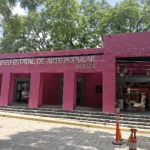
    Oaxacan Women Artisans TakeStage for International Women’s Day

    A new exhibition opening this weekend at Oaxaca’s state folk art museum will bring together 100 handmade pieces from craftswomen across the state’s eight regions, timed to coincide with International Women’s Day.

    Mujeres. Creadoras de historias [Women: Creators of Stories] opens at noon Sunday at the Museo Estatal de Arte Popular Oaxaca [State Museum of Popular Art of Oaxaca], known as the Meapo. The show spotlights the craft traditions that Oaxacan women have long carried — textiles, embroidery, black clay pottery, and basketry — and makes their work available for sale directly from the artisans.

    Women Drive the Craft Economy

    Carlomagno Pedro Martínez, director of the Meapo, estimates that women make up roughly 65% of the state’s artisanal workforce. Their presence is especially pronounced in textiles — weaving and embroidery in particular — as well as in ceramics and basket-making.

    “The artisans maintain living ancestral techniques, passing knowledge from generation to generation. This work is a form of creating stories, keeping the memory of their communities alive in the face of modernity,” Martínez said.

    Oaxaca is widely considered one of Mexico’s most important states for folk art. It is home to an estimated 20,000 working artisans, and crafts account for a significant share of the state’s economy. Women have historically been the primary keepers of those traditions, though their individual contributions have not always received formal recognition.

    Who Is Showing

    The exhibition features work from named master artisans representing communities throughout Oaxaca. Among them is Angélica Vásquez, a recipient of the National Prize for Sciences and Arts in 2011 — one of Mexico’s highest cultural honors. Also showing are Elida Merino, an artisan and bilingual teacher from San Pedro Amuzgos; Carolina Hernández, a Mixtec artisan from San Juan Colorado; and Elodia Martínez from San Blas Atempa.

    The Meapo’s home village of San Bartolo Coyotepec is itself represented through master potters of barro negro [black clay], the polished dark pottery that has become one of Oaxaca’s most recognized craft traditions.

    The show draws participants from communities across the state’s eight geographic regions, including both indigenous and Afro-Mexican communities, making it one of the more geographically inclusive exhibitions the museum has mounted.

    About the Meapo

    The Museo Estatal de Arte Popular Oaxaca sits on the south side of the main plaza in San Bartolo Coyotepec, about 12 kilometers south of Oaxaca city. Inaugurated in 2004, the museum is dedicated to preserving and promoting Oaxacan folk art and the artisans who produce it. Its permanent collection spans the pre-Hispanic period to the present, with particular depth in barro negro pottery. Carlomagno Pedro Martínez — himself an accomplished ceramicist who began training in his family’s workshop — has led the institution since its founding.

    The timing of Mujeres. Creadoras de historias is not coincidental. March 8 is International Women’s Day, observed globally, and the exhibition specifically frames the work of Oaxacan craftswomen within a broader conversation about labor, cultural preservation, and identity.

    Women’s craft traditions in Oaxaca have come under increasing scrutiny in recent years, largely because of high-profile cases in which international brands have reproduced indigenous designs without crediting or compensating the communities that created them. Those disputes have accelerated federal efforts to establish legal protections for Mexico’s indigenous intellectual property. Yucatán Magazine has reported on similar cases involving Oaxacan heritage.

    The Mujeres exhibition takes a different approach — not confrontation, but visibility. By presenting the work in a formal museum setting, with the artisans identified by name and community, the show pushes back against the long tradition of displaying folk art anonymously, a practice the Meapo has been actively working to end since its founding.

    Pieces in the exhibition include traditional garments, embroidered textiles, and objects made using techniques that predate European contact. More information on the museum is available at UNESCO’s intangible heritage program.

    Quick Facts: Mujeres. Creadoras de historias

    • Opening: Sunday, March 8, at noon — International Women’s Day
    • Venue: Museo Estatal de Arte Popular Oaxaca (Meapo), San Bartolo Coyotepec, Oaxaca
    • Number of pieces: 100
    • Regions represented: All 8 regions of Oaxaca, including indigenous and Afro-Mexican communities
    • Featured artisans include: Angélica Vásquez (National Prize for Sciences and Arts, 2011), Elida Merino (San Pedro Amuzgos), Carolina Hernández (San Juan Colorado), Elodia Martínez (San Blas Atempa), and barro negro masters from San Bartolo Coyotepec
    • Craft disciplines: Textiles, embroidery, weaving, ceramics, barro negro pottery, basketry
    • Museum director: Carlomagno Pedro Martínez
    • Meapo location: About 12 km south of Oaxaca city on the main plaza of San Bartolo Coyotepec

    Source: Excélsior

  • Free Shakira Concert in Mexico City Breaks Records

    Free Shakira Concert in Mexico City Breaks Records

    Shakira closed out the Mexican leg of her world tour Sunday night with a free concert at Mexico City’s Zócalo that drew an estimated 400,000 people — the largest crowd ever recorded at the iconic plaza for a live music event.

    Mexico City Head of Government Clara Brugada announced the attendance figure after the show, which served as the final Mexico date of Shakira’s Las Mujeres Ya No Lloran (The Women No Longer Cry) World Tour. The Colombian singer performed for just over two hours on a stage set up in the heart of the Plaza de la Constitución, better known as the Zócalo, in the city’s historic center.

    The concert surpassed the previous Zócalo attendance record held by Argentine ska band Los Fabulosos Cadillacs, who drew 300,000 fans to their 2023 show. Before that, Grupo Firme drew 280,000 in 2022, and Paul McCartney brought out 230,000 in 2012.

    Shakira has history with the Zócalo. She performed there in 2007 before an estimated 210,000 people, making Sunday’s show a return to the same stage nearly two decades later — with roughly twice the crowd.

    Production costs for the concert — stage, sound, and infrastructure — were covered by Grupo Modelo, the beer company behind Corona, as part of a celebration marking its centennial. The Mexico City government handled logistics, public safety, and transportation coordination.

    The show drew fans from across Mexico and beyond. Some began camping near the Zócalo as early as Feb. 28 — three days before the event — to secure a good spot. Authorities set up large screens with professional sound on several nearby streets, including Avenida Juárez near the Alameda, to accommodate overflow crowds.

    Shakira opened the set with “Estoy aquí,” one of her earliest hits, and worked through a catalog spanning decades — “Pies Descalzos,” “Ojos así,” “Antología,” “Hips Don’t Lie,” and “Waka Waka,” among others. She also debuted a new song, “Algo Tú,” performing it live with Colombian artist Beéle.

    Near the end of the show, she waved a Mexican flag from the stage before signing off: “Gracias, México. Gracias por ser mi familia. Nos vemos.”

    Ahead of the event, the Cámara Nacional de Comercio, Servicios y Turismo de la Ciudad de México projected an economic impact of roughly 403 million pesos for the surrounding area, driven by hotel occupancy above 90% and strong business at restaurants and bars in the historic center.

    Mexico has long been one of Shakira’s strongest markets. The country features prominently on the Las Mujeres Ya No Lloran tour, which also included arena dates at Mexico City’s Estadio GNP Seguros before the Zócalo finale. The tour name references her 2023 album of the same name, widely seen as her artistic response to her high-profile split from former soccer star Gerard Piqué. The breakup inspired a string of songs — including the massively viral “Shakira: Bzrp Music Sessions, Vol. 53” — that turned personal hardship into some of her biggest global hits in years.

    The Zócalo, a colonial-era plaza surrounded by the Metropolitan Cathedral and the National Palace, has a long tradition of hosting large-scale free events. It serves as the symbolic center of Mexican public life, the site of independence celebrations, political rallies, and cultural festivals. Getting a slot there carries weight beyond ticket sales. For Shakira, closing a world tour in the square that sits at the literal and historical heart of Mexico carried particular resonance.

    Shakira is no stranger to Mexican audiences beyond the capital. She has performed in Yucatán and other regional venues over the years. Ricky Martin is also heading to Mérida this spring for his fifth concert in the Yucatecan capital, a sign of the region’s growing draw for international touring acts.


    Shakira at the Zócalo — Key Facts

    • The concert took place Sunday, March 1, 2026, at Mexico City’s Plaza de la Constitución (the Zócalo)
    • Attendance: 400,000, according to the Mexico City government
    • The show was free to the public — no ticket required
    • It was the final Mexico City date of the Las Mujeres Ya No Lloran World Tour
    • Production was sponsored by Grupo Modelo/Corona, marking the company’s 100th anniversary
    • Previous Zócalo attendance record: 300,000, set by Los Fabulosos Cadillacs in 2023
    • Shakira last performed at the Zócalo in 2007, drawing approximately 210,000 people
    • The concert ran just over two hours and included a new song, “Algo Tú,” with Colombian artist Beéle
    • Economic impact was projected at more than 403 million pesos for the historic center area
    • The show was streamed live on Shakira’s social media channels and the Mexico City government’s YouTube channel

    Sources: Shakira’s free Mexico City concert, El Universal, Infobae, Excélsior, El Financiero.

  • Can Expats Legally Own Beachfront Property in Mexico? And What the Heck’s Fideicomiso?

    Can Expats Legally Own Beachfront Property in Mexico? And What the Heck’s Fideicomiso?

    Photo: Scott Coe / Yucatan Magazine

    Every year, thousands of Americans, Canadians, and Europeans fall in love with Mexico’s Caribbean and Pacific coastlines and start asking the same question: Can I buy property here? The short answer is, yes. The longer answer involves a word that trips up most first-timers but has been quietly making foreign beach house dreams come true for over five decades: fideicomiso.

    Pronounced fee-day-coh-MEE-so, a fideicomiso is a bank trust that allows non-Mexican citizens to legally own residential property in what the Mexican Constitution defines as the “restricted zone.” That zone covers all land within approximately 31 miles (50 kilometers) of any coastline and roughly 62 miles (100 kilometers) of any international border. 

    In practical terms, it includes every beachfront property in Cancun, every ocean view condo in Puerto Vallarta, every cliffside villa in Los Cabos, and every jungle retreat along the Riviera Maya. So, if you want to own a home within sight or earshot of the surf, you’ll almost certainly need one.

    Beachfront Property in Mexico and Fideicomiso

    The system traces its roots to Article 27 of Mexico’s 1917 Constitution, a landmark piece of legislation born out of the Mexican Revolution that was originally designed to prevent foreign powers from acquiring Mexican territory. For decades, that meant non-citizens simply could not own coastal land. 

    But in 1973, recognizing the economic potential of foreign investment in resort communities, the Mexican government introduced the fideicomiso as a legal workaround. Rather than amending the Constitution itself, lawmakers created a trust framework in which a Mexican bank holds the property title on behalf of the foreign buyer, who retains all practical rights of ownership. The buyer can live in the property, rent it, renovate it, sell it, or pass it on to their heirs.

    Early versions of the trust were limited to 30-year terms and came loaded with red tape. By 1993, further reforms under the Foreign Investment Law extended the trust period to 50 years with unlimited renewals and simplified the paperwork considerably. That wave of reform is widely credited with fuelling the real estate booms in places like Cancun, Los Cabos, and Playa del Carmen, where foreign buyers suddenly had the confidence to invest in property knowing their ownership was both secure and recognized under Mexican law.

    Today, tens of thousands of foreigners own property in Mexico through a fideicomiso. And while the process involves a few more steps and costs than buying a home back in the United States or Canada, it is a well-established and legally sound path to owning your own piece of the Mexican coast.

    How the Fideicomiso Actually Works

    The fideicomiso is a three-party arrangement. A Mexican bank acts as the trustee and holds the legal title to the property. The foreign buyer is named as the beneficiary and retains full control over the property, including the right to use it, lease it, make improvements, sell it, or bequeath it to heirs. The third party is the Secretaria de Relaciones Exteriores (the SRE, or Ministry of Foreign Affairs), which issues the permit authorizing the creation of the trust.

    It is important to understand what this is not. It is not a lease. It is not a time-limited license. The bank cannot sell, encumber, or make decisions about your property without your written instruction. The bank’s role is custodial. Think of it as a safety deposit box for your property title: the bank holds the box, but only you have the key.

    The trust is valid for 50 years from the date it is established and can be renewed indefinitely for additional 50-year terms. When the term approaches its end, the trustee bank will notify the beneficiary, who then requests a renewal permit from the SRE. The renewal process involves a fee of approximately $1,000 to $1,500 (US), a notary signing, and registration with the Public Registry of Property. There is no limit to how many times the trust can be renewed.

    Choosing a Bank and What It Costs

    Not all banks are created equal when it comes to fideicomiso service, though all authorized institutions operate under the same federal regulations. The most used banks for property trusts include BBVA Bancomer (Mexico’s largest retail bank, with more than 1,800 branches), Banorte (the country’s largest domestically owned bank, established in 1899), Scotiabank Mexico (a subsidiary of the Canadian-owned Bank of Nova Scotia), Banco Santander, and HSBC Mexico. Smaller institutions like Banco del Bajio and CI Banco also handle fideicomisos and sometimes offer more personalized service.

    One practical consideration that many buyers overlook: some banks centralize their trust departments in Mexico City or Guadalajara, which can slow local response times in resort areas. Others maintain dedicated fideicomiso representatives in popular coastal markets. It is worth asking your notary or real estate agent which banks are most responsive in the specific area where you are buying.

    As for costs, expect to pay a one-time setup fee in the range of $2,000 to $3,000 (US). That figure typically includes the bank’s administrative work, legal filings, and the first year’s maintenance. Annual maintenance fees from that point forward generally run between $500 and $1,000 (US), depending on the bank and the value of the property. These fees cover the bank’s ongoing compliance reporting and administrative oversight.

    On top of the fideicomiso-specific costs, buyers should budget for total closing costs of between 5 and 8 percent of the purchase price. This includes the acquisition tax (currently around 4 percent nationwide), notary fees (typically 1 to 2 percent of the property value), and the SRE permit fee. It is also worth noting that most foreign property purchases in Mexico are cash transactions. Over 90 percent of foreign buyers pay in full at closing, in large part because securing a Mexican mortgage as a non-citizen involves higher interest rates (currently in the 8 to 12 percent range) and down payments of 30 to 50 percent.

    The Step-by-Step Process

    The fideicomiso process follows a standard sequence, though the timeline can vary depending on the bank and the complexity of the transaction. First, you identify the property and sign a purchase agreement with the seller. Most sellers in coastal resort areas are well accustomed to working with foreign buyers and fideicomisos. Next, you select a Mexican bank to serve as trustee. Your real estate attorney or agent will typically recommend institutions they have worked with before, but the choice is yours.

    The bank then prepares the fideicomiso application and submits it to the SRE for authorization. This government review ensures the transaction complies with foreign investment regulations and generally takes three to six weeks. Once the SRE issues the permit, the closing takes place before a notario publico, a government-appointed legal authority who oversees all real estate transactions in Mexico. The notario is not the same as a notary public in the US or Canada. In Mexico, the notario holds considerably more legal authority and is responsible for verifying title, ensuring all taxes are paid, and confirming that the entire deal is in order.

    At closing, the property title is transferred from the seller into the trust with the bank named as trustee. You sign the trust deed, the notario reads the so-called Calvo Clause (a standard constitutional formality in which foreign buyers agree not to seek diplomatic intervention regarding the property), and the deed is then registered with the Public Registry of Property. From that moment, you are the legal beneficial owner.

    The entire process from signed purchase agreement to registered trust typically takes between 45 and 90 days, though delays can occur if there are title issues or if the SRE permit takes longer than expected.

    What About Ejido Land?

    No discussion of buying property in Mexico is complete without a mention of ejido land. Ejidos are communal agricultural lands that were distributed to rural communities following the Mexican Revolution and later formalized under Article 27. While reforms in 1992 under President Carlos Salinas de Gortari allowed ejido land to be privatized under certain conditions, buying property on ejido land that has not been fully regularized and converted to private title is extremely risky for foreign buyers.

    The key question to ask your attorney is whether the property has a clear private title registered in the ownership section of the Public Registry, as opposed to the possession section, which indicates a disputed or incomplete title. If the answer involves ejido land that has not been formally converted, proceed with extreme caution or, better yet, walk away.

    The Mexican Corporation Alternative

    The fideicomiso is not the only path to property ownership in the restricted zone. Under the 1998 amendment to the Foreign Investment Law, foreigners can also purchase property through a Mexican corporation (known as a sociedad anonima or SA). However, this option is primarily intended for commercial use, such as operating a rental business, hotel, or retail space.

    If your plan is to buy a home or vacation property for personal residential use, the fideicomiso is the appropriate and required legal vehicle. If you are investing in commercial real estate, a Mexican corporation may offer more flexibility, but it also comes with annual tax filings, accounting compliance, and higher administrative costs. In either case, qualified legal counsel is not optional.

    Common Myths and Misconceptions

    The fideicomiso system has been in place for more than 50 years, yet several persistent myths continue to circulate among prospective buyers.

    The first and most common: the bank owns your property and can take it from you. This is false. The bank holds the title in trust, but it has zero authority to sell, transfer, or use the property without your explicit written consent. The bank has a fiduciary obligation to act solely on your instructions.

    The second myth: the fideicomiso is a temporary arrangement and your ownership could expire. Also false. The trust runs for 50 years and is renewable indefinitely. There is no scenario in which a properly maintained fideicomiso simply expires and leaves you without recourse.

    The third: if the bank goes bankrupt, you lose everything. Again, not true. The property held in a fideicomiso is not considered an asset of the bank. If the bank encounters financial trouble, your trust is transferred to another institution.

    And the fourth, which comes up regularly in online forums: Mexico might change the law and revoke foreign property rights. While no one can predict the future with certainty, there is no political appetite in Mexico for undermining the fideicomiso system. In fact, a 2013 constitutional reform proposal aimed to make it easier for foreigners to own property by allowing direct ownership in the restricted zone. That proposal did not pass, but its very existence signals a trend toward liberalization, not restriction. Foreign real estate investment supports local economies across the country, particularly in resort communities, and the Mexican government has a clear financial incentive to keep the system stable.

    Do You Need a Visa to Buy?

    One of the more pleasant surprises for prospective buyers is that property ownership in Mexico is treated as a foreign investment matter, not an immigration issue. You do not need Mexican residency, a work permit, or any specific visa to purchase property through a fideicomiso. You can buy while visiting on a standard tourist permit.

    That said, if you plan to live in your property for extended periods or generate rental income, obtaining temporary or permanent residency will simplify several practical matters, from setting up utilities and local bank accounts to managing your tax obligations in Mexico. Property ownership can also support a residency application by demonstrating financial stability.

    Why the Fideicomiso Still Makes Sense

    For all the paperwork and added costs, the fideicomiso remains a remarkably practical tool. It provides foreign buyers with ownership rights that are, in all meaningful respects, equivalent to direct ownership. It simplifies estate planning by allowing beneficiaries to be named directly in the trust, avoiding the need for complex probate proceedings. And it is backed by more than five decades of legal precedent and thousands upon thousands of successful transactions.

    With the state of Quintana Roo alone welcoming over 33 million visitors in 2023, and with new developments like The Ritz-Carlton Residences, Riviera Maya setting starting prices north of $1.8 million (US), the appetite for foreign-owned coastal property in Mexico shows no sign of slowing down. Whether you are eyeing a two-bedroom condo in Tulum, a beachfront estate in San Jose del Cabo, or a penthouse overlooking Banderas Bay in Puerto Vallarta, the fideicomiso is the legal bridge that makes it possible.

    The process isn’t complicated. But it does require attention to detail, qualified legal advice, and a reliable bank. Get those three things right, and that beachfront dream is well within reach.

  • Mexico’s Most Wanted Is Dead. Now What?
    Mexico’s Most Wanted Is Dead. Now What?

    The killing of Nemesio Rubén Oseguera Cervantes was the biggest single blow Mexican security forces have dealt to organized crime in years. It also lit parts of the country on fire.

    Oseguera Cervantes, 59, was wounded during a military raid Feb. 22 in Tapalpa, a mountain town in the western state of Jalisco, and died while being flown to Mexico City, according to Mexico’s Defense Department. He led the Jalisco New Generation Cartel — known by its Spanish initials, CJNG, or Cartel Jalisco Nueva Generación — which had become, by most accounts, the most powerful criminal organization in Mexico.

    Puerto Vallarta
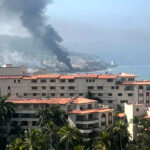
    Cartel fury was unleashed most visibly in Puerto Vallarta after a drug kingpin was killed. Photo: Contributed

    Writing in The Independent, security analyst Chris Dalby argued that removing El Mencho is less a finishing blow than a destabilizing one. The drugs will keep moving, he wrote. The violence may get worse before it gets better. That assessment was hard to argue with, given what followed the raid.

    Cars set ablaze by cartel members blocked roads in nearly a dozen states. Guadalajara, Jalisco’s capital, turned into a ghost town as civilians sheltered indoors. By Monday, authorities confirmed that 25 members of Mexico’s National Guard had been killed in cartel attacks across the state. More than 250 roadblocks were reported across 20 states before security forces began clearing them.

    The operation itself came together through surveillance of a close associate tied to one of El Mencho’s romantic partners. Special forces, backed by National Guard troops and military aircraft, sealed off the rural compound before dawn. When soldiers advanced, cartel gunmen opened fire. El Mencho fled into nearby woods with members of his security detail. A second firefight broke out. Soldiers eventually found him wounded alongside two bodyguards. He was airlifted toward a hospital but died in flight. Armored vehicles, rocket launchers, and other weapons were seized at the scene.

    The White House confirmed U.S. intelligence support. “President Trump has been very clear — the United States will ensure narcoterrorists sending deadly drugs to our homeland are forced to face the wrath of justice they have long deserved,” press secretary Karoline Leavitt said in a statement Sunday night.

    El Mencho had been a fugitive for decades. Born in 1966 in the state of Michoacán, he was convicted in California in 1994 for conspiracy to distribute heroin and served three years in a U.S. prison. After returning to Mexico, he worked through the ranks of several criminal organizations before co-founding the CJNG around 2009. The group grew fast, trafficking cocaine, methamphetamine, and fentanyl into the U.S. while also smuggling migrants and diversifying into fuel theft, extortion, and timeshare fraud. The U.S. Drug Enforcement Administration estimated by 2019 that CJNG was responsible for at least one-third of all drugs entering the U.S. by air and sea. The State Department had placed a $15 million reward on his head.

    The cartel became notorious for military-style tactics — drones rigged with explosives, rocket-propelled grenades, and direct assaults on government officials. In 2015, CJNG shot down a Mexican military helicopter in Jalisco, killing nine soldiers. In 2020, cartel gunmen staged a brazen assassination attempt against then-Mexico City police chief Omar García Harfuch — now the country’s federal security secretary — using grenades and high-powered rifles in the middle of the capital.

    Dalby, in The Independent analysis, described El Mencho’s approach as almost medieval: conquer ruthlessly and make the consequences visible to anyone who might resist. That strategy built the CJNG quickly, but it also meant constant, grinding confrontation.

    Now the question is whether his death reduces that violence or simply reshuffles it. Unlike other cartels with multiple power centers, the CJNG was built around El Mencho personally. There is no obvious heir. His son, brother, and daughter are all in prison. That gap could trigger a succession fight among regional commanders — the same dynamic that shattered the Sinaloa Cartel after El Chapo’s arrest.

    Mexico has been here before. A “kingpin strategy” under President Felipe Calderón from 2006 to 2012 killed or captured dozens of cartel leaders. Violence spiked each time. More than 300,000 people have been murdered in Mexico in the past decade, a period that overlapped directly with the CJNG’s national expansion. The current president, Claudia Sheinbaum, had long been skeptical of that approach — but Sunday’s operation represents a sharp shift in posture. She applauded the security forces and called for calm.

    The Trump administration has been pressing Mexico hard on cartel enforcement, threatening tariffs and raising the specter of unilateral military action if results didn’t come. The CJNG was designated a foreign terrorist organization by the U.S. in February 2025. El Mencho’s death gives Sheinbaum a significant chip to play in that relationship — though the wave of retaliatory violence that followed will complicate any easy narrative of victory.

    The timing carries its own weight. Guadalajara, still clearing burned-out vehicles from cartel reprisals, is set to host FIFA World Cup matches in just a few months.

    For context on cartel activity in southeast Mexico, including how trafficking dynamics have shifted in states bordering the Yucatán Peninsula, see our earlier coverage at Yucatán Daily News. For broader analysis of what comes next for the CJNG, Al Jazeera has published detailed reporting on the succession question.


    Fast Facts: El Mencho and the CJNG

    • Nemesio Rubén Oseguera Cervantes, “El Mencho,” was killed Feb. 22, 2026, in Tapalpa, Jalisco, during a Mexican army operation
    • He was 59 and had been involved in drug trafficking since the 1990s
    • He co-founded the Jalisco New Generation Cartel (CJNG — Cartel Jalisco Nueva Generación) around 2009
    • The CJNG has a presence in at least 21 of Mexico’s 32 states and is active across all 50 U.S. states, according to the DEA
    • The U.S. had offered a $15 million reward for information leading to his arrest
    • The Trump administration designated the CJNG a foreign terrorist organization in February 2025
    • 25 Mexican National Guard members were killed in cartel reprisals following the operation
    • Roadblocks and arson spread across more than 20 Mexican states within hours of the raid
    • El Mencho’s son, brother, and daughter are all currently imprisoned, leaving no clear successor

    Sources: The Independent; Al Jazeera; NBC News; CBS News; Axios; Institute for Economics and Peace / Mexico Peace Index 2025