
Author: MxTrib Staff

  • Viral Video: Tourist Caught Looting Puerto Vallarta OXXO During Attacks

    Viral Video: Tourist Caught Looting Puerto Vallarta OXXO During Attacks

    A video that spread rapidly across social media this week shows a man carrying a Canadian-branded tote bag walking out of a smashed OXXO convenience store in Puerto Vallarta with a bag of items and a jug of water — without paying. The footage, filmed by local bystanders who confronted him, became a flashpoint in a city already shaken by days of cartel violence.

    The context matters. On Feb. 22, Mexican Army forces killed Nemesio “El Mencho” Oseguera Cervantes, leader of the Jalisco New Generation Cartel (CJNG), during a raid on a rural compound in Tapalpa, Jalisco. The killing set off immediate retaliation across more than 20 Mexican states. In Puerto Vallarta, cartel members torched buses and cars, blocked roads and shut down public transportation. Businesses closed. Flights were canceled. Thousands of tourists were told to shelter in place. OXXO stores across the city were among the properties burned or damaged in the chaos.

    Viral looter
    Video of a foreign tourist apparently looting an OXXO convenience store went viral this week. Photo: Screengrab

    The video of the OXXO incident — originally posted by Instagram user @regiophotographer and reported by Castanet — shows several people entering the damaged store while bystanders shout at them. A few returned the items they had picked up. The man with the Canadian bag did not. When confronted, he reportedly accused one of the men challenging him of being American. He left with the goods.

    The clip went viral, drawing sharp reactions online. Many commenters were quick to identify the man as Canadian based on the tote bag, though others pointed out that a bag alone is no proof of nationality. One Facebook commenter wrote that a Canadian would have left money on the counter. Another said she was disgusted and that “real” Canadian visitors who love Puerto Vallarta would never disrespect the community. A few were more skeptical, noting that a man carrying a Canada bag in a foreign country would be an unlikely choice for an actual Canadian.

    One commenter offered a more charitable reading: a Mexican acquaintance had reportedly told them the man was a regular customer who left a note saying he would return to pay when things settled down, and that he was taking only essentials — water and a few snacks — for survival.

    Authorities have not released details about the identities of those in the video, and no arrests related to the incident have been reported. Local police have been occupied with far larger security challenges this week.

    The episode landed in a particularly charged moment for Canadian tourists, tens of thousands of whom were stranded in Puerto Vallarta after flights were canceled by Air Canada, WestJet and other carriers. Puerto Vallarta receives more than 750,000 Canadian visitors annually and is one of the most popular winter destinations for Canadian snowbirds. This year, many had redirected their winter travel there from the United States amid tensions over trade and tariffs — making the timing of the incident, and the mockery that followed online, sting a little more.

    As the city begins to return to normal — with flights resuming, buses running again and restaurants reopening — local business owners and residents are taking stock of the damage. The broader question of what El Mencho’s death means for security and tourism in Mexico, including the upcoming World Cup matches in Guadalajara, remains unresolved.

    Fast Facts

    • The OXXO looting video was originally posted by Instagram user @regiophotographer in Puerto Vallarta
    • The man in the video was carrying a Canadian-branded tote bag; his nationality has not been confirmed
    • Some bystanders who entered the store returned items when confronted; the man with the bag did not
    • Cartel members burned or damaged numerous OXXO stores across Puerto Vallarta during the unrest
    • CJNG leader Nemesio “El Mencho” Oseguera Cervantes was killed Feb. 22 in Tapalpa, Jalisco
    • Puerto Vallarta receives more than 750,000 Canadian visitors annually
    • Air Canada, WestJet and multiple U.S. carriers canceled or suspended flights following the violence
    • The city began reopening Feb. 24; some flights resumed; Uber remained unavailable as of Tuesday

    Sources: Castanet.net, CBC News, Global News, Yahoo News Canada, KWTX, NBC News

  • World Cup Is Coming. So Is an Airbnb Surge — and Mexico City Isn’t Ready

    World Cup Is Coming. So Is an Airbnb Surge — and Mexico City Isn’t Ready

    Requests to have apartments professionally managed as short-term rentals in Mexico City jumped 25% in January compared to the same month last year, according to data from two international property management platforms — a trend that community activists say could intensify the capital’s already strained housing market ahead of the FIFA World Cup this summer.

    The figures come from Guesty and Smoobu, firms that offer AI-driven tools for property owners looking to list and manage units on platforms such as Airbnb. Both companies reported a significant uptick in inquiries from Mexico City landlords during January and February 2026, compared to the same period a year earlier.

    The World Cup kicks off June 11 in Mexico City at Estadio Azteca — the only stadium in history to host three World Cup opening matches. Mexico City is one of three Mexican host cities, along with Guadalajara and Monterrey. Organizers expect around 5.5 million visitors across all host cities during the tournament, which runs through July 19.

    Mexico City already had more than 30,000 short-term rental listings on Airbnb as of late 2025, concentrated mainly in the boroughs of Cuauhtémoc and Miguel Hidalgo. The advocacy group Inside Airbnb counted more than 26,000 active listings, with roughly 65% consisting of apartments or homes that had been pulled from the long-term housing market.

    Sergio González Juaricua, a community activist in the Juárez neighborhood, said the new wave of property management requests signals more of the same. He warned that during the World Cup, temporary rental operators “will be able to charge whatever they want,” and predicted prices could double, triple, or even quadruple. He also raised concern that motels along the Calzada de Tlalpan corridor would shift to short-stay formats during the tournament, further blurring the line between residential and commercial use.

    “What worries us is the normalization of commercial use in properties zoned for housing,” he said, referring to what activists call “pirate hotels” — apartments that function as lodging businesses without the permits or oversight that licensed hotels are required to have.

    His concerns are not new. By late 2024, Mexico City had already passed a series of reforms to its Tourism Law establishing a 180-day-per-year limit on short-term rentals. The law also banned the use of government-built social housing for tourist rentals. Airbnb filed an injunction against the reforms, and the city had not yet implemented a required registry of rental hosts — the mechanism activists argue is key to enforcement. Neighborhood organizations filed their own legal actions at the end of 2025 demanding compliance.

    The housing tension in Mexico City predates the World Cup by years. The city has been grappling with an unresolved debate over whether to regulate or deregulate short-term rentals, with a housing crisis that has already displaced thousands of families in the capital. According to the city’s General Urban Planning Program, more than 20,000 low-income households are forced out of the city annually due to the lack of affordable housing.

    The post-pandemic surge in digital nomads accelerated the problem. In 2022, the city signed a deal with Airbnb aimed at attracting remote workers, and critics say it helped fuel rising rents. Data shows La Condesa saw a 17% rent increase from April 2023 to April 2025, while neighboring Miguel Hidalgo borough saw a 98% rise over the same period. The pressures are similar in other parts of Mexico. Housing costs in Mérida and other cities have also climbed as the Yucatán Peninsula attracted its own wave of international remote workers.

    Airbnb, meanwhile, has been actively recruiting new hosts for the tournament. The platform is offering $750 to new “entire home” hosts in any of the 16 World Cup cities across the U.S., Canada, and Mexico, with hosts needing to welcome their first guests by July 31, 2026. The company says searches for stays in World Cup cities are up 80% from a year ago. A Deloitte report commissioned by Airbnb projected that the average nightly rate in Mexico City during the tournament would reach $68 — the highest of any Mexican host city.

    Hotel construction is underway but falls short of what officials estimate is needed. More than 3,300 new hotel rooms are being added to Mexico City’s existing inventory of approximately 61,500 rooms. Airbnb’s public affairs director, Jorge Balderrama, has argued that without short-term rentals, the city will lack the capacity to host all incoming visitors.

    City officials have said they are reviewing whether current regulations strike the right balance, and have stated they want to avoid what Mayor Clara Brugada’s office has called “tourismophobia.” Whether the regulatory gap gets closed before summer remains an open question.


    World Cup 2026: Mexico City fast facts

    • The tournament runs June 11–July 19, 2026, across 16 cities in Mexico, the U.S., and Canada
    • Mexico City’s Estadio Azteca will host the opening match — its third World Cup opener in history
    • As of late 2025, Mexico City had more than 30,000 Airbnb listings, with concentrations in Cuauhtémoc and Miguel Hidalgo
    • Mexico City passed a 180-day annual cap on short-term rentals in October 2024; Airbnb filed an injunction against it
    • A required host registry mandated by the law had not been launched as of early 2026
    • Neighborhood groups filed legal actions in late 2025 demanding enforcement of the rental cap
    • Airbnb is offering $750 to new hosts in all 16 World Cup cities who complete their first booking before July 31, 2026
    • Hotel room supply in Mexico City stands at approximately 61,500, with 3,300 more under construction for the Cup
  • Mexico Sends 103 Marines to Puerto Vallarta as Canadian Flights Resume
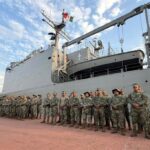
    Mexico Sends 103 Marines to Puerto Vallarta as Canadian Flights Resume

    Mexico’s navy has deployed 103 marines to Puerto Vallarta following days of cartel-related violence that shuttered the city’s airport, paralyzed the region, and left thousands of Canadian tourists stranded. Canadian airlines resumed flights on Tuesday, Feb. 24, two days after one of the most dramatic security crises in recent Mexican history.

    The marines arrived aboard the naval vessel ARM “Usumacinta” (A-412) in response to attacks on businesses and property across several neighborhoods of the Pacific resort city, according to Mexico’s Secretaría de Marina (Navy Secretariat). The deployment came alongside a broader military push by the federal government, which sent an additional 2,000 army troops to Jalisco state.

    The crisis began Sunday, Feb. 22, when the Mexican military killed Nemesio Oseguera Cervantes — known as “El Mencho” — the longtime leader of the Jalisco New Generation Cartel (CJNG), regarded as one of the most powerful and violent criminal organizations in the world. Within hours, cartel members responded with coordinated attacks across more than 20 Mexican states. Vehicles were set ablaze, highways were blocked at more than 250 points, and stores were ransacked. In Puerto Vallarta, black smoke billowed over the city’s famous boardwalk.

    The Puerto Vallarta International Airport shut down completely. Grupo Aeroportuario del Pacífico (GAP), which operates the facility, confirmed that all international flights and most domestic services were cancelled. Airlines including Air Canada, WestJet, Southwest, United, Delta, Alaska, and Porter all halted operations.

    At least 73 people were killed in the unrest, including members of Mexico’s National Guard and cartel operatives. Authorities arrested 25 people, 11 of them for participating in violent acts and 14 for looting. A jail riot at a Puerto Vallarta lockup killed a prison guard.

    For Canadian tourists, the situation was particularly disorienting. Global Affairs Canada estimated roughly 5,000 Canadians were in Jalisco state alone, with more than 26,000 registered throughout Mexico. Officials issued shelter-in-place advisories and urged travelers to monitor their airline status and limit movements. Foreign Affairs Minister Anita Anand said her Mexican counterpart expected the situation to “normalize” in the coming days. Mexican President Claudia Sheinbaum described the country as “calm.”

    By Tuesday morning, things had stabilized enough for airlines to resume service. Air Canada restarted flights from Montreal, Toronto, and Vancouver to Puerto Vallarta, deploying larger Boeing 787-9 Dreamliners with 258 additional seats per flight to help clear the backlog of stranded passengers. Service from Toronto to Guadalajara followed Wednesday. WestJet resumed operations to Puerto Vallarta, Guadalajara, and Manzanillo the same day. Air Transat, Porter, and Flair Airlines also restarted Puerto Vallarta flights, with complimentary change policies for affected passengers.

    At Toronto’s Pearson International Airport Tuesday morning, travelers showed a mix of relief and resolve. “We talked to people down there yesterday and everything has calmed down,” said Todd Martin, heading to Puerto Vallarta for vacation. Christine Dusablon, whose flight had been cancelled Monday, was equally unfazed. “There was some unrest, but I figured it would pass,” she said. “It is a great place to go.”

    Not everyone was so sanguine. Ontario Premier Doug Ford urged Canadians to reconsider travel to Mexico and said he would work with Ottawa to bring stranded travelers home if needed. The federal government updated its travel advisory to recommend avoiding non-essential travel to parts of Jalisco state, while advising high caution in other tourist zones, including Cancún.

    The killing of El Mencho marks the end of a years-long manhunt. He had led CJNG since its founding and built it into a cartel with operations spanning dozens of countries. Security analysts warn that leadership vacuums in major cartels often trigger prolonged internal fighting as factions compete for control.

    The violence, while concentrated in Jalisco, sent ripples across the country. Organized crime has been testing boundaries even in quieter corners of Mexico, a trend that security officials have been tracking for months. Puerto Vallarta’s airport remained under federal security force protection throughout the disruption, with no incidents reported inside the terminal. Resorts in the area stayed open throughout, and the situation along tourist corridors returned to normal well before airline service resumed.

    Coverage from CBC News has been tracking the unfolding situation with regular updates.


    Quick facts

    • El Mencho, born Nemesio Oseguera Cervantes, was killed by the Mexican military on Sunday, Feb. 22, 2026, in Jalisco state
    • He founded and led the Jalisco New Generation Cartel (CJNG), one of Mexico’s most powerful criminal organizations
    • More than 250 road blockades were reported across 20 Mexican states following his death
    • At least 73 people were killed in the subsequent violence, including National Guard members
    • Puerto Vallarta International Airport suspended all international flights for approximately 48 hours
    • An estimated 5,000 Canadians were in Jalisco state; more than 26,000 were registered throughout Mexico
    • 103 Mexican marines arrived in Puerto Vallarta aboard the ARM “Usumacinta” (A-412)
    • Canada and the U.S. both issued shelter-in-place advisories for parts of Jalisco and neighboring states
    • Air Canada, WestJet, Air Transat, Porter, and Flair resumed Puerto Vallarta flights on Feb. 24
    • Mexico’s federal government deployed an additional 2,000 army troops to Jalisco
  • Will the Mexico World Cup be Safe for Overseas Visitors? Here’s What We Know…  

    Will the Mexico World Cup be Safe for Overseas Visitors? Here’s What We Know…  

    The killing of Nemesio Oseguera Cervantes, the leader of the Jalisco New Generation Cartel (CJNG) and one of the world’s most wanted drug lords, has triggered a wave of retaliatory violence across Mexico and raised pointed questions about whether the country can safely host World Cup matches this summer. 

    Oseguera, known as “El Mencho“, was fatally wounded during a dawn military raid on Sunday in Tapalpa, roughly 55 miles (90 kilometers) south of Guadalajara, the Jalisco state capital that is scheduled to host four group-stage games at the 2026 FIFA World Cup. According to The Guardian, he died while being airlifted to hospital.

    Within hours of his death, CJNG gunmen blocked close to 100 major roads and attacked National Guard bases across multiple states, killing at least 25 soldiers. More than 70 people died in total over the weekend, and over 200 flights to Jalisco were cancelled or diverted. For the millions of international fans planning trips to Mexico for the tournament, which kicks off on June 11 at Estadio Azteca in Mexico City, the violence could not have come at a worse time. 

    What happened in Guadalajara

    Guadalajara and the resort city of Puerto Vallarta were all but shut down on Sunday. Jalisco state Governor Pablo Lemus suspended public transport, in-person schooling, and mass events. Liga MX postponed four professional football matches, including the women’s derby between Chivas and Club América at Estadio Akron – the same venue where Mexico will play South Korea on June 18 and where Uruguay will face Spain on June 26. 

    An international friendly between Mexico and Iceland, scheduled for Wednesday at the Corregidora Stadium in Querétaro, was also cancelled. The U.S. Embassy issued a shelter-in-place order for American citizens in Jalisco, including Guadalajara, Puerto Vallarta, and Chapala, as well as parts of TamaulipasMichoacánGuerrero, and Nuevo León.

    In Puerto Vallarta, residents reported gunshots and columns of black smoke as more than ten vehicles and several businesses were set alight. Prison breaks were also reported. Tourists found themselves stranded, with some American visitors describing the scenes as terrifying. Steve Perkins of Oklahoma told reporters from his hotel room in Puerto Vallarta: “There’s a lot of Americans trapped here.” By Monday, the violence had largely subsided, though The Guardianreported sporadic episodes in several rural municipalities of Jalisco overnight. Mexico’s security minister confirmed that all cartel roadblocks had been cleared by Monday, and airlines were beginning to resume limited service. 

    What does this mean for the World Cup?

    Mexican President Claudia Sheinbaum moved quickly to reassure international visitors. At her daily press conference on Tuesday, she stated there are “all the guarantees” for the World Cup to be held in Mexico and that there is “no risk” for those attending. “

    Little by little the situation in Jalisco is returning to normal,” she said, as reported by The Guardian. A FIFA spokesperson told Reuters on Monday that the organization was “closely monitoring the situation in Jalisco” and remained in “constant communication with the authorities.” FIFA has not announced any changes to the match schedule or venue locations. Under its own tournament regulations, FIFA retains the right to cancel, reschedule, or relocate matches due to safety or security concerns.

    Tim Meehan, security director at International SOS, told FOX 4 that while the retaliatory violence was expected, the scale was surprising. He said Mexican authorities are expected to increase their military presence in Guadalajara significantly ahead of the tournament. But Meehan also noted that public perception could be just as damaging as the violence itself, with potential fans thinking twice about the trip. 

    The CJNG, he pointed out, is not the largest cartel in Mexico, but it is considered the most violent and the best armed. With a leadership vacuum now in place, analysts warn that internal power struggles or encroachment by rival groups like the Sinaloa Cartel could provoke further instability in the coming months.

    Sheinbaum pushed back against comparisons between this operation and the broader “war on drugs” strategy pursued by former president Felipe Calderón two decades ago. “A situation arose in which, during the arrest of a member of an organized crime group who had an arrest warrant out against him, members of the army were attacked and responded, and he died during transport,” she told reporters. “We’re looking for peace, not war. That is the difference.” Whether that distinction holds up over the next four months, with the eyes of the football world turning toward Mexico, remains to be seen.

  • After El Mencho’s Killing, Spotlight Falls on CJNG’s Reach in Safe Haven Yucatán
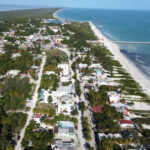
    After El Mencho’s Killing, Spotlight Falls on CJNG’s Reach in Safe Haven Yucatán

    The death of Nemesio Rubén Oseguera Cervantes, the co-founder and longtime head of the Jalisco New Generation Cartel, is reshaping how authorities and analysts view the cartel’s footprint across Mexico — including in the Yucatán Peninsula, where intelligence documents and federal arrests confirm a sustained presence.

    Oseguera Cervantes, 59, was wounded during a military operation in Tapalpa, Jalisco, and died while being flown to Mexico City. The operation was carried out with U.S. intelligence support and set off a wave of cartel roadblocks and vehicle fires across more than 20 states.

    The CJNG, sometimes called the “cartel of four letters,” has operated on the Yucatán Peninsula for years, confirmed in both Mexican military intelligence leaked by the hacktivist group Guacamaya in 2022 and the DEA’s National Drug Threat Assessment 2025. The DEA report places the cartel in all 32 Mexican states and 40 countries, attributing its expansion in part to alliances with corrupt officials.

    The peninsula’s geography explains much of the cartel’s interest. Intelligence documents describe Yucatán, Campeche and Quintana Roo as a strategic corridor for trafficking narcotics and people from Central America, South America and the Caribbean toward the United States. The cartel also exploits the region’s tourism economy, where extortion, money laundering through luxury real estate and retail drug sales are the most profitable criminal activities.

    Yucatán’s Quiet Role

    Yucatán itself has remained Mexico’s most peaceful state by homicide rates, but federal authorities have documented its use as a base of operations and a refuge for cartel leaders. In August 2024, authorities arrested Aldrin Miguel Jarquín Jarquín, alias “El Chaparrito,” in a residential neighborhood in northern Mérida. He was identified as a CJNG plaza boss from Colima with close ties to El Mencho, and had reportedly set himself up as a local businessman. The U.S. Treasury’s OFAC had designated him a foreign cartel leader since 2021 for fentanyl trafficking.

    Before that, leaked Sedena files identified a CJNG operator known as “Enzo” or “Chino” as running illegal hardwood exports out of Progreso and Mérida — fine timber extracted in Campeche and shipped to China. The documents also raised the possibility that the network was importing chemical precursors for synthetic drugs. A 2020 case saw U.S. anti-drug officials track a cocaine-laden aircraft from South America that landed in Yucatán carrying 750 kilograms.

    In 2025, narco banners attributed to criminal organizations appeared in the Yucatán coastal town of El Cuyo, a rare but telling sign of encroachment along the Yucatán-Quintana Roo border zone.

    Quintana Roo: The Hot Zone

    The cartel’s activity is far more overt in Quintana Roo. Federal forces arrested a series of CJNG operatives there in the final months of 2025. In December, they took down Miguel Alexander “N,” alias “Dumbo,” identified as the Cozumel cell leader, along with three associates. That same month, Emilio Alejandro “N,” alias “El Danone,” was captured with 300,000 pesos in cash, weapons and drugs. In November, Marcos Josué “N” was arrested as the cartel’s logistics chief for distributing weapons across Benito Juárez, Puerto Morelos, Kantunilkín and Isla Mujeres. Also that month, Ernesto Guadalupe “N,” alias “El Rayo,” was linked to at least five killings and disappearances in Playa del Carmen and Tulum.

    The DEA rates CJNG’s presence in Quintana Roo as “significant,” with the cartel competing against the Gulf Cartel, the Caborca Cartel and the Pacific Cartel for control of tourist-area criminal markets.

    Campeche

    The DEA also rates the CJNG’s presence in Campeche as “significant.” Public arrests there have been less frequent, but in August 2025, authorities detained 10 people in Champotón, including a woman known as “Lady Drones” and José Roberto Sánchez Cortés, alias “El 80,” who were found with gold-plated weapons bearing the CJNG insignia.

    What Follows El Mencho’s Death

    Analysts warn that removing a cartel leader does not dismantle the organization. Chris Dalby, senior analyst at Dyami Security Intelligence, has noted that the flow of drugs will continue regardless, and that regional commanders with money, power, and armed forces of their own are well positioned to splinter off or compete for control. Succession is far from clear: El Mencho’s son is jailed in the United States, and no obvious heir has emerged.

    Mexican President Claudia Sheinbaum has previously expressed skepticism about the kingpin strategy, warning that removing cartel leaders can fracture organizations and ignite new cycles of violence. She has nonetheless come under mounting pressure from the Trump administration to show concrete results against cartel operations. For the Yucatán Peninsula, the immediate question is whether the cartel’s regional cells — accustomed to operating with relative autonomy — will stay disciplined or use the leadership vacuum to expand their turf.


    About the CJNG

    • The Jalisco New Generation Cartel (Cártel Jalisco Nueva Generación) was co-founded around 2009 by Nemesio Rubén Oseguera Cervantes, “El Mencho”
    • El Mencho was killed by Mexican military forces on Feb. 22, 2026, in Tapalpa, Jalisco, with U.S. intelligence support
    • The cartel was designated a foreign terrorist organization by the U.S. State Department in February 2025
    • Its financial arm, Los Cuinis, is headed by family members of El Mencho’s former wife, Rosalinda González, “La Jefa” (The Boss)
    • The DEA places the CJNG in all 32 Mexican states and 40 countries
    • Key Peninsula arrests in 2024–2025 include: “El Chaparrito” (Mérida), “Lady Drones” and “El 80” (Champotón, Campeche), “Dumbo,” “El Danone,” “El Rayo” and others (Quintana Roo)
    • The U.S. State Department had offered a $15 million reward for information leading to El Mencho’s arrest

    Sources: Diario de Yucatán; DEA National Drug Threat Assessment 2025; Al Jazeera; NBC News; Sedena/Guacamaya Leaks