Author: MxTrib Staff

  • Casual Dining and Fast Food in Mexico City: What’s Worth Knowing About

    Casual Dining and Fast Food in Mexico City: What’s Worth Knowing About

    Mexico City is one of the world’s great food capitals, and that reputation extends well beyond its white-tablecloth restaurants. The capital’s fast-food scene — from century-old churro shops to pandemic-era smash-burger startups — offers something that’s hard to find north of the border: quick, affordable food with a real culinary identity. Here’s a rundown of seven chains worth knowing before your next trip.

    Sanborns

    Americans of a certain age will remember when department stores had full restaurants inside — think the Walnut Room at Marshall Field’s in Chicago, or the tearoom at a Nordstrom. Sanborns is that concept, still thriving. It’s a full-service sit-down restaurant operating inside a department store, and it has been since 1903, when California brothers Walter and Frank Sanborn opened the first location in Mexico City. The chain now has roughly 146 locations concentrated heavily in the capital, with branches stretching from Tijuana to Cancún. Its most famous location occupies the Casa de los Azulejos (House of Tiles), a 16th-century colonial mansion decorated with a mural by José Clemente Orozco. Iconic menu items include enchiladas suizas — chicken enchiladas with cheese and green salsa — as well as chilaquiles and club sandwiches. Waitstaff wear traditional dress. The pace is unhurried. The chain is now owned by billionaire Carlos Slim’s Grupo Carso, but the dining room still feels pleasantly stuck in time. For a first-time visitor, it’s a genuinely worthwhile meal, food blogger Jon Barr said.

    La casa de Toño
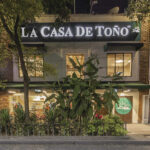
    La Casa de Toño has a branch in Mexico City’s Zona Rosa. Photo: Courtesy

    La Casa de Toño

    La Casa de Toño is a Mexico City institution built around traditional street food served at speed. The chain specializes in pozole — the slow-simmered pork and hominy soup that is one of Mexico’s great comfort dishes — alongside tostadas and other casual staples. Chips arrive before you’ve settled in, and the kitchen turns orders around in minutes. It’s a hole-in-the-wall that runs like a machine, with waiters everywhere and a pace that has no equivalent in American casual dining. Worth a stop for the pozole alone, though first-timers will want guidance on how to dress the bowl — cream, oregano, and tostadas on the side, added gradually.

    Dynasty Legendary Chinese Food

    Every major mall in Mexico City seems to have one, and Dynasty Legendary Chinese Food is a fixture in the capital’s luxury shopping centers. The free samples at the counter pull you in, and the portions are enormous — bigger than anything you’d typically see at a comparable U.S. chain. The sweet chicken and rice combo is the standard order. Visually and conceptually, it lands squarely in Panda Express territory: recognizable, filling, and not particularly memorable. Mall food culture is still going strong in Mexico City in a way it no longer is in much of the United States, and Dynasty benefits from that foot traffic. It’s fine for what it is, but it’s the one stop on this list where Mexico doesn’t have a clear edge.

    Chubbies Burger
    Chubbies Burger in Mexico City started during the Pandemic. They have been expanding ever since. Photo: Courtesy

    Chubbies Burger

    This is the standout of the bunch. Chubbies is a Mexico City smash burger chain that launched during the COVID-19 pandemic and has been expanding steadily ever since. It has earned a 4.7 average rating across major review platforms and operates across the capital and State of Mexico. The especial burger — beef patty, American cheese, bacon jam, garlic dressing, and chile — runs around 250 pesos and is significantly better than most fast food burgers available anywhere, including in the United States, says food bloggerJon Barr. Loaded fries come buried under the same toppings. Outdoor seating is available at some locations.

    El Califa

    Choosing your taqueria chain in Mexico City is something like picking a soccer team — it marks age, neighborhood, and allegiance. El Califa is one of the city’s best-regarded chains, a tightly run operation open until 4 a.m. every day with multiple locations across the capital, including in Polanco and Condesa. The al pastor — pork carved from a vertical spit — is the standard order. Tacos here are small by American standards, which means you order several and eat them fast. The salsa selection is serious.

    Churrería El Moro

    Francisco Iriarte emigrated from Elizondo, Spain, to Mexico City in 1933. Noticing that no churros were being sold anywhere in the city, he set up a cart in the Zócalo before eventually opening a permanent shop, naming the business El Moro in honor of a churro vendor from his hometown. That was 1935. The original location sits on Eje Central Lázaro Cárdenas in the Historic Center and has never closed. Since 2014, the founder’s grandchildren have expanded to locations across the city, including in Polanco and Roma. The standard order is churros with chocolate for dipping. The consolada — a churro ice cream sandwich — is the signature item. For a late-night dessert stop, it’s hard to beat.

    OXXO

    This isn’t a restaurant, per se, but you can still stuff your face quickly and economically here. Think of OXXO as Mexico’s answer to 7-Eleven, only more ubiquitous. Founded in Guadalupe, Nuevo León, in 1976 and owned by the beverage conglomerate FEMSA, OXXO has grown to more than 21,000 stores across the Americas — the largest convenience store chain in Latin America. Nearly every block in Mexico City has one. The coffee is decent, cinnamon cappuccinos are a local staple, and the pastry case usually includes a concha, the sugar-topped sweet roll that is a cornerstone of Mexican bakery culture. Don’t expect anything extraordinary. Do expect it to be open at 3 a.m. OXXO is also actively expanding into the United States, with locations now appearing in Texas.

    For more on where to eat in Mexico, the street food guide at Yucatán Magazine covers regional favorites across the country.

    Fast-Food Fast Facts

    • OXXO operates more than 21,000 stores across the Americas and is currently expanding in Texas
    • Sanborns dates to 1903 and is now part of Carlos Slim’s Grupo Carso
    • La Casa de Toño specializes in pozole and other traditional street food staples, with multiple locations across Mexico City
    • Dynasty Legendary Chinese Food has more than 30 locations across Mexico
    • El Califa is open until 4 a.m. daily with multiple locations across Mexico City
    • Chubbies Burger launched during the COVID-19 pandemic and now operates across Mexico City and the State of Mexico
    • Churrería El Moro has been family-owned since 1935; the original Centro location never closes

    Sources: Jon Barr, Wikipedia, El Moro, The Infatuation, Chubbies Burger, FEMSA

  • Spain’s King Breaks Silence on Colonial Abuses in America

    Spain’s King Breaks Silence on Colonial Abuses in America

    King Felipe VI of Spain said Monday that the colonization of the Americas involved “a lot of abuse” and “ethical controversies” — marking the most direct acknowledgment of colonial-era wrongs the Spanish Crown has made in the years-long dispute with Mexico over an official apology.

    The remarks came during an unscheduled visit to La mitad del mundo. La mujer en el México indígena (“Half the World: Women in Indigenous Mexico”), an exhibition of roughly 250 Prehispanic pieces now on display at the Museo Arqueológico Nacional in Madrid, Spain. Many of the objects had never left Mexico before. The king toured the show alongside Mexico’s ambassador to Spain, Quirino Ordaz Coppel, along with museum director Isabel Izquierdo and other officials.

    In an informal exchange captured on video shared by the Casa Real — the Spanish royal household — Felipe VI said that certain things from that period, viewed through today’s values, “obviously cannot make us feel proud.” He called for rigorous historical analysis without what he described as excessive moral presentism. He also noted that debates over the exercise of colonial power existed from the very beginning, and that good intentions expressed in legislation — such as the Leyes de Indias — often fell short in practice. “There was a lot of abuse,” he said.

    The king added that Mexico is the product of all its cultures, including the encounter with Spain.

    The comments carry weight because they come from the king himself, not a minister. They follow a November 2025 statement by Spanish Foreign Minister José Manuel Albares, who acknowledged “pain and injustice toward indigenous peoples” during the conquest — the first such admission by a senior Spanish official. President Claudia Sheinbaum called that statement a “first step.” Monday’s remarks by Felipe VI are seen as another move in a gradual diplomatic thaw between the two countries.

    The friction goes back to 2019, when then-President Andrés Manuel López Obrador wrote to Felipe VI and Pope Francis demanding a formal apology for the abuses of the 1519–1521 conquest and the three centuries of colonial rule that followed. Spain rejected the request, and the king never replied publicly. When Sheinbaum took office in October 2024, she declined to invite the king to her inauguration as a result. Spain responded by pulling all official representation from the ceremony, including Prime Minister Pedro Sánchez.

    The backdrop to all of this is deeply familiar in Yucatán. The Peninsula was among the last regions of Mesoamerica to be fully subdued by Spanish forces, and the Maya resisted colonial rule for centuries. Spanish colonial history shaped Mérida from the ground up — the city was founded on top of the Maya city of T’ho in 1542, and even Plaza Grande was built using stones from destroyed Maya structures.

    Neither Monday’s visit nor Felipe VI’s comments constitute a formal apology. The Casa Real described the exhibition as a binational cultural project, organized jointly by Spain’s Ministry of Foreign Affairs and Mexico’s Secretaría de Cultura, aimed at highlighting the role of indigenous women in pre-Columbian societies. The king’s visit was not listed on his public agenda.

    Still, analysts watching the Mexico-Spain relationship are paying attention. Spain has so far stopped well short of the kind of formal colonial reckoning carried out by countries like Germany (Tanzania), Belgium (Democratic Republic of Congo), and The Netherlands (former enslaved colonies). Whether Monday’s words move that needle remains to be seen.

    For now, El País is reporting the king’s statement as a notable shift from a Crown that had, until recently, stayed out of the debate entirely.

    About the Exhibition

    • La mitad del mundo. La mujer en el México indígena is on display at the Museo Arqueológico Nacional, Madrid
    • Features approximately 250 Prehispanic pieces, many never before exhibited outside Mexico
    • Highlights include the guerrera águila (eagle warrior) figure from Tehuacán, Puebla; Olmec terracottas from the Gulf Coast; the Palenque priestess figure; a Mayan incense holder; and the Joven de Amajac sculpture found in Veracruz
    • Organized jointly by the Spanish Ministry of Foreign Affairs and Mexico’s Secretaría de Cultura
    • The show is also running at the Museo Nacional Thyssen-Bornemisza and other Madrid venues
  • Sheinbaum Says She Won’t Sue Elon Musk Over Cartel Claim

    Sheinbaum Says She Won’t Sue Elon Musk Over Cartel Claim

    Mexican President Claudia Sheinbaum said Wednesday she has decided not to pursue a civil lawsuit against tech billionaire Elon Musk over his social media posts accusing her of taking orders from drug cartels, though she left the door open if his attacks continue.

    “I took the decision — my decision, really — to finally not file, not present the civil complaint in this case,” Sheinbaum said at her daily morning press conference at the National Palace. “We’ll see. If it continues, then we’ll reevaluate.”

    The dispute has its roots in late February, when Musk responded to a 2025 video of Sheinbaum circulating on his platform, X, in which she argued against returning to a full-scale militarized war on drugs. When a user commented that Sheinbaum was “a cartel plant,” Musk replied that she was “just saying what her cartel bosses tell her to say.” He offered no evidence to support the claim.

    The posts came days after the Feb. 22 military operation in Tapalpa, Jalisco, that killed Nemesio Oseguera Cervantes — known as “El Mencho” — the longtime leader of the Jalisco New Generation Cartel (Cártel Jalisco Nueva Generación, CJNG) and one of the world’s most wanted criminals. The U.S. had offered a $15 million reward for his capture. American intelligence support contributed to the operation, which the White House called a major victory against fentanyl trafficking. The killing triggered a violent CJNG backlash across more than 20 Mexican states — roadblocks, arson attacks, and armed confrontations with security forces that left at least 25 National Guard members dead.

    Sheinbaum initially called the cartel-ties allegation “absurd” and said her legal team was reviewing options. At the time she noted, pointedly, that Musk was accusing her of taking orders from a cartel her own military had just taken down.

    On Wednesday she stepped back from the legal threat but used the occasion to open a broader debate about the role of social media platforms in public life.

    “It is a major discussion — where does freedom of expression end and where does attacking someone begin?” she said. She added that platforms like X operate beyond national jurisdictions, making regulation complicated. “They are international platforms. But it is a very good debate and I think it is essential that it takes place in our country.”

    Sheinbaum’s Women’s Secretary, Citlalli Hernández, added a pointed detail: while Google, Meta, and TikTok have all signed protocols with the Mexican government to combat digital violence against women, X declined to participate. “X argued it has no offices in Mexico and did not take part in the meetings — despite being one of the platforms where this type of violence is most common,” Hernández said.

    Digital violence and children’s screen time

    Sheinbaum broadened the conversation further, flagging the growing global debate around children’s exposure to social media. She cited evidence linking heavy platform use to anxiety in young people, and said Mexico needs an open national discussion on the subject.

    “I’m not saying we should sanction it or restrict it,” she said. “But it has been demonstrated that very long hours on these platforms generate anxiety problems in children.”

    Education Secretary Mario Delgado echoed those concerns earlier this week, noting that at least 79 countries have adopted some form of regulation on mobile device use in schools, and that UNESCO recommends banning phones from classrooms to reduce distraction and improve learning outcomes.

    A wider backdrop

    Sheinbaum’s security record has drawn scrutiny since El Mencho’s death, but polls suggest most Mexicans backed the operation. A survey conducted after the raid found that roughly seven in 10 respondents viewed the military action favorably, and nearly half said their approval of the president increased as a result.

    Her administration has differed from that of her predecessor, Andrés Manuel López Obrador, who favored a nonconfrontational approach to organized crime. Under Sheinbaum, homicides linked to organized crime fell 16 percent nationally in 2025 compared to the previous year, according to consulting firm Lantia Consultores. Earlier this year, she deployed nearly 10,000 National Guard troops to the northern border to combat fentanyl trafficking amid U.S. tariff pressure.

    Musk, who owns X and has been a close ally of the Trump administration, has made repeated interventions in Mexican politics. Al Jazeera reported that when Sheinbaum first raised the possibility of legal action, she described the narco-government accusation as “demonstrably false.”

    Wednesday’s announcement did not close the matter entirely. Sheinbaum said the episode could be a model for how Mexico tackles the question of digital violence — and that she herself might be among the first to use a new government reporting mechanism designed to help women document and act on online attacks.

    Quick facts

    • Claudia Sheinbaum has been president of Mexico since October 2024
    • Elon Musk owns X (formerly Twitter), where the disputed posts were published
    • Nemesio Oseguera Cervantes (“El Mencho”) was killed Feb. 22 in a military operation in Tapalpa, Jalisco
    • The CJNG — Jalisco New Generation Cartel — responded to his death with attacks across more than 20 states
    • At least 25 National Guard members were killed in the aftermath of the operation
    • The U.S. offered a $15 million reward for El Mencho’s capture; American intelligence supported the operation
    • Mexico’s Education Secretary says 79 countries have adopted some form of school mobile phone restriction
    • X declined to participate in Mexico’s government protocol on digital violence against women

    Sources: Diario de Yucatán, Reuters, Al Jazeera, El Financiero

  • 21 Sickened at Women’s Day Breakfast in Morelos; Fungicide Suspected
    21 Sickened at Women’s Day Breakfast in Morelos; Fungicide Suspected

    At least 21 people fell ill after attending a government-sponsored International Women’s Day breakfast in the southern Morelos municipality of Tlaquiltenango on March 8, with preliminary reports suggesting food may have been contaminated with a fungicide.

    The event was organized by the municipal government of Tlaquiltenango, led by Mayor Enrique Alonso Plascencia of the PRI-PAN-PRD-RSP alliance, along with the local DIF social services agency and the municipal Instancia de la Mujer (Women’s Office). The day began with a march for public employees and residents, followed by a communal breakfast served at a covered sports court in the town center.

    Food poisoning
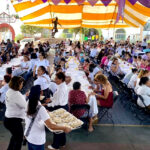
    At least 21 people were hospitalized after a Women’s Day breakfast in Tlaquiltenango, Morelos, on March 8, 2026. Photo: Social Media

    Chilaquiles, Bread, Coffee, and Water Served

    Organizers offered chilaquiles, bread, coffee, and water to dozens of attendees — most of them women who came with family members. Hours later, participants began reporting vomiting, abdominal pain, diarrhea, and blurred vision.

    Those affected sought treatment at the IMSS clinic in neighboring Zacatepec and at the Hospital General Ernesto Meana San Román in Jojutla. Medical staff identified at least 21 patients with similar symptoms, consistent with a food poisoning outbreak. Two patients were reported in serious condition and remained under observation.

    Doctors noted signs including intestinal activity, pain in the upper and middle abdomen, and along the colon. Negative results for appendicitis and kidney-related indicators helped rule out other conditions. The working diagnosis was gastroenteritis and colitis of unspecified origin.

    Authorities said early indications pointed to possible chemical contamination — specifically, a fungicide — though no official confirmation had been issued at time of reporting.

    A Wider Pattern in Mexico

    Food poisoning incidents at public gatherings are not uncommon in Mexico. The country’s health secretariat reports roughly 500,000 cases of food-borne illness annually, according to the Servicio Nacional de Sanidad, Inocuidad y Calidad Agroalimentaria (SENASICA — National Agri-Food Health, Safety and Quality Service). Outbreaks have been recorded at graduation dinners, weddings, and community events across multiple states in recent years, with bacterial contamination the most frequently identified cause.

    Chemical contamination is less common but does occur, particularly when agricultural products or equipment are improperly stored near food supplies. Fungicides and pesticides used in rural Mexican communities can become hazardous when they make contact with food or cooking surfaces. In this case, investigators had not yet determined how a fungicide may have entered the food chain.

    The incident came on the same day that International Women’s Day marches took place across Mexico, with cities including Mérida seeing large public demonstrations. The Tlaquiltenango gathering was one of many municipal-level events organized to mark the occasion.

    Investigation Under Way

    Health authorities were continuing their investigation at the time of this report, and no arrests or administrative actions had been announced in connection with the outbreak. Officials from the DIF municipal system, represented by Irene Vallejo Plascencia, were among those connected to the event’s organization.

    The two patients in serious condition remained hospitalized. The condition of the remaining 19 was not specified in initial reports.


    Key Facts

    • At least 21 people were hospitalized after a Women’s Day breakfast in Tlaquiltenango, Morelos, on March 8, 2026
    • Symptoms included vomiting, diarrhea, abdominal pain, and blurred vision
    • Two patients remained in serious condition as of initial reports
    • Attendees were treated at IMSS Zacatepec and Hospital General Ernesto Meana San Román in Jojutla
    • Preliminary reports suggested possible fungicide contamination; no official cause had been confirmed
    • The breakfast was organized by the Tlaquiltenango municipal government, DIF, and the local Women’s Office
    • Mexico reports approximately 500,000 food-borne illness cases annually

    Source: Diario de Yucatán / El Universal

  • 8M Protesters Set Fire to Police Officers in Campeche; 11 Arrested

    8M Protesters Set Fire to Police Officers in Campeche; 11 Arrested

    Masked demonstrators set fire to state police officers outside the Government Palace in Campeche during an International Women’s Day march on Sunday, leaving two officers with burns and triggering a chaotic police response that swept up at least 11 people — including peaceful protesters and, reportedly, minors

    The attack came as marchers were dispersing following a rally in the state capital. According to local reports, hooded individuals approached a line of Policía Estatal (State Police) officers guarding the Palacio de Gobierno (Government Palace), using an aerosol can and a lighter to ignite the officers. Two female officers suffered burn injuries.

    8M
    Video on social media shows a protestor setting police officers on fire in Campeche.

    Campeche Gov. Layda Sansores condemned the attack in sharp terms, calling it a “criminal act” carried out against women officers who were simply doing their jobs. She also suggested political motives were at play. “Those involved have already been identified and some are linked to political groups,” she said, adding that formal complaints would be filed and that the law would be applied.

    Arrests Draw Accusations of Overreach

    What followed the attack drew as much attention as the attack itself. Police pursued the group responsible for roughly 300 meters to Parque de Las Banderas, near the Government Palace, where they made at least 11 arrests. But witnesses and videos circulating on social media suggested the dragnet went well beyond those responsible.

    Accounts from women present at the park — many of whom say they were protesting peacefully and at a distance from the violence — describe the scene as a “hunt.” Video footage showed riot police arriving on scene, officers surrounding a pregnant woman, and police attacking a vehicle carrying women trying to leave the area. Eyewitnesses said there was “no distinction” in who was detained.

    The incident added a complicated layer to an already fraught day. In neighboring Mérida, the 8M march ended peacefully, a deliberate outcome city officials had worked toward. This year, Mayor Cecilia Patrón Laviada took the unusual step of leaving the Palacio Municipal unbarricaded — a departure from previous years when metal fencing was erected around government buildings as a precaution. As Yucatán Magazine reported, it was a calculated gamble that paid off, with no major confrontations reported. The buildings were not along the route of the march, with damage mainly contained to the Paseo Montejo’s monuments.

    A National Day of Mobilization

    The events in Campeche unfolded against a backdrop of nationwide demonstrations. Tens of thousands of women marched through Mexico City and across the country on Sunday in what has become the largest political protest event in a country where human rights advocates say gender-based violence often goes ignored or unpunished.

    In Mexico City, one of the main avenues turned into a sea of purple and green — colors representing justice and reproductive rights — as thousands of women marched demanding an end to gender-based discrimination by the country’s institutions.

    The scale of participation reflects the urgency many women feel. In Mexico, about seven out of every 10 women have experienced physical, sexual, emotional, or economic violence, according to several studies.

    The 8M marches have grown increasingly charged in recent years. In 2019, activism moved into the streets after reports that police in Mexico City raped a woman, recasting March 8 as an organizing deadline and making it a focal point for coordinated action. Property damage and clashes with police have become recurring features, particularly in cities where the relationship between feminist movements and law enforcement is deeply adversarial.

    In Mexico City this year, the National Palace had been surrounded with metal barriers up to 2.5 meters tall ahead of the march. President Claudia Sheinbaum said the barriers were intended to prevent confrontation between officers and demonstrators.

    Political Fallout

    The events in Campeche are likely to fuel debate on multiple fronts — over the use of fire as a protest tactic, the rights of demonstrators to march without mass arrest, and how authorities should respond when violence breaks out within a larger peaceful demonstration.

    Governor Sansores, who has not shied from controversy during her tenure, made clear she intends to pursue those responsible. Whether the arrested individuals include those who carried out the attack — or primarily bystanders caught in the sweep — was not confirmed by authorities as of Sunday night.


    Key Facts

    • The incident occurred March 8, 2026, during the 8M International Women’s Day march in Campeche city
    • Masked individuals used an aerosol can and lighter to set fire to state police officers guarding the Palacio de Gobierno
    • Two female officers were hospitalized with burn injuries
    • At least 11 people were arrested near Parque de Las Banderas, about 300 meters from the Government Palace
    • Witnesses and video footage allege peaceful protesters and minors were caught in the police sweep
    • Gov. Layda Sansores called the attack a “criminal act” and said those involved have been identified, some linked to political groups
    • Marches took place across Mexico on March 8, with tens of thousands participating in Mexico City alone
    • In Mérida, the 8M march ended without incident

    Source: Diario de Yucatán; CBC News