
Author: Carlos Rosado van der Gracht

  • One of Mexico’s Most Famous Archaeologists is Sounding the Alarm at INAH

    One of Mexico’s Most Famous Archaeologists is Sounding the Alarm at INAH

    INAH
    One of the most venerated voices in Mexican archaeology is sounding the alarm at INAH.

    Eduardo Matos Moctezuma, the 86-year-old emeritus professor of the National Institute of Anthropology and History (INAH) and the legendary director of the Templo Mayor Project, has broken a long silence to issue a devastating critique of the institution to which he dedicated his life. 

    In a series of statements, he warns that INAH is undergoing cumulative deterioration, hindered by chronic budget shortages, bureaucratic paralysis, and political pressures that threaten to erode its ability to protect the country’s ancient heritage.

    The Conscience of a Master

    In a recent article titled “These Times We Live In,” published in the magazine Arqueología Mexicana, Matos Moctezuma pulls no punches. He describes as “desolate” the relocation of archaeological facades and elements to so-called “Memory Parks” as part of the Mayan Train megaproject. Beyond this specific project, he expressed a deep-seated “disenchantment” at seeing museums and archaeological sites lack the necessary resources for maintenance, while young graduates of the National School of Anthropology and History (ENAH) cannot get hired because the Ministry of Finance refuses to open permanent positions.

    His criticism also takes aim at what he sees as attempts to rewrite history for political ends.

    “I stopped hearing my voice when they tried to change the founding date of Tenochtitlán,” he states, referring to official attempts to place the event in 1325 to align with a presidential term. Similarly, he recently condemned the sanitization of pre-Hispanic history, specifically the denial of the well-documented practice of human sacrifice among the Mexica.

    An Accumulated Crisis

    For Matos, these are symptoms of a deep, systemic illness. During a recent forum titled “These Times We Live In,” held at the INAH’s own Directorate of Historical Studies, he explained that the institution’s problems are not merely circumstantial. 

    “I have seen different administrations come and go, with differences between them,” he reflected, “but today we face problems reflected in the lack of renewal of positions, in increasing administrative obstacles, and in conditions that make academic work difficult.” 

    He added, “After 66 years in the INAH and having seen about 10 directors pass, some better, others worse or in between, of course, I have a disenchantment, because I see that support for everything concerning our institution is waning.”

    A Rebellion of Archaeologists

    Matos Moctezuma’s lament echoes a broader insurrection brewing within the ranks of INAH professionals. A collective of researchers has issued a sharp public letter denouncing the agency’s current state. Their grievances paint a picture of an institution brought to a near-standstill by its own weight.

    They denounce an “absurd” internal bureaucracy, stating that research has become “an extremely difficult task” due to excessive and unnecessary administrative red tape. The collective also demands the resignation of the president and members of the Council of Archaeology, whom they accuse of exceeding their authority as a mere consultative body, covering up the destruction of archaeological heritage, and making authoritarian decisions that “denigrate archaeological work”.

    More than a year ago, in November 2025, the group requested meetings with the general director of the INAH, Joel Omar Vázquez Herrera, to address these issues. After six months without a response, they have gone public. “After six months without receiving a concrete response, we publicly denounce that our authorities, in addition to being deaf, are insensitive and incompetent,” the letter states.

    A Pact of Silence and a Question of Survival

    The frustration is palpable. An anonymous letter from academic staff, presented at the forum by ethnologist Rosa María Garza Marcué, denounced that colleagues not only face contracts that violate labor laws but are sometimes expected to work for months without pay and to pay for supplies out of their own pockets. This precariousness, critics say, drives away new talent, leaving INAH an aging institution that is failing to renew itself.

    In his article, Matos Moctezuma wrote that profound sadness is his main feeling upon observing the reality of INAH. “Deep down, it is not only a matter of resources,” he said. “It is a matter of will… of understanding that what is at stake is the memory of a country.” His words constitute a final, desperate call to reverse what he sees as a slow sinking. The question now, resounding through the halls of Mexican archaeology, is whether anyone in a position of power is still listening.

  • AMLO Blasts Trump’s ‘Interventionist’ Tactics
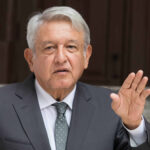
    amlo
    Former Mexican President Andrés Manuel López Obrador has launched a scathing attack on Donald Trump’s administration for meddling in international affairs.

    From his ranch in Palenque, Chiapas, Andrés Manuel López Obrador, Mexico’s former president, has launched a blistering critique of Donald Trump’s current administration. 

    In a lengthy message on X, AMLO has not only called for a course correction but has also sought to position himself as a protector of national sovereignty, aiming to influence a bilateral dynamic that is increasingly tense and complex.

    From Friendly Neighbor to “Vile Adventurer”

    The central axis of AMLO’s argument revolves around a perceived shift in Trump’s character. He recalls his own government as a period of respectful cooperation, where dialogue prevented trade wars and made the T-MEC possible. By contrast, AMLO does not attribute the change to political circumstances but to the bad influence of “false friends and internal and external advisors” who, in his view, have led the American president into “vile and sinister adventures”.

    His greatest concern is the designation of Mexican cartels as Foreign Terrorist Organizations (FTOs). López Obrador warned that this classification could justify unilateral actions, allowing the U.S. to pursue individuals without sufficient evidence in a form of extrajudicial “execution” outside its territory. His final plea, “Por el bien de todos, que regrese el otro Trump” (“For everyone’s good, may the other Trump return”), points to a past he considers more predictable and respectful of Mexican sovereignty.

    Sovereignty Under Fire: FTOs, Extraditions, and Investigations

    AMLO’s intervention is not occurring in a vacuum but in a context of maximum diplomatic friction known as “CIAgate,” triggered by the death of U.S. agents in Mexico. In May 2026, the Trump administration formalized the designation of six Mexican cartels (including Sinaloa and Jalisco Nueva Generación) as FTOs, a move critics argue could paralyze trade and justify military action.

    Supporting President Claudia Sheinbaum, AMLO echoes her stance that these attacks do not seek to solve the fentanyl crisis but are of a “political and electoral” nature, aiming to “weaken Morena.”

    This tension is further fueled by a Los Angeles Times report revealing U.S. investigations into Morena governors Alfonso Durazo (Sonora) for alleged ties to organized crime and Américo Villarrea for fuel theft. Both governors have denied the accusations and claimed their visas are still valid.

    Andrés Manuel López Obrador has emerged as a crucial bulwark for the current administration, interpreting U.S. pressure as interventionism and a coordinated attack on the political project he leads. 

    The former president has also been publicly critical of the Trump administration’s interventions in Venezuela, as well as the rhetoric surrounding an invasion of Cuba.

  • Mexico City Protestors Destroy FIFA Effigies

    Mexico City Protestors Destroy FIFA Effigies

    Fifa world cup
    Members of the CNTE have destroyed several effigies of the FIFA World Cup in Mexico’s capital, worsening security concerns.

    The 2026 FIFA World Cup is now just days away, but Mexico City is far from being in a festive mood.

    Coordinated protests by the National Coordinator of Education Workers (CNTE) have intensified in the capital. The situation has escalated to the point that FIFA has been forced to cancel in-person training for its volunteers at the main Zócalo Fan Fest and move it to a virtual format exclusively due to security concerns.

    The in-person sessions for the volunteers were scheduled for Thursday and Friday. The FIFA message to the volunteers was clear: “For safety reasons and to avoid putting anyone at risk, we have decided to hold these sessions virtually”.

    This decision is a significant blow to the tournament’s preparations, signaling that the global sporting event cannot proceed as planned without addressing the social unrest in the host country.

    The Zócalo Fan Fest is the flagship fan zone for all of Mexico. This massive complex in the nation’s central square is expected to be the primary gathering point for fans, with an anticipated capacity of up to 60,000 people during match days. The site is designed to feature live music, local gastronomy, and large screens broadcasting the games.

    This sprawling installation has effectively become the physical and symbolic front line of the conflict. For the CNTE, it is a highly visible target for demonstrating its grievances against the government.

    The week’s events began with the CNTE significantly escalating its protest tactics. On Tuesday, teachers blocked major avenues in Mexico City, including Paseo de la Reforma and Circuito Interior, causing severe traffic chaos.

    The most symbolic act of defiance was the toppling and vandalism of several large World Cup statues of soccer players. 

    Videos of hooded individuals toppling 5-meter-high plastic effigies with ropes circulated widely online. The protesters scrawled a potent message on the fallen figures: “If there is no solution, the ball will not roll”.

    The underlying demands center on a national salary dispute. The teachers are calling for a significant wage increase and the reversal of a new pension law, with some leaders demanding a 100% salary increase. The union has threatened to disrupt the World Cup, promising to bring “millions” of teachers to the capital to protest.

    The government has confirmed it is in dialogue with the CNTE to seek a resolution. However, with the opening match less than two weeks away, security is now a critical concern. The cancellation of the volunteer training is a clear message that the path to the 2026 World Cup in Mexico City is proving to be much more turbulent than anyone anticipated.

  • Sheinbaum Takes a Hard Line Against Washington, Rallying Support Amid Sinaloa Scandal
    Sheinbaum Takes a Hard Line Against Washington, Rallying Support Amid Sinaloa Scandal

    Sheinbaum
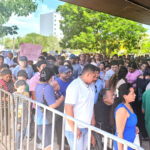
    Last Sunday, supporters of President Sheinbaum showed up in droves across the country to express their support.

    Two years after her historic election victory, President Claudia Sheinbaum marked her political anniversary by delivering her toughest warning yet to the United States, reframing a growing domestic political crisis as a national struggle to defend Mexico’s sovereignty.

    Addressing an estimated 130,000 supporters packed into the Plaza de la República on Sunday, Sheinbaum launched a fierce attack on the US Department of Justice over its accusations against high-ranking officials in Sinaloa.

    Her central question was direct: “Is it a legitimate interest to fight organized crime, or do they actually intend to influence the 2027 election in our country?” In the shadow of the Monument to the Revolution, she answered her own question by accusing Washington of injerencia, a Spanish term for interference.

    A Swift and Partisan Dispersal

    By mid-afternoon, the plaza was almost empty. While the administration boasted of a massive turnout, the speed with which the crowd vanished was as notable as its size. Buses idled at the ready, their engines running to return supporters to their destinations shortly after the president’s speech ended.

    The swift and organized dispersal highlighted the nature of the event: it was not an organic outpouring of public sentiment, but a calculated mobilization of territorial leadership—a hallmark of the political machine built by her predecessor, Andrés Manuel López Obrador.

    The Sinaloa Elephant in the Room

    The president’s nationalist messaging obscured a much more delicate issue: the crisis within her own party. The event was meant to celebrate the second anniversary of her triumph. Still, it instead functioned as a show of force to shield Morena from the fallout of U.S. accusations against high-ranking party members.

    The Justice Department has formally accused and requested the extradition of Sinaloa Governor Rubén Rocha Moya and Senator Enrique Inzunza, alongside eight other officials, for alleged ties to the Sinaloa Cartel. The US claims these officials received bribes to protect the cartel in exchange for political support.

    Not once during her speech did the president mention the accused by name. There were no substantive explanations of the allegations and no detailed defense of their conduct. Instead, the Sinaloa scandal was transformed into a national grievance against an overreaching United States.

    A New Law to Block Elections

    This confrontation comes as Mexico’s Senate is fast-tracking a controversial constitutional amendment that would allow elections to be annulled on the grounds of “foreign interference.” While the official narrative, echoed by the president, presents the reform as a preemptive shield against global meddling, critics see it as a political weapon.

    The amendment’s language is vague: it refers to “acts of foreign intervention or interference that influence electoral results,” a definition so broad that it raises immediate concerns about how it might be wielded by a dominant political party controlling all three branches of government.

    The United States has also publicly expressed concerns that the amendment could be “used as a political tool against the opposition.” Morena’s defenders, including Deputy Ricardo Monreal, argue that simple tweets or news reports will not trigger the measure. However, with Washington’s aggressive security policies and the upcoming Mexican mid-term elections, the combination of a high-stakes political battle and ambiguous legal language has put electoral stability at the center of the debate.

    The Chihuahua Subplot

    Sheinbaum also wove the unrelated death of two CIA agents in Chihuahua into her sovereignty narrative. While the US has called for cooperation and transparency, the president has used the incident to highlight the double standards of security cooperation. Her administration has pointedly noted that while the US demands extraditions, it has not fulfilled Mexico’s own requests. The Mexican Foreign Ministry revealed that between 2018 and 2026, Mexico filed 269 extradition requests with the United States—none of which were granted.

    The case has also been used to spotlight opposition figures. Although Governor Maru Campos has said she is cooperating with the investigation, Sheinbaum used her speech to link her political adversaries to a pattern of foreign collusion, a recurring theme in López Obrador’s playbook.

    A Battle for the Narrative

    As the rally wound down, the crowd chanted, “You are not alone!” It was a potent display of loyalty as Sheinbaum recalibrates her presidency for the challenges ahead.
    But Sheinbaum’s critics, including El País opinion columnist Elia Castillo Jiménez, argue that the president is less focused on governing than on winning the argument.

  • Mexico Cell Phone Registration 2026: Deadline Looms, But Millions Refuse

    Mexico Cell Phone Registration 2026: Deadline Looms, But Millions Refuse

    register
    The deadline to register mobile phones in Mexico is June 30; on July 1, unregistered lines are to be suspended.

    With a handful of weeks to go before Mexico’s mandatory cell phone registration deadline on June 30, 2026, registrations are finally starting to tick upward

    But a significant portion of the population is refusing to comply, citing fears over data privacy and a profound distrust of the government.

    The Registro Nacional de Usuarios de Telefonía Móvil (Renaut) requires every mobile phone user to link their SIM card to their CURP (Unique Population Registry Code) and a valid ID – or risk losing service entirely.

    As the cut-off approaches, registrations have gradually increased, but the numbers remain troublingly low. As of late May, only about 49.5 million of the country’s estimated 158 million active lines had been registered, a compliance rate of just 31%. 

    Other reports put the figure even lower, reporting that only 28.3 million of 161.7 million lines had been processed – barely 17.5 percent of users.

    How to Register

    For those wishing to register their line, the Mexican government has set up a step-by-step tutorial (in Spanish). The process is simple and requires an INE voters’ card or, for foreigners, a valid passport. 

    Because of the rush to register, the websites of several companies, including Telcel and AT&T, have been experiencing technical problems, so getting it done may not work on the first try.

    However, after three attempts, if the registration is not completed properly, the system will stop working, forcing a phone reset, the use of another device, or a visit to the mobile carrier’s offices. 

    Privacy Fears and a Troubled History

    The government claims the registry is a crucial tool to combat extortion and phone fraud, but many Mexicans remain unconvinced. This is not the country’s first attempt at such a measure. A similar database, Renaut, was scrapped in 2011 after it was discovered that user information was being sold in open-air markets. In 2022, the Supreme Court declared a similar biometric registry unconstitutional, citing privacy violations.

    Civil liberties groups, such as the Network for Digital Rights (R3D), warn that the new system is still deeply flawed, as security authorities can request data from telecoms without a court order – a dangerous loophole in a nation plagued by corruption and cyberattacks. These fears are not hypothetical. Recent years have seen a series of catastrophic breaches, including a 2022 hack of the Secretariat of National Defense (Sedena) that exposed seven terabytes of classified documents and a 2024 attack on the Presidency’s Legal Counsel that leaked 206 GB of sensitive data.

    “There are reports that similar databases have been hacked or sold. So, it is not unreasonable for people to worry that their name, CURP, and cell number could end up in the hands of criminals,” an analyst stated, summarizing the public’s predominant anxiety.

    “Time to Revise”: Carlos Slim Weighs In

    Adding a powerful voice to the criticism, Mexican billionaire Carlos Slim – whose company América Móvil owns the country’s largest carrier, Telcel – has publicly called for the government to reconsider its strategy. Slim described the registration process as “very complicated” and argued that the deadline is too short, particularly for the prepaid market, which accounts for roughly 80% of all lines.

    “I think they should give it a ‘re-study’ to make it more efficient,” Slim said, suggesting the current timeline is unrealistic for millions of users.

    Skepticism Regarding Actual Suspensions

    The most widespread belief among the unregistered is that the promised service suspension is a bluff. A huge number of Mexicans do not believe that phone companies will follow through on disconnecting their service. 

    Many are convinced that a last-minute amnesty will be granted or that the Supreme Court, which has already struck down similar mandates, will step in at the eleventh hour to block the cut-off. 

    As of May 2026, authorities maintained that no extension would be granted, but with the deadline looming, many are betting on last-minute political or judicial intervention. The coming weeks will determine whether the government’s security gamble pays off, or if millions of cell phones go silent.