
Author: Carlos Rosado van der Gracht

  • Why El Chapo Wants to Serve His Sentence in Mexico Rather than the US

    Why El Chapo Wants to Serve His Sentence in Mexico Rather than the US

    Chapo
    Convicted Sinaloa cartel leader Joaquin “El Chapo” Guzman is again trying to leave his United States prison, this time by asking a New York court to contact Mexican President Claudia Sheinbaum about his possible transfer to Mexico. 

    During the past week, Joaquin “El Chapo” Guzman sent a handwritten letter from the ADX Florence supermax prison in Colorado to the Federal Court for the Eastern District of New York. In the letter, his thirteenth such communication, he requested that judicial authorities reach out to President Sheinbaum’s office to explore options for him to finish his sentence in his home country.

    Guzman has been serving a life sentence since his 2019 conviction on drug trafficking, money laundering, organized crime, and firearms charges. His current facility, known as the “Alcatraz of the Rockies,” is one of the strictest prisons in the world. Inmates spend 23 hours a day in solitary confinement inside small concrete cells measuring roughly seven by twelve feet.

    Guzman has a history of escaping from Mexican prisons. In 2001, he was smuggled out of a prison in Jalisco, reportedly hidden in a laundry cart pushed by maintenance workers he had bribed. In 2015, he escaped from the Altiplano maximum security prison through a mile-long tunnel equipped with lighting and ventilation, using a motorcycle modified to run on rails. 

    That escape was considered a major embarrassment for the Mexican government. In 2016, he was recaptured and extradited to the United States the following year.

    Even if Guzman did not plan another escape, a transfer to Mexico would likely make his detention much more comfortable. 

    In many Mexican prisons, inmates can bribe guards for privileges, and drug cartels often control facilities through corruption and intimidation. A 2012 report from Mexico’s National Human Rights Commission found that 65 of the country’s 101 most populated prisons were under the control of convicts. 

    One prison was found to have sex workers, large plasma screen televisions, and drugs available for inmates. In contrast, at ADX Florence, Guzman is isolated in a concrete cell with minimal human contact, has only one hour of exercise per day, and has complained of headaches, lack of clean air, depression, memory loss, and discrimination for not receiving legal documents in Spanish.

    This is not Guzman’s first request to be returned to Mexico. In April 2025, he sent a handwritten letter in English to the same federal court, asking the district judge to respect his rights and send him back to his country. 

    Judge Brian Cogan rejected that petition along with four other letters sent around the same time, stating that some of the documents “lack meaning and none of them have legal validity,” and dismissing all of them. In his most recent letter, Guzman repeated his claims of rights violations during his extradition process and added that the violence attributed to his cartel was actually the responsibility of the Mexican government during that period. He wrote, “The supposed violence was unfair regarding my sentence, when the Mexican government did all the deaths, and I was blamed for trying to protect my life and my family in Mexico.”

    His letter also asked for family visits to be restored and questioned his living conditions, arguing that basic principles of equality and rights should be respected for all incarcerated people. He thanked Judge Brian M. Cogan for considering his health in future appeals, though his previous requests have all been dismissed. So far, neither the Mexican presidency nor U.S. judicial authorities have publicly responded to the request outlined in the letter.

    Who is El Chapo?

    Joaquin Archivaldo Guzman Loera was born in the 1950s in La Tuna, a mountain village in Sinaloa, Mexico. 

    Under Guzman’s leadership, the Sinaloa Cartel became one of the most powerful drug trafficking organizations in the world, moving billions of dollars’ worth of cocaine, heroin, methamphetamine, and marijuana across the U.S. border. Forbes magazine estimated his fortune at $1 billion in 2009, and U.S. prosecutors later put the figure at nearly $13 billion. For years, he was considered the world’s most wanted drug lord, known for both his ruthlessness and his ability to evade capture.

  • The World Cup’s Ugly Side: FIFA’s Exorbitant TV Fees Spark Outrage in Mexico

    The World Cup’s Ugly Side: FIFA’s Exorbitant TV Fees Spark Outrage in Mexico

    FIFA
    Business owners in Mexico face steep fees if they don’t pay up to allow their patrons to enjoy FIFA World Cup matches.

    As Mexico prepares to co-host the 2026 FIFA World Cup, a bitter fight is brewing far from the manicured lawns of the stadiums. While the national team gears up for the opening match, anger and injustice are boiling over among the country’s bar owners, restaurateurs, and even local governments. They are the latest targets of what many are calling FIFA’s aggressive and “anti-soccer” licensing tactics.

    The debate centers on the exorbitant fees FIFA demands for the right to broadcast matches in public spaces — practices that have turned what should be a nationwide celebration into a legal and financial nightmare for small business owners.

    The Price Tag for Patriotism

    For decades, watching El Tri at the local cantina was a sacred, affordable ritual. That tradition is now under threat. According to the Mexican National Chamber of the Restaurant and Seasoned Food Industry (CANIRAC), the costs to legally show the games are prohibitive.

    Israel López García, president of CANIRAC Yucatán, recently outlined the strict locks FIFA places on broadcasting. Businesses cannot use domestic cable or streaming services like VIX; they are forced to contract specialized commercial packages from providers like Izzi Negocios or Sky Business.

    The pricing is tiered by size but is universally steep, ranging from 5,000 pesos (US$290) per TV in small venues to 25,000 pesos (US$1,450) at venues with 20 tables or more. 

    For a family-owned restaurant hoping to attract a few extra diners, these costs are devastating. Even municipal governments have been forced to cancel public viewings in town squares because they cannot afford the licensing fees.

    The “Anti-Mexico” Sentiment

    Beyond the transmission fees, businesses face draconian penalties for simply using World Cup imagery in their advertising. The fear of the Instituto Mexicano de la Propiedad Industrial (IMPI) has swept through the hospitality industry.

    “Those who are not registered and linked to FIFA… the restrictions related to the unauthorized use of these logos and trademarks through advertising can lead to fines exceeding 28 million pesos,” López García warned. This staggering figure—roughly US$1.6 million — is the sword hanging over every mom-and-pop shop.

    In response, the atmosphere in cities like Mexico City has been described as surreal. Instead of festive decorations, many establishments have stripped their walls clean. A manager for the Wingstop chain in Mexico City told EFE that the World Cup “doesn’t even seem like a World Cup in Mexico; everything is prohibited”. Bars on Paseo de la Reforma have removed flags and balls to avoid the IMPI inspectors, who have the authority to impose these massive fines or even close businesses for 90 days.

    “It is disappointing on the part of FIFA and the Government that they allow all this,” said Raúl Torres, a supervisor in Mexico City. The widespread sentiment is that FIFA is prioritizing short-term profit over the game’s cultural spirit, leading many to label the practices “anti-soccer” and punishing the very fans who create the atmosphere FIFA profits from.

    A Call to Resist

    Ironically, while the chamber of commerce is advising its members to comply to avoid bankruptcy, the grassroots sentiment is shifting toward resistance. Many business owners feel that FIFA is acting as a bully and plan to test their luck. 

    As one supervisor lamented, the area around the stadium is totally apagada (turned off) and lonely, devoid of the foreign tourists and local energy that was expected.

  • Indigenous Groups in San Luis Potosí Mobilize Against New Fracking Policy
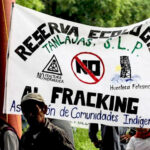
    Indigenous Groups in San Luis Potosí Mobilize Against New Fracking Policy

    fracking
    “Not here, not there, not anywhere”: the slogan capturing indigenous resistance to hydraulic fracturing in Mexico’s Huasteca region

    A political confrontation is unfolding in northeastern Mexico, where indigenous communities in the Huasteca Potosina region are challenging President Claudia Sheinbaum’s decision to legalize and promote hydraulic fracking. 

    After years of an official ban and widespread political opposition to the practice, the current administration has reversed course, citing national energy sovereignty. However, indigenous leaders from the Tének and Náhuatl peoples maintain that the government has violated their constitutional rights by failing to conduct legally mandated consultations before approving extraction projects on their ancestral lands.

    The Dangers of Fracking

    Opponents cite severe environmental and health risks associated with fracking. Hydraulic fracturing involves injecting a mixture of water, sand, and chemical additives at extremely high pressure to fracture rock formations and release trapped oil and gas. For a single well, this process requires approximately 29 million liters of water and over 600 toxic chemicals.

    Environmental impact assessments indicate that the proposed polygons (Castaña and Maguey) contain 200 perennial bodies of water and 1,306 intermittent streams. Indigenous leaders warn that these water sources—including the Valles, Pujal, Coy, Tampaon, Huichihuayan, and Moctezuma rivers—would face severe contamination from chemical injection and methane release.

    “The fracking requires millions of liters of fresh water per well that will be extracted from aquifers vital for human consumption and agricultural activity,” indigenous representatives stated in a formal declaration. “There is no sovereignty possible if we sacrifice the health of our population”.

    The coalition further warns that claims of ecological fracking or non-damaging extraction techniques are scientifically false. “There is no way that the exploration of shale gas and oil can be a clean activity. The injection of chemicals and the release of methane are undeniable technical realities,” they assert.

    Indigenous Leadership and the Slogan of Resistance

    At the forefront of the opposition is Jaquelina Fernández Acosta, a Tének teacher from Tamaletón and a vocal defender of indigenous rights. During the International Day of Indigenous Women ceremony in September 2025, while receiving an award from the state’s Indigenous Development Institute (INDEPI), Fernández Acosta used the platform to protest fracking projects. She held up a sign written in her native Tének language expressing her community’s rejection of the practice.

    Fernández Acosta has popularized the slogan “not here, not there, not anywhere” (aquí no, allí no, en ningún lado), which has become a rallying cry for affected communities. 

    The slogan summarizes a position of total opposition to hydraulic fracturing, rejecting any compromise that would permit the practice in some locations while prohibiting it in others. This position reflects the community’s understanding that water systems are interconnected and that contamination in one area inevitably affects surrounding regions.

    Fracking and Consultation Rights

    The central legal argument made by indigenous groups rests on the absence of prior consultation. Mexican constitutional law, particularly Article 2 of the Constitution, along with international instruments such as the International Labor Organization’s Convention 169 (ratified by Mexico), requires that indigenous communities be consulted before any project that could affect their territories or ways of life. These consultations must be “prior, free, informed, culturally appropriate, and in good faith.”

    Indigenous leaders assert that no such consultation process has occurred regarding the fracking projects planned for the Huasteca. “We warn that any attempt to implement fracking on indigenous territories without prior, free, and informed consultation is born with a defect of origin,” the communities declared in an April 2026 statement. 

    Rejection Despite Government Claims

    Despite the federal government’s efforts to move forward with planning, resistance on the ground remains firm. On June 5, the 5th Regional Forum, titled “No to Fracking, in Defense of Territory, Water, and Life,” was held in Huehuetlán, drawing massive participation from Tének and Náhuatl communities, agrarian authorities, municipal officials, civil organizations, agricultural producers, tourism representatives, and researchers. 

    The assembly reached a unanimous agreement to reject and prevent fracking in their territories.

  • Mexico’s Olinia EV Is Turning Heads, but not Necesarily for the right reasons

    Mexico’s Olinia EV Is Turning Heads, but not Necesarily for the right reasons

    Olina
    President Sheinbaum demos the new Olina EV during a special press event.

    The recent unveiling of the first production model of Olinia, Mexico’s state-backed electric vehicle initiative, has ignited a national conversation that pits pragmatic engineering against its unorthodox look and specifications. 

    Olia, a Model Designed for the Neighborhood, Not the Showroom

    On June 7, Olina project coordinator Roberto Capuano Tripp finally took the wraps off Olinia Uno, the first tangible result of a project announced by President Claudia Sheinbaum in October 2024. 

    With a maximum speed capped at 50 kilometers per hour and a per-charge range of 125 kilometers, the Olinia Uno is explicitly not designed for highway travel or long commutes. 

    Instead, its tall, boxy body and compact footprint are conceived as a solution for the daily reality of millions of Mexicans, where 70% of the population lives in urban areas and 80% of daily trips cover fewer than 30 kilometers. 

    The car can be recharged from any standard household outlet, eliminating the need for specialized public charging stations for daily use.

    Designers explicitly drew inspiration from the ubiquitous mototaxis that navigate narrow streets across the country, aiming to offer a safer, enclosed alternative with space for four passengers or adapted configurations for people with disabilities.

    While earlier plans spoke of three different models and a wide price range, Capuano confirmed that this initial version will retail for 150,000 pesos (roughly USD $7,500), a figure within reach of the country’s working class. 

    Government officials argue that the Olina’s operational cost, estimated at just half a peso per kilometer, will save owners up to 50,000 pesos annually compared to a conventional vehicle, making it cheaper to run than a motorcycle.

    Olina, Sovereignty, Economy, and the Battle Against Chinese Imports

    President Sheinbaum has been clear that the goal is for Mexico to move beyond its role as a low-cost assembly hub for foreign automakers and instead develop its own proprietary technology, a transition explicitly framed as a step toward technological sovereignty. 

    The project’s name, derived from the Nahuatl word for “movement,” is an intrinsic part of this narrative, embedding a cultural and linguistic identity directly into the engineering.

    The Mexican EV market is projected to grow between 25% and 30% annually over the next five years, but that growth is currently being captured almost entirely by imported models, particularly from Chinese brands like BYD and Chery, which already account for nearly a tenth of new car sales in the country. 

    Reception: A Storm of Memes Meets a Pragmatic Defense

    From the moment the first images of the Olina were shared by President Sheinbaum on social media, the aesthetic debate began in earnest. Critics were quick to pounce on the vehicle’s utilitarian, almost brutalist form. 

    On social media, the car was labeled Olina, “the ugliest thing I have ever seen,” and its design was sarcastically attributed to having been commissioned by a five-year-old child. Another user on X, formerly Twitter, quipped that the car was “perfect for crater-level potholes,” a biting reference to Mexico’s notoriously poor urban infrastructure. 

    The mockery has been widespread and relentless, with the vehicle’s slab-sided, industrial aesthetic becoming a primary target for those who see the project as a national embarrassment.

    However, a strong countercurrent of support has emerged, arguing that critics have fundamentally misunderstood the project’s goals. Supporters point out that the Olinia Uno is not a luxury good or a status symbol, but a piece of industrial equipment designed for a specific and vital public purpose: affordable, sustainable mobility for the working class. 

    The director of the project himself stated that Olinia is “a project for the people,” not a bid for design awards. 

    As one Mexican columnist observed, her own mother wanted an Olina not because it was pretty, but because it promised to solve a real, daily logistical problem at a cost that was finally attainable.

  • How the Mayan Train Sidestepped Lawsuits and Transferred Land to the Army

    How the Mayan Train Sidestepped Lawsuits and Transferred Land to the Army

    Tren Maya
    Landowners affected by Tren Maya-related expropriations are left with no real legal recourse as the project is decreed a national security concern. 

    The Tren Maya, the flagship infrastructure project of former president Andrés Manuel López Obrador, was built under a legal framework that allowed the federal government to bypass normal market conditions and place thousands of hectares of land under direct military control. 

    A report published in June 2026 by México Unido Contra la Delincuencia (MUCD) documents how expropriations carried out for the construction of the railway significantly expanded the real estate holdings under the control of the Mexican Army. 

    The mechanism, the report argues, avoided the normal costs and conditions of the land market while causing direct harm to indigenous communities in the region.

    The legal pathway for this accumulation of land was paved early. In November 2021, an agreement published in the Official Gazette declared the Tren Maya, or Mayan Train, a matter of national security. 

    This designation, issued by the National Public Security Council, had a specific practical effect: it allowed the government to lift definitive suspensions that courts had already granted against the project. 

    In one notable case, a federal judge had issued a definitive suspension halting construction on Section 5 of the railway. Instead of contesting the ruling with environmental impact evidence, the government declared the entire project a national security matter, effectively voiding the court order. 

    The move was widely criticized. The National Action Party accused the government of using a tramposa maniobra to evade justice and hide the corruption behind the project. UN experts later warned that the change of status did not allow Mexico to elude its international obligations to protect the human rights of affected communities.

    With legal obstacles neutralized, the land acquisitions proceeded at scale. The MUCD report documents more than 300 expropriation decrees and public utility declarations transferring ejido and private lands across Chiapas, Tabasco, Campeche, Yucatán, and Quintana Roo. 

    Under President Claudia Sheinbaum, new expropriation decrees have been published regularly, affecting ejidos such as Tikuch in Yucatán, where landowners are offered as little as 14 pesos per square meter. In other cases, the government paid 354 pesos per square meter for land in Quintana Roo, demonstrating the wide disparity in valuations.

    The land being acquired is not randomly selected. MUCD argues that the government deliberately incorporated strategic territorial extensions before the full added value generated by the railway could be reflected in market prices. 

    This means that as the railway raised land values across the peninsula, the state had already secured those parcels at pre-development prices. The benefit, therefore, is not limited to the railway infrastructure itself. It extends to the land beneath stations, operational facilities, hotels, and future commercial projects linked to the rail corridor. Unlike government spending on construction, which is consumed over time, real estate assets remain as long-term holdings. 

    The economic reach of the Tren Maya, the report argues, cannot be measured solely by passenger or cargo revenue, but also by the accumulation of territorial assets and infrastructure under the control of the military.

    The scale of the expropriation is matched by the volume of ongoing legal challenges. As of 2026, 51 active judicial proceedings are tied to the project. These include 12 lawsuits related to expropriations and environmental matters, three nullity trials over early contract terminations and payment refusals, four agrarian suits filed by peasants demanding land restitution, and 31 labor lawsuits from workers alleging unjustified dismissals.

    The social and cultural costs of this land transfer are also significant. For indigenous and ejido communities across the peninsula, land holds not just an economic value but a cultural, historical, and identity-based one. The MUCD report argues that the expropriation scheme allowed the government to incorporate strategic lands before the added value of the railway was fully reflected, meaning communities were compensated at pre-development prices while the state captured the subsequent gains. 

    The national security declaration, the expedited expropriations, and the consolidation of military-managed enterprises have produced a new economic reality in the southeast. The question that remains is whether this model of development, built on legal exceptionalism and land transfer at below-market prices, will ultimately serve the public interest or simply enrich a new military-commercial class.
    With information from Diario de Yucatán.