
Author: Carlos Rosado van der Gracht

  • Mexico’s World Cup Exit to England: Why Fans Are Celebrating Despite the Loss

    Mexico’s World Cup Exit to England: Why Fans Are Celebrating Despite the Loss

    mexico
    Mexico’s elimination from the 2026 World Cup was a bitter pill to swallow for fans, but the team’s performance and grit have won them near-universal praise.

    Mexico’s World Cup campaign ended on Saturday with a narrow 2-3 loss to England in the quarterfinals. The English players celebrated their advance to the semifinals, but the Mexican squad remained on the pitch. 

    Some had their heads in their hands, while others consoled each other. The final score marked a defeat, yet the crowd’s reaction and critics’ analysis have been unified in praise. By any reasonable measure, this Mexican team has delivered the most impressive performance in the nation’s World Cup history.

    Mexico’s Match Against England

    The match itself was a testament to the team’s character. After falling behind early to a well-taken goal, Mexico did not retreat. They pressed high, disrupted England’s rhythm, and created several chances. A brilliant equalizer from a set piece silenced the English supporters. When England took the lead again just before halftime, the momentum seemed to shift permanently.

    Mexico came out for the second half with renewed energy. They scored a second equalizer, a well-worked team goal that involved a series of quick passes before a clinical finish.

    It took a moment of individual brilliance from an English star in the 78th minute to finally break the deadlock. Even then, Mexico threw everything forward, winning corners and free kicks and forcing the English goalkeeper into two crucial saves in the dying minutes.

    A Tournament of Attacking Football

    The story of this tournament for Mexico has not been one of luck or defensive desperation. It has been a story of proactive, attacking football. In previous World Cup appearances, Mexico often exited in the round of sixteen. 

    Those performances were frequently defined by a defensive posture and a reliance on individual talent to see them through.

    This year was different. Mexico topped their group with a record of two wins and a draw, scoring seven goals in the process. In the round of sixteen, they dismantled a strong European side with a 3-1 victory. 

    That result was statistically and aesthetically their most complete knockout-stage performance in decades. They were not merely participants; they were protagonists, dictating the pace of play and creating better chances in every game they played.

    The Youngest Squad in the Tournament

    What makes this praise particularly significant is the composition of the team. This is not a squad of aging veterans attempting one last run. It is a young, vibrant, and fearless group of players. The average age of the starting lineup against England was just under 23 years old, an incredibly low statistic for a team in the quarterfinals of a World Cup.

    The most talked-about player for Mexico has been a seventeen-year-old forward, Gilberto Mora Zambrano, nicknamed “Morita.” He was introduced as a substitute in the opening game and quickly became a starter. 

    His pace, dribbling, and composure on the ball have drawn comparisons to some of the sport’s greatest young talents. Yet he is just one part of a larger wave. The midfield is anchored by a twenty-year-old who has shown the tactical intelligence of a player ten years his senior. 

    The fullbacks, both under the age of twenty-two, have provided constant width and energy, covering every blade of grass on the flanks. 

    Celebrated at Home and Abroad

    At home, the celebration has been immense. Streets were filled with fans watching on giant screens, and even after the final whistle, there was a sense of pride rather than despair.

    Mexican media have been effusive in their praise, focusing on the bright future these young players represent. The sentiment is that this team has laid a foundation for the next decade of Mexican football. 

    They have proven that they can compete with the best teams in the world on even terms, not merely by defending deep and countering, but by possessing the ball and imposing their own style.

    Internationally, the respect has been equally notable. Commentators from around the world have acknowledged that Mexico was the better team for large portions of the match against England. 

  • Archaeologists Unearth Minanbé, a 1,200-Year-Old Maya City Hidden in the Jungle

    Archaeologists Unearth Minanbé, a 1,200-Year-Old Maya City Hidden in the Jungle

    Minanbé
    The Calakmul Biosphere is home to an enormous number of Maya archaeological sites, dating from the dawn of Maya civilization to the so-called classical collapse. 

    Minanbé, a name derived from the Yucatec Maya words mina’an, meaning “there is no,” and be, meaning “road,’ has emerged from the dense jungle of the Calakmul Biosphere Reserve in the Mexican state of Campeche. 

    The 37-hectare or 91-acre site, which flourished during the Late Classic to Terminal Classic period between 600 and 900 CE, represents one of the most significant archaeological discoveries in recent years. Unlike many other Maya sites that have been looted over the centuries, Minanbé remains completely intact, offering researchers an unprecedented window into the final centuries of Maya civilization.

    The discovery was made by an international team led by the Slovenian archaeologist Ivan Šprajc, affiliated with the Research Center of the Slovenian Academy of Sciences and Arts, and authorized by Mexico’s National Institute of Anthropology and History (INAH). The find culminates three decades of research during which Šprajc has identified more than 80 Maya sites across the largely unexplored Central Maya Lowlands of the Yucatán Peninsula. Among his previous discoveries are the nearby sites of Chactún, reported in 2013, and Ocomtún, discovered in 2023.

    The Challenge of Access

    The name Minanbé was chosen precisely because of the extreme difficulty the team faced in reaching the location. The site is situated in such a remote section of the Calakmul Biosphere Reserve that no roads or even logging paths exist. To access the ruins, the archaeologists and workers from the community of Constitución had to cut a five-kilometer trail through the jungle using machetes and chainsaws. After clearing this initial path, they advanced on all-terrain vehicles and then walked an additional six kilometers under the scorching sun.

    Šprajc explained that the absence of callejones, the dirt roads opened decades ago for logging operations that had guided them to other sites, was actually a positive sign. In his own words, the lack of access routes meant the site had remained undisturbed. For the last three years, this was the first intact site his team had found, with no evidence of looting pits.

    What Minanbé Reveals

    The urban core of Minanbé covers approximately 15 hectares (37 acres) and includes plazas surrounded by palace-like buildings and religious structures, as well as terraces and wetlands with hydraulic canalization systems. The tallest structure is a pyramid temple exceeding 13 meters in height, built in the Río Bec architectural style, which is characterized by finely cut masonry, smooth facade panels, steep stairways, and decorative moldings.

    The team documented 14 stone monuments, including stelae and altars, many of which bear hieroglyphic texts and iconographic elements. These monuments were arranged at the end of a causeway that connects the central and northeastern sectors of the site. The epigrapher Octavio Esparza Olguín has been working to decipher the inscriptions, and some of the monuments show evidence of intentional alterations. 

    For example, a fractured altar depicting a ruler wearing a headdress and jewelry has been identified. This could indicate the incursion of groups from the northern part of the peninsula during a later period, who modified the city’s political symbolism.

    A Glimpse Into the Final Years

    One of the most significant finds is Stela 1, which depicts a decapitation alongside a calendar date corresponding to the year 849 CE. The monument shows a figure beheading another with an axe or knife. According to the project’s epigrapher, this suggests that at least some of the monuments were erected shortly before Maya sites were abandoned in the 10th century C.E. The discovery of this stela, still readable, was particularly notable to the team. The archaeologist Vitan Vujanović remarked that it was the first time he had registered a reasonably well-preserved temple and a stela still containing glyphs.

    The region that now holds Minanbé was once home to an estimated nine to 11 million people during the Late Classic period. The sheer density of archaeological remains in the area makes it frequently impossible to determine where one ancient community ends and another begins. More than 500 archaeological sites of varying sizes have been identified within the Calakmul Biosphere Reserve alone, a testament to the complexity and scale of Maya civilization in this region.

    The Role of Technology

    The identification of Minanbé was made possible through Light Detection and Ranging (LiDAR) surveys, a remote sensing technology that allows archaeologists to see through dense vegetation. As Šprajc explained, LiDAR is a powerful scanning method that enables researchers to identify features that stand out from the natural terrain. The initial LiDAR data for this area was acquired 13 years ago, but it was only during this recent field season that the team was able to verify the information on the ground.

    Future Research at Minanbé

    While the discovery of Minanbé has already provided valuable insights, further research will be necessary to understand its significance fully. Šprajc has noted that more in-depth excavations are highly desirable, but they would face considerable logistical challenges. Building an access road to the site would require authorization from the reserve authorities, and the remote location would make sustained archaeological work difficult.

    At 71, Šprajc has stated that he has no immediate plans for another project, though he has not ruled it out entirely. For now, Minanbé stands as a remarkable testament to the enduring mysteries of the Maya world, a city that lay hidden in the jungle for more than a thousand years, untouched and unseen, only to finally reveal its secrets to those willing to cut a path through the wilderness.

  • Mexico City World Cup Celebration Turns Deadly: 4 Dead at Angel de la Independencia
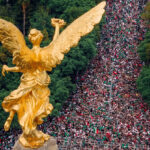
    Mexico City World Cup Celebration Turns Deadly: 4 Dead at Angel de la Independencia

    Mexico City
    Celebrations turned deadly as four people lost their lives in Mexico City at the World Cup victory celebration over Ecuador. 

    A night of celebration in Mexico City turned into tragedy as an estimated 1.2 million people gathered at the iconic Angel de la Independencia to celebrate the national team’s World Cup victory over Ecuador. 

    The massive crowd, which overwhelmed the streets of Paseo de la Reforma and the surrounding areas, resulted in the deaths of four people. Mexico City authorities have since confirmed the fatalities and are now working to implement new safety measures ahead of future matches.

    The victims included two women, aged 19 and 48, and a 44-year-old man, all of whom died from asphyxiation. A fourth victim, a man approximately 30 years old, was hospitalized after suffering an epileptic seizure and gastrointestinal bleeding in the middle of the crowd. He later died from cardiorespiratory arrest. 

    Emergency responders found three of the victims unconscious on side streets near the monument, including at the intersections of Hamburgo and Lancaster streets and on Berna Street. Despite immediate medical attention, they could not be revived.

    The Mexico City Attorney General’s Office has opened four investigation files into the deaths. The primary line of investigation suggests that the massive crowding causes physical failures. Witnesses described a chaotic scene in which the crowd surged forward after a chant of “nadaremos” (we will swim) spread through the gathering. 

    The movement created a bottleneck on Lancaster Street, where people began pushing, and several fell to the ground. Fireworks after the game also prompted a brief panic, causing people to run and fall in crowded side streets. 

    In total, emergency services attended to more than 1,600 people, with 28 requiring hospital transport for contusions, fractures, alcohol intoxication, and anxiety attacks.

    The victory that sparked these celebrations was significant for Mexican fans. Mexico’s 2-0 win over Ecuador secured the team’s place in the Round of 16 of the 2026 FIFA World Cup. 

    Goals from Julián Quiñones and Raúl Jiménez ignited a wave of euphoria that sent hundreds of thousands into the streets. The Angel of Independence has long served as the traditional gathering point for major sporting victories in Mexico City, and the prospect of advancing in the World Cup drew an unprecedented crowd.

    The fervor was not limited to the capital. Across Mexico, cities erupted in celebration, and other unfortunate events occurred. In some locations, the combination of alcohol, fireworks, and overcrowding led to additional injuries and incidents. 

    The scale of the gatherings overwhelmed local infrastructure in multiple cities, highlighting a national pattern of inadequate crowd management during high-stakes sporting events.

    In response to the tragedy, Mexico City Mayor Clara Brugada announced the immediate reinforcement of Civil Protection, Security, and Health protocols. 

    The city government is developing a new protocol that will include additional protection measures, security operations, and communication campaigns to discourage attendance when an area reaches capacity. 

    The mayor has made clear that celebrations will not be suspended, arguing that the Angel of Independence is a symbol of sports celebrations and that people will naturally gather there.

    Instead of closing the monument, the strategy focuses on greater decentralization of gatherings. The city plans to install additional screens and create free spaces at various points across the city to prevent crowds from congregating in a single location. 

    Mayor Brugada explained that installing barriers could generate greater risks by provoking confrontations between attendees and security forces. She has also called on citizens to celebrate responsibly, avoid excesses, moderate alcohol consumption, and follow authorities’ instructions.

    Federal Deputy Laura Ballesteros has proposed implementing an occupancy traffic light system in public spaces where events are held. The system would allow people to make informed decisions about whether to enter an area based on green, yellow, or red capacity indicators. Ballesteros argued that the tragedy could have been prevented with proper planning and risk management, noting that the increase in attendance was a gradual and entirely predictable scenario. 

    She has also called for transparency regarding the number of Civil Protection elements, ambulances, and medical units that were available during the celebrations.

    The city government has provided support to the families of the deceased, including financial assistance for funeral expenses. Mexico is now preparing for its next World Cup match against England.

  • Iran Football Team Issues Emotional Thank You to Mexico for Tijuana Refuge
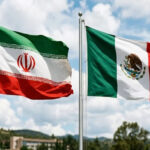
    Iran Football Team Issues Emotional Thank You to Mexico for Tijuana Refuge

    Iran
    Iran’s Soccer Team has expressed its gratitude to Mexico for its warm welcome during the FIFA World Cup. 

    Iran’s National Soccer Team Thanks Mexico for Hospitality During World Cup Ordeal

    Iran’s national football team left the 2026 World Cup with a deep sense of gratitude toward Mexico, a country that became its refuge after political tensions with the United States forced the team to abandon its original plans. 

    In a farewell message released before departing Tijuana, the team declared that Mexico would forever be “our second home and our second team”.

    A Forced Change of Plans

    Iran had originally planned to establish its World Cup training base in Tucson, Arizona. However, political tensions between Tehran and Washington created serious logistical problems. Several members of Iran’s delegation were denied US visas, making it impossible for the team to stay in the United States for an extended period.

    Just days before the tournament began, Iran was forced to relocate its base to Tijuana, Mexico. The team arrived in the border city on June 7 and settled at the Marriott Agua Caliente hotel, using the Xolos training facility at the Centro Xoloitzcuintle for their practices.

    The arrangement was far from ideal. For their first two matches in Los Angeles, Iran was allowed to enter the United States only one night before each game and was forced to return to Mexico immediately afterward. The US authorities later eased some restrictions, permitting the team to travel two days before their final group match in Seattle, but they were still required to return to their Mexican base after the game.

    The Warm Reception in Tijuana

    While Iran faced obstacles in the United States, the people of Tijuana offered a different experience entirely. During the 20 days the team spent in the border city, local residents embraced the Iranian squad with genuine warmth. Hundreds of fans gathered outside the team’s hotel to ask for autographs, take photographs, and offer encouragement.

    The Iranian team’s official statement expressed profound appreciation for this reception. “They received us with generosity and a genuine hospitality that made us feel at home,” the team said. “Leaving Tijuana is truly difficult,” they added, because they had formed friendships and memories they would carry “always in the heart”.

    The Iranian ambassador to Mexico, Abolfazl Pasandideh, also expressed his gratitude. “Our players will leave Tijuana with a very good memory of you,” he said. “The kindness you gave us, we will never forget. I hope that when you come to Tehran, we can receive you there. Our country is your second home, and we will receive you with much love”.

    A Message of Gratitude and Support

    After Iran’s elimination was confirmed, the team posted a message on its official Instagram account featuring an illustration of two hands shaking, one with a Mexico wristband and the other with an Iran wristband, under a sky lit by fireworks. “Thank you, Mexico, for opening your doors to us,” the team wrote in Spanish. “Your act stayed in our hearts”. In larger letters, they added, “Friendship needs no translation.”

    The team also released a longer statement on its WhatsApp channel. “To the noble people of Mexico and the city of Tijuana, thank you,” the message began. “You showed us that hosting the World Cup is not just about stadiums and tickets; it is about respect, humanity, and dignity. We will never forget the kindness of the people of Tijuana. From today, Mexico is not only our host, but also our second country and our second team”.

    The team also expressed support for Mexico’s continued run in the tournament, adopting the host nation as their “second team”. Coach Amir Ghalenoei said, “Our heart and our soul stay here.”

    Questions About Fairness

    While expressing gratitude to Mexico, Iran also raised concerns about the treatment they received during the tournament. “We leave this World Cup with pride, but with one serious question: Did all teams truly enjoy equal opportunities and equal standards?” the statement said.

    The team noted that “a series of decisions, logistical arrangements, and circumstances undermined the sense of fairness”. They also addressed the concept of fair play directly. “For us, fair play is not just a slogan on advertising boards; it is the identity of football,” the players wrote. “But this World Cup showed that there is still a great distance between beautiful slogans and genuine action”.

    A Lasting Bond

    The Iranian team’s gratitude toward Mexico was not a fleeting gesture. Hedayat Mombeini, secretary general of the Iranian Football Federation, asked for a bilateral relationship with Tijuana in sports matters. The Iranian ambassador echoed this sentiment, emphasizing that the connection formed during the World Cup would not be forgotten.

  • Mexico Extends Mobile Phone Registration Deadline Amid Low Compliance and Privacy Concerns

    Mexico Extends Mobile Phone Registration Deadline Amid Low Compliance and Privacy Concerns

    registration
    Just a day before the original official cutoff, less than half of Mexico’s mobile phone lines had been registered.

    The Mexican government has granted an extension to the mandatory mobile phone registration process, walking back previous assurances that July 1 would be the definitive cutoff date. 

    The decision, announced by the Comisión Reguladora de Telecomunicaciones (CRT) on June 25, comes as official figures show that less than half of the country’s active mobile lines have been successfully registered.

    The Extension and Its Staggered Timeline

    The extension is not a blanket postponement but rather a staggered schedule that assigns different deadlines based on the last digit of each mobile number.

    The complete schedule is as follows: digit 0 by August 15; digit 1 by August 31; digit 2 by September 15; digit 3 by September 30; digit 4 by October 15; digit 5 by October 31; digit 6 by November 15; digit 7 by November 30; digit 8 by December 15; and digit 9 by December 31.

    The CRT emphasized that once each deadline passes, telephone companies will suspend service for unregistered lines within 72 hours. 

    Suspended lines will still be able to make calls to emergency numbers, citizen service lines and their own operator, as well as receive earthquake alerts. Service will be fully restored once the line is successfully registered. 

    The government has clarified that the process is carried out directly with telephone companies, not with government agencies, and that companies only associate the user’s name and CURP (the unique population registry code) with the mobile number, deleting any other data or images used during the verification process.

    Why the Government Granted the Extension

    The decision to extend the deadline, despite earlier assurances that no extension would be granted, stems from a stark reality: by late June 2026, only approximately 63 million of the more than 144 million active mobile lines in Mexico had been registered. Of those registered, 40.2 million were prepaid lines and 22.8 million were postpaid lines, which are automatically registered as they are already associated with an identity at the time of contracting. This leaves approximately 80 million lines—the vast majority of them prepaid—still unregistered.

    The low registration rate effectively forced the government’s hand. With the original July 1 deadline looming, a mass service suspension affecting tens of millions of lines would have caused widespread disruption to businesses, families and essential services. 

    The CRT acknowledged that while registration had shown “sustained and growing progress,” the sheer volume of pending registrations made the original deadline unworkable. Reports indicate that some carriers had achieved registration rates as low as 16% for certain demographics.

    The Government’s Justification for the Database

    The Mexican government has framed the mandatory registration as a critical public security measure. According to the CRT, “each telephone number must be registered in the name of a person, to eliminate the anonymity that has allowed crime to be committed, such as fraud or extortion to be committed.” The government maintains that Mexico has been one of the few countries allowing the acquisition of a SIM card without identification, whereas 166 countries already require such registration.

    Privacy Concerns and Past Controversies

    Despite the government’s security rationale, the database has attracted fierce criticism from privacy advocates, civil liberties organizations and legal experts. The most significant concern is that the current registration requirement echoes the original PANAUT, which the Supreme Court struck down as unconstitutional in April 2022. The court found that the original PANAUT violated the right to privacy, in part because it required the collection of biometric data, which is considered highly sensitive personal information.

    The Instituto Nacional de Transparencia, Acceso a la Información y Protección de Datos Personales (INAI) had presented an action of unconstitutionality against the original PANAUT, arguing that it violated data protection rights. Critics argue that the current registration scheme, while ostensibly narrower in scope, represents a revival of the same concept under a different name. Organizations have noted that mobile phone user registries have historically shown little effectiveness in preventing crime while posing significant privacy risks.

    Another major concern is data security. Past incidents have demonstrated the vulnerability of government databases in Mexico. Critics have noted that the original PANAUT database was reportedly hacked and its contents sold on the black market, and extortion actually increased by 41.3% after its implementation. This has fuelled skepticism about the government’s ability to safeguard sensitive personal information collected under the new registration scheme.

    Civil society organizations have also raised concerns about the potential for function creep—the gradual expansion of a system’s purpose beyond its original intent. While the government insists that information will be used exclusively for security purposes, critics fear that the database could eventually be used for surveillance, political control or other purposes not originally contemplated. The requirement to link a CURP—a unique identifier used across virtually all government services—to a mobile number creates a powerful tool for tracking individuals’ movements and communications.