
Author: Carlos Rosado van der Gracht

  • Tapatio Hot Sauce Sold to Private Equity After 55 Years as a Mexican-American Family Business

    Tapatio Hot Sauce Sold to Private Equity After 55 Years as a Mexican-American Family Business

    tapatio
    El Tapatio: From home-made hot sauce to a spicy empire and a painful goodbye. 

    After 55 years as a family-run business, the iconic hot sauce brand Tapatio was sold in January to a private equity firm. The transaction marks the end of an era for a company that began as a modest operation in a small Los Angeles warehouse and grew into a staple of American kitchens, ranking as the fifth best-selling hot sauce brand in the United States.

    The story of Tapatio is a classic immigrant success story. The company was founded in 1971 by Jose-Luis Saavedra Sr., a native of Mexico City who had immigrated to Southern California. Saavedra was not a chef by training; he worked in the aerospace industry. The business was born from a simple homemade recipe for a spicy sauce that he and his wife shared with friends and coworkers. Tapatiosauce proved so popular that when Saavedra was laid off from his aerospace job, he decided to pursue it as a full-time venture.

    The early years were defined by hard work and perseverance. Saavedra, who spoke little English, leased a modest 750-square-foot building in Maywood, California, and initially had to work other jobs to support his new business. He did nearly everything himself, from grinding the peppers to applying the glue to the labels. 

    The sauce’s name was also a trial. The first label, “Cuervo,” quickly drew a lawsuit from the tequila company Jose Cuervo. A second attempt, “Charro,” met the same legal fate. Finally, Saavedra chose “Tapatio,” a term used to describe a person from Guadalajara, Mexico. He chose this name as a tribute to his children, all of whom were born in that city. Even then, the name was challenged by food giants ConAgra and Del Monte, but Saavedra fought back and successfully kept the trademark.

    The company’s growth was steady. In 1985, it moved to a larger 8,500-square-foot facility in Vernon, California. By 1996, it had outgrown that space as well, and Saavedra built a custom 30,000-square-foot state-of-the-art facility. His three children eventually joined the business, helping to manage its expansion. By 1988, the sauce, once popular primarily among the Hispanic community, had become a staple in American households. The brand’s iconic label, featuring a man in a sombrero, became a familiar sight in kitchens and restaurants across the country.

    Highlander Partners, a Dallas-based private investment firm, executed the acquisition in 2026. The financial terms of the deal were not disclosed. Still, the family behind El Tapatio released a press statement stating that there was no way the company could continue to operate as it had for decades under current market conditions. The family expressed gratitude to their fans and said the decision was extremely difficult, especially for the company’s founder, who recently suffered a stroke at 97.

    Tapatio’s sale is a clear echo of similar acquisitions that have reshaped the hot sauce landscape in recent years. In 2017, the spice maker McCormick & Co. acquired Frank’s RedHot, the quintessential Buffalo wing sauce, as part of its larger $4.2 billion purchase of Reckitt Benckiser’s food business. 

    In 2020, McCormick made another significant move, purchasing the Cholula hot sauce brand from the private equity firm L Catterton for $800 million in cash. These deals, like the Tapatio acquisition, are driven by the growing consumer appetite for spicy flavors. 

    A 2024 survey found that 62% of consumers are more likely to buy a food or beverage item if it is advertised as spicy. This trend has made established hot sauce brands with loyal followings and strong brand identities exceptionally valuable assets.

    But the reality is that when large corporations acquire brands like Tapatio, compromises on ingredients are common, and longtime loyal fans often turn away. Taste aside, part of what makes brands like Tapatio special is their story.

  • The Right to a Dignified Death: The Debate on Euthanasia in Mexico

    The Right to a Dignified Death: The Debate on Euthanasia in Mexico

    The discussion surrounding the right to end one’s own life under extreme medical circumstances has reached a pivotal moment in Mexico.

    Recent legal actions have pushed the boundaries of a long-standing prohibition, signaling a potential shift in how the nation approaches the concepts of autonomy and dignity in the face of terminal illness.

    The Euthanasia Before the Supreme Court

    Mexico’s Supreme Court (SCJN) recently agreed to review a legal challenge brought by Silvia García Castañeda, a thanatologist diagnosed with breast cancer. 

    Her lawsuit contests the absolute prohibition of euthanasia and assisted suicide found in the General Health Law and the Mexico City Penal Code. 

    The challenge is grounded in her professional and personal experience with the suffering of terminally ill patients, arguing that the current law fails to respect a person’s autonomy to decide how and when to end their life through euthanasia.

    This move, approved by a majority of the justices, does not change the current legal reality but opens the door for the Court to decide on the ban’s constitutionality. The central question is whether the prohibition violates fundamental rights or if the state’s interest in preserving life justifies a blanket ban, a decision that would inevitably require legislative action if the ban is overturned.

    The Current Legal Framework and a Path Forward

    While there is no legal pathway for euthanasia, Mexican law does recognize the figure of “advance directives,” which allows patients to refuse treatments that artificially prolong life in terminal phases 

    This distinction highlights a growing societal acceptance of decisions regarding the end of life, even as the law stops short of allowing active medical intervention to hasten death.

    A recent citizen initiative, known as the “Trasciende Law,” seeks to bridge this gap. This proposal explicitly aims to regulate euthanasia within the General Health Law, effectively repealing the articles that currently ban it [citation:5]. This legislative effort reflects a broader push to legalize what medical literature broadly defines as “assisted dying.”

    Perspectives and Public Opinion

    In the medical field, the terms “voluntary active euthanasia” and “physician-assisted suicide” carry distinct definitions. The former involves a third party, typically a doctor, administering lethal substances at the patient’s request, while the latter involves the doctor providing the means for the patient to self-administer. Both are currently prohibited in Mexico, but the debate is increasingly framed not as a matter of life or death, but of personal liberty.

    Though not legal, the cultural practice of ending life through passive means to honor the wishes of loved ones when there is little to no hope of recovery is also widely practiced in Mexico.

    Academic voices, such as Asunción Álvarez del Río from UNAM’s Faculty of Medicine, argue that legalizing medically assisted death empowers individuals, as it is an option that no one is forced to use and no physician is obligated to perform. 

    Similarly, researcher Diego Valadés from the Institute of Legal Research suggests that this is an evolutionary step in the recognition of human rights, comparable to the legalization of abortion, indigenous rights, or same-sex marriage.

    This academic perspective is supported by public sentiment. A national survey indicated that around 72.7% of people agree that laws should change to allow terminally ill patients to receive help to end their lives if they so decide.

    The normalization of conversations about death is often cited as a crucial step in removing the taboo surrounding euthanasia. As the Supreme Court prepares to deliberate, Mexico stands at a crossroads. Whether the decision comes from the judicial or legislative branch, the outcome of these debates will define the boundaries of individual sovereignty over one’s own body and life in the country for years to come.

  • Nuns Are Saving a Critically Endangered Salamander in Mexico, and It’s Working
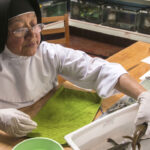
    Nuns Are Saving a Critically Endangered Salamander in Mexico, and It’s Working

    salamander
    Dominican nuns in Pátzcuaro are leading the conservation of one of the country’s rarest salamanders.

    For more than two decades, a community of Dominican nuns in Pátzcuaro has quietly been leading one of Mexico’s most extraordinary conservation efforts. 

    Tucked behind the walls of their monastery, adjacent to a 16th-century basilica, the sisters care for and breed the critically endangered Lake Pátzcuaro salamander. This species, known locally as the achoque, exists nowhere else on Earth. 

    While the salamander’s wild population has collapsed due to pollution, invasive species, and habitat loss, the convent has become an unexpected ark. 

    Today, the largest known captive population of this amphibian is maintained not in a university laboratory or a government facility, but in rows of glass aquaria and white enamel bathtubs inside a religious order. 

    The story of how these sisters became the species’ primary guardians is a testament to the unexpected ways that faith, tradition, and science can converge in the service of conservation.

    A Centuries-Old Remedy

    The achoque, scientifically known as Ambystoma dumerilii, is a paedomorphic salamander.

    This means it retains its larval features, including its feathery external gills, throughout its entire adult life. It is a close relative of the better-known axolotl, another Mexican amphibian that has captivated scientists worldwide for its remarkable ability to regenerate lost limbs and even portions of its brain and heart. 

    For centuries, long before the species was formally described by French herpetologist Alfredo Dugès in 1870, the Indigenous Purépecha people of the Lake Pátzcuaro region revered the achoque as both a food source and a vital ingredient in their traditional medicine.

    The salamander even held spiritual significance, with some accounts linking it to pre-Columbian deities. This deep cultural connection to the lake and its creatures laid the groundwork for the salamander’s later role in the monastery.

    The Dominican sisters at the Monastery of Our Lady of Health have used achoques to produce a traditional cough syrup, known as jarabe, for generations. Some sources indicate that this practice dates back 150 years. 

    The syrup, believed to treat respiratory ailments such as asthma, coughs, and even anemia, became the convent’s main source of income, selling for approximately 200 pesos per bottle. The nuns would traditionally collect salamanders from the lake to make their remedy. However, in the 1980s, the wild population of achoques in Lake Pátzcuaro crashed dramatically. 

    The lake, the species’ only natural home, was shrinking and becoming increasingly polluted by sewage, agricultural fertilizer runoff, deforestation in the surrounding watershed, and the introduction of invasive fish species such as Asian carp. In the 1980s, fishermen were still extracting as much as 20 tonnes of axolotls from the lake each year. Today, fewer than 150 adult achoques are thought to remain in the wild.

    When the Lake Began to Die

    Faced with the collapse of both the species and their own livelihood, the nuns took decisive action. With guidance from a friar who was also a trained biologist, they began breeding the salamanders in captivity, establishing the colony that now thrives within the monastery. 

    What started as a practical measure to preserve their syrup business evolved into something far more significant. Sister Ofelia Morales Francisco, who has cared for the achoques for nearly 20 years, and her fellow sisters mastered the amphibians’ complex reproductive biology through patient observation and hands-on experience. 

    They developed their skills through a combination of independent trial and error and consistent support from local universities and research centers. “Being part of a religious order is not an obstacle for scientific progress,” Sister Ofelia has said. For her and the other nuns, the work has taken on a deeper meaning beyond commerce. “It’s about protecting a species from nature,” she explained in an interview with the New York Times. “If we don’t work to take care of it, to protect it, it will disappear from creation.”

    The transformation in their mission was gradual but profound. The sisters moved from being harvesters of a wild resource to being its most dedicated custodians. Their daily routine now includes meticulous monitoring of water quality, feeding schedules, and health checks for hundreds of individual salamanders. 

    Faith Meets Science

    The nuns’ achievement has not gone unnoticed by the international scientific community. Biologists from the nearby University of San Nicolás de Hidalgo in Michoacán discovered that the sisters were expert breeders and began collaborating with them on a formal conservation program. 

    The United Kingdom’s Chester Zoo, which has a long history of amphibian conservation, also recognized the monastery’s thriving colony as an invaluable resource. Dr. Gerardo Garcia, a curator and expert on endangered species at the zoo, has described the nuns as “very vital” to the salamanders’ prospects in the wild.

  • Korea vs Mexico World Cup 2026: The Story Behind an Unlikely Friendship 
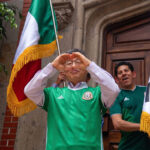
    Korea vs Mexico World Cup 2026: The Story Behind an Unlikely Friendship 

    korea
    South Korea’s national team and fans are being treated as locals in Mexico during the World Cup. But this friendship will soon be put to the ultimate test.

    The atmosphere across Mexico’s World Cup host cities has transformed into something far beyond a typical sporting event. 

    As the FIFA tournament unfolds, a particularly warm and palpable wave of affection has been directed toward the South Korean national team’s fans and players. 

    From the bustling streets of Guadalajara to the plazas of Mexico City, Korean supporters have been met with hospitality and genuine camaraderie that have surprised even the most seasoned football travelers. 

    This phenomenon, rooted in a profound sense of mutual respect and a shared historical underdog spirit, is creating some of the most memorable moments of the 2026 World Cup.

    The scenes of celebration have been remarkable. Videos circulating globally show that Korean fans have turned ordinary dining experiences into spontaneous international parties. In one viral incident, a group of South Korean supporters in a Guadalajara taqueria, enjoying authentic Mexican cuisine, heard the opening notes of PSY’s global hit Gangnam Style. Within seconds, what began as a simple dinner transformed into a full-blown dance party. 

    The Korean visitors immediately began following the rhythm, and the infectious energy quickly spread to the Mexican diners around them. Patrons of all ages and nationalities joined in, dancing together between tables, capturing the moment on their phones, and laughing as cultural barriers dissolved. 

    The restaurant’s staff, far from being bystanders, were reportedly seen dancing alongside the patrons, clapping to the beat and encouraging the impromptu celebration, a testament to the natural rhythm that defines Mexican hospitality. This scene was not isolated. At the legendary Arena Coliseo during a lucha libre wrestling night, Korean fans once again broke into the same dance, stealing the spotlight from the masked wrestlers and getting the entire crowd to groove along, showing that the love for joy knows no borders.

    This extraordinary welcome is not a spontaneous act of random friendliness; it is rooted in a specific and cherished moment of World Cup history. 

    The bond traces back to the 2018 Russia World Cup. In the group stage, Mexico was facing a tense elimination scenario. South Korea, already eliminated from the tournament, was playing its final group match against the heavily favored and defending champions, Germany. In a stunning upset, the Korean team defeated Germany two to zero, a result that directly propelled Mexico into the Round of 16. 

    In gratitude, Mexican fans famously gathered outside the South Korean embassy in Mexico City, sharing tequila and beer, and chanting a now legendary slogan: “Coreano, hermano, ya eres mexicano” (“Korean, brother, you are now Mexican”). This sentiment has been powerfully revived for this World Cup.

    During South Korea’s opening group match against the Czech Republic in Guadalajara, Mexican fans showed up in full force, waving Taegeukgi flags, wearing sombreros mixed with Korean red shirts, and cheering every Korean attack as if it were their own. Mexican supporters joined their Korean counterparts in jeering the opposition and performing the famous “Mexican wave” through the stands as one unified block of support. 

    Korean superstar Son Heung-min is treated with the same reverence as a local hero, with Mexican fans eagerly anticipating his every touch of the ball. This goodwill is further backed by organized diplomatic efforts. 

    The roots of this connection run deeper than pop culture, stemming from a shared history of struggle and resilience. Korean immigration to Mexico began in 1905 when over a thousand Korean laborers arrived as indentured workers on the henequen plantations of the Yucatán Peninsula

    However, this goodwill is about to face its most severe test. On Thursday, June 18th, at the Akron Stadium in Guadalajara, South Korea will face off against Mexico in a critical Group A match with massive stakes for advancing to the knockout rounds. 

    Both teams won their opening matches, and the atmosphere will shift from open-armed embrace to competitive fervor.

  • Museo Textil de los Pueblos Indígenas y Afromexicanos 2026 Guide Hours Cost and Highlights

    Museo Textil de los Pueblos Indígenas y Afromexicanos 2026 Guide Hours Cost and Highlights

    museo
    Mexico City just added yet another world-class museum to its already thriving cultural scene.

    The Museo Textil de los Pueblos Indígenas y Afromexicanos, or MUT in Mexico City, opened its doors with the mission: to celebrate and preserve the rich, living heritage of the nation’s indigenous and Afro-Mexican textile arts. 

    The MUT was designed as a dynamic space that places the knowledge and traditions of these communities at the very center of the national conversation about identity, art, and history.

    Visitors will find the museum in the Casa del Marqués del Apartado, a magnificent neoclassical palace built between 1795 and 1805 by the renowned architect Manuel Tolsá. 

    This historical setting, located on República de Argentina street in the Cuauhtémoc borough, provides a stunning backdrop for a collection that looks to the future by honoring the past. Inside, the museum is a treasure trove of culture, systematically spread across sixteen permanent exhibition halls distributed over three floors. 

    These halls are not simply displays; they are guided narratives that guide the visitor through the science, history, and spirituality of textile creation. Room titles such as “The Loom and the Virtuous Society,” “Indigenous Science on the Loom,” and “The Heritage of Ixcuina: Mexican Textile Fibers” hint at the deep intellectual and cultural journey that awaits.

    The museum’s collection is anchored by over two hundred pieces, each one representing techniques, knowledge, and artistic traditions passed down through countless generations. 

    These works are a testament to the skill of the artisans who have kept these cultural expressions alive, often against great odds. The museum’s narrative powerfully highlights the contributions of both indigenous and Afro-Mexican communities, ensuring that their stories and artistic legacies are woven into the broader tapestry of Mexican history. This commitment extends beyond the permanent collection. 

    The museum’s first temporary exhibition is dedicated to Trine Ellitsgaard, a weaver and textile artist celebrated for her profound connection to contemporary textile art, a choice that beautifully bridges ancestral techniques with modern artistic expression.

    The MUT is far more than a static repository. It is designed as a living cultural center, complete with a children’s library and dedicated spaces for educational workshops and community gatherings. True to its mission of holistic education, the museum also features a unique archaeological window, allowing visitors to glimpse the pre-Hispanic vestiges that lie beneath the very ground on which they stand, connecting the art of textiles to the deep geological and historical roots of the land. 

    This integration of past and present underscores the museum’s message that cultural heritage is not a relic, but a continuous, evolving dialogue.

    For those planning a visit, the MUT is open Tuesday through Sunday, welcoming guests from ten in the morning until six in the evening. 

    Admission and Opening Hours

    A general admission ticket costs ninety-five pesos, a modest sum for access to such a wealth of cultural heritage. Demonstrating a strong commitment to accessibility, the museum offers free entry to children, artisans, students, teachers with valid identification, senior citizens, and people with disabilities. The museum also schedules guided tours for school groups on Mondays, Wednesdays, and Fridays, further cementing its role as an educational pillar in the community.