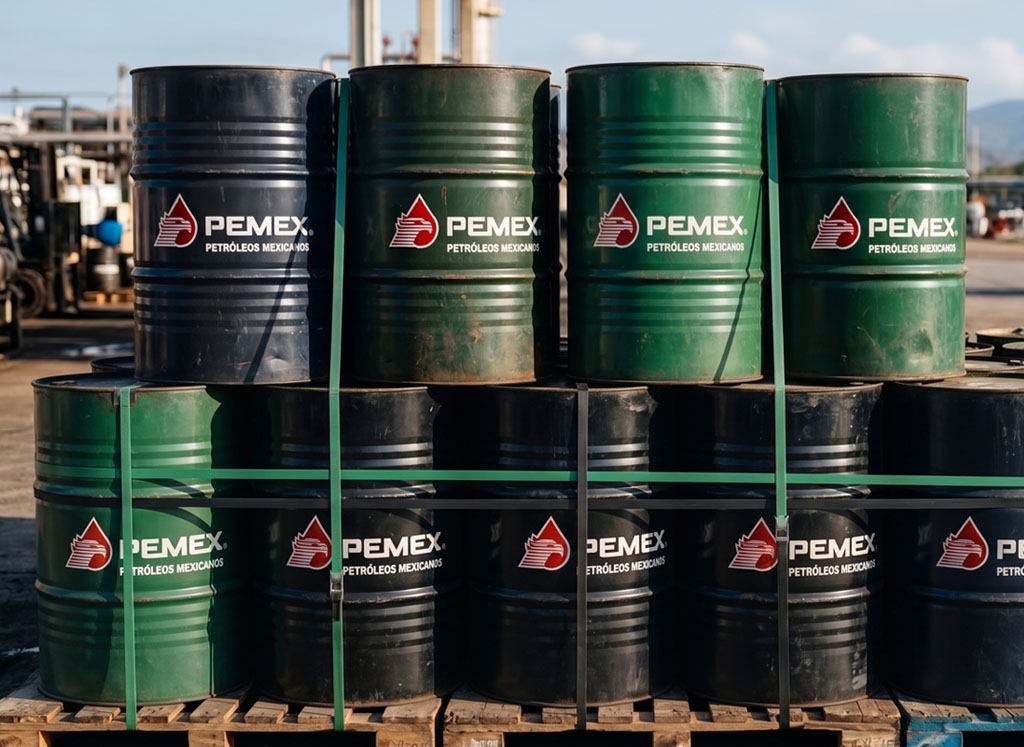
In a strategic pivot to safeguard its energy security, Japan has finalized an agreement to import one million barrels of crude oil from Mexico. The deal, confirmed by Mexican President Claudia Sheinbaum, comes as the de facto closure of the Strait of Hormuz threatens the supply lines for over 90% of Japan’s oil imports.
The agreement represents a concrete shift in global energy procurement, driven by escalating conflict in the Middle East. Following a recent telephone conversation between Japanese Prime Minister Sanae Takaichi and President Sheinbaum, both nations committed to bolstering bilateral energy cooperation to mitigate the risks posed by the disruption of the strategic chokepoint.
President Sheinbaum confirmed the arrangement during a press conference, explaining that the crude to be shipped is surplus material not processed by Mexico’s domestic refineries. “It is not the first time it has been done. This is the surplus crude we still have for export,” Sheinbaum stated. She noted that Japan’s request had been longstanding, but the urgency of the current crisis accelerated the approval. While Sheinbaum did not specify the delivery date, reports from the Japanese economic daily Nikkei and other sources suggest the shipment is scheduled for July 2026.
A Critical Alternative to a Vulnerable Route
The urgency of the deal is underscored by Japan’s heavy reliance on Middle Eastern oil. With domestic production covering only roughly 0.3% of its crude needs, Japan is the world’s fourth-largest oil importer and is exceptionally vulnerable to maritime blockades. The Strait of Hormuz, a narrow waterway between Iran and Oman, has effectively been closed amid the ongoing US-Iran-Israel conflict, prompting Tokyo to seek urgent alternatives.
This vulnerability has forced a rapid diplomatic response. By turning to Mexico, Japan gains access to a Pacific coastline supply route that avoids the conflict zones of the Middle East entirely. Mexico produces approximately 1.8 million barrels of crude oil per day, though a significant portion of that volume is directed toward domestic refining. Currently, between 400,000 and 500,000 barrels are available for daily export, meaning the one-million-barrel shipment for Japan is a substantial, but manageable, commitment for the state-owned oil company Pemex.
Broader Economic Pressures
The reverberations of the Hormuz closure are being felt in fuel markets as well. To shield consumers from the shock of Brent crude reaching $107 per barrel at its April peak, the Sheinbaum administration has tightened a price containment agreement. This pact caps regular gasoline (Magna) below 24 pesos per liter, as the government estimated that without intervention, unsubsidized diesel could have surged to as high as 35 pesos per liter.
While the deal has been framed by some as a historic diplomatic victory, the logistical and financial realities present a more measured picture. The agreement provides a vital stopgap, allowing Japan to diversify its sources away from an increasingly volatile Middle East. However, it remains a relatively small volume compared to Japan’s total consumption, suggesting it is a strategic supplement rather than a complete solution to the supply crisis.
Furthermore, analysts note that Pemex continues to face significant financial constraints. The state company recently posted a first-quarter loss of MX 2.6 billion in debt.
The logistical challenges of shipping crude across the Pacific, as opposed to the shorter routes through Hormuz, also add layers of cost and transit time to the transaction.
Ultimately, the Japan-Mexico agreement signals a slow redrawing of the global oil map. It confirms that Latin America is an essential, stable alternative supplier in a fractured global market, and that Mexico is willing to play a more active role in Pacific energy security despite its domestic production challenges.
Mexico and Japan’s Little-Known Long-Term Partnership
Following Mexico’s nationalization of oil in 1938 and Japan’s post-World War II industrial boom, bilateral trade grew slowly, centered on Mexican raw materials such as minerals, copper, and later crude oil in exchange for Japanese machinery and consumer goods.
A key shift occurred in the 1960s and 1970s as Japanese auto and electronics manufacturers established assembly plants in Mexico, leveraging its proximity to the U.S. market. The relationship deepened further in the 21st century with the entry into force of the Economic Partnership Agreement in 2005, which eliminated most tariffs on industrial and agricultural goods.
Since then, trade has expanded rapidly: Mexico exports automobiles, auto parts, and agricultural products like pork and vegetables to Japan, while Japan sends high-tech machinery, electrical equipment, and steel to Mexico.
By the 2010s and 2020s, annual bilateral trade surpassed $20 billion, making Japan one of Mexico’s top Asian trading partners, though the flow remains broadly balanced with a slight Mexican surplus in recent years.