
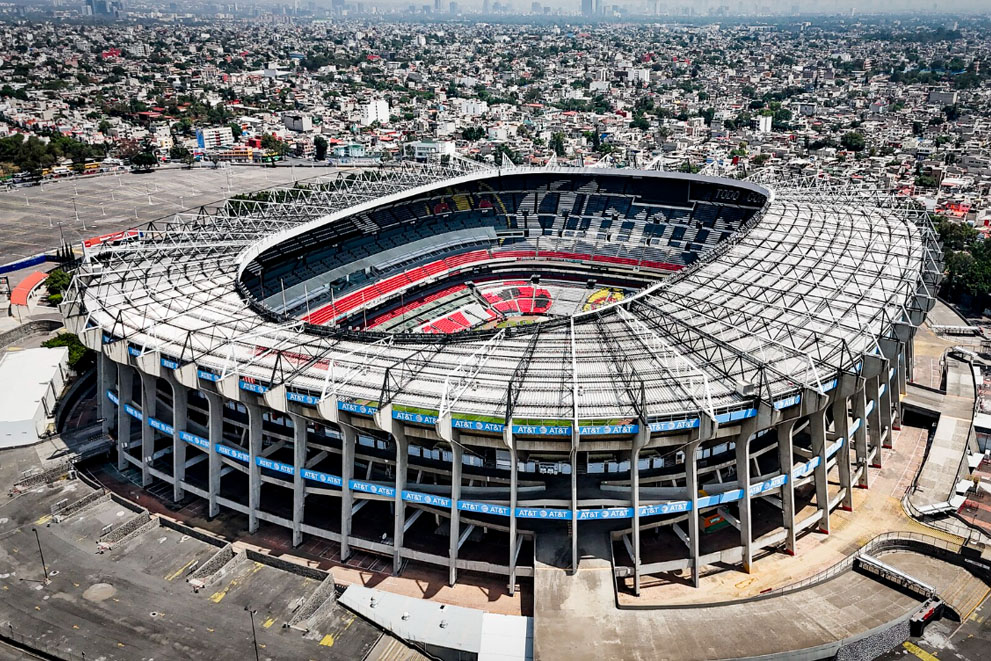
On March 28, 2026, the Estadio Azteca—one of soccer’s most hallowed grounds—reopened its doors after an extensive renovation. But the iconic Mexico City stadium did so under a new name: Estadio Banorte. While the $105 million naming rights deal brought much-needed funds for modernization, it ignited a firestorm of controversy among fans, protesters, and even FIFA regulators. This is the story of how a historic colossus became a corporate symbol, the financial mechanics behind the change, and where the newly named venue stands among the giants of Latin American and world sports.
Why the Name Change?
The decision to rename the Estadio Azteca was not a simple branding exercise but a financial lifeline. In March 2025, Grupo Ollamani, the stadium’s owner, led by Mexican media mogul Emilio Azcárraga, announced a major alliance with Banorte, one of Mexico’s largest financial institutions. The core of the deal was a loan of 2.1 billion Mexican pesos—approximately $105 million USD—to be repaid over 12 years.
According to a filing with the Mexican Stock Exchange, the naming rights were a central component of this financing package. The funds were essential for continuing the stadium’s massive remodeling project, which had begun in the summer of 2024. The original budget for the renovation was 1.5 billion pesos, making the Banorte injection critical to meeting the standards required for the 2026 FIFA World Cup. Emilio Azcárraga framed the partnership as a point of pride, stating, “With them, we will modernize this emblematic stadium, respecting its essence and architectural designs recognized for decades. It will be the most important venue to showcase Mexico to the world”.
A History Etched in Grass and Concrete
To understand the emotional weight of the name change, one must look at the stadium’s storied past. Opened on May 29, 1966, the Estadio Azteca was designed by renowned architects Pedro Ramírez Vázquez and Rafael Mijares Alcérreca. Nicknamed the Coloso de Santa Úrsula (Colossus of Santa Úrsula) after the neighborhood it resides in, it immediately set a standard for modern sports architecture.
The Azteca is the only stadium in history to have hosted two FIFA World Cup finals: the legendary 1970 final, where Pelé’s Brazil triumphed, and the 1986 final, where Diego Maradona lifted the trophy. It was also the site of two of the most famous moments in soccer history during the 1986 quarter-final: Maradona’s infamous “Hand of God” goal and the “Goal of the Century” against England. Today, bronze plaques commemorating those events still stand outside the gates.
This was not the first time the stadium’s name was subject to controversy. In 1997, following the death of FIFA executive Guillermo Cañedo, owner Televisa briefly renamed the stadium in his honor. The move was widely seen as an attempt to dissociate the venue from the name “Azteca,” which was shared by a rival television network, TV Azteca. However, the public refused to accept the change, and the original name was quietly restored. The 2025 rebranding to Banorte, however, proved permanent—secured by a binding financial contract.
Controversy and FIFA’s Neutralization
The rebranding was met with immediate backlash, culminating in dramatic scenes during the stadium’s March 28, 2026, re-inauguration match between Mexico and Portugal.
While the stadium was packed with 87,500 spectators, a very different scene unfolded outside and on the surrounding highways. Protesters, organized under the banner of denouncing the “World Cup of Dispossession,” took to the streets. In one striking act of civil disobedience, they transformed a major Mexico City highway into a makeshift football pitch, blocking traffic to highlight issues they claimed were being ignored for the sake of World Cup preparations, including shortages of housing, water, and electricity.
Banners reading “Global event, local eviction” reflected fears that the modernization was fueling gentrification and displacement in the Santa Úrsula neighborhood. Actor Damián Alcázar accused the protesters of being political opponents, but the demonstrations highlighted a deep social divide regarding the priorities of the mega-event.
The FIFA Rule
The most paradoxical twist to the naming saga came from FIFA itself. Despite the lucrative deal to call the stadium Estadio Banorte, the venue will not carry that name during the 2026 World Cup. According to FIFA regulations for organized events, the stadium cannot display any sponsor names that are not official FIFA partners. As a result, for the duration of the tournament starting June 11, 2026, the stadium will be officially referred to as Estadio de la Ciudad de México (Mexico City Stadium).
Furthermore, the venue will have to cover or remove all Banorte branding visible inside and outside the stadium. This is a standard practice applied to all World Cup venues; the Azteca joins a list of 10 other stadiums in the US and Mexico undergoing similar temporary rebranding for the tournament.
Size and Global Standing
Beyond the controversy, the physical scale of the stadium remains a point of pride and debate. Historically, the Estadio Azteca was one of the largest stadiums in the world. At its inauguration in 1966, it held 107,494 spectators, and at various points in the late 20th century, it was reported to hold upwards of 114,600.
However, to comply with modern safety standards and FIFA regulations—and to add luxury boxes and amenities—the capacity has been reduced. Today, the official capacity stands at approximately 87,500 seats.