
Author: Carlos Rosado van der Gracht

  • Why Flying Out of Mexico City’s Largest Airport Just Got More Expensive

    Why Flying Out of Mexico City’s Largest Airport Just Got More Expensive

    AICM
    Mexico City’s main international airport (AICM) raises its prices again at the worst possible time for travellers. 

    Mexico City International Airport (AICM) quietly pulled the lever on a significant price hike. As of April 1, 2026, the Airport Use Fee (TUA) has increased, making plane tickets more expensive during one of the busiest travel seasons of the year and just months before the world arrives for the 2026 FIFA World Cup. The timing has sparked outrage among travelers and tourism experts, who argue that the government is raising prices at the worst possible moment.

    The increase is not a flat rate but a percentage adjustment linked to the U.S. Consumer Price Index (CPI), as authorized by the Ministry of Finance and the Marina operating group. For domestic flights, the TUA rose by 2.9%, meaning Mexican travelers will now pay approximately $30.59 USD (roughly 542 pesos) per ticket to use the airport facilities. International passengers face a slightly steeper hike of 3%, raising the fee to $58.09 USD (approximately 1,030 pesos) for those leaving the country. While these figures are expressed in dollars, passengers will see the equivalent charge in pesos on their ticket receipts, with the exchange rate adjusted monthly based on Bank of Mexico figures.

    How AICM Compares: Mexico’s Most Expensive Airport

    The AICM’s new rates stand out significantly when compared to other major Mexican airports, raising questions about whether travelers are getting fair value for their money. According to data published for 2026, the AICM charges approximately 542 pesos for domestic TUA, while the Felipe Ángeles International Airport (AIFA)—located just outside the city—charges only 266.62 pesos for domestic flights, roughly half the price. For international travel, the disparity is even more dramatic: AICM passengers pay around 1,030 pesos, compared to just 481.51 pesos at AIFA.

    Other major Mexican airports also offer more competitive rates. Cancún International Airport, a primary gateway for international tourists, charges only 351 pesos for domestic TUA and 861 pesos for international flights. Guadalajara and Monterrey, Mexico’s second and third-largest metropolitan areas, charge 655 and 697 pesos, respectively, for domestic TUA, while Los Cabos reaches 655 pesos for domestic and a steep 1,404 pesos for international—though even the latter only slightly exceeds AICM’s international rate. The AICM’s TUA can represent up to 60% of a domestic ticket’s base price, according to the airport’s own disclosure, making it a substantial burden for budget-conscious travelers.

    The Government’s Defense: World Cup Improvements, Debt, and Subsidies

    Authorities defend the hike as a necessary evil. According to the AICM administration, the funds are critical for ongoing integral remodeling projects ahead of the World Cup. Current projects include rehabilitating runways, overhauling restrooms, replacing baggage claim belts, and optimizing migration and customs areas. With an estimated influx of millions of soccer fans expected for the 2026 World Cup—where Mexico serves as a host nation alongside the United States and Canada—the AICM is racing to modernize its image. As of mid-February, however, the remodeling was only at 40% completion, leading to questions about why customers should pay a premium for a half-finished service.

    However, national media and critics point to a less glamorous reason for the price hike: debt. A significant portion of the TUA collected at the AICM reportedly goes toward paying off the massive financial liability left by the canceled Texcoco airport project. According to the International Air Transport Association (IATA), the AICM currently directs TUA revenue to bond payments for the canceled terminal—a debt the airport will continue servicing until 2047. The situation, IATA notes, violates guidelines from the International Civil Aviation Organization (ICAO) and drains capital that could otherwise be invested directly into passenger infrastructure.

    Adding to the controversy is the financial performance of the Felipe Ángeles Airport, the military-run alternative airport that has struggled to achieve profitability despite receiving significant government support. According to a review of financial statements, AIFA accumulated losses of 792 million pesos over its first four years of operation. 

    While the airport achieved operational breakeven in 2024 and reported profits of 492 million pesos by the end of last year, it continues to receive subsidies and transfers from federal budgets—resources used primarily to cover payroll and operating expenses. There are also voices arguing that passengers flying out of AICM are effectively subsidizing a competitor that cannot stand on its own feet, all while the government maintains artificially low TUA rates at AIFA to attract carriers and passengers away from the saturated AICM.

    Critics: Timing Is a “Punch in the Gut” for Travelers

    Cost aside, passengers are angry as they are now paying more for a product that is currently subpar. The airport is a maze of construction work, with reports of closed walkways and chronic congestion. The AICM served 44.5 million passengers in 2025, and that number is expected to grow as the World Cup approaches, putting additional strain on aging facilities.

    AICM
    Domestic and international travelers alike often describe Mexico City’s AICM as a perpetual construction zone.  

    While the government sees a necessary funding mechanism, tourism industry experts see self-sabotage. Mexico is competing globally for tourists, and price sensitivity is at an all-time high due to inflation. Industry analysts argue that raising the TUA right before the World Cup is counterproductive. Mexico is already perceived as an expensive destination due to the strong peso and rising hotel rates, and adding another layer of taxes on airfare makes the country less competitive against Caribbean or Central American destinations.

    The AICM’s TUA is not only high by Mexican standards but also stands up poorly against major international hubs. While direct comparisons are complicated by differing airport funding models, the fact that AIFA—just an hour away—charges half the domestic rate highlights the disparity. Industry leaders warn that passengers may simply choose to fly out of Toluca, Puebla, or even AIFA to avoid the AICM surcharge, undermining the very revenue the government is trying to collect.

  • Why Semana Santa Is the Best Time to Visit Mexico City
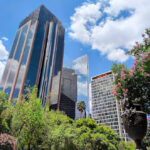
    Why Semana Santa Is the Best Time to Visit Mexico City

    Mexico
    Semana Santa is the ideal time to visit Mexico City and enjoy everything the city has to offer.

    Mexico City’s Semana Santa holiday period offers a rare combination: reduced traffic congestion and a packed calendar of cultural and religious events, making it an ideal time for visitors.

    While many residents leave the capital for beach destinations, the city transforms. Traffic, normally a daily challenge, eases significantly. At the same time, the city hosts major events, including one of the country’s most important religious traditions, drawing over a million attendees.

    The Easing Of Traffic in Mexico City During Semana Santa

    The reduction in traffic during Semana Santa is substantial. Millions of residents leave the city for destinations like Acapulco and Queretaro, emptying offices and schools. For those staying or visiting, this means shorter travel times and easier access to attractions.

    However, visitors should note that vehicle restrictions remain in effect. The Hoy No Circula program operates on its normal schedule throughout Semana Santa 2026, with no announced suspensions. Drivers must check the daily restrictions, as vehicles with holograms 1 and 2 are subject to normal limitations even on holidays.

    Public transportation operates on modified schedules. The Metro runs from 7:00 to 24:00 on Jueves and Viernes Santo, while Metrobus operates from 5:00 to 24:00 . The “Tu bici viaja en Metro” program allows bicycles on the system throughout the holiday, providing an alternative transportation option.

    The Ley Seca (dry law) takes effect in several boroughs, including Iztapalapa, Cuajimalpa, and Magdalena Contreras from Jueves Santo through Sunday, limiting alcohol sales and consumption.

    Major Events and Attractions

    After 183 editions, the Iztapalapa’s Passion Play has been recognized by UNESCO as Intangible Cultural Heritage, drawing visitors from across the country. The reenactment moves through the Ocho Barrios to Cerro de la Estrella. In 2025, more than one million people attended the Viernes Santo procession.

    Centro Histórico – The Visita a las Siete Casas (Visit to the Seven Churches) sends families walking between historic temples, including the Catedral Metropolitana, Templo de Santo Domingo, and Templo de San Hipólito.

    Museums and Cultural Sites

    Major museums remain open along Paseo de la Reforma’s museum corridor:

    • Museo Nacional de Antropología
    • Castillo de Chapultepec (Museo Nacional de Historia)
    • Museo de Arte Moderno
    • Museo Tamayo 

    In Coyoacán, visitors can explore the Casa Azul (Frida Kahlo Museum), Museo Anahuacalli, and colonial-era churches, including Parroquia de San Juan Bautista.

    In San Ángel, the Bazar del Sábado and the Diego Rivera and Frida Kahlo studio museum offer additional cultural experiences.

    mexico
    Experiencing a day out with friends in a trajinera at Xochimilco is something everyone should try at least once.

    Outdoor and Family Activities

    Xochimilco – Trajinera boat rides through the canals remain a signature experience. The Feria de la Nieve in Santiago Tulyehualco, a tradition spanning more than 180 years, offers local ice cream varieties.

    Chapultepec – The Parque Urbano Aztlán features the Aztlán 360 panoramic wheel and mechanical rides. The Bosque de Chapultepec also hosts special events, including “Sólo la luz, Primavera,” an outdoor light art installation with 13 sculptures along Reforma from the Ángel de la Independencia to Puerta de los Leones.

  • Controversy and Name Change at Mexico City’s Estadio Azteca
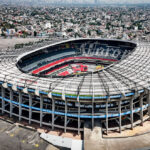
    Controversy and Name Change at Mexico City’s Estadio Azteca

    Estadio Azteca
    Regardless of its name, Mexico City’s main soccer arena is one of the largest in the world, with a capacity of over 100,000.

    On March 28, 2026, the Estadio Azteca—one of soccer’s most hallowed grounds—reopened its doors after an extensive renovation. But the iconic Mexico City stadium did so under a new name: Estadio Banorte. While the $105 million naming rights deal brought much-needed funds for modernization, it ignited a firestorm of controversy among fans, protesters, and even FIFA regulators. This is the story of how a historic colossus became a corporate symbol, the financial mechanics behind the change, and where the newly named venue stands among the giants of Latin American and world sports.

    Why the Name Change?

    The decision to rename the Estadio Azteca was not a simple branding exercise but a financial lifeline. In March 2025, Grupo Ollamani, the stadium’s owner, led by Mexican media mogul Emilio Azcárraga, announced a major alliance with Banorte, one of Mexico’s largest financial institutions. The core of the deal was a loan of 2.1 billion Mexican pesos—approximately $105 million USD—to be repaid over 12 years.

    According to a filing with the Mexican Stock Exchange, the naming rights were a central component of this financing package. The funds were essential for continuing the stadium’s massive remodeling project, which had begun in the summer of 2024. The original budget for the renovation was 1.5 billion pesos, making the Banorte injection critical to meeting the standards required for the 2026 FIFA World Cup. Emilio Azcárraga framed the partnership as a point of pride, stating, “With them, we will modernize this emblematic stadium, respecting its essence and architectural designs recognized for decades. It will be the most important venue to showcase Mexico to the world”.

    A History Etched in Grass and Concrete

    To understand the emotional weight of the name change, one must look at the stadium’s storied past. Opened on May 29, 1966, the Estadio Azteca was designed by renowned architects Pedro Ramírez Vázquez and Rafael Mijares Alcérreca. Nicknamed the Coloso de Santa Úrsula (Colossus of Santa Úrsula) after the neighborhood it resides in, it immediately set a standard for modern sports architecture.

    The Azteca is the only stadium in history to have hosted two FIFA World Cup finals: the legendary 1970 final, where Pelé’s Brazil triumphed, and the 1986 final, where Diego Maradona lifted the trophy. It was also the site of two of the most famous moments in soccer history during the 1986 quarter-final: Maradona’s infamous “Hand of God” goal and the “Goal of the Century” against England. Today, bronze plaques commemorating those events still stand outside the gates.

    This was not the first time the stadium’s name was subject to controversy. In 1997, following the death of FIFA executive Guillermo Cañedo, owner Televisa briefly renamed the stadium in his honor. The move was widely seen as an attempt to dissociate the venue from the name “Azteca,” which was shared by a rival television network, TV Azteca. However, the public refused to accept the change, and the original name was quietly restored. The 2025 rebranding to Banorte, however, proved permanent—secured by a binding financial contract.

    Controversy and FIFA’s Neutralization

    The rebranding was met with immediate backlash, culminating in dramatic scenes during the stadium’s March 28, 2026, re-inauguration match between Mexico and Portugal.

    While the stadium was packed with 87,500 spectators, a very different scene unfolded outside and on the surrounding highways. Protesters, organized under the banner of denouncing the “World Cup of Dispossession,” took to the streets. In one striking act of civil disobedience, they transformed a major Mexico City highway into a makeshift football pitch, blocking traffic to highlight issues they claimed were being ignored for the sake of World Cup preparations, including shortages of housing, water, and electricity.

    Banners reading “Global event, local eviction” reflected fears that the modernization was fueling gentrification and displacement in the Santa Úrsula neighborhood. Actor Damián Alcázar accused the protesters of being political opponents, but the demonstrations highlighted a deep social divide regarding the priorities of the mega-event.

    The FIFA Rule

    The most paradoxical twist to the naming saga came from FIFA itself. Despite the lucrative deal to call the stadium Estadio Banorte, the venue will not carry that name during the 2026 World Cup. According to FIFA regulations for organized events, the stadium cannot display any sponsor names that are not official FIFA partners. As a result, for the duration of the tournament starting June 11, 2026, the stadium will be officially referred to as Estadio de la Ciudad de México (Mexico City Stadium).

    Furthermore, the venue will have to cover or remove all Banorte branding visible inside and outside the stadium. This is a standard practice applied to all World Cup venues; the Azteca joins a list of 10 other stadiums in the US and Mexico undergoing similar temporary rebranding for the tournament.

    Size and Global Standing

    Beyond the controversy, the physical scale of the stadium remains a point of pride and debate. Historically, the Estadio Azteca was one of the largest stadiums in the world. At its inauguration in 1966, it held 107,494 spectators, and at various points in the late 20th century, it was reported to hold upwards of 114,600.

    However, to comply with modern safety standards and FIFA regulations—and to add luxury boxes and amenities—the capacity has been reduced. Today, the official capacity stands at approximately 87,500 seats.

  • The Fight for the Right to Die in Mexico: A Movement Gains Momentum

    The Fight for the Right to Die in Mexico: A Movement Gains Momentum


    Muerte Digna
    The right to die in Mexico has become a hot-button issue, as advocates and detractors passionately debate the morality and law of the issue in the halls of power and through art installations.

    The recent death of Noelia Castillo in Spain has reignited a global conversation about medical aid in dying. After an 18-month legal battle that reached the European Court of Human Rights, the 25-year-old Spaniard finally accessed euthanasia—a case her father and conservative groups had fought to block. For activists in Mexico, Castillo’s ordeal was both a warning and a catalyst: a reminder that determined opposition can prolong suffering, and proof that the right to die can be legally protected.

    The Face of the Right to Die in Mexico

    At the heart of Mexico’s movement is 30-year-old Samara Martínez. Diagnosed with lupus and chronic kidney failure, the journalist from Chihuahua has transformed her own terminal condition into a national campaign. In August 2025, she launched the “Ley Trasciende” (Transcend Law), a citizen initiative to reform Mexico’s General Health Law and Federal Penal Code. Current law classifies euthanasia as “homicide by mercy”—punishable by 4 to 12 years in prison—and assisted suicide as a crime carrying 1 to 5 years. The proposed legislation would allow terminally ill adults to request medical assistance in dying, shifting the framework from criminal prohibition to regulated access.

    Martínez has taken this conversation to unconventional spaces. In March 2026, she inaugurated “Muerte Digna ¡Ya!” (Dignified Death Now!), an art installation in Mexico City’s Metro system. The exhibition, featuring informational panels and personal testimonies, aims to reach the thousands of commuters who daily face chronic illness and suffering in silence.

    Political traction has followed. Martínez has gathered over 130,000 signatures, presented the initiative to Congress, and filled auditoriums at the Senate and UNAM. Legislators from both the ruling Morena party and the opposition have expressed support, with a potential vote expected in late 2026. Public opinion appears favorable, with surveys showing 70% of Mexicans backing active euthanasia.

    Political, Cultural, and Religious Challenges

    Yet significant hurdles remain. Mexico remains deeply Catholic, and the Church hierarchy has historically mobilized against progressive legislation. More nuanced resistance comes from within medicine itself. A 2025 study of palliative care clinicians at Mexico’s National Cancer Institute revealed a “paradox”: doctors who witness daily suffering often position themselves against euthanasia, viewing their role as managing suffering through palliative care rather than ending it.

    Mexico lags behind countries like the Netherlands and Canada, where assisted dying has been legal for years. The Netherlands permits euthanasia for psychological suffering and patients as young as 12; Canada’s MAID framework has steadily expanded since 2016. In Latin America, only Colombia and Ecuador have legalized the practice. Mexico would become the third if the Ley Trasciende passes.

    The Castillo case underscored a critical vulnerability: even in countries with euthanasia laws, family objections can delay access. Castillo’s father challenged her request for 18 months, requiring European Court intervention. Mexican activists see this as a cautionary tale about the need for clear, unimpeachable legal frameworks.

    For Martínez, whose own health continues to decline, the fight is personal. She speaks of wanting to die surrounded by family, without pain—a choice currently denied to terminally ill Mexicans. “Since the disease took away our opportunity to choose how to live,” she said recently, “at least let us have the choice of how to leave.”

  • Mexico Bans AI Voices in Film Dubbing and Animation

    Mexico Bans AI Voices in Film Dubbing and Animation

    dubbing
    In Mexico, most TV shows and movies are dubbed into Spanish, but a new law naw guarantees that these voices will be human, not the result of artificial intelligence. 

    Mexico’s Congress has approved a new law that bans the use of artificial intelligence for voice dubbing in foreign films and for creating AI-generated characters in animated movies and shorts. The measure makes Mexico one of the first countries in the world to put such a clear legal limit on AI in the voice acting industry.

    The rule is part of a broader update to Mexico’s Federal Film and Audiovisual Law, which replaces a 1992 measure. The Mexican Congress approved Article 29 of the new law, which states that dubbing for foreign movies into Spanish or any indigenous language must be done by real people – actors, interpreters, or performers. AI is now completely excluded from this work.

    The law also protects voice actors against voice cloning or any unauthorized use of their voices without their clear permission and fair payment. It recognizes the human voice as a unique and unrepeatable artistic tool that cannot be replaced by artificial intelligence. 

    “This is a real victory for voice actors, the public, and not just Mexico, but consumers of Spanish-language media everywhere,” said Mario Catañeda, who over the decades has voiced famous Hollywood actors like Bruce Willis and anime characters like Goku of Dragon Ball.

    President Claudia Sheinbaum announced the initiative during a morning press conference in February, saying that Mexico has some of the best dubbing actors in the world and that they deserve protection. The push for the law came from voice actors themselves, who had grown worried about companies using AI to copy their voices without consent.

    One case that drew attention involved Amazon Prime Video, which used AI for dubbing some of its productions. The move was met with strong criticism from both audiences and actors. That backlash helped push lawmakers to act.

    The new law does more than just ban AI dubbing. It also changes the Federal Labor Law and the Federal Copyright Law to give voice actors more rights over how their voices are used. The National Institute of Copyright, known as INDAUTOR, will be responsible for resolving disputes when voices are used without permission. Companies that break the law can face fines ranging from 1,000 to 5,000 times Mexico’s daily minimum wage, and repeat violators can be fined double that amount.

    The law also requires companies to be transparent in their contracts. They cannot include hidden clauses that give them the right to use an actor’s voice to train AI systems.

    Mexico’s dubbing industry is the largest in Latin America, with most work centered in Mexico City. For decades, Mexican voice actors have dubbed foreign films and TV shows for audiences across the Spanish-speaking world. The new law aims to protect those jobs from being replaced by machines.

    The rule applies to all foreign movies shown in Mexico, as well as any animated films or shorts made in the country. Streaming platforms like Netflix, Amazon, and Disney+ must also follow the law if they want to distribute content in the Mexican market.

    Some film companies have expressed concerns that AI could make dubbing faster and cheaper. But the Mexican government has said that saving money is not more important than protecting people’s jobs and the country’s cultural heritage.

    The law is part of a larger effort by the Sheinbaum administration to update Mexico’s film industry. The new law also guarantees that Mexican films receive at least 10 percent of theater screen time, requires theaters to show those films for at least 14 days instead of seven, and ensures they are shown at reasonable hours rather than early-morning “ghost hours”.

    The government has also created new financial incentives for film production, with public support of up to 40 million pesos available for certain projects.

    Voice actors in Mexico have celebrated the new law. As one industry representative put it, AI voices may be cheaper, but they cannot match the emotion and feeling that real human actors bring to a performance.

    Other countries are now watching to see how Mexico’s law works in practice. For now, audiences in Mexico can be sure that the voices they hear in their favorite dubbed movies and cartoons are real, not machine-generated.