
Author: Carlos Rosado van der Gracht

  • New DNA Discovery Reveals Twin Sacrifices at Chichén Itzá

    New DNA Discovery Reveals Twin Sacrifices at Chichén Itzá

    What started as a routine examination of ancient remains at Chichén Itzá turned into something much more surprising. Scientists analyzing DNA from a burial site found not one but two pairs of identical twins.

    The discovery came from a place called Serie Inicial, also known as Chichén Viejo—the older section of the famous Maya ruins. Researchers had been studying remains found in an underground chamber, and the genetic results caught them off guard.

    Chichén Itza
    The fact that the uncovered human remains were found within one of Chichén Itzá’s ceremonial centers points to the fact that these were people of elevated social status.

    What Scientists Found at Chichén Itzá

    The study, published in the journal Nature, examined 64 sets of remains from a burial site first uncovered in 1967. The location of most of the remains was within a chultún—an underground water storage chamber—connected to a small cave near a cenote.

    The DNA analysis, led by Rodrigo Barquera from the Max Planck Institute and Julio Lara from the Autonomous University of Yucatán, revealed several key facts. All the remains found in this specific burial at Chichén Itzá were male, which is unusual in itself. Included were children between three and six years old when they died. At least a quarter were closely related—brothers or cousins buried together. Among them, two pairs were identical twins, a rare find that got researchers’ attention.

    Identical twins occur in only about 0.4 percent of births. Finding two pairs in a single burial of 64 individuals is far higher than chance would predict.

    Connection to Maya Mythology

    The discovery of twins points to a famous Maya story. The Popol Vuh, the sacred book of the Kʼicheʼ Maya, tells of the Hero Twins—Hunahpu and Xbalanque. In the story, the twins travel to the underworld, where they face repeated cycles of sacrifice and resurrection.

    The burial site at Chichpen Itzá itself matters too. Underground chambers and caves were seen as entrances to the underworld in Maya belief. Putting twins in such a place suggests that the people performing these rituals were reenacting the story of the Hero Twins.

    “It doesn’t get any cooler than that,” archaeologist Jaime Jose Awe told Science magazine. “We couldn’t have known this without ancient DNA.”

    How They Died

    One puzzle remains: the cause of death. The bones show no cut marks or other signs of how these children were killed. Unlike remains from the nearby Sacred Cenote, which show clear trauma, these bodies were placed in the chamber without visible injury. Researchers suggest poisoning as one possibility, though more testing is needed.

    Connection to Modern Maya People

    The study didn’t just look at ancient remains at Chcichén Itzá. Scientists also worked with 68 volunteers from the modern Maya community of Tixcacaltuyub, a town near Chichén Itzá. The results showed something remarkable: the ancient children and modern residents share a direct genetic link. The same population has lived in the area for more than 1,000 years.

    “Their genomic legacy of Chichén Itzá and the Maya is still present,” the Nature study states.

    But there were differences, too. Modern Maya people carry genetic variants that help resist certain diseases—specifically, protection against Salmonella infection. Their ancestors from 1,000 years ago did not have these same protections.

    This tells a clear story. When Spanish colonizers arrived, they brought new diseases, including the Salmonella strain that caused the deadly 1545 cocoliztli epidemic. The Maya who survived passed on genetic adaptations to their descendants. The DNA of modern Maya people still carries that history.

    Chichén Itzá
    The fact that the uncovered human remains were found within one of Chichén Itzás ceremonial centers points to the fact that these were people of elevated social status.

    Why This Discovery at Chichén Itzá Matters

    This discovery is important for several reasons. It overturns the old myth that Maya sacrifice focused on young women or virgins. That idea came from early Spanish accounts and has stuck in popular imagination, but the DNA evidence shows a different reality.

    It also confirms that ancient DNA can work in tropical climates. Heat and humidity usually destroy genetic material, but advances in technology now allow scientists to recover and analyze DNA from Maya sites. This opens the door for more studies across Chichén Itzá, the Maya region, and Mesoamerica more broadly.

    Excavations of recently discovered human remains in Dziblichalún from roughly the same period have also been announced to have potential for comparative DNA analysis. 

    The research also shows the value of working with Indigenous communities. The Maya people of Tixcacaltuyub were partners in the research, not just subjects. They permitted the DNA comparison of samples from Chichén Itzá and were instrumental in shaping the study. For these communities, seeing their ancient connection confirmed matters. “It’s very valuable to know and be sure of their roots,” said Ermila Moo Mezeta, a Maya co-author of the study.

  • Jaguar Spotted in Guanajuato for First Time: Cameras Capture Rare Sighting in Sierra Gorda Reserve

    Jaguar Spotted in Guanajuato for First Time: Cameras Capture Rare Sighting in Sierra Gorda Reserve

    For the first time, scientists have recorded a jaguar in the state of Guanajuato, marking a significant expansion of the species’ range in central Mexico.

    The National Commission of Natural Protected Areas (Conanp) confirmed that camera traps captured images of the jaguar inside the Sierra Gorda Biosphere Reserve. The reserve is in northeastern Guanajuato and spans nearly 237,000 hectares across five municipalities.

    Researchers installed 75 camera traps between August 2024 and May 2025 with assistance from community monitors. The project was led by Juan Felipe Charre-Medellín and received funding from Toyota and Mexico’s science agency.

    The jaguar was photographed in an area with large sections of continuous forest and low human disturbance. According to Charre-Medellín, the location lies within a corridor connecting jaguar populations in central Mexico to those in the eastern part of the country.

    With this discovery, all six wild cat species found in Mexico have now been recorded in the Sierra Gorda reserve. The others are the ocelot, the tiger cat, the jaguarundi, the bobcat, and the puma.

    Why This Matters

    Jaguars are what scientists call an apex predator. They sit at the top of the food chain and help keep ecosystems balanced by controlling populations of deer, peccaries, and other herbivores. Without them, overgrazing can damage forests and reduce biodiversity.

    The Sierra Gorda reserve is home to nearly 2,900 species of fungi, plants, and animals. Twelve of those species are classified as endangered, 39 as threatened, and 51 under special protection.

    Jaguar
    Over the past couple of decades, attitudes towards jaguars have shifted considerably, even among the cattle ranchers who once hunted them.

    Jaguar Populations in Mexico

    The jaguar’s situation in Mexico is mixed. Recent census data indicate that the population has grown significantly over the past decade; however, the species still faces serious threats.

    According to the National Alliance for Jaguar Conservation (ANCJ), Mexico had an estimated 5,326 jaguars in 2024. That represents a 30 percent increase since 2010, when the government first listed the species as endangered, and an 11 percent increase since 2018.

    However, experts warn that the population remains vulnerable. The ANCJ estimates it will take 15 to 30 years of steady growth for the species to be considered no longer in danger. Reaching a stable population of 8,000 jaguars could take more than three decades.

    At the same time, the species has lost more than half of its historical range in Mexico due to human development, deforestation, and habitat fragmentation. A book published in February 2026 by the Universidad Intercultural del Estado de México describes the jaguar’s situation as “critical,” with some of the lowest genetic diversity found across the species’ entire range from the southwestern United States to Argentina.

    The largest jaguar populations in Mexico are in the Yucatán Peninsula, where an estimated 1,699 individuals live, followed by the South Pacific region with 1,541 individuals.

    Ongoing Threats for Jaguars

    Habitat destruction remains the biggest threat to jaguars in Mexico. Agricultural expansion, cattle ranching, and urban growth continue to reduce the areas where jaguars can live.

    Conflict with ranchers is another major problem. When jaguars lose their natural prey, they sometimes attack cattle. Ranchers may kill jaguars in retaliation. Illegal trafficking of jaguar skins, skulls, claws, and teeth also continues.

    Conservation groups have called for stronger protections, including incentives to preserve wildlife corridors that allow jaguars to move between habitats, and stricter enforcement against the sale of jaguar parts on social media platforms.

    Community Role in Conservation

    In the Selva Lacandona region of Chiapas, community-based conservation projects have helped reduce conflict between ranchers and jaguars. A program called Jaguardianes has trained residents to monitor jaguars with camera traps. Some former hunters now help document jaguar activity and assist ranchers in filing livestock insurance claims when jaguars attack cattle.

    Similar community monitoring efforts in Guanajuato helped confirm the jaguar’s presence in the Sierra Gorda reserve. Conanp said the discovery reflects the work of landowners, academics, civil organizations, and government agencies working together.

    Conanp stated that the first recorded jaguar in Guanajuato confirms the Sierra Gorda reserve’s status as the state’s most biodiverse and best-preserved natural area.

  • Mayapán Remains Closed After Nearly 6 Years as INAH Talks Stall
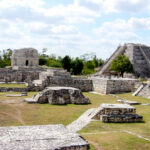
    Mayapán Remains Closed After Nearly 6 Years as INAH Talks Stall

    Mayapan
    Mayapán is one of the most important archaeological zones in Yucatán. Still, it has been closed for the better part of a decade due to a dispute between federal and ejido authorities over who should operate it. 

    The Mayapán archaeological zone has been closed to the public for nearly six years, with no signs of a resolution between the community of Telchaquillo and the National Institute of Anthropology and History (INAH).

    According to local authorities in Telchaquillo, although INAH has new directors at the national and local levels, officials have not reached out or provided any information regarding a way forward. 

    The community maintains total control of this pre-Prehispanic Maya city, which has been closed almost entirely since the 2020 pandemic. At the heart of the conflict is a fight over ownership and stewardship of the archaeological zone. 

    Simply put, the Telchaquillo ejido is demanding control over the archaeological zone of Mayapán; however, Mexico’s constitution does not permit this, as all archaeological zones are under federal control and may be administered only by INAH. 

    According to a communications advisor for the community, INAH stated a few months ago on the radio that the institute was seeking dialogue with the community to resolve the problem. However, when residents learned of this statement, they immediately denied the notion that there was no ongoing communication or dialogue. 

    “The community of Telchaquillo remains open to talks to reach an agreement on the co-administration of the archaeological zone, which is a non-negotiable demand,” the communications advisor reported. “Dialog must follow proper procedures, in writing and formally.”

    While indigenous communities should benefit from tourism, the idea of handing over archaeological zones like Mayapán to ejidos is untenable because they lack the expertise and legal framework to maintain the site. 

    In Mexico, the difference between archaeological sites and archaeological zones is that the latter are designated as national parks and fall entirely under federal jurisdiction. Some archaeological sites and communities, like Yaxuna, have a tacit deal that allows locals to work at the site, give tours, and charge admission, with the understanding that the monuments themselves are entirely under the control of INAH. 

    “We do not want a repeat of what Diego Prieto (Hernández, former director general of INAH) did, which was everything verbal and private. We see that Diego Prieto continues to manage INAH from his new position because he was in Chichén Itzá and Mérida mediating conflicts with communities, but he persists with his strategy of private meetings and nothing in writing,” said a spokesperson and legal counsel for the community of Telchaquillo

    Corruption allegations within Techaquillo’s own government have also come up on more than one occasion, which is likely not making the process any smoother. 

    “The only ones losing out are INAH and tourism, because the community has never benefited from the archaeological site,” the ejido spokeswoman said. “The archaeological zone is well cared for. We do not know what INAH’s intention is because, in its tourism promotions, it states that Mayapán is open. Many people come to the community and find it closed. We explain that there is an ownership dispute with INAH, and they have to leave.”

    “INAH deceives tourists because it publishes that the archaeological zone is open. Agencies include Mayapán in their tour packages, but when they arrive, they see it is closed,” she sai. “We believe this is a form of pressure that INAH exerts on the community to create problems with tourists. But fortunately, the residents know how to explain the problem, and the visitors understand.”

  • Thirst for Growth: Mezcal’s Global Appeal Strains Oaxaca’s Land and Water
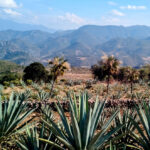
    Thirst for Growth: Mezcal’s Global Appeal Strains Oaxaca’s Land and Water

    What was once a small-scale tradition is now a global phenomenon. International demand has pushed Mexican mezcal production from approximately 1 million liters in 2010 to over 11 million liters in 2024, according to the Mexican Regulatory Council for Mezcal Quality (Comercam). Nearly 75 percent of exports head to the United States, and less than 30 percent of total production remains in Mexico.

    Along roads leading to communities like San Luis del Río—where celebrity-backed brands such as Dos Hombres, co-founded by Breaking Bad actors Bryan Cranston and Aaron Paul, are produced—vast agave plantations now cover hillsides that were forest just years ago.

    Forests Cleared, Water Stressed

    Research led by Rufino Sandoval-García, a forestry engineer and professor at the Technological University of the Central Valleys of Oaxaca, documents the scale of change. In two major mezcal-producing areas, more than 86 acres of tropical dry and pine-oak forests have disappeared over two decades to make room for agave cultivation—an area roughly the size of Monterrey. Agave plantations expanded by over 400 percent in three decades, with most new plantings devoted to espadín, a variety used in commercial mezcal.

    The consequences extend beyond tree loss. Deforestation is accelerating soil erosion, reducing carbon capture by an estimated 4 million tons annually in the studied region, limiting groundwater recharge, and creating heat islands in heavily planted areas.

    Mezcal production has always demanded significant resources. Producing one liter requires at least 10 liters of water for fermentation and distillation, according to industry estimates. The process also generates waste: bagasse (the pulpy residue) and vinazas (acidic wastewater) often end up untreated in rivers.

    A 2025 report from Oaxaca’s Network of Interpreters and Cultural Promoters warned that the industry is extracting more than 50 million liters of water annually without adequate regulation, while over 70 million tons of vinazas are discharged into rivers. The organization identified transnational companies—including Britain’s Diageo, France’s Pernod Ricard, and Mexico’s Becle (formerly José Cuervo)—as linked to brands contributing to environmental damage.

    The Shift From Milpa to Monoculture

    Félix Monterrosa, a third-generation producer from Santiago Matatlán who owns the Oaxacan brand CUISH, describes how industrial mezcal displaced the traditional milpa system he learned from his ancestors—a method where corn, beans, and squash were cultivated alongside agave.

    “Now everything is monoculture, and that is the real problem,” Monterrosa said.

    Mezcal
    The mezcal industry in Oaxaca generates approximately 30,000 jobs in Oaxaca alone. But as this precious crop starts eating up more land, many are starting to wonder if these not particularly well-paid jobs are even worth it.

    The shift has left visible scars. In his town, decades of dumping mezcal waste into the river left the water so contaminated that residents nicknamed it “Nilo”—short for “ni lo huelas,” or “don’t even smell it”. Monterrosa now plants wild agaves alongside corn and trees to restore biodiversity, though he acknowledges that scaling this approach remains difficult.

    Scientific research supports concerns about biodiversity loss. A genomic study published in October 2025 found that espadín—the dominant agave used in commercial mezcal—represents a clonal lineage selected by farmers for desirable production traits, resulting in considerable genetic differentiation from wild agave populations. This genetic uniformity increases vulnerability to pests and disease while reducing resilience to climate change.

    Economic Lifeline or Environmental Toll?

    For many in Oaxaca—where poverty rates remain among Mexico’s highest—the mezcal boom has brought unprecedented economic opportunity.

    Luis Cruz Velasco, a producer from San Luis del Río who works with Mexican brands like Bruxo, said the industry’s growth has created jobs for nearly every family in his town of about 300 residents. “Before, people in this town lived in houses with thatched roofs. Then we were able to build with sheet metal, and now they are made of cement,” said Luis Cruz Ruiz, 62, reflecting on the changes. “We survived because of the maguey”.

    Velasco acknowledges the environmental trade-offs. “There are many people who criticize us and ask what we do to reforest,” he said. “But we have to look for a livelihood and food”.

    He points to a lack of public incentives as a core problem. “We know it has an impact,” Velasco said, adding that large brands have done more than the government to support marginalized areas, but farmers need support to adopt sustainable practices like planting native trees or maintaining traditional systems.

    Efforts Toward Sustainability

    In 2018, Garnica founded a women’s collective called Guardians of Mezcal. The group promotes mezcal production using sustainable practices: using only fallen trees for firewood, planting agave alongside other crops, and avoiding monoculture.

    With support from Tierra de Agaves and local community officials from Santa María Zoquitlán, the collective secured protected status for 26,000 hectares of forest surrounding the municipality.

    “If there is a funeral, a wedding, a party, mezcal is a drink you are going to share with others, and above all, many families depend on it,” Garnica said. “Mezcal is a way of life, like a form of work that our parents taught us, so it really means a lot”.

    As the thirst for Mezcal arround the world continues to grow, so does pressure on ecosystems.

  • The Gansito Index: What a Simple Snack Reveals About Inflation in Mexico 

    The Gansito Index: What a Simple Snack Reveals About Inflation in Mexico 

    The Economist’s famous Big Mac index is often used to explain purchasing power parity across borders. But for Mexicans trying to understand what is happening to their own wallets, a different, more nostalgic indicator has emerged: the “Gansito Index.”

    The Gansito, a small packaged sponge cake with strawberry jam and chocolate coating made by Marinela, is a staple of Mexican childhoods. For decades, it was the affordable treat (3 pesos in the year 2000) that a parent could toss into the grocery cart without a second thought. Today, that gesture is causing anxiety at the checkout counter, and the modest snack has become a powerful symbol of the inflation quietly eroding household budgets.

    Recent data confirms what many Mexican families feel on every trip to the corner store. In February 2026, Mexico’s annual inflation rate climbed to 4.02%, moving further away from the Banco de México’s 3% target. While overall inflation is a worrying figure, the prices of specific everyday goods tell the real story. According to the national statistics agency INEGI, the basic food basket in urban areas rose by 5.1% annually in January 2026, significantly outpacing the general inflation rate.

    This is where the Gansito comes in. In 2019, a Gansito cost around 11 pesos. By mid-2024, that price had more than doubled, hovering around 23 pesos. In some stores now, it can push past 25 pesos. The sticker shock of that single item is a microcosm of a broader trend.

    To put it in terms of real wages, a columnist for El Sol de México recently crunched the numbers to illustrate the “falacia del salario mínimo” (minimum wage fallacy). In 2019, a monthly minimum wage could buy approximately 280 Gansitos. By 2024, despite the minimum wage having nominally doubled, it could only afford 270 of the pastries. You are earning more, but the cart is emptier.

    This isn’t just about a craving for sweets. The pressure on the family budget is coming from every aisle. Essential proteins have seen drastic spikes. In January 2026, beef steak rose by as much as 17% year-over-year, and pasteurized milk climbed over 10%. Fresh produce, always volatile, saw extreme jumps, with lemons and tomatoes spiking over 20% in a single month.

    The result is a “split” inflation reality, as described by Mexico Business News. While macro indicators show some cooling, the cost of essential proteins and basic goods remains painfully high for consumers. This forces families into difficult trade-offs. Do you buy the milk or the meat? Do you say no to the child asking for the treat that used to be a given?

    Furthermore, the Mexican government implemented adjustments to the Special Tax on Production and Services (IEPS) and new tariffs on goods from countries without a trade agreement at the start of 2026. This has driven up the cost of everything from soft drinks to textiles, adding another layer of financial strain. Neighborhood stores, or tienditas, which are the lifeblood of local communities, see their thin profit margins squeezed even further as they try to avoid losing customers.

    The Gansito Index isn’t an official economic measure. It is a cultural one. It represents the moment a parent hesitates, the moment a childhood memory becomes too expensive to recreate. As long as the cost of the basic basket outpaces wages, the simple act of buying a snack will remain a reminder that for many everyday Mexicans, the economy still feels far from stable