
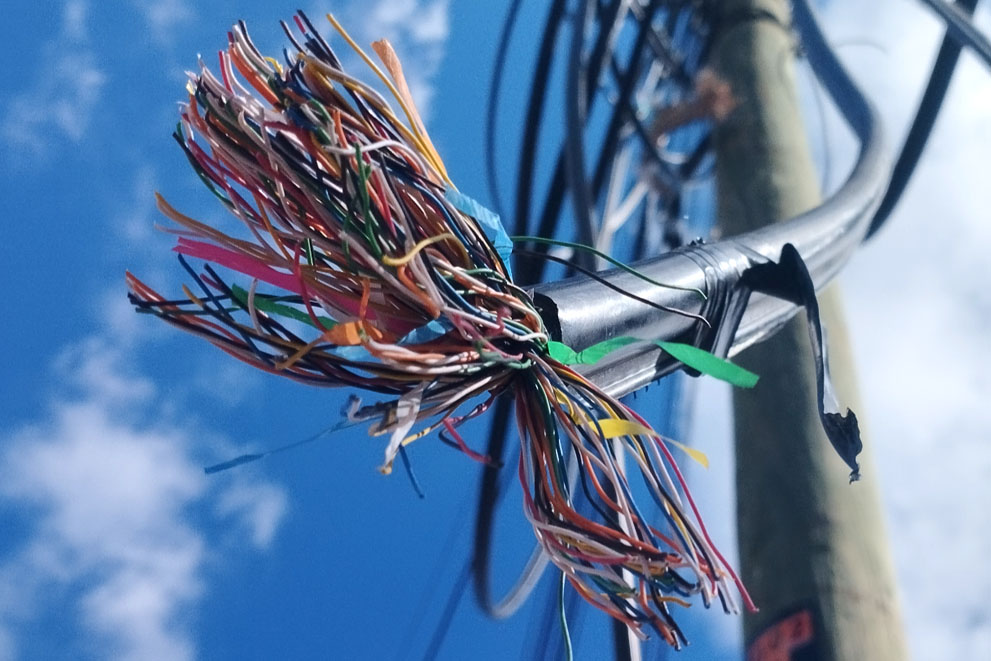
As massive cloud service providers and AI developers consume bandwidth at unprecedented rates, aging cross-border connectivity is reaching its limits. C3ntro Telecom has moved to address this bottleneck with Project Tikva, a 2,500-km fiber-optic network linking Querétaro, Mexico, to Phoenix, Arizona.
While specific investment figures are often cited at approximately roughly US$240-290 million, the strategic value lies in the route itself. Unlike traditional crossings that bottleneck through Texas, Tikva follows a Pacific corridor, entering the U.S. via Nogales. This provides a redundant, low-latency alternative for data traffic, a critical requirement for real-time AI processing and high-frequency data transfers.
Construction began in March 2025, with service expected to go live in the fourth quarter of 2026. The financing for the Mexican segment of the project was secured through a syndicated facility with PROPARCO and DEG (KfW Group), signaling institutional confidence in the demand for dedicated AI-ready transport.
The Bottleneck in Querétaro
To understand the importance of this investment, one must look at Querétaro. Over the last five years, the city has become the densest data center hub in Latin America. Major players have established a significant footprint there. KIO Networks, a pioneer in the region, recently launched QRO2, adding nearly 19 MW of capacity to its existing operations in the state.
However, the physical infrastructure connecting this Mexican hub to the U.S. cloud matrices has not kept pace. According to Salomón Cojab, Vice President of Infrastructure at C3ntro Telecom, the existing networks are aging and struggle to meet the bandwidth demands of modern workloads. For a data center in Querétaro to function as an effective extension of a cloud region in Northern Virginia or California, the pipe connecting them must be wide, diverse, and low-latency. Without it, the nearshoring promise—processing data near the U.S. market—fails to deliver.
Implications for the AI Industry
The arrival of Tikva addresses key pain points in Mexico’s AI industry.
First, AI models, particularly those used for inference (real-time predictions), require millisecond response times. By offering a diverse route and “hyperscale-class construction,” the network is engineered specifically to support the stop-and-go nature of AI processing, preventing data packet loss across long distances.
Then there is the supply chain diversification. Phoenix is not just a city; it is one of the fastest-growing data center markets in North America. By linking Querétaro directly to Phoenix, C3ntro is effectively integrating Mexico into the U.S. Southwest’s supply chain. This allows international enterprises to use Mexican facilities for disaster recovery or specific processing tasks without routing traffic through congested Texas exchanges.
With regards to scalability, the project is designed with “multi-duct capacity,” meaning that once the fiber is in the ground, the bandwidth can be scaled dramatically by activating new wavelengths (100/400/800 Gb) without digging new trenches. This future-proofs the investment against the doubling of compute demands expected in the coming years.
Energy and Sustainability
However, fiber alone is not a panacea. The growth of data centers in Mexico is bumping up against hard limits regarding power and water. Communities in Querétaro have recently raised concerns about grid instability and water availability, while the Mexican Association of Data Centers (MEXDC) projects the market will require 1,516 additional megawatts by 2030.
Tikva solves the connectivity equation but not the energy equation. Industry leaders acknowledge that the next bottleneck will be electricity generation and distribution. The trend toward “edge data centers” (smaller facilities closer to users) is growing, but for massive AI training clusters, connectivity to the U.S. grid via fiber—and reliable power in Mexico—must develop in parallel.