
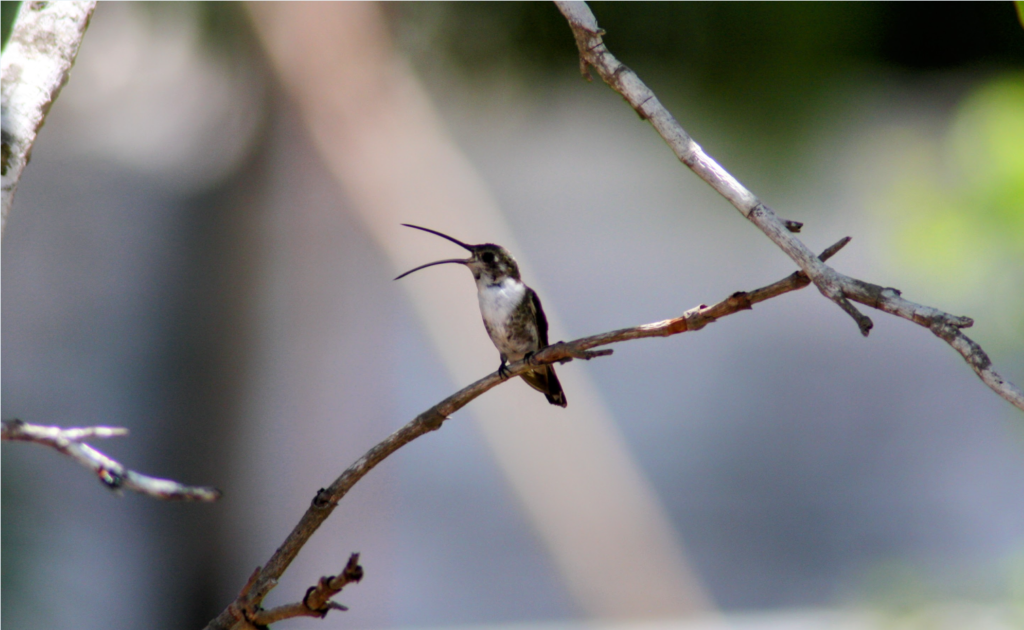
At the Museum of Natural History in Mexico City, visitors are taking a deep dive into the world of hummingbirds.
Colibríes, arte y biodiversidad urbana (Hummingbirds, Art, and Urban Biodiversity), aims to educate the public about these remarkable birds while showcasing detailed clay sculptures by artist Davit Nava.
Hummingbirds possess extraordinary physical abilities. They can hover in midair, fly backward, and change direction instantly—feats that have long fascinated scientists and bird enthusiasts alike. The exhibition highlights these traits while emphasizing the bird’s significance in Mexico’s ecosystem.
Museum Director Mercedes Jiménez del Arco explained that the institution — part of the Mexico City Environment Secretariat — focuses on communicating important environmental topics to the public. Hummingbirds, she noted, are a key subject because of their unique biodiversity value.
The Americas are the only places in the world where hummingbirds exist naturally, making the region particularly privileged. According to the National Commission for the Knowledge and Use of Biodiversity (CONABIO), more than 300 species of hummingbirds have been discovered globally. Mexico is home to approximately 59 of those species, and remarkably, nearly half can be found within Mexico City itself.
“A city that we apparently see with many cars and many buildings still has such great biodiversity,” Jiménez del Arco said. “It’s really spectacular.”
The 23 clay sculptures are each a life-sized representation of a hummingbird species rendered with scientific precision. Nava, a sculptor deeply committed to environmental issues, produced pieces that allow visitors to appreciate the birds’ intricate details up close.
Beyond the scientific facts and artwork, the exhibition also provides an opportunity to reflect on the cultural significance hummingbirds have held throughout Mesoamerican history. Ancient civilizations, including the Aztecs and Maya, regarded these tiny creatures as sacred beings with deep spiritual meaning.
The Maya people told a creation story in which the gods, after making all other animals, realized they had no messenger to carry their thoughts between worlds. With no remaining materials to fashion a new creature, they carved a small jade stone into the shape of an arrow and breathed life into it, creating the first hummingbird. According to Maya belief, these birds were so light and delicate that they could approach the most fragile flowers without disturbing a single petal. Their purpose was to travel between the human realm and the divine, carrying thoughts, prayers, and messages.
Some traditional beliefs persist in parts of Mexico today—that a hummingbird appearing nearby brings a message of love from someone who is thinking of the observer. The Maya also maintained that hummingbirds should never be captured or caged, as their role as divine messengers required them to remain free.
For the Aztecs, hummingbirds held equally powerful symbolism. Their primary deity, Huitzilopochtli—whose name translates to “Hummingbird of the Left” or “Hummingbird from the South”—was the god of war and the sun. Aztec tradition held that warriors who died in battle would be reincarnated as hummingbirds, returning to life to flit among flowers and drink nectar. The birds thus represented the spirits of fallen warriors, embodying strength, energy, and good fortune. Aztecs viewed the hummingbird’s long, sharp beak as a weapon, and believed that wearing hummingbird talismans conferred energy and power.
Another Aztec legend described the hummingbird as the sun in disguise, taking the form of the tiny bird to court the moon, his true love, secretly.
The Museum of Natural History and Cultural Environment is located in the Bosque de Chapultepec, Mexico City’s large urban park, on Avenida de los Compositores in the second section. The exhibition is included with regular museum admission, which costs 38 pesos for the general public. Students and teachers with valid identification pay 18 pesos, while senior citizens and people with disabilities enter free upon presentation of credentials.
The museum operates Tuesday through Sunday from 10 a.m. to 5 p.m., with ticket sales ending at 4:30 p.m. Colibríes, arte y biodiversidad urbana will remain on display through April 12.