
The killing of Nemesio Rubén Oseguera Cervantes was the biggest single blow Mexican security forces have dealt to organized crime in years. It also lit parts of the country on fire.
Oseguera Cervantes, 59, was wounded during a military raid Feb. 22 in Tapalpa, a mountain town in the western state of Jalisco, and died while being flown to Mexico City, according to Mexico’s Defense Department. He led the Jalisco New Generation Cartel — known by its Spanish initials, CJNG, or Cartel Jalisco Nueva Generación — which had become, by most accounts, the most powerful criminal organization in Mexico.
Writing in The Independent, security analyst Chris Dalby argued that removing El Mencho is less a finishing blow than a destabilizing one. The drugs will keep moving, he wrote. The violence may get worse before it gets better. That assessment was hard to argue with, given what followed the raid.
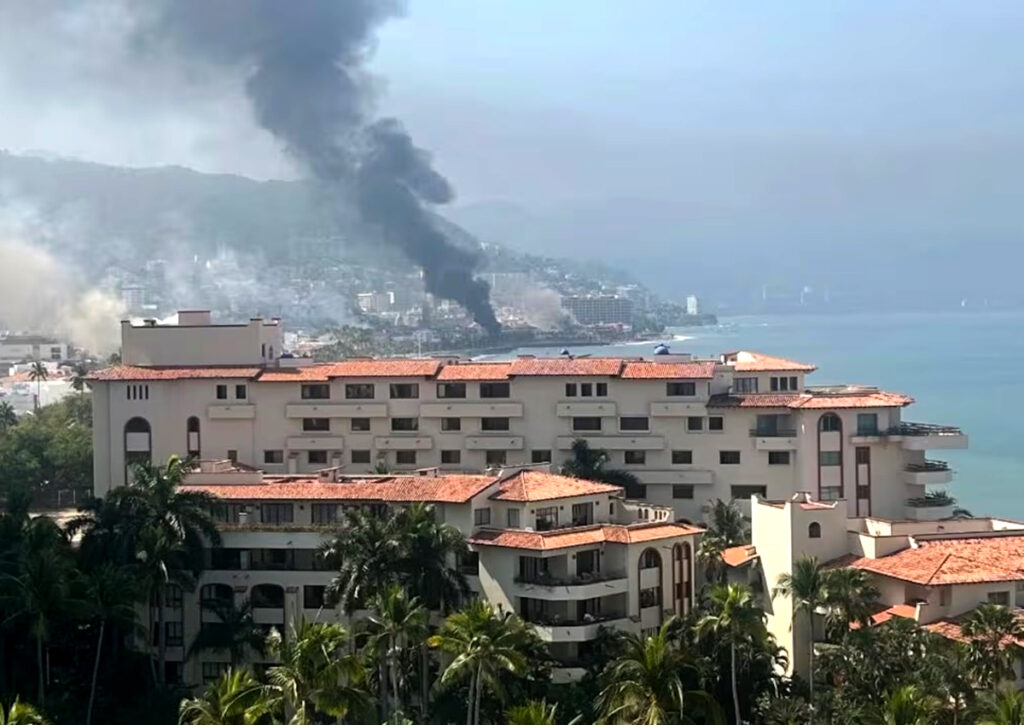
Cars set ablaze by cartel members blocked roads in nearly a dozen states. Guadalajara, Jalisco’s capital, turned into a ghost town as civilians sheltered indoors. By Monday, authorities confirmed that 25 members of Mexico’s National Guard had been killed in cartel attacks across the state. More than 250 roadblocks were reported across 20 states before security forces began clearing them.
The operation itself came together through surveillance of a close associate tied to one of El Mencho’s romantic partners. Special forces, backed by National Guard troops and military aircraft, sealed off the rural compound before dawn. When soldiers advanced, cartel gunmen opened fire. El Mencho fled into nearby woods with members of his security detail. A second firefight broke out. Soldiers eventually found him wounded alongside two bodyguards. He was airlifted toward a hospital but died in flight. Armored vehicles, rocket launchers, and other weapons were seized at the scene.
The White House confirmed U.S. intelligence support. “President Trump has been very clear — the United States will ensure narcoterrorists sending deadly drugs to our homeland are forced to face the wrath of justice they have long deserved,” press secretary Karoline Leavitt said in a statement Sunday night.
El Mencho had been a fugitive for decades. Born in 1966 in the state of Michoacán, he was convicted in California in 1994 for conspiracy to distribute heroin and served three years in a U.S. prison. After returning to Mexico, he worked through the ranks of several criminal organizations before co-founding the CJNG around 2009. The group grew fast, trafficking cocaine, methamphetamine, and fentanyl into the U.S. while also smuggling migrants and diversifying into fuel theft, extortion, and timeshare fraud. The U.S. Drug Enforcement Administration estimated by 2019 that CJNG was responsible for at least one-third of all drugs entering the U.S. by air and sea. The State Department had placed a $15 million reward on his head.
The cartel became notorious for military-style tactics — drones rigged with explosives, rocket-propelled grenades, and direct assaults on government officials. In 2015, CJNG shot down a Mexican military helicopter in Jalisco, killing nine soldiers. In 2020, cartel gunmen staged a brazen assassination attempt against then-Mexico City police chief Omar García Harfuch — now the country’s federal security secretary — using grenades and high-powered rifles in the middle of the capital.
Dalby, in The Independent analysis, described El Mencho’s approach as almost medieval: conquer ruthlessly and make the consequences visible to anyone who might resist. That strategy built the CJNG quickly, but it also meant constant, grinding confrontation.
Now the question is whether his death reduces that violence or simply reshuffles it. Unlike other cartels with multiple power centers, the CJNG was built around El Mencho personally. There is no obvious heir. His son, brother, and daughter are all in prison. That gap could trigger a succession fight among regional commanders — the same dynamic that shattered the Sinaloa Cartel after El Chapo’s arrest.
Mexico has been here before. A “kingpin strategy” under President Felipe Calderón from 2006 to 2012 killed or captured dozens of cartel leaders. Violence spiked each time. More than 300,000 people have been murdered in Mexico in the past decade, a period that overlapped directly with the CJNG’s national expansion. The current president, Claudia Sheinbaum, had long been skeptical of that approach — but Sunday’s operation represents a sharp shift in posture. She applauded the security forces and called for calm.
The Trump administration has been pressing Mexico hard on cartel enforcement, threatening tariffs and raising the specter of unilateral military action if results didn’t come. The CJNG was designated a foreign terrorist organization by the U.S. in February 2025. El Mencho’s death gives Sheinbaum a significant chip to play in that relationship — though the wave of retaliatory violence that followed will complicate any easy narrative of victory.
The timing carries its own weight. Guadalajara, still clearing burned-out vehicles from cartel reprisals, is set to host FIFA World Cup matches in just a few months.
For context on cartel activity in southeast Mexico, including how trafficking dynamics have shifted in states bordering the Yucatán Peninsula, see our earlier coverage at Yucatán Daily News. For broader analysis of what comes next for the CJNG, Al Jazeera has published detailed reporting on the succession question.
Fast Facts: El Mencho and the CJNG
- Nemesio Rubén Oseguera Cervantes, “El Mencho,” was killed Feb. 22, 2026, in Tapalpa, Jalisco, during a Mexican army operation
- He was 59 and had been involved in drug trafficking since the 1990s
- He co-founded the Jalisco New Generation Cartel (CJNG — Cartel Jalisco Nueva Generación) around 2009
- The CJNG has a presence in at least 21 of Mexico’s 32 states and is active across all 50 U.S. states, according to the DEA
- The U.S. had offered a $15 million reward for information leading to his arrest
- The Trump administration designated the CJNG a foreign terrorist organization in February 2025
- 25 Mexican National Guard members were killed in cartel reprisals following the operation
- Roadblocks and arson spread across more than 20 Mexican states within hours of the raid
- El Mencho’s son, brother, and daughter are all currently imprisoned, leaving no clear successor
Sources: The Independent; Al Jazeera; NBC News; CBS News; Axios; Institute for Economics and Peace / Mexico Peace Index 2025