Category: News

  • Mexico to Use Own Aircraft for U.S. Training After Toluca Controversy

    Mexico to Use Own Aircraft for U.S. Training After Toluca Controversy

    A U.S. military transport aircraft landing at a civilian airport sparked a national debate about sovereignty and bilateral security protocols.

    President Claudia Sheinbaum announced Tuesday that Mexico will use its own aircraft to transport personnel for training in the United States, ending a practice that allowed U.S. military planes to land in Mexico for pickup operations.

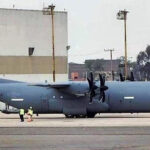
    The policy shift follows widespread criticism after a U.S. Air Force C-130J Super Hercules landed at Toluca International Airport on Jan. 18. The aircraft arrived from Texas to transport Mexican security personnel for training exercises under bilateral cooperation agreements.

    “We’ve decided that when it involves training, it’s better for a Mexican aircraft to go to the United States to drop off those who are being trained, rather than having a U.S. aircraft come pick them up,” Sheinbaum said during her morning press conference.

    The Hercules landing coincided with Federal Aviation Administration warnings about military activities in the Eastern Pacific, creating heightened sensitivity about U.S. military operations near Mexico. The timing amplified concerns following the Trump administration’s recent military action to capture Venezuela’s then-president Nicolás Maduro earlier this month.

    Sheinbaum emphasized that the National Security Council authorized the Toluca landing and that such training flights are part of standard bilateral security cooperation. She rejected claims the landing violated any laws, noting that Senate authorization is only required when foreign troops enter Mexico for operations — not for transport crews.

    “The Senate approves when troops or trainers come to Mexico to train,” she explained. “In this case, no troops came. It was the aircraft crew, they didn’t bring weapons.”

    The president confirmed that similar U.S. military aircraft have landed in Mexico before, typically at military installations rather than civilian airports. The decision to use Toluca this time came from the National Security Council as a logistical determination.

    Military cooperation between Mexico and the United States dates back decades through programs including the Mérida Initiative, which began in 2008 to combat drug trafficking and organized crime. The framework includes training exchanges, equipment transfers, and intelligence sharing under carefully negotiated protocols.

    Critics questioned why the military transport used Toluca’s civilian airport rather than the nearby Santa Lucía Air Force Base. Images of the massive four-engine transport at a commercial facility raised questions about operational procedures and transparency in bilateral military arrangements.

    The C-130J Super Hercules is one of the most versatile military transport aircraft in service. According to manufacturer Lockheed Martin, the plane handles everything from troop transport to humanitarian relief missions and is operated by 23 countries worldwide, including Mexico’s Air Force.

    Mexico operates three older C-130 Hercules aircraft assigned to the Air Squadron 302 at Santa Lucía base. The military announced in 2025 plans to purchase a new C-130J, which would make Mexico the first Latin American country to operate the advanced variant when delivered in 2028.

    Opposition party Movimiento Ciudadano questioned the government’s handling of the incident, noting that the Senate had not authorized any U.S. military personnel entry. The party pointed out that a December 2025 request to approve Navy SEAL training in Campeche was postponed indefinitely without explanation.

    The new protocol establishes stricter oversight of training operations. All international training must now receive approval from the National Security Council, and Mexican aircraft will handle all personnel transport to avoid future confusion about foreign military presence on Mexican soil.

    The change reflects Mexico’s emphasis on sovereignty while maintaining security cooperation relationships. Both governments continue to state they will collaborate on combating cartels and fentanyl trafficking, with Mexico repeatedly stressing it will not accept violations of its sovereignty.

    Security officials from both countries are scheduled to meet Friday to continue bilateral cooperation efforts focused on countering transnational criminal organizations and controlling illegal flows of drugs and weapons across the shared border.

    Key Facts About the Toluca Aircraft Incident

    • Aircraft: U.S. Air Force C-130J Super Hercules (registration 08-5726)
    • Flight origin: Dyess Air Force Base, Abilene, Texas
    • Landing location: Toluca International Airport, State of Mexico
    • Date: Jan. 18, 2026
    • Purpose: Transport Mexican security personnel to U.S. for training
    • Authorization: Mexican National Security Council approved the flight
    • New policy: Mexico will use its own aircraft for future training transport

    Sources: Diario de Yucatán, El Financiero, Milenio, El Imparcial, PBS News, NPR, Congressional Research Service

  • Measles outbreak spreads to all 32 Mexican states, kills 24

    Measles outbreak spreads to all 32 Mexican states, kills 24

    Mexico’s Ministry of Health reported Monday that measles has spread to all 31 states and Mexico City, with 7,131 confirmed cases and 24 deaths in the past 12 months, despite an aggressive vaccination campaign that delivered over 11.8 million doses.

    Health authorities report 90 percent of cases occurred in unvaccinated people, with severe cases and deaths mainly among those with incomplete vaccinations, young children, and individuals with immune deficiencies or malnutrition.

    Children ages 1 to 4 are most affected, with 1,089 cases, followed by 830 cases in those ages 5 to 9.

    Chihuahua reports the most cases at 4,495, and 21 of 24 deaths. Jalisco has 1,020 cases and one death, followed by Chiapas (430 cases), Michoacán (261), and Guerrero (248).

    The government announced it will strengthen vaccination efforts at high-traffic locations, including airports and bus terminals, to prevent new infections and enable early detection.

    Regional outbreak traced to Texas

    Mexico’s outbreak began in February 2025 after Chihuahua officials linked cases to a January outbreak in an undervaccinated Gaines County, West Texas community.

    National Autonomous University of Mexico specialists warn that measles “is the most contagious disease there is, even surpassing COVID-19.” The Health Ministry notes that while only 5 percent of total cases remain active, authorities have also recorded 17,267 cases of febrile exanthematous diseases — illnesses causing fever and widespread skin rashes, including measles, rubella, roseola, scarlet fever and chickenpox — during the same period.

    Americas lose measles-free status

    In November, the Pan American Health Organization announced that the Americas had lost verification of their status as free of endemic measles transmission. Canada lost its measles-free status on Nov. 10, 2025, while Mexico and the United States received two-month extensions to contain their outbreaks.

    Mexico faces a virtual review on April 13 to determine whether it will maintain its measles-free status. The country’s National Epidemiological Surveillance System continues to monitor the disease, enabling timely case detection, laboratory confirmation, and identification of circulating genotypes.

    According to Scientific American, declining vaccination rates in the United States and Canada have helped entrench measles in those countries, with growing anti-vaccine messaging from the U.S. Health Secretary Robert F. Kennedy Jr. is contributing to outbreaks there.

    Health Minister David Kershenobich and President Claudia Sheinbaum discussed the government’s outbreak strategy at her Tuesday morning press conference.

  • Sheinbaum Addresses the Landing of US Military Aircraft in Toluca
    Sheinbaum Addresses the Landing of US Military Aircraft in Toluca

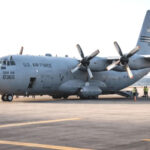
    A recent event at the Toluca Airport in Mexico State caused a significant stir in Mexico. It involved the arrival of a United States military aircraft, a C-130 Hercules, leading to discussion over national sovereignty and the transparency of military agreements with foreign nations.

    This is especially the case after the actions taken by the US military in Venezuela at the beginning of the year. 

    The controversy began when images of the large, camouflaged U.S. Air Force plane parked at the civilian Toluca airport spread rapidly on social media. Mexico has a long and deeply held principle of non-intervention, rooted in its history and constitution. The presence of a foreign military aircraft, especially one as recognizable as a Hercules, immediately raised questions and concerns about why it was there and what it was doing.

    The reaction forced President Claudia Sheinbaum to address the issue publicly. During her January 19 morning press conference, she explained, clarifying what she called part of the “mystery.” According to the President, the aircraft was not carrying U.S. troops into Mexico for any operational mission. Instead, she stated that it was a logistical flight for a training exercise approved months earlier.

    Her explanation, based on the government’s account, was detailed. She said the aircraft landed in Toluca to pick up Mexican public officials. These officials were then flown to the United States to participate in a training program “related to their work,” regulated by Mexico’s National Security System. She specified that the U.S. Northern Command was involved in these trainings, which are part of existing bilateral agreements between the two countries.

    A key point in her defense was the timeline for authorization. Sheinbaum emphasized that the Mexican Senate had granted permission for this specific flight in October. She argued that because no foreign troops were entering Mexican territory—only Mexican officials were boarding the plane to leave—the event did not require new public consultation. The only unusual detail, she noted, was that the aircraft used Toluca Airport rather than another entry point, though she did not give a reason for the change.

    The explanation did not fully calm the political waters. The incident shed light on the broader and often contentious process of military cooperation between Mexico and the United States. Sheinbaum used the opportunity to clarify a separate, pending issue. She mentioned that her administration had previously sent a request to the Senate’s Permanent Commission to authorize the temporary entry of U.S. military personnel—specifically 29 members of the U.S. Navy SEALs and Special Forces—for a joint training program planned for early 2026.

    This revealed a complex bureaucratic process. Sheinbaum stated that such authorizations must be approved by the full Senate during its ordinary sessions, not just by the smaller Permanent Commission. She addressed rumors head-on, denying that a recent Senate delay in voting on that larger troop request was related to political events in Venezuela or done on her orders. She said the senators simply decided to wait until the next ordinary session in February to vote, as is their constitutional right.

    The reactions from other political leaders and analysts were mixed. Some accepted the president’s logistical explanation for the Toluca flight. Others, particularly from opposition parties, remained skeptical. They argued that the event highlighted the government’s lack of transparency and proactive communication. Critics asked why, if the flight was routine and pre-authorized, its occurrence came as such a surprise to the public. 

  • Mexico City’s Cablebús To Transform Its Network Into the Largest in the World
    Mexico City’s Cablebús To Transform Its Network Into the Largest in the World

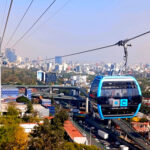
    Mexico City’s government has announced the construction of five new cable-car — known locally as Cablebús — lines. The goal is to optimize public transit in the Western Hemisphere’s largest city and to fight the traffic it has become infamous for. 

    The Cablebús transport system, which began operating in July 2021, has established itself as a daily option for tens of thousands of commuters. 

    The head of CDMX’s government, Clara Brugada, announced that in the coming year, resources will be allocated to expanding the Cablebús transit network. Five new routes will be built, covering eight underserved boroughs: Tlalpan–Coyoacán, Magdalena Contreras, Álvaro Obregón, Milpa, Alta–Tláhuac, Cuajimalpa, and Xochimilco.

    Once these upgrades to the Cablebús network are complete, Mexico City will be home to the largest cable car network in the world. 

    The ambitious infrastructure project also includes connections with bus and subway lines, as well as light rail and electric trams. 

    The expanded Cablebús network addresses a key challenge in urban planning: connecting neighborhoods that conventional rail or road networks have historically underserved due to complex topography. 

    For example, areas like the southern boroughs of Milpa Alta and Xochimilco, known for their canals and rural landscapes, have long faced connectivity issues. The cable car offers a sustainable and cost-effective alternative to carving expensive roads or tunnels through such terrain.

    The benefits of the Cablebús over traditional public transit include speed and safety, as each Cablebús accommodates 8 passengers and has police officers at every stop, making the risk of muggings or assault negligible.

    This is something that cannot be said of the fleet of passenger vans that travel to CDMX from surrounding communities and can take several hours to reach their destinations as they navigate some of the most dangerous highways and streets in the country. 

    The ambition to become the world’s largest network is notable. According to a 2021 report by the International Association of Public Transport, urban cable car systems are seeing a global renaissance, with Latin America being a particular hotspot. 

    Cities like La Paz in Bolivia and Medellín in Colombia have pioneered the use of cable cars as integral parts of their public transit, successfully improving access for residents in informal settlements perched on hillsides. Mexico City’s project, however, is on a different scale in terms of the population it aims to serve within a single urban agglomeration. 

    While Medellín’s famous Metrocable has about half a dozen lines, Mexico City’s plan for a total of eight lines (three existing plus five new) would represent one of the most extensive and interconnected systems globally.

    The expansion of the Cablebús network also promises secondary positive impacts. For example, a study of the effects of the Cablebús network on CDMX’s Line 1 Subway found that the cut in subway crowding alone has already cut travel time for residents of Cuautepec by up to an hour for a round trip, a life-changing improvement for daily commuters.

    Furthermore, by providing a reliable and efficient public service, the system can foster greater social inclusion, linking marginalized communities to economic opportunities, healthcare, and education in the city center. And as an electrically powered system, the Cablebús network helps reduce air pollution caused by traffic congestion, a serious concern throughout the Valley of Mexico.

    However, such an ambitious project is not without its challenges and criticisms. The initial construction costs are high, and securing funding and navigating the complex urban landscape will be a significant test for the administration. 

    There are also concerns about the long-term maintenance costs and ensuring the system’s operational resilience. Some urban planners caution that while cable cars are excellent for specific point-to-point connections, they must be perfectly integrated with other transit modes, such as the Metro, buses, and trolleybuses, to form a cohesive network and avoid becoming isolated novelties.

    Nevertheless, public reception of the news has been positive. For residents in the newly designated boroughs, the promise of the Cablebús represents hope for a less grueling daily commute and better access to the city. The sight of the bright red and white cabins gliding silently over the sprawling cityscape has become a symbol of modern, progressive urban planning for Mexico City.

    The Cablebús has also become somewhat of a tourism attraction, especially on its Chapultec line, which offers stunning views of the city.