
Category: News

  • Hackers Leak 2.3 TB of Data from 25 Mexican Institutions

    Hackers Leak 2.3 TB of Data from 25 Mexican Institutions

    A hacker collective known as Chronus made good on threats Thursday, releasing massive amounts of personal data from government agencies and institutions across Mexico — including information from a private university in Yucatán.

    The group dumped roughly 2.3 terabytes of data involving 25 institutions, according to cybersecurity journalist Ignacio Gómez Villaseñor, who reviewed the leaked files. Chronus estimates the breach affects about 36.5 million people, or 28% of Mexico’s population.

    Among the affected institutions is Clínica Universitaria Anáhuac Mayab in Yucatán, alongside the municipality of Benito Juárez in Quintana Roo, which includes Cancún.

    The data dump represents one of the largest cybersecurity breaches in Mexico’s recent history. It exposes personal details ranging from Social Security numbers and medical records to internal government documents and voter registration data.

    Biggest target: IMSS Bienestar

    The most extensive leak involved IMSS Bienestar, Mexico’s public healthcare system. Hackers released 1.8 terabytes in five compressed files containing the System of Social Protection in Health registry.

    That database includes information on 3.15 million people, complete with direct validations from Mexico’s national population registry RENAPO, affiliation status, geographic locations and digital validation QR codes. The predominantly PDF format suggests hackers extracted complete digitized records, not just metadata.

    Within an hour of publication, the IMSS Bienestar database had been downloaded 74 times.

    The National Perinatology Institute also suffered a severe compromise. Hackers obtained a complete SQL database dump with more than 24 internal databases and 494,311 lines of records. The administrative-level access would allow reconstruction of the institute’s complete operational and clinical history.

    Biometric data exposed

    The National Insurance and Bonding Commission breach exposed information on 95,178 people in the insurance sector. Unlike other cases, this dataset includes biometric data such as personal photographs alongside CURP, RFC and license numbers — significantly increasing the risk of identity theft and high-quality fake documents.

    The ruling Morena party’s affiliate registry was compromised, exposing data on 26,899 members. The leak includes voter credentials, affiliation status, personal phone numbers and internal review notes — information that could be used to identify and locate party members beyond public figures.

    Mexico’s tax agency SAT also appears on the list, though the extent of that breach remains unclear. Chronus suggested more SAT information could be released through a VIP channel.

    Complete list of affected institutions

    The 25 compromised entities include:

    • Clínica Universitaria Anáhuac Mayab
    • Municipality of Benito Juárez, Quintana Roo
    • Tax Administration Service (SAT)
    • IMSS Bienestar
    • Federal Health Secretariat (supplies)
    • National Perinatology Institute
    • National Insurance and Bonding Commission
    • State health secretaries and prosecutors in Chihuahua, Tabasco and Tamaulipas
    • Judicial Branch of Tabasco
    • DIF systems in Zacatecas and Sonora
    • State governments of Morelos and Nayarit
    • COMUDE Guadalajara
    • Autonomous University of the Northeast
    • Morena political party
    • National Institute of Political Training (Morena)

    Hackers cite security failures

    In a statement following the release, Chronus said the leaks demonstrate the “total inefficiency” of official security protocols and that government infrastructure “was always vulnerable.”

    The breach came just weeks after Mexico unveiled its National Cybersecurity Plan 2025-2030 in early December. That 85-page document promised to make Mexico a “regional leader in cybersecurity governance” but lacked concrete budget allocations or implementation timelines.

    Chronus has claimed responsibility for more than 1,700 security incidents since 2021, with 26 targeting Mexican public institutions. Previous victims include the states of San Luis Potosí and Coahuila.

    Mexico’s Anti-Corruption Secretariat has opened investigations to determine how the breach occurred and whether administrative violations contributed to the security failures. Affected institutions must cooperate with inquiries and file criminal complaints where appropriate.

    The primary risk to affected individuals is identity theft. Experts warn that exposed personal data could circulate for years, enabling criminals to open fraudulent accounts, file false tax returns or commit other forms of fraud.

    No official statements have been released regarding victim notification protocols or data protection measures being implemented following the breach. Mexico remains highly vulnerable to cyberattacks, averaging four per second and registering more than 40 billion intrusion attempts in early 2025.

    What to Know About the Mexico Data Breach

    • The Chronus hacker group released 2.3 terabytes of data from 25 Mexican institutions on Jan. 30
    • An estimated 36.5 million people may be affected, representing 28% of Mexico’s population
    • Exposed data includes Social Security numbers, medical records, biometric information and voter credentials
    • IMSS Bienestar suffered the largest breach with 1.8 TB affecting 3.15 million people
    • A Yucatán university clinic and Cancún’s municipal government were among those compromised
    • The breach occurred three weeks after Mexico unveiled its National Cybersecurity Plan
    • Victims face elevated risk of identity theft, fraud and document forgery
    • Investigations are underway but no victim notification protocols have been announced

    Sources: Diario de Yucatán, Infobae, CETYS Universidad, Revista Morelia

  • 2 Train Workers Lacked Valid Railroad Licenses in Fatal Crash

    2 Train Workers Lacked Valid Railroad Licenses in Fatal Crash

    The machinist and conductor operating a Tren Interoceánico locomotive that collided with a trailer truck on Dec. 7 did not have valid railroad operating licenses at the time of the accident, according to local media. The accident left 14 people dead and 98 injured.

    The Federal Railroad Transportation Agency (AFTF) confirmed that neither worker possessed the required certification to operate the train on the Interoceanic Railway route, where the fatal collision occurred at a highway crossing.

    The revelation adds scrutiny to Mexico’s interoceanic rail project, which has faced questions over safety protocols since passenger service was relaunched in recent years on the historic line connecting the Pacific and Gulf coasts.

    Safety Oversight Under Question

    Mexican law requires all train operators to hold valid licenses issued by the AFTF, which oversees railroad safety and certification nationwide. The licensing process includes technical training, medical evaluations, and demonstrated competency in railroad operations.

    While investigations continue into the circumstances of the crash, the lack of proper licensing raises questions about training standards and oversight for the railway project, which operates across the Isthmus of Tehuantepec.

    Historic Railway Line

    The Tren Interoceánico runs along a historic route connecting Coatzacoalcos, Veracruz, on the Gulf of Mexico, with Salina Cruz, Oaxaca, on the Pacific coast. The railway crosses the narrowest part of Mexico, offering an alternative to the Panama Canal for cargo movement.

    The Mexican government revitalized the line as part of infrastructure modernization efforts, adding both freight and passenger service to the corridor. The route spans approximately 186 miles (300 km) across the Isthmus of Tehuantepec.

    Critics have questioned whether safety measures have kept pace with the railway’s expanded operations. The project’s operator has defended its training programs and safety protocols.

    The December accident was not isolated. Several collisions with vehicles at grade crossings have occurred on Mexican rail lines, though most resulted in property damage rather than fatalities.

    Transportation experts note that grade crossing safety remains a critical challenge for railroad operations worldwide, particularly in areas where highways and rail lines intersect without protective barriers or advanced warning systems.

    Federal Investigation Ongoing

    Mexico’s Attorney General’s Office continues investigating the December crash to determine whether criminal negligence played a role. The licensing revelation could influence potential charges against railway operators or supervisors responsible for crew certification.

    The AFTF has not publicly commented on how the unlicensed operators were cleared to work or what disciplinary measures may follow. The railway operator has also declined to address the licensing issue.

    The incident highlights concerns about regulatory oversight as Mexico expands its rail infrastructure. The country’s freight rail network has operated for over a century, but passenger service expansions require renewed attention to safety standards and crew training.

    Sources: Diario de Yucatán, Mexican Federal Railroad Transportation Agency, Attorney General’s Office reports

  • Nearly 2 in 3 Mexicans Feel Unsafe in Their Cities, New Government Survey Shows

    Nearly 2 in 3 Mexicans Feel Unsafe in Their Cities, New Government Survey Shows

    More than 63% of Mexicans living in urban areas said they felt unsafe in their cities at the end of 2025, according to a quarterly government survey that tracks public perception across the country’s 91 largest metropolitan areas.=

    The National Urban Public Security Survey, released Jan. 23 by Mexico’s statistics agency INEGI, found women reported feeling significantly more insecure than men. Nearly 70% of women said living in their city felt unsafe, compared to 57% of men.

    The numbers mark a slight increase from September 2025, when 63% reported feeling unsafe, and represent a statistically significant jump from December 2024’s 61.7%.

    Five cities topped the list for perceived insecurity. Uruapan in Michoacán led with nearly 89% of residents feeling unsafe, followed closely by Culiacán Rosales in Sinaloa at 88%. Ciudad Obregón in Sonora, Ecatepec de Morelos in México state, and Irapuato in Guanajuato all reported insecurity levels at or above 87%.

    Both Uruapan and Culiacán have faced escalating cartel violence in recent months. Culiacán has been ground zero for an internal war within the Sinaloa Cartel since September 2024, with more than 1,000 people killed and thousands disappeared. In Uruapan, the November 2025 assassination of Mayor Carlos Manzo, who had launched an aggressive campaign against organized crime, sparked nationwide protests.

    At the other end of the spectrum, wealthy San Pedro Garza García in Nuevo León recorded the lowest insecurity perception at less than 9%, followed by Benito Juárez in Quintana Roo at 14.8% and Piedras Negras in Coahuila at 17.3%.

    The survey also measured where people feel most vulnerable. More than 72% said they felt unsafe using ATMs on public streets, while nearly 65% reported feeling insecure both on public streets and on public transportation. About 59% said highways felt dangerous.

    Looking ahead, residents showed mixed expectations. Nearly 34% of respondents said crime and insecurity would stay equally bad over the next year, while 25.6% predicted conditions would worsen. On a more optimistic note, 23% believed things would improve.

    The survey found alcohol consumption in the streets topped the list of observed criminal or antisocial behavior at nearly 60%, followed by robberies and assaults at 48%. Drug dealing or consumption came in third at 40%, with vandalism and frequent gunfire rounding out the top five concerns.

    During the final quarter of 2025, more than 36% of adult residents experienced some type of direct conflict with family members, neighbors, coworkers, business staff, or government authorities. Fear of crime prompted 42.5% of residents to stop carrying valuables like jewelry, cash, or credit cards, while 38% changed habits about letting children go outside unaccompanied.

    When it came to law enforcement, the Mexican military branches received the highest marks. Eighty-three percent rated the Navy as very or somewhat effective, followed by the Air Force at 81.4% and the Army at nearly 80%. In contrast, municipal police earned approval from just 46% of respondents.

    The survey, conducted quarterly since 2013, asks urban residents about their experiences with crime and perceptions of safety. While actual crime statistics have shown some recent declines in homicide rates under President Claudia Sheinbaum’s administration, the perception data suggests many residents haven’t yet felt those improvements in their daily lives.

    Regional variations remain stark. States like Yucatán continue ranking among Mexico’s safest, with homicide rates more than 10 times lower than the national average. The Yucatán state has held the top spot in the Mexico Peace Index for eight consecutive years, boasting a 2025 homicide rate of just 2.2 per 100,000 people compared to the national rate of nearly 25.

    KEY FINDINGS FROM THE ENSU SURVEY

    • 63.8% of urban residents felt unsafe in their cities in December 2025

    • Women reported 12 percentage points higher insecurity than men (69.4% vs. 57.1%)

    • Uruapan, Culiacán, and Ciudad Obregón topped insecurity perception above 88%

    • 72.3% felt unsafe at street ATMs, the most vulnerable location

    • 32.3% of households had at least one member victimized by robbery, extortion, or fraud during the second half of 2025

    • 45.4% of people who contacted security authorities reported experiencing at least one act of corruption

    • 86.4% identified potholes as their city’s biggest problem, ahead of water supply issues (63.9%) and traffic (61.2%)

    Sources: INEGI National Urban Public Security Survey (ENSU), Human Rights Watch, Institute for Economics and Peace Mexico Peace Index 2025, InSight Crime

  • The Discovery of an Ancient Zapotec Tomb in Huitzo, Oaxaca, is Changing Mesoamerican History
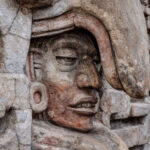
    The Discovery of an Ancient Zapotec Tomb in Huitzo, Oaxaca, is Changing Mesoamerican History

    In the ruins of Huitzo, Oaxaca, Mexico, archaeologists have uncovered a secret that had been locked in stone for over thirteen centuries. The discovery christened Tomb 10 of Huitzo is not just another ancient burial. Leading experts from Mexico’s National Institute of Anthropology and History (INAH) are calling it the most important archaeological discovery in the country in the past decade. 

    The find forces historians to rewrite the timeline of what they thought they knew about one of Mexico’s foundational cultures: the Zapotecs.

    To understand the shock of this discovery, we must first understand the people who built it. The Zapotec civilisation, often called (Loosely translated as the Cloud People), flourished in the Valley of Oaxaca for more than two thousand years. Around 500 B.C.E, they accomplished something remarkable. They built one of the first major cities in all of the Americas: Monte Albán

    This great city was constructed on top of a mountain, leveled by hand. The Zapotecs were master architects, creating grand plazas, ball courts, and intricate tombs. They developed one of the earliest writing systems in the Americas, recording their history and rituals on stone. 

    The Archaeological Site of Huitzo

    Huitzo, known in ancient times as Etlatongo, was one of these important towns in the northern part of the valley. It was a significant center in its own right. Tomb 10 was found deep within the main pyramid at the core of Huitzo. The tomb itself is a chamber carved directly into the bedrock, the solid layer of rock beneath the soil. Its entrance was sealed with a heavy, rectangular stone slab. This seal was intact, a crucial fact. It meant that for all those centuries, the tomb had remained untouched by looters. Everything inside was exactly as the Zapotec people had left it during a royal funeral ceremony around 700 C.E.

    The Treasures Found Within Tomb 10 of Huitzo

    The interior chambers of Tomb 10 at Huitzo are carved with elaborate panels and stucco friezes.
    The interior chambers of Tomb 10 at Huitzo are carved with elaborate panels and stucco friezes.

    When archaeologists carefully opened the tomb at Huitzo, they found the burial of a single adult male. His position and the treasures surrounding him left no doubt: this was a person of great authority. He was likely a cocijo, a king, or a supreme priest of Huitzo. But it was the objects buried with him that caused such a stir among researchers.

    The contents of Huitzo’s Tomb 10 are extraordinary for their material and their craft. The most stunning find is a large pectoral, a kind of chest ornament, shaped like a crescent moon. It is made of solid gold. The craftsmanship is exquisite, with fine details that show a highly skilled artisan made it. This alone was a surprise. Before this tomb, experts believed the Zapotecs of this period worked primarily with jade, obsidian, and ceramic. Gold was associated with later cultures, like the Mixtecs, or with peoples far to the south. Finding this much gold in a Zapotec tomb from this early date completely changes the story.

    The golden pectoral was not alone. The royal body was adorned with numerous other gold ornaments, including beads and pendants. There were also beautiful pieces made of jade, a green stone the Zapotecs valued above all for its symbolic link to life and water. He wore ear spools and necklaces of this precious material. There were also sharp blades made from obsidian, a volcanic glass used in ceremonies.

    Along the walls of the tomb, the archaeologists found several large ceramic urns. These are not simple pots. They are elaborate sculptures, often depicting important figures in formal poses. These are believed to represent ancestors or gods, placed there to guard and accompany the ruler into the afterlife. The combination of gold, jade, and these sacred urns created a burial scene of unmatched richness for this period in Zapotec history.

    The elaborate tomb at Huitzo shares features such as refined stucco work and owl imagery with other remarkable tombs, like those at Lambityeco and Zaachila, but is of scientific importance comparable perhaps only to Tomb 7 of Monte Albán

    So, why is this single tomb considered the discovery of the decade? First, it challenges the timeline of technological and trade developments. The gold proves that the Zapotecs, at least by 700 C.E., had mastered complex metalworking or had strong trade networks that brought finished gold objects from other regions. This shows they were far more connected to the wider Mesoamerican world than previously proven.

    Second, it reveals a shift in political power. The tomb dates to a time when the great capital of Monte Albán was beginning to lose its tight control over the valley. The incredible wealth buried in a secondary center like Huitzo suggests that local rulers were growing very powerful. They had the resources to command such treasures and the authority to take them to the grave. It paints a picture of a valley with multiple strong kingdoms, not just one dominant capital.

    Because the tomb had never looted or even opened until its discovery, its context remained untouched, a real rarity. Every artifact was in its original place, telling a clear and truthful story about the burial rituals and the social status of the individual.

  • New Mexico Minimum Wage Increase Takes Effect: What Expats Need to Know

    New Mexico Minimum Wage Increase Takes Effect: What Expats Need to Know

    Photo: Yucatán Magazine

    As 2026 kicked off, some 8.5 million Mexican workers saw their paychecks grow following the country’s ninth consecutive year of double-digit minimum wage increases. The National Minimum Wage Commission (CONASAMI) approved a 13% hike to the general daily minimum wage, raising it from 278.80 pesos to 315.04 pesos per day.  For expats and visitors who employ household staff, dine out frequently, or rely on local services, this wage adjustment carries direct implications for monthly budgets and the broader cost of living across Mexico.

    The increase marks a continuation of a wage-recovery strategy that began in 2019 under the previous administration and has now resulted in a cumulative rise of 256.6% since 2018, when the daily minimum stood at just 88.36 pesos. At current exchange rates of approximately 17.4 pesos to the US dollar, the new general minimum wage translates to roughly $18.10 USD per day, or about $550 USD monthly. 

    Workers in the Northern Border Free Zone, which encompasses municipalities in Baja CaliforniaSonoraChihuahuaCoahuilaNuevo León, and Tamaulipas along the US border, received a more modest 5% increase, bringing their daily minimum to 440.87 pesos (approximately $25.34 USD).

    New Mexico Minimum Wage Increase for 2026

    President Claudia Sheinbaum Pardo announced the adjustment during her morning press conference on December 3, 2025, describing it as the product of consensus between government, unions, and employers. Minister of Labor Marath Bolaños noted that the government’s wage policy has increased the purchasing power of minimum-wage earners by 154% between 2018 and 2025. 

    The stated goal is for the minimum wage to eventually cover the equivalent of 2.5 basic consumption baskets, a threshold that would allow a worker to support themselves and their dependents adequately. The increase structure comprises a fixed boost of 17.01 pesos through the Independent Recovery Amount (known as MIR in Spanish) combined with a 6.5% percentage adjustment.

    For the foreign community living in Mexico, these numbers represent more than abstract policy. They signal changes to the cost of hiring a housekeeper in San Miguel de Allende, paying a gardener in Puerto Vallarta, or tipping at a taqueria in Mexico City. Understanding the details of this wage adjustment is essential for anyone managing a household budget or running a business in Mexico.

    The New Wage Structure Explained

    The 2026 minimum wage operates under Mexico’s two-zone system, which has been in place since 2019. The General Zone covers most of the country, including major expat destinations such as OaxacaMéridaGuanajuato, and the Riviera Maya. Here, the daily minimum wage of 315.04 pesos translates to a monthly income of approximately 9,582 pesos (roughly $550 USD) based on a 30-day calculation.

    The Northern Border Free Zone maintains a higher wage floor due to elevated living costs and economic activity near the United States. Municipalities included in this zone span from Tijuana and Mexicali in Baja California to Ciudad Juárez in Chihuahua, Nuevo Laredo and Matamoros in Tamaulipas, and Reynosa on the United States border in Texas. Workers here now earn a minimum of 440.87 pesos daily, equivalent to approximately 13,409 pesos monthly ($771 USD).

    Beyond the general rates, CONASAMI also adjusted professional minimum wages for 61 specialized trades and occupations. These categories include technicians, equipment operators, nurses’ aides, bilingual secretaries, and certified trade workers across industrial, agricultural, administrative, and service sectors. Professional minimum wages for 2026 range from approximately 280 pesos to 624 pesos per day, depending on the skill level and certification requirements of each role. These specialized rates increased between 5% and 13%, keeping pace with the general adjustment.

    What This Means for Expat Households

    For the estimated one million Americans and Canadians living in Mexico, along with growing communities of Europeans and digital nomads, the minimum wage increase will likely translate into higher costs for domestic services. Housekeepers, gardeners, caregivers, and cooks have historically earned wages that hover at or slightly above the legal minimum, and employers can expect upward pressure on these rates throughout 2026.

    Current market rates vary significantly by location. In Mazatlán, a housekeeper working three hours weekly typically earns between 300 and 400 pesos per visit. Full-time domestic workers in Mexico City earn approximately 9,850 pesos monthly according to recent surveys, while gardeners in the capital average around 8,040 pesos. In tourist-heavy areas like Playa del Carmen and Tulum, where competition for English-speaking staff runs higher, rates can reach $7 to $10 USD per hour compared to $5 for Spanish-speaking workers elsewhere.

    Mexican labor law requires employers of household staff to provide certain benefits regardless of hours worked. The aguinaldo, or Christmas bonus, mandates 15 days’ pay for full-time employees and a proportional amount for part-time workers based on days worked throughout the year. Vacation premiums, severance obligations, and increasingly, registration with the Mexican Social Security Institute (IMSS) also apply. While many household employment arrangements remain informal, the legal framework has become stricter, and enforcement through labor inspections has increased.

    Inflation and the Cost of Basic Goods

    Mexico’s annual inflation rate stood at 3.69% in December 2025, down from 3.80% in November and within the Bank of Mexico’s target range of 3% plus or minus one percentage point. However, this headline figure masks uneven price pressures that affect daily expenses for residents and visitors alike.

    The cost of Mexico’s basic food basket, or canasta básica, rose 4.4% in urban areas and 3% in rural regions during 2025, outpacing overall inflation. This basket includes 24 essential products such as cooking oil, rice, sugar, beans, eggs, chicken, milk, tortillas, and tomatoes. In urban areas, the monthly cost now averages approximately 2,467 pesos ($142 USD), while rural areas see prices around 1,854 pesos ($107 USD). Regional variations are substantial. A recent survey by the Federal Consumer Protection Agency (Profeco) found the same basket of goods priced at 903 pesos at a Walmart in San Luis Potosí versus 784 pesos at a Chedraui in Tamaulipas.

    Restaurant and lodging inflation remained particularly elevated at 7.35% year-over-year in December 2025. Prepared foods at lunch counters, sandwich shops, and taco stands also saw increases, driven partly by higher ingredient costs and partly by wage pressures. Electricity prices jumped 20.70% in 18 cities following the end of government subsidy programs. Public transportation costs rose 4.32% in the first half of November alone.

    Impact on Employment and Business Costs

    The wage increase extends beyond direct payroll effects for employers. KPMG Mexico has warned that higher minimum wages raise the base salary used for calculating social security contributions to IMSS, with knock-on effects for mandatory benefits including bonuses, vacation premiums, and year-end payments. Companies must update their payroll systems, employment contracts, and documentation to remain compliant.

    Despite concerns that wage increases could dampen hiring, Mexico’s labor market has remained relatively stable. The average registered salary for workers affiliated with IMSS reached 624.90 pesos daily in late 2025, reflecting annual growth of approximately 7%. Female participation in formal employment continued to expand, with women holding 9.2 million registered positions, representing 40.4% of formal employment.

    However, economists and business groups have expressed caution about 2026. Alberto Alesi, General Director for Mexico, the Caribbean, and Central America at ManpowerGroup, characterized the employment environment as “notably more conservative” compared to previous years. The OECD lowered its GDP growth forecast for Mexico to 1.2% for 2026, citing moderate consumption, fiscal consolidation, and trade uncertainty. Banamex analysts have suggested that wage increases may slow formal job creation, particularly among small and medium-sized enterprises already navigating tighter margins.

    Other Labor Changes Taking Effect in 2026

    The minimum wage adjustment arrives alongside several other significant labor reforms. As of January 1, 2026, the pilot program requiring digital platform workers to register for social security has become mandatory. Delivery drivers and ride-hailing workers for services like UberDidi, and Rappi must now be enrolled with IMSS. Updated rules published in late December revised how net income is calculated, with exclusion factors varying by transport mode: 48% for cars, 32% for motorcycles, and 3% for non-motorized transport. The Ministry of Labor estimates that approximately one million platform workers per month received occupational risk coverage during the pilot phase.

    The Ley Silla, or Chair Law, which took effect in June 2025, is now subject to enforcement through Labor Ministry inspections that began in December. This legislation requires employers to provide seating for workers who perform tasks that can be done seated, affecting retail, hospitality, and service industries.

    Looking ahead, the Ministry of Labor has submitted a constitutional reform proposing a gradual reduction of the standard workweek from 48 to 40 hours, beginning in 2027. The plan would reduce working hours by two hours annually until reaching 40 hours in 2030, without reducing wages. If approved, this change would have significant implications for labor costs and operational planning across all sectors.

    The Peso Factor

    Currency fluctuations add another layer of complexity for expats and visitors converting dollars, euros, or other currencies to pesos. The Mexican peso has appreciated significantly in recent months, closing at approximately 17.65 to the US dollar in mid-January 2026, its strongest level since July 2024. The peso gained nearly 16% against the dollar throughout 2025, defying many economists’ predictions.

    This appreciation benefits Mexican workers whose wages are denominated in pesos, as their purchasing power increases relative to imported goods. However, it reduces the effective discount that foreigners receive when spending in Mexico. A dollar that bought roughly 20 pesos in late 2022 now buys closer to 17.5 pesos. For an expat household spending $2,000 monthly in local currency, this represents a meaningful reduction in buying power compared to two years ago.

    Banco de México has maintained its policy rate at 7%, preserving one of the widest real yield differentials in emerging markets and attracting continued foreign investment into peso-denominated assets. Analysts attribute the peso’s resilience to this interest rate differential, along with Mexico’s proximity to US supply chains and relatively stable macroeconomic fundamentals.

    Practical Advice for Expat Budgets

    Given these changes, foreign residents and long-term visitors should anticipate modest increases in service costs throughout 2026. Renegotiating rates with household staff at the start of the year is common practice and offering raises that at least match the 13% minimum wage increase demonstrates good faith while helping retain reliable employees.

    Those employing domestic workers full-time should familiarize themselves with their legal obligations, including aguinaldo calculations, vacation entitlements, and the potential requirement to register workers with IMSS. The website of the Secretary of Labor and Social Welfare (STPS) provides contract templates and benefit calculators in Spanish.

    For day-to-day expenses, shopping at local mercados and fruterías rather than international supermarket chains like City Market or Costco can yield savings of 10% to 20% on groceries. Restaurant costs will likely continue rising faster than overall inflation, so cooking at home more frequently offers a practical hedge against dining-out inflation.

    The minimum wage increase reflects Mexico’s ongoing commitment to improving living standards for its workers after decades of stagnant wages. For the expat community, it serves as a reminder that the cost advantages of living in Mexico, while still substantial compared to the United States and Canada, are gradually narrowing. Understanding these shifts helps foreign residents’ budget appropriately while supporting fair compensation for the workers who make daily life in Mexico possible.