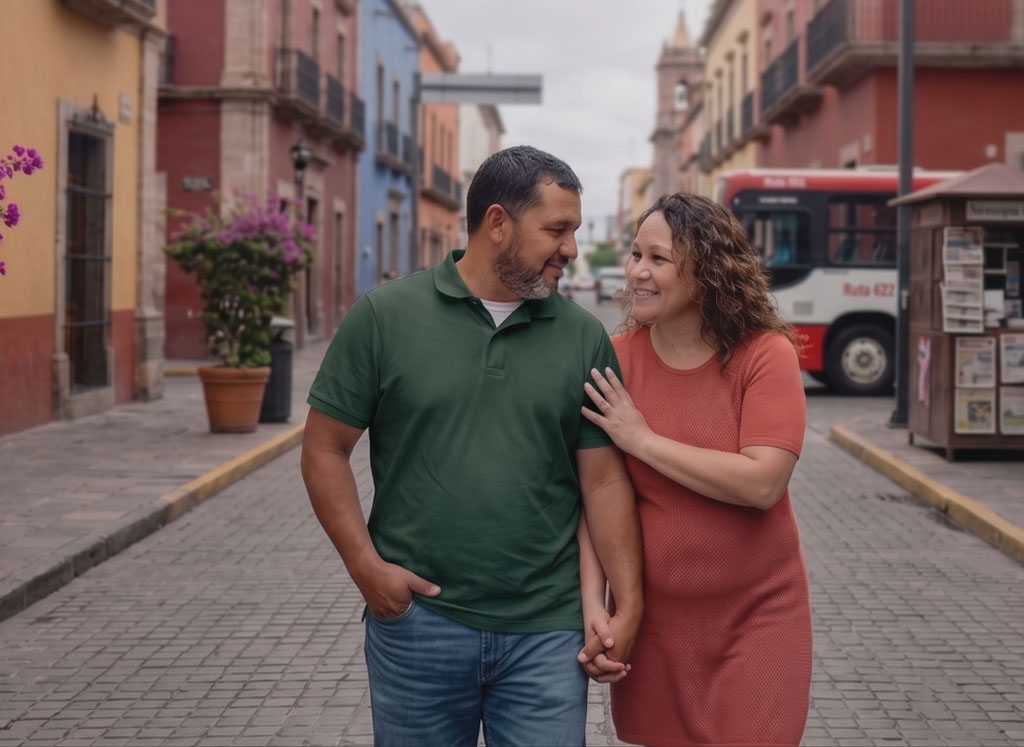
For thousands of U.S. citizens, the American Dream is ending not with a bang, but with a heartbreaking choice: break up their family or leave their homeland behind.
As the Trump administration ramps up its mass deportation campaign—with the Department of Homeland Security reporting 2.2 million self-deportations since January 2025—a quieter but equally devastating migration is unfolding in reverse . American citizens, many of whom have never lived elsewhere, are packing their bags and moving to Mexico to keep their families intact .
They are the “de facto deportees”—a population researchers estimate included more than 11,000 people who moved from the U.S. to Mexico between 2015 and 2020 specifically to accompany a deported family member . Among them are over 6,000 U.S. citizens, nearly 90% of them children .
Families Torn Apart
For parents facing deportation, the decision is often made in a matter of days, with lifelong consequences.
The cruelty of these separations cuts across all demographics—including military families.
Patricia Reyes, a 40-year-old hairstylist from Atlanta, was deported after a domestic violence dispute turned into an immigration case. She left behind three U.S. citizen children, two of whom serve in the United States Marine Corps .
“I have two daughters in the Marines, yet they deported me; they are my family,” Reyes said as she arrived in Tapachula, a sweltering city in Mexico’s southern tip—some 2,000 miles from the U.S. border. “I mean, they don’t even care about that”.
The U.S. has increasingly been flying deportees to Tapachula and Villahermosa in southern Mexico, making it far more difficult for them to attempt to return. Of the nearly 60,000 immigrants in U.S. immigration detention in September 2025, 71.5% had no criminal records, according to data analyzed by the Transactional Records Access Clearinghouse.
The Reverse Migration
For many deportees, Mexico is not home. They left as young children and have spent decades building lives in the United States.
Marvin Robledo Rodriguez, 43, had lived in the United States for 35 years—most recently in New Jersey—before he was deported following a fight. The charges were dropped, he said, but ICE was waiting for him as he walked away from the courthouse.
Asked if anything in Tapachula seemed familiar, Robledo Rodriguez had a three-word answer: “Not at all”.
“My Spanish is a little crude,” he added. He left behind two boys in the United States, ages seven and eleven.
Families Choosing to Leave
Some Americans are making the move voluntarily before deportation forces their hand.
Lois Muñoz, originally from Brooklyn, now lives in her husband Alfredo’s family compound in Puebla. She was a waitress at a diner in New York. Now, with no car and little Spanish, her world has shrunk dramatically.
But for her, the calculation was simple: moving to Mexico was an easier legal path than risking her husband’s detention. Under Mexican “Family Unit” rules, Americans married to Mexican nationals can apply for temporary, then permanent, residency.
Candace Maria Garcia Sánchez made the same choice nearly a decade ago, moving from Utah to rural Mexico after her husband was deported. She now has more than 1.5 million TikTok followers and describes the experience as unexpectedly positive.
“Fast forward to now, I feel like we’re just living our happy lives and raising our children in a beautiful place,” she said.
‘Mexico Embraces You’
The Mexican government has launched a program called “México Te Abraza“—”Mexico Embraces You”—to help deportees and their families integrate. Returnees receive debit cards preloaded with about $108, health screenings, and assistance obtaining Mexican birth certificates.
But for many, the psychological toll is severe. Researchers have documented “extreme anxiety” and other mental health problems among deportees “from the shock and mistreatment they’d just gone through,” said Adam Isacson of the Washington Office on Latin America.
“There are people who are basically gringos at this point, and they’re undergoing a real big shock,” Isacson said.
The Children Left Behind in Limbo
A report by American Families United estimates that 1.5 million U.S. citizens are separated or live in fear of separation from loved ones because they are in mixed-status relationships. More than 200,000 U.S. citizen minors living in Mexico lack proper documentation to register for school, according to the Rhizome Center for Migrants.
They become the undocumented—in their own families’ homeland.
For Amalia, now finally in California after two decades, the journey is not over. She is working toward her G.E.D. and dreams of studying psychology to help others struggling with depression.
“Our fears are always the only thing holding us back,” she said, “but once you see things for yourself, you see what you’ve been missing”.
With Information from NBC News.