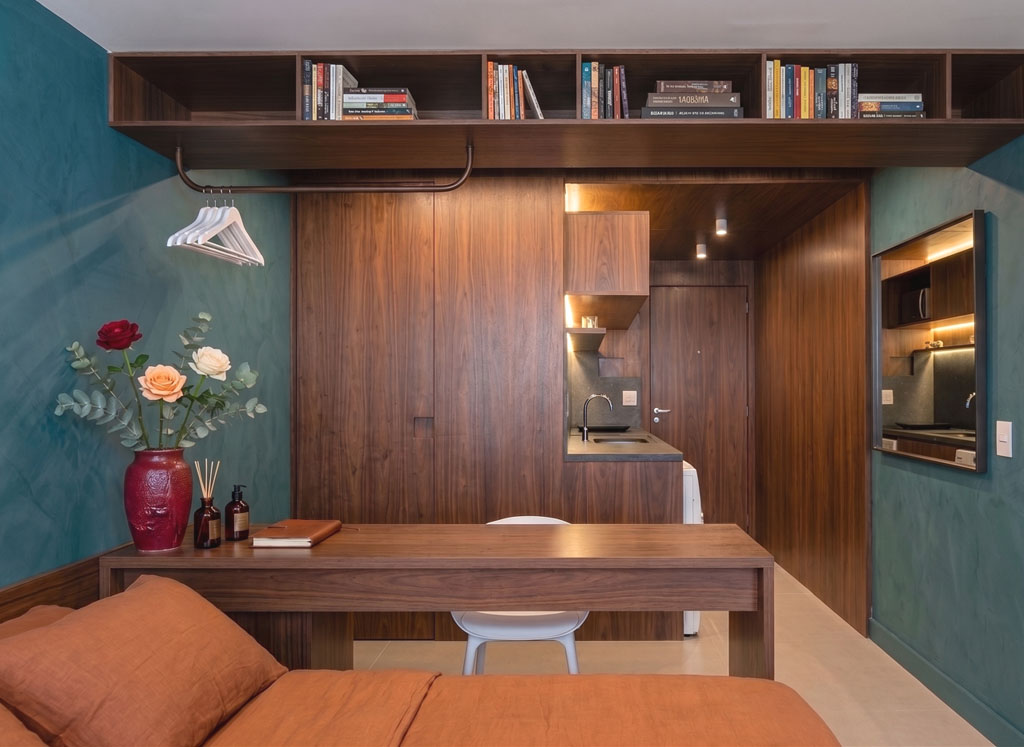
In Mexico City, a growing number of young people are making a stark calculation. They are choosing to live in apartments as small as six square meters (under 65 square feet) in order to remain in central, safer neighborhoods with good access to transport and work. For many, the trade-off is simple: less space for a better location.
According to data cited by local media, the average monthly rent in Mexico City now exceeds 800 dollars, while the average monthly salary is around 400 dollars. This gap forces young professionals to make difficult choices. A 2023 financial health survey by the National Institute of Statistics and Geography found that nearly 70 percent of young people between 18 and 29 years old live with financial stress, a condition that affects both mental health and daily decision-making.
The housing crisis in the capital has been driven by multiple factors. An estimated deficit of over 350,000 housing units exists in Mexico City and its metropolitan area, according to CONAVI data. At the same time, the rise of short-term rental platforms and an influx of digital nomads—many earning in dollars or euros—have pushed prices upward in formerly affordable neighborhoods like Roma, Condesa, and Juárez. One study cited by local activists noted that rent prices in some central areas increased by nearly 50 percent over a four-year period.
Faced with this reality, young renters have adapted. Some live in converted rooftop rooms, known locally as “cuartos de azotea,” which are often poorly insulated and lack proper ventilation. Others rent micro-apartments where the bed is on a mezzanine level with barely one meter of headroom, making it impossible to stand up. Kitchens are reduced to a single counter with a sink and a mini-fridge. Bathrooms measure barely more than one meter by 80 centimeters.
Urban sociology experts from the National Autonomous University of Mexico point out that young people today do not have access to the same housing opportunities as their parents’ generation. Stable salaries, government-backed mortgages, and employer credit programs have largely disappeared for entry-level workers. As one sociologist explained, access to housing in Mexico City is becoming “repatrimonialized”—meaning that independence often depends on inherited wealth or direct family support.
The city government has responded with a 14-point plan announced by Mayor Clara Brugada in July 2025, which includes rent controls, an anti-eviction measure, and a proposed investment of over 600 million pesos to build or renovate 20,000 rental units. The plan prioritizes young people, single mothers, and workers commuting to central areas. However, real estate associations have criticized the rent control approach, citing examples from Paris and Berlin where such measures led to reduced housing supply and legal disputes.
Despite these efforts, activists argue that the measures are insufficient and come too late. The Front for Youth Housing, an anti-gentrification organization founded in April 2025, has staged multiple protests in central neighborhoods, arguing that the root problem is structural, not temporary. Young people are not just looking for any roof. They are looking for a place where they can sleep, study, cook, and invite a friend over—basic activities that a six-square-meter space barely allows.
For now, many continue to accept the compromise. They live without dining tables, without closets, without space for more than a few pairs of shoes. They store sweaters in kitchen cabinets and work from their beds. The arrangement is not ideal, but for those who prioritize safety, mobility, and proximity to work, it has become the only viable option in a city where central location has become a luxury good.