
A celebrity wedding in one of Mexico’s most ecologically sensitive nature reserves has set off a firestorm of criticism — and touched off a federal crackdown that closed popular natural sites just as the Semana Santa holiday season kicked off.
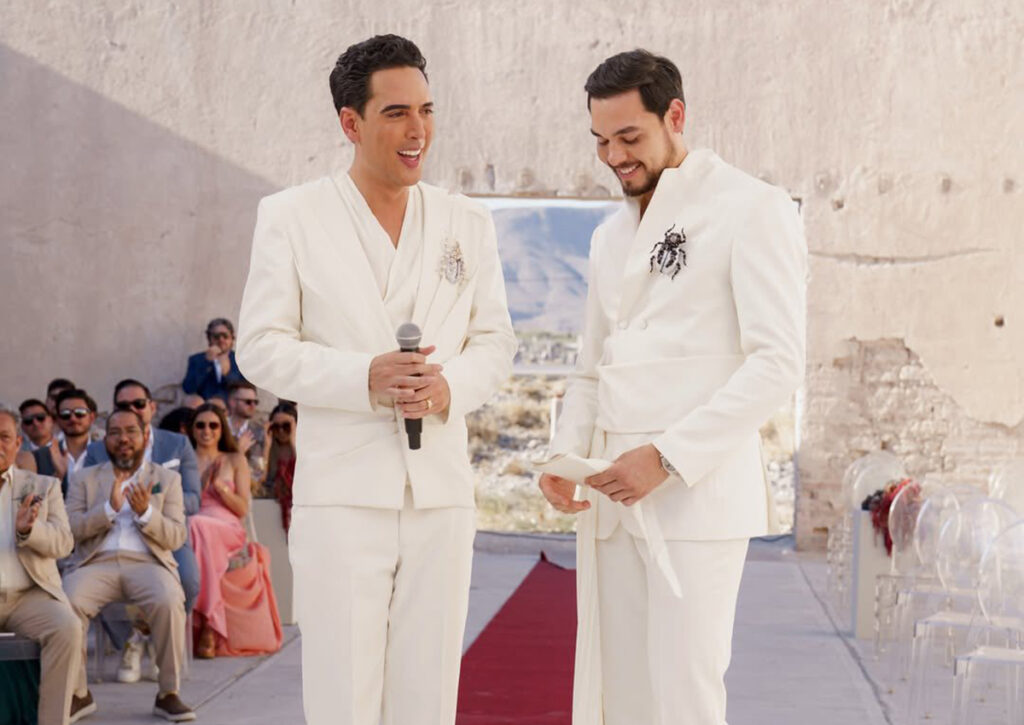
The controversy centers on Alfredo Cantú, a Mexican content creator known online as “Un Tal Fredo,” who married his partner, Adrián Álvarez, at Cuatro Ciénegas, a federally protected biosphere reserve in the northern state of Coahuila. Days after the event, environmental authorities moved in and shuttered several natural areas within the reserve, citing possible irreversible ecological damage.
Profepa, Mexico’s consumer-protection environmental enforcement agency, acting in coordination with Semarnat, the National Commission of Protected Areas, and the National Water Commission, closed the popular Río Mezquites corridor and sealed 3 water wells operating without legal permits. The agencies said the intervention was aimed at halting illegal water extraction and protecting the reserve’s fragile systems — but the timing, coming immediately after the wedding, was impossible to ignore.
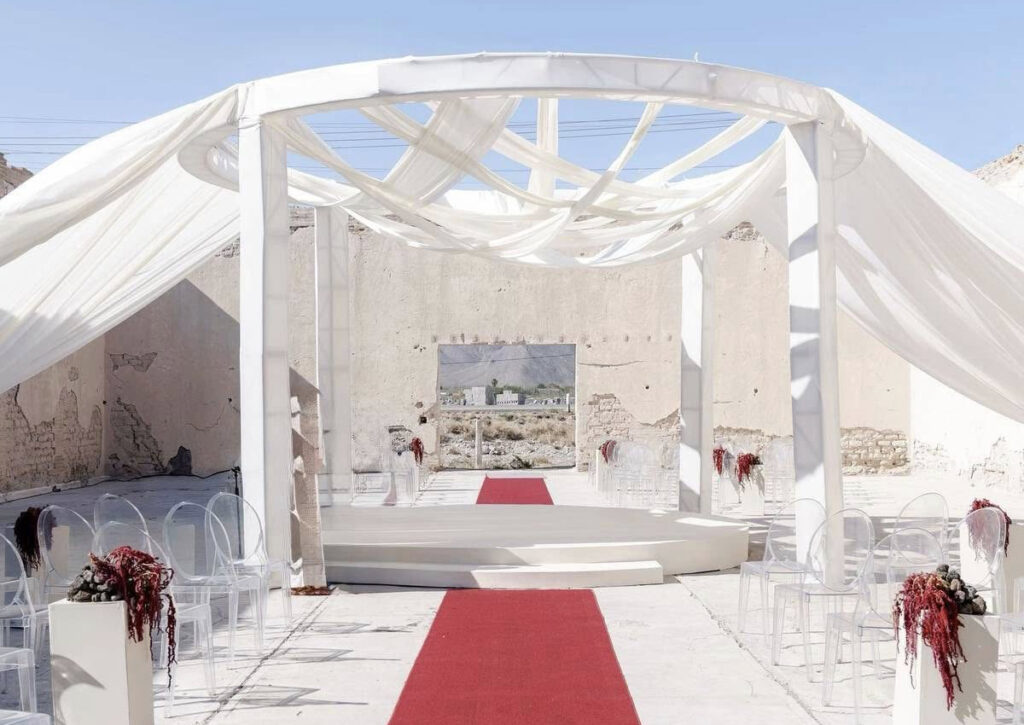
Profepa acknowledged that an event was held in the reserve and that it prompted an environmental inspection. Officials said temporary structures, artificial lighting, and heavy vehicles had been deployed in protected zones — including near gypsum dune formations and natural pozas, or spring pools, that took thousands of years to form. Dinners were reportedly held inside marble mines within the protected area. The agency stopped short of formally blaming Cantú for the damage, saying it was still evaluating the scope of the impact.
The influencer has not commented publicly. Some of his followers pushed back on the criticism, pointing out that the same-sex wedding represented an important moment of visibility for the LGBTQ+ community. In Mexico, where marriage equality is now recognized nationally but social acceptance remains uneven, the wedding drew both admiration and scrutiny before the ecological fallout became news.
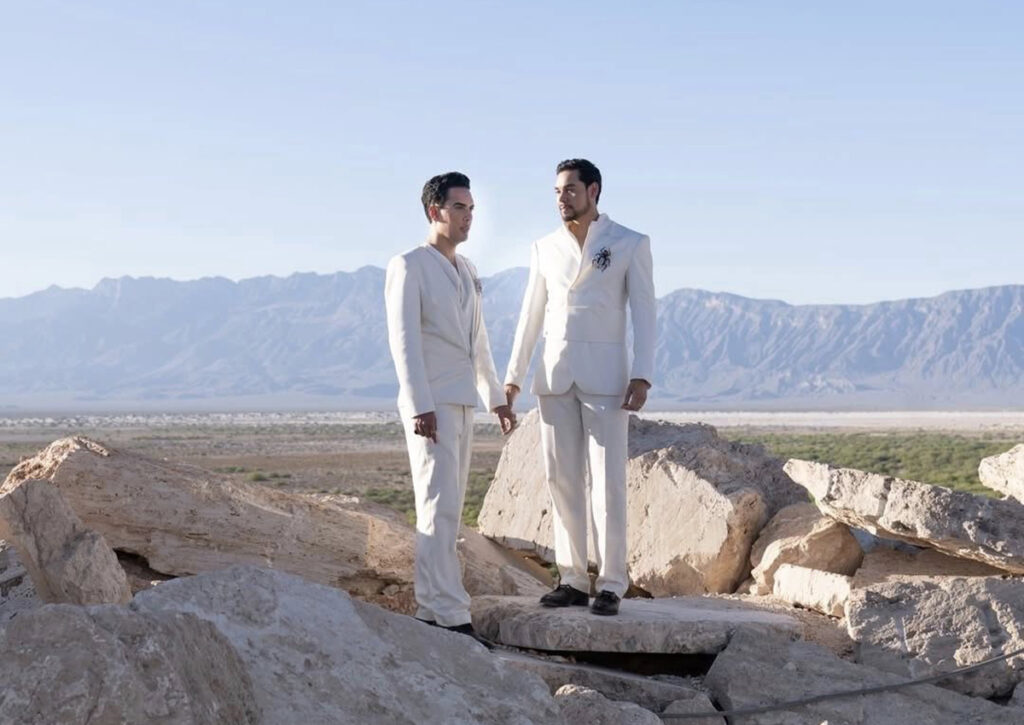
What made the story resonate beyond celebrity gossip is where it happened. Cuatro Ciénegas is no ordinary vacation destination. Designated as a UNESCO Biosphere Reserve in 1994, the area encompasses roughly 84,347 hectares (208,425 acres) and is home to more than 500 spring pools, or pozas, packed with organisms found nowhere else on Earth. Scientists have compared it to the Galápagos Islands. Researchers describe it as having the highest level of endemic biodiversity in North America, with microbial life varying pond to pond — each pool, in effect, a small experiment in evolution. NASA has noted potential links between the basin’s microbial forms and the search for life on Mars.
The closure landed at the worst possible moment for local business owners. The shutdown came at the start of spring break season, when Cuatro Ciénegas — also a designated Pueblo Mágico — draws its heaviest tourist traffic. Municipal president Víctor Manuel Leija Vega acknowledged that the closures hit the local economy hard, as tourism is the community’s primary source of income. Tour operators, hoteliers, and service providers were left scrambling.
The episode has reignited a broader debate in Mexico about the tension between tourism, celebrity culture, and conservation. Profepa has been stepping up enforcement of Mexico’s protected natural areas — including along the coasts of the Yucatán Peninsula, where unauthorized development has repeatedly threatened fragile ecosystems. Environmental specialists note that even brief human intrusion in places like Cuatro Ciénegas can trigger damage that outlasts the event by decades. The combination of crowds, infrastructure, noise, and vehicle traffic can alter soil chemistry, disturb endemic species, and disrupt water systems that took geological time to develop.
Whether Cantú’s wedding was the direct cause of the closures or whether federal authorities simply used the moment to act on preexisting violations — the three unsealed wells, for example, were already operating without permits — remains an open question. Profepa has not published a formal determination. What is clear is that the story put Cuatro Ciénegas in the national spotlight, and that a protected reserve of unique global scientific value paid a very public price for it.
At a Glance: Cuatro Ciénegas Biosphere Reserve
- Located in Coahuila, in northern Mexico
- Covers approximately 84,347 hectares (208,425 acres)
- Designated a UNESCO Biosphere Reserve in 1994
- Home to more than 500 pozas (spring pools) with species found nowhere else on Earth
- Contains stromatolites — ancient microbial structures rare on the modern planet
- Classified as a Pueblo Mágico (Magical Town)
- Tourism is the municipality’s primary economic driver
Sources: Revista FAMA / Infobae